

TL;DR:
- Dried bouquets are sustainable and require minimal maintenance, making them an eco-friendly decor option.
- They should be placed in dry, protected environments and can be further preserved with a thin layer of hairspray to extend their lifespan.
Dried bouquets are a sustainable decor detail that lasts for 1 to 3 years with minimal care, making them a practical and eco-friendly alternative to fresh flowers. Inspiration for dried bouquets ranges from simple lavender bundles to complex arrangements featuring pampas grass, hydrangeas, and eucalyptus. What makes dried flower arrangements so appealing is the combination of natural aesthetics and almost non-existent maintenance. You don't need to change water, trim stems, or worry about wilting petals. This guide provides concrete ideas, practical techniques, and styling tips that work in any home.
1. Inspiration for dried bouquets: which plants are best?
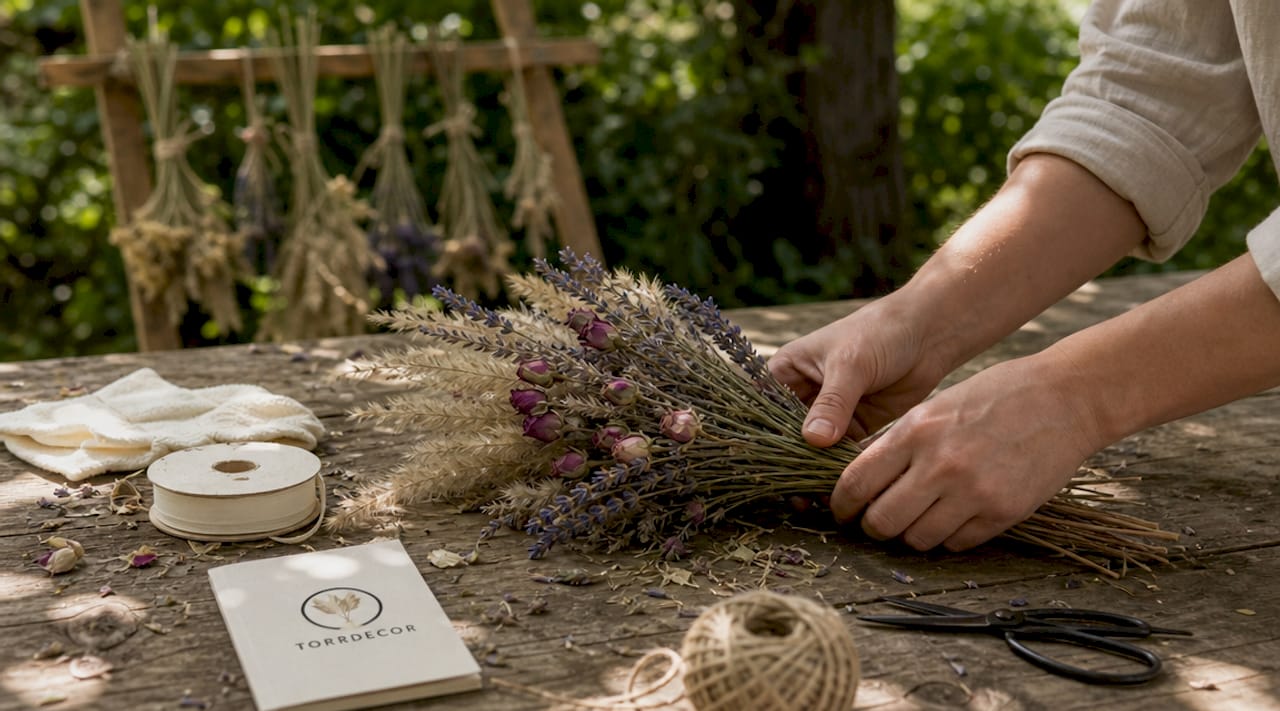
Flowers with low moisture content and robust petals are the best choices for dried arrangements. Lavender, bud roses, hydrangeas, pampas grass, and statice are all classic options that retain their shape and color for a long time. These plants combine decorative effect with practical durability, making them the base of most dried bouquets for home decor.
Variation in texture is what separates a mediocre arrangement from a professional one. Mix soft, fluffy elements like pampas grass with more structured flowers like statice or thistles. Eucalyptus adds volume and a subtle scent that lasts for months. Ornamental millet and everlasting flowers are additional materials that easily combine with base materials and create a lively, organic impression.
Here are the most popular plants for dried bouquets:
- Pampas grass (Cortaderia selloana): adds volume and a dramatic expression, available in white, beige, and pink
- Lavender: retains its scent and purple color for a long time, suitable for all styles
- Hydrangea: dries beautifully while maintaining its shape, good as filler material
- Roses in bud: retain their shape better than fully open roses
- Statice (Limonium): natural dried flower that requires minimal preparation
- Eucalyptus: provides greenery and structure, suitable as a base in arrangements
- Everlasting flowers: strong colors that are well preserved, easy to combine
Pro tip: Pick flowers for drying just before they are fully open. The bud holds its shape better during the drying process and gives a more elegant final result.
2. Best drying methods for flowers at home
Air drying is the most common method and requires a dark, dry, and ventilated place for 2 to 4 weeks. The result is a natural, rustic look that suits most interior styles. This method works best for robust flowers like lavender, statice, and pampas grass.
Silica gel is an alternative for more delicate flowers like roses and peonies. This method is faster and preserves color better than air drying. You embed the flowers in silica gel in an airtight container and wait 3 to 7 days, depending on the size and moisture content of the flowers. The result is more vibrant colors and better preserved shape, but the technique requires more preparation.
Pressing is a third method suitable for flat arrangements, framed art, and card decorations. Place the flowers between absorbent paper and press with heavy books for 2 to 3 weeks. This method is not suitable for three-dimensional bouquets but offers unique decorative possibilities.
Pro tip: Hang flowers upside down during air drying. This prevents the stems from bending and gives a straighter, more professional result.
3. Step-by-step: create your own handmade dried bouquets
Creating your own dried bouquets requires the right materials and a clear plan before you begin. Plan heights and placement carefully before assembling the arrangement, as adjustments can damage the delicate stems and petals.
Materials you'll need:
- Dried flowers and plants in at least 3 to 5 different varieties
- Oasis (floral foam) or gravel as a base material in the vase
- Rubber bands and raffia for tying
- Scissors or a floral knife for trimming stems
- A vase or container that suits your style
- Possibly moss or gravel to cover the base
How to do it:
- Sort your materials into piles by type and height
- Start with the longest and most voluminous elements, such as pampas grass
- Add medium-sized flowers like hydrangeas or roses around them
- Fill in with smaller details like lavender, statice, or everlasting flowers
- Tie together with a rubber band and cover with raffia for a neat finish
- Cover the base with gravel or moss for a professional look
- Place the bouquet in the vase and make minimal adjustments
Think in groups of three when arranging. Three elements of the same kind create balance without the arrangement looking stiff. Mix colors and textures for contrast, but stick to a common color palette for a cohesive result.
4. Ideas for decorating with dried bouquets in different rooms
Dried flowers suit all rooms, but their placement and style should be adapted to the room's function and atmosphere. Variation in flower types and height creates a more dynamic expression, regardless of whether you are decorating a living room or an office.
| Room | Recommended style | Suggested plants |
|---|---|---|
| Living room | Bohemian or minimalist | Pampas grass, eucalyptus, hydrangea |
| Bedroom | Romantic and soft | Lavender, bud roses, statice |
| Kitchen | Simple and natural | Lavender, herbs, everlasting flowers |
| Office | Minimalist | Pampas grass, eucalyptus, thistles |
| Entrance hall | Dramatic and welcoming | Pampas grass, large hydrangeas |
Height is an underestimated tool in interior design with dried flowers. A tall vase with pampas grass in a corner of the living room draws the eye upwards and gives the room more volume. Combine with lower arrangements on the coffee table to create depth.
Combining dried flowers with pinecones, branches, and moss adds more texture and a more lasting visual impression. Natural materials like these cost little and make a big difference to the overall impression. A basket with pinecones and a few dried branches next to a bouquet creates a cohesive natural feel.
Bohemian style works well with loose, free arrangements in natural colors. Minimalist style requires fewer elements and clear lines. Romantic style is built on soft colors like pink, beige, and white, preferably with roses and lavender as main elements.
Pro tip: Use decor with dried plants as a way to tie together the room's color palette. Choose plants whose natural tones match your textiles and furniture.
5. Care and preservation for long lifespan
The environment where you place your dried bouquets is as important as the arrangement itself for maintaining its beauty over time. Place bouquets away from direct sunlight and avoid humid environments such as bathrooms and kitchens near the stove. Sunlight quickly fades colors, and humidity can cause mold.
Cleaning is simple but requires caution. Use a hairdryer on a cool setting and gently blow away dust from the petals. Alternatively, you can use a soft dusting cloth or a small brush. Avoid water and chemical cleaning agents entirely.
Here are the most important care tips:
- Place the bouquet in a room with stable temperature and low humidity
- Avoid placement near windows with direct sunlight
- Clean with a cool hairdryer or soft brush, never with water
- Lightly spray with hairspray to strengthen petals and reduce dust buildup
- Minimize handling after the arrangement is complete
Unnecessary moving and adjusting of dried bouquets break down delicate petals faster. Decide on the bouquet's location before assembling it, and then leave it undisturbed.
Hairspray is a simple and effective trick that many people miss. A thin layer of hairspray on the petals creates a protective layer that reduces brittleness and maintains shape longer. Use a neutral hairspray without a strong scent and hold the bottle at least 30 centimeters away.
6. Dried vs. fresh vs. preserved bouquets: what suits you?
Dried bouquets require less maintenance and are a better environmental choice compared to fresh flowers, as they don't need water and last for 1 to 3 years. This makes them the most practical option for permanent home decor.
| Type | Durability | Maintenance | Cost | Environmental impact |
|---|---|---|---|---|
| Dried bouquets | 1 to 3 years | Minimal | Medium | Low |
| Fresh flowers | 1 to 2 weeks | High (water, trimming) | Ongoing | Medium to high |
| Preserved flowers | 1 to 2 years | Low | High | Medium |
Fresh flowers are best suited for temporary decorations, such as dinner parties or special occasions. They offer an immediate freshness and scent that dried flowers cannot match. The downside is the ongoing cost and continuous maintenance.
Preserved flowers are treated with glycerin or other chemicals to maintain their appearance. They look like fresh flowers but require almost no care. However, the price is significantly higher than for dried bouquets, and they can be sensitive to moisture and heat. For those who want a lively appearance without maintenance, preserved flowers are an option, but for most homes, dried bouquets offer the best value for money.
Key takeaways
Dried bouquets provide durable, low-maintenance decoration for 1 to 3 years when you choose the right plants, drying method, and placement.
| Point | Details |
|---|---|
| Choose the right plants | Lavender, pampas grass, hydrangea, and statice retain their shape and color best. |
| Plan before arranging | Determine heights and placement in advance to avoid damaging post-adjustments. |
| Protect from sunlight and moisture | Place bouquets in dry, shaded environments to prevent fading and mold. |
| Use hairspray as protection | A thin layer of hairspray extends durability and reduces brittleness. |
| Mix materials for texture | Pinecones, moss, and branches give the arrangement a more professional and natural look. |
My thoughts on dried bouquets as a decor choice
I've worked with interior design and dried plants long enough to see trends come and go. Dried bouquets are not a trend. They are a permanent decor choice that fits equally well in a modern minimalist home as in a bohemian or rustic one.
What I often see people do wrong is buying a single large bouquet and placing it in the middle of the room, and then they're done. This rarely yields the best result. What truly elevates a room is working with multiple arrangements of different sizes and heights, placed in strategic locations. A tall pampas grass bouquet in a corner, a small lavender bundle on the bedside table, and a few dried branches in a narrow vase on the bookshelf create a cohesive feeling without being overdone.
I always recommend starting with a neutral base—beige, white, and natural brown—and then adding one or two color accents. This makes it easier to swap out parts of the arrangement when you want to refresh it without starting from scratch. A guide to dried flowers can give you a good starting point if you're new to this.
What surprises most people is how long dried bouquets actually last when properly cared for. Three years is entirely possible. It just requires choosing the right spot from the start and leaving the bouquet undisturbed.
— Torrdecor
Find your next dried bouquet at Torrdecor
Torrdecor offers a wide range of dried bouquets, pampas grass, and decorative vases for all types of homes and styles. The products are selected for their durability and aesthetics, and require minimal maintenance.

Whether you're looking for a dramatic pampas grass arrangement for the living room or a subtle lavender bundle for the bedroom, there are options to suit. Torrdecor delivers directly to your door with fast shipping, and the assortment also includes handmade white clay vases produced in Portugal. Read more about Torrdecor as a supplier and find the arrangement that suits your home.
FAQ
How long do dried bouquets last?
Dried bouquets last for 1 to 3 years with minimal care. Durability depends on placement, humidity, and how much the bouquet is handled.
Which flowers are best for dried bouquets?
Lavender, pampas grass, hydrangea, bud roses, and statice are the most popular choices. They have low moisture content and robust petals that preserve shape and color well.
How do I dry flowers at home?
Air drying is the simplest method. Hang flowers upside down in a dark, dry, and ventilated place for 2 to 4 weeks. Silica gel provides faster results and better color preservation for more delicate flowers.
Can I place dried bouquets in the bathroom?
It is not recommended. Humidity in bathrooms can cause mold and accelerate the breakdown of petals. Choose a dry room with a stable temperature.
How do I clean dried bouquets?
Use a hairdryer on a cool setting or a soft brush to gently blow or brush away dust. Avoid water and chemical cleaning agents entirely.
0 comments