

TL;DR:
- Dried bouquets are durable and can last 1 to 3 years with minimal care.
- They suit various interior design styles, such as minimalist, bohemian, romantic, and mixed.
- They are a climate-smart, cost-effective, and aesthetic alternative to fresh flowers.
Finding the right dried bouquet for your home can feel overwhelming with such a vast selection. Which style suits your room? Which plants last the longest? And how do you ensure the bouquets truly enhance your decor instead of just standing there collecting dust? Dried bouquets have become a natural choice for many who want beautiful flowers without constant maintenance. They fit equally well in a minimalist living room as in a bohemian bedroom. In this article, we will go through the most important selection criteria, the most popular types, how they compare to fresh and preserved alternatives, and concrete ideas for how to style them in your home.
Table of Contents
- Key criteria: how to choose the right dried bouquet
- The most popular types of dried bouquets
- Comparison: dried bouquets vs fresh and preserved
- How to decorate with dried bouquets: inspiration and style ideas
- Why personalized dried bouquets are the interior detail of the future
- Explore dried bouquets and find your favorite
- Frequently asked questions about dried bouquets
Key Insights
| Point | Details |
|---|---|
| Long-lasting | Dried bouquets last one to three years with minimal care. |
| Style variations | Several types available, from minimalist to bohemian and romantic bouquets. |
| Eco-friendly choice | Dried varieties are a sustainable and water-free alternative to fresh flowers. |
| Inspiring decor | Dried bouquets provide trendy and easy-care decoration all year round. |
Key criteria: how to choose the right dried bouquet
Now that you have an overview of why dried bouquets are so popular, you need to know what's most important to consider when making your choice. There are some clear factors that make a big difference in how satisfied you will be with your selection.
Match the bouquet style with your interior decor
The first question to ask is what style you want to achieve. Here are four common interior design styles and the type of bouquet that best suits them:
- Minimalist style: Choose bouquets with a simple green and white composition, such as eucalyptus or lagurus branches. Keep it clean and opt for neutral colors.
- Bohemian style: Pampas grass, wheat, and mixed wildflowers create the loose, natural expression characteristic of the boho style.
- Romantic style: Dried roses, hydrangeas, and lavender create a soft, feminine feel with natural pastel tones.
- Mix and match: You can combine different styles if you consider height and volume. A large bouquet as a base with smaller details around it often works well.
Choosing the right style is not about rules. It's about feeling at home with what you choose.
Durability and maintenance needs
Dried bouquets last 1 to 3 years with proper care. This is one of the major advantages compared to fresh flowers. However, not all dried flowers are equally robust. Pampas grass and wheat, for example, are more resistant to moisture and light than roses and hydrangeas, which can fade faster if exposed to direct sunlight.
Choose flowers that suit your room's conditions. A sunny kitchen requires more durable varieties, while a dark bedroom can accommodate more delicate options without issue.
Maintenance-free flowers are also an argument that more and more people highlight. They require no water, no fertilizers, and no special care beyond light dusting.
Color, scent, and size
Color is one of the most personal choices. Natural beige and brown tones give an earthy, calm impression. If you want more color, you can choose bouquets with elements of blue lavender, pink roses, or moss-green eucalyptus. Keep in mind that dried flowers often retain their color better when not exposed to direct sunlight.
Scent is a bonus with some dried plants. Lavender retains its fragrance for a long time and is a popular choice in bedrooms and bathrooms. Eucalyptus has a fresh, green scent that works excellently in kitchens and hallways.
Size plays a big role in the overall impression. A large bouquet in a small room can be overwhelming, while a small bouquet in a large room might get lost. It’s a good idea to measure the space before ordering.
The different drying methods also affect how the bouquet looks and how long it lasts. Air-dried flowers are the most common and give a natural, slightly rustic appearance.
Correct placement makes a big difference
Dried bouquets thrive best in dry, draft-free environments. Avoid bathrooms and kitchens near stoves or sinks where steam can cause damage. Windowsills with direct sunlight will fade the flowers quickly.
A durable floral decoration is as much about placement as it is about product choice.
Pro tip: Combine several smaller bouquets at different heights in a corner or on a shelf. This creates an organic, lively impression without needing a single large bouquet. Vary the vases for extra effect.
The most popular types of dried bouquets
With the criteria in mind, we can go through which varieties are most popular and why. The main types include air-dried flowers such as lavender, roses, hydrangeas, pampas, oats, and mixed bouquets.
Overview of popular types
| Type | Style | Best for | Durability | Maintenance |
|---|---|---|---|---|
| Pampas grass | Bohemian, modern | Living room, hallway | Very high | Minimal |
| Lavender | Romantic, rustic | Bedroom, bathroom | High | Minimal |
| Hydrangea | Romantic, classic | Living room, dining room | Medium | Low |
| Dried roses | Romantic, vintage | Bedroom, desk | Medium | Low |
| Oats and wheat | Minimalist, rustic | Kitchen, hallway | Very high | Minimal |
| Eucalyptus | Minimalist, fresh | Kitchen, hallway, office | High | Minimal |
| Mixed bouquets | Varying | All rooms | Varies | Low |
Deeper look at the most common types
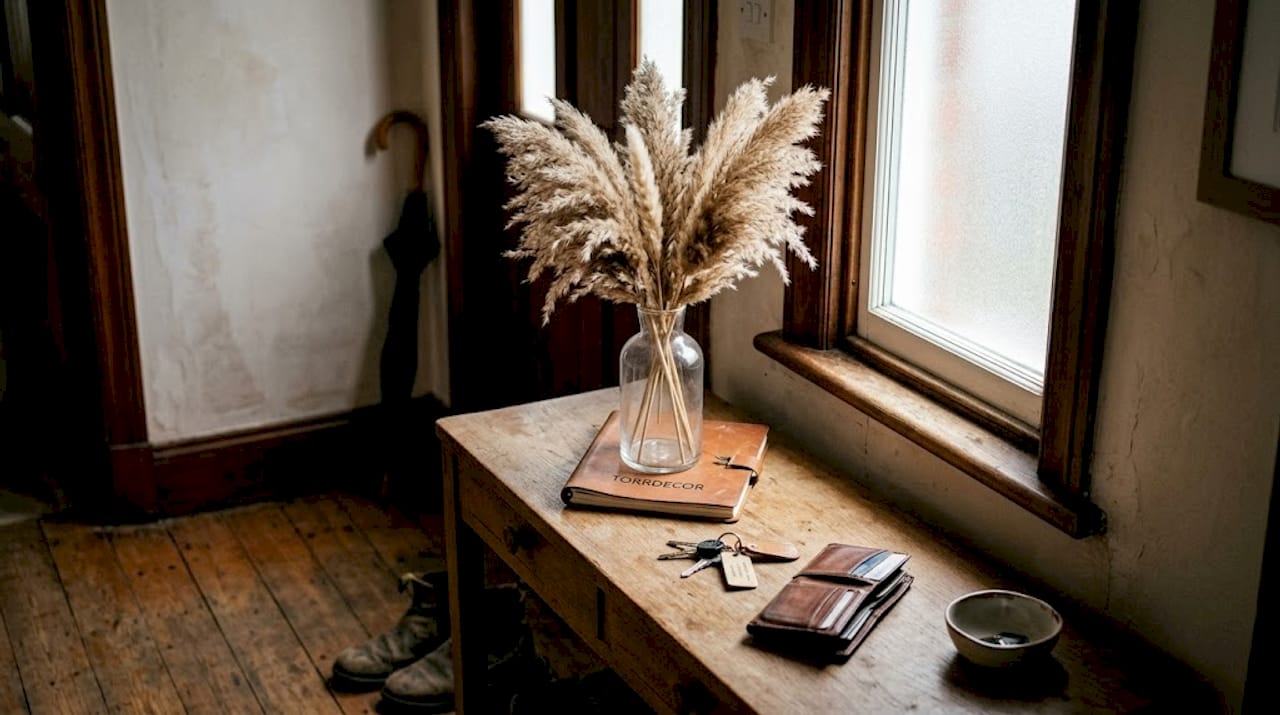
Pampas grass is one of the most sought-after durable dried plants in Sweden right now. Its fluffy appearance makes it a focal point in any room. It is also extremely robust and requires almost no maintenance.
Lavender is a natural choice for those who want a bouquet that is both beautiful and fragrant. The dried variety retains its purple color well and has a calming scent suitable for the bedroom.
Hydrangea provides volume and a soft, romantic feel. It can be a little more sensitive to moisture but looks fantastic in a vase with a wider opening.
Dried roses are timeless. They work alone or in mixed bouquets and suit almost all interior design styles. A disadvantage is that they can become fragile and lose petals if handled carelessly.
Oats and wheat are rustic, natural, and perfectly suited for the kitchen or hallway. They are robust and affordable.
Mixed bouquets combine several varieties for a more dynamic expression. They are a good choice if you want to experiment with different styles and see what works in your home. Read more about smart decoration choices to find the right combination.
The main advantages and disadvantages per type:
- Pampas grass: Durable and trendy. May shed some fibers initially, but this is normal and subsides.
- Lavender: Fragrant and beautiful. Can become a little fragile over time.
- Hydrangea: Large volume and elegant. Sensitive to moisture.
- Roses: Classic and romantic. Requires careful handling.
- Oats and wheat: Affordable and robust. Slightly simpler aesthetic.
If you want to create your own arrangements, you can learn more about how to make durable bouquets step by step.
Comparison: dried bouquets vs fresh and preserved
To help you decide if dried bouquets are the best choice for you, we compare them with common alternatives.
Comparison table: dried, fresh, and preserved bouquets
| Feature | Dried | Fresh | Preserved |
|---|---|---|---|
| Durability | 1 to 3 years | 1 to 2 weeks | 1 to 3 years |
| Cost per year | Low | High | Medium |
| Environmental impact | Low | Medium to high | Medium |
| Maintenance | Minimal | Daily | Minimal |
| Natural feel | High | Very high | Medium |
| Scent | Sometimes | Yes | Rarely |
Dried bouquets are climate-smart and last much longer than fresh ones. This makes them the most economically and environmentally sensible choice for most households.
Fresh flowers provide an immediate sense of life and freshness that dried ones cannot quite replicate. But they require daily attention, water, and a lifespan of only one to a couple of weeks. The annual cost of fresh bouquets can be significantly higher if you regularly buy new ones.
Preserved flowers, often called stabilized flowers, have been treated with glycerin or similar substances to maintain their shape and softness. They often look more similar to fresh flowers compared to dried ones, but they can be more sensitive to touch and often more expensive.
How to know what suits you:
- Choose dried if you want low cost, minimal maintenance, and a natural, rustic feel.
- Choose fresh if you prioritize the feeling of freshly picked and intense scent and don't mind replacing them regularly.
- Choose preserved if you want a softer, more lifelike appearance and are prepared to pay a bit more.
- Combine dried and preserved if you want variety without sacrificing durability.
“Dried bouquets are an excellent choice for those who want to create a stable, beautiful interior without having to worry about daily care. They combine aesthetics with practical simplicity.”
Those who want to understand more about sustainability and how durability and drying methods affect the final result can find detailed information in external guides. There is also an excellent overview of dried vs fresh for decor if you want to delve deeper into the topic.
How to decorate with dried bouquets: inspiration and style ideas
Once you've found your favorite type, the next step is to incorporate the bouquets into your home in an inspired way. It's about more than just placing a vase on a table.
Pampas, lavender, and eucalyptus are trendy elements in minimalist and bohemian homes. But there's a whole landscape of possibilities for every room.
Room by room: concrete ideas
- Living room: Place a large bunch of pampas grass in a tall, narrow vase as floor decor. This provides a dramatic focal point without taking up space on furniture. Complement with smaller bouquets on the coffee table.
- Hallway: The hallway is the first impression. A slender bouquet of wheat or eucalyptus in a tall vase by the door gives a welcoming yet discreet look.
- Bedroom: Lavender or dried roses on the nightstand provide a mild scent and a soft feeling. Keep it small and simple to avoid disturbing rest.
- Kitchen: Oats, herbs, and green sprigs in a small glass on the counter look charming and take up minimal space. Avoid placing them near the stove and sink.
- Office: Eucalyptus or a small mixed bouquet on the desk gives a creative and fresh impression. It's an easy way to personalize your workspace.
Styling and placement in practice
Height is an underestimated tool. Mix bouquets of different heights on a shelf or table for a more dynamic impression. Think in threes: three bouquets or three vases of different sizes look more thoughtful than an even number.
Colors don't always have to match exactly. Related tones, such as beige, rosé, and brown, work naturally together. Contrasts can work well if used intentionally, for example, blue lavender against a dark wooden table.
The vase plays a big role. A rustic clay pot gives a bohemian feel, while a slim glass vase suits minimalist decor. The vase and bouquet style should support each other.
For more concrete ideas, you can explore trendy interior design tips and learn more about floral decor in the home to understand how to create sustainable environments.
Pro tip: Replace individual elements in your bouquet with the season. Add sprigs with cones or berries in autumn, light eucalyptus tones in winter, and delicate grasses in summer. Reuse the base bouquets and only change the details. It's inexpensive and effective.
Why personalized dried bouquets are the interior detail of the future
There's a lot of talk about interior design trends, and dried bouquets have truly made their mark on the agenda in recent years. But we believe it's about more than a temporary trend.
Dried bouquets suit a time when many want more intentionality in their homes. Fewer things, but the right things. They force you to think about what you actually like, which colors feel right, and how you want your home to feel. This is what we call slow decoration, decorating with reflection rather than impulse.
What's also interesting is that dried bouquets provide character in a way that synthetic decorations rarely do. They change slightly over time, they carry a history and a natural origin. It's difficult to replicate that feeling with plastic or fabric.
From an economic perspective, it's also a smart choice. An investment in a bouquet that lasts one to three years costs far less per month than regularly buying fresh flowers.
We encourage you to dare to experiment. Try an unexpected combination of heights, mix varieties you haven't seen together before, and choose a vase that challenges you a bit. Decorating shouldn't be a performance but an expression. If you want to get started practically, there is good guidance for creating your own bouquets of dried flowers step by step. It's easier than you think, and the result will be unique.
Explore dried bouquets and find your favorite
Are you ready to embark on your own interior design journey with dried bouquets?
At Torrdecor, you'll find a carefully curated selection of dried bouquets, pampas grass, and decorative plants to suit all styles and budgets. Whether you're looking for a classic romantic bouquet with roses and lavender or a modern bohemian touch with pampas grass, there are options for you. Start by exploring our popular pampas grass for the home and see how easy it is to transform a room with a single element. If you want to know more about the philosophy behind our range, you can read about dried bouquets and Torrdecor. Ordering is quick, delivery is easy, and the result lasts a long time.
Frequently asked questions about dried bouquets
How long do dried bouquets last?
With proper care, dried bouquets can last between 1 and 3 years. This means avoiding direct sunlight and keeping them in dry environments. Proper care significantly extends the life of the bouquet.
What are the most popular flowers and plants in dried bouquets?
Popular choices include lavender, pampas grass, eucalyptus, roses, oats, and hydrangeas. They are often combined in mixed bouquets for a varied and personal expression.
How do you best care for dried bouquets?
Avoid direct sunlight and moisture, lightly dust the bouquets regularly, and occasionally change their position for even exposure. Correct placement is the single most important factor for a long lifespan.
What are the advantages of dried bouquets compared to fresh ones?
Dried bouquets are more durable, require no water, and are a more environmentally friendly choice. They are also climate-smart and sustainable in the long run compared to regularly buying fresh flowers.
0 comments