

TL;DR:
- Low-maintenance decoration refers to plants and decorative elements that require very little upkeep after establishment. Options include dried, artificial, and hardy living plants that retain their appearance for a long time. These solutions save time, reduce costs, and are more environmentally friendly, while providing stable and beautiful interiors.
Low-maintenance decoration is defined as decorative elements and plants that require minimal upkeep after an initial establishment phase, without losing their aesthetic quality over time. It's not about eliminating all care, but about drastically reducing ongoing effort. For those who want a beautiful home or a neat garden without spending hours watering, pruning, and replacing flowers, this is a practical and sustainable solution. Dried bouquets, hardy perennials, and ceramic decorations are all examples of what low-maintenance interiors look like in practice.
What does low-maintenance decoration mean and how does it work?
Low-maintenance decoration is a collective term for decorations and plants that thrive with very little ongoing care. In the interior design industry, the terms "easy-care decorations" or "maintenance-free decorations" are sometimes used for the same concept. The core idea is that you invest time and energy once, during selection and placement, and then enjoy the result for a long time.
Low-maintenance flowers come in three main categories: dried, artificial, and easy-care living varieties. Dried bouquets require no water at all, artificial ones are completely maintenance-free, and some living plants only need minimal upkeep after they've established themselves. This means you can combine these three categories to create an interior that always looks good, no matter how hectic your daily life is.
The concept applies not only to plants. Decorative ceramic vases, natural material sculptures, and dried pampas grass arrangements are all included. What they have in common is that they retain their appearance without regular care, making them a natural choice for modern low-maintenance interiors.
What types of low-maintenance decorations and plants are available?
There are several distinct categories of low-maintenance options, and each category suits different environments and needs.
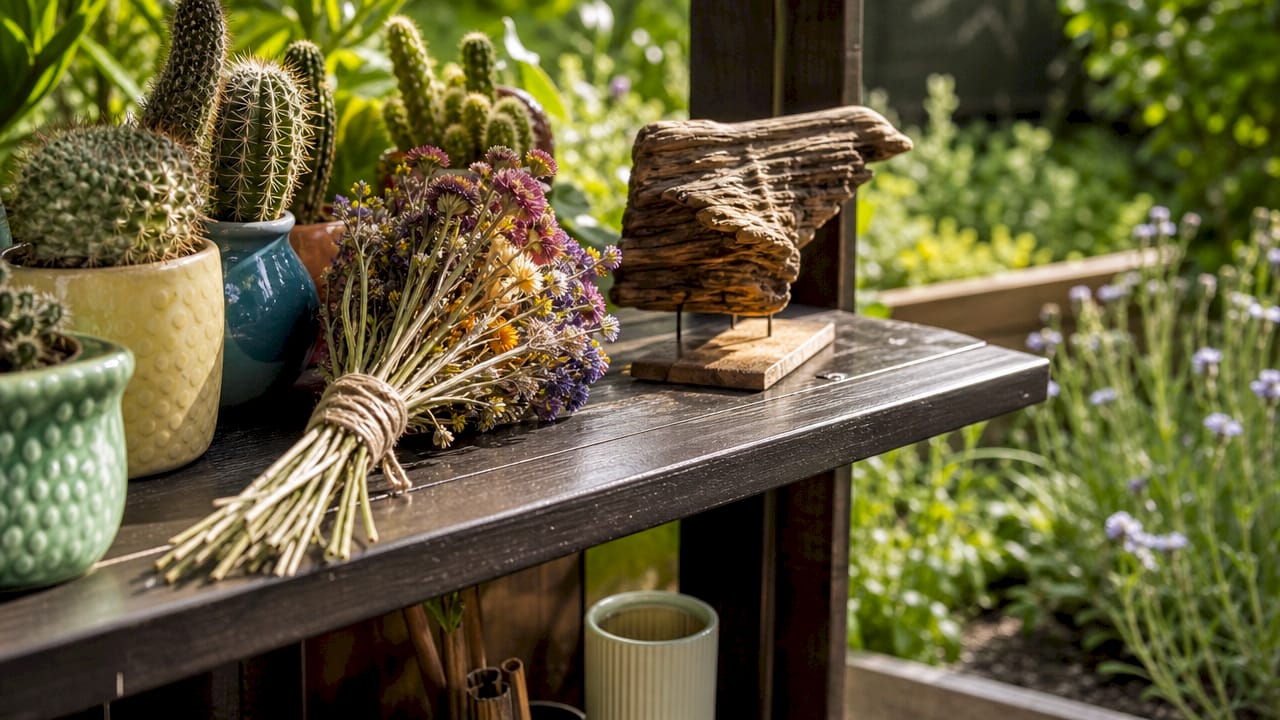
Dried plants and flowers are the most popular option for indoor decoration. Pampas grass, dried bouquets, and pressed flowers retain their shape and color for months, sometimes years, without water or nutrients. They are suitable for living rooms, bedrooms, and entrances, providing an organic, natural impression.
Artificial plants have improved significantly in quality and now look much more realistic than previous generations. They are completely maintenance-free and can withstand both dry indoor air and direct sunlight without fading, provided you choose good quality products.
Hardy living perennials such as stonecrop, Russian sage, and daylilies require minimal maintenance after establishment. They bloom and thrive with very little effort, making them an excellent choice for gardens and outdoor environments. It is normal for them to need a little extra watering during the first year, but after that, they largely take care of themselves.
Plants like creeping thyme and Siberian peashrub are extremely drought-tolerant and only require annual pruning and minimal fertilization. This makes them ideal for those who want a green garden without having to water every week.
- Dried bouquets and pampas grass: suitable indoors, no watering, long lifespan
- Artificial plants: completely maintenance-free, tolerate varied light conditions
- Stonecrop and Russian sage: hardy perennials for outdoor use
- Creeping thyme and Siberian peashrub: self-sufficient after 1 to 2 years
- Ceramic decorations and vases: only require simple cleaning
Pro tip: Combine dried bouquets indoors with hardy perennials outdoors for a cohesive aesthetic that requires minimal effort year-round.
What are the advantages of low-maintenance decoration compared to traditional options?
The benefits of low-maintenance solutions are concrete and measurable, not just theoretical.
-
Time-saving. You avoid the weekly routine of watering, fertilizing, and replacing withered flowers. For an average homeowner with living houseplants and seasonal flowers, this can amount to several hours a month.
-
Lower long-term cost. Dried decorations and hardy perennials do not require recurring purchases of soil, fertilizer, or new plants each season. The initial cost is higher, but the total expenditure over one to three years is lower than for traditional alternatives.
-
Environmental friendliness. Reduced need for water, chemical pesticides, and artificial fertilizers makes low-maintenance decorations a more climate-smart choice. Sustainable floral decor also reduces transportation emissions because you don't need to buy new flowers as often.
-
Aesthetic stability. A dried bouquet looks the same in January as in July. This provides a consistent and well-planned interior without the variations that living plants entail.
-
Practical solution for gravesites. Maintenance-free grave decoration means the administration takes responsibility for upkeep, reducing the burden on relatives. One-time costs cover upkeep for 25 years, with the possibility of extension for another 15 years. This provides security and dignity without requiring regular visits.
Compared to traditional decoration with fresh flowers and houseplants that require daily or weekly attention, the difference in effort is significant. Low-maintenance options are particularly suitable for those who travel frequently, have a hectic schedule, or simply want a beautiful interior without it requiring ongoing work.
How to choose the right low-maintenance decorations for different environments?
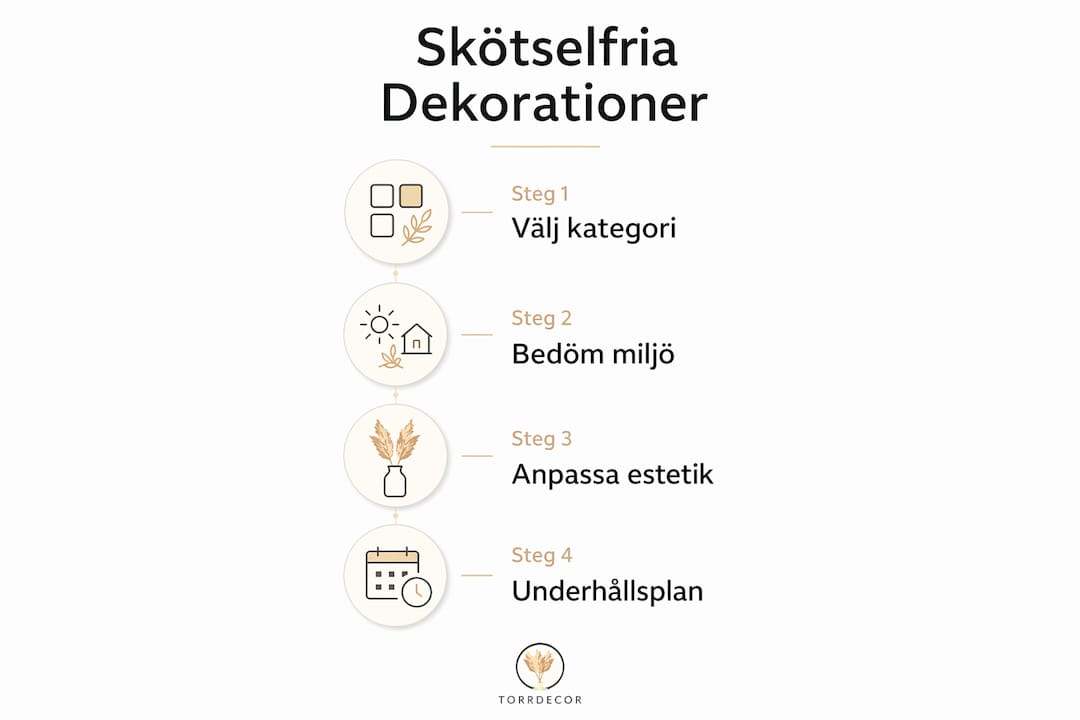
The right choice of low-maintenance decoration depends on three factors: the conditions of the location, your aesthetic preference, and how much initial establishment time you are willing to invest.
Assess the conditions of the location
Indoors, light conditions and humidity are crucial. Dried bouquets and pampas grass are suitable for most indoor environments but should not be placed in direct sunlight for long periods, as UV light can fade natural materials. Artificial plants, on the other hand, tolerate more varied light.
Outdoors, climate zone and soil type are the most important. The right plants for your climate zone significantly minimize the need for watering and pruning. A stonecrop that thrives in your region requires almost no care, while the same plant in the wrong climate may require constant attention.
Choose materials and plants based on aesthetics and function
| Environment | Recommended choice | Maintenance level |
|---|---|---|
| Indoor, living room | Dried bouquets, pampas grass | Very low |
| Indoor, bathroom | Artificial plants | None |
| Outdoor, sunny bed | Stonecrop, Russian sage | Low after establishment |
| Outdoor, hedge or boundary | Siberian peashrub | Low, annual pruning |
| Gravesite | Low-maintenance ceramic decorations | Minimal |
Common mistakes to avoid
- Choosing plants without checking climate adaptation for your region
- Placing dried natural materials in humid environments like bathrooms without good ventilation
- Expecting zero maintenance directly from day one, without giving plants time to establish themselves
- Mixing too many materials and styles, which creates a cluttered impression rather than a cohesive interior
Pro tip: Start with one or two low-maintenance decorative elements in a room and evaluate how they fit in before building further. It's easier to add than to remove.
Dried plants as interior design material provide a timeless and sustainable base to build your decor around, whether you prefer a minimalist or more nature-inspired style.
What to consider for long-term care of low-maintenance decorations?
Low-maintenance doesn't mean zero maintenance. It means the effort is small and infrequent, not that you never have to do anything.
Dried and natural decorations
Dried bouquets and pampas grass collect dust over time. A light dusting with a hairdryer on a cool setting or a soft brush is enough to keep them fresh. Avoid placing them near open fires or heat sources, as dry natural materials are flammable.
Ceramic and artificial materials
Ceramic decorations with a metallic finish should be cleaned with a dry cloth rather than damp cloths. Moisture can get trapped in textured surfaces and cause deposits. This simple tip significantly extends the lifespan of your decorations.
Artificial plants can be wiped with a damp cloth or gently rinsed under water, depending on the material. Always check the manufacturer's recommendations.
Living low-maintenance plants
- Water regularly during the first year to support establishment
- Siberian peashrub should be pruned in late winter/early spring for best density and long lifespan
- Perennials like stonecrop and daylilies need minimal pruning, but remove withered stems for a tidier appearance
- Avoid over-fertilization, as hardy plants often fare better with less nutrients than with too much
Maintenance intervals to follow
A simple routine is sufficient for most low-maintenance decorations. Dust dried elements once a month. Check ceramic decorations for cracks or stains once a quarter. Prune outdoor plants once a year, preferably in early spring. That's all it takes to keep a low-maintenance interior in good condition year after year.
Key takeaways
Low-maintenance decoration requires thoughtful initial establishment but then provides a long period of beautiful results with minimal ongoing effort.
| Point | Details |
|---|---|
| Definition of low-maintenance | Decorations and plants that require minimal upkeep after establishment, not zero care. |
| Three main categories | Dried, artificial, and easy-care living plants complement each other in sustainable interior solutions. |
| Choose right for the location | Climate zone, light conditions, and materials determine how truly low-maintenance the result will be. |
| Long-term care | Simple routines like dusting and annual pruning are enough to maintain appearance over time. |
| Economic benefit | Lower total cost over time compared to traditional decorations that require regular replacement. |
My perspective on low-maintenance decorations
There's a common misconception about low-maintenance decoration that I encounter frequently. Many believe it's about cutting corners or choosing practicality over beauty. That's not true.
What I've seen work best is a combination of dried natural materials and one or two ceramic elements with distinct character. Pampas grass in a well-chosen vase gives a room more personality than a bouquet of fresh flowers that wilts within a week. And that feeling lasts for months.
What many don't realize is that the establishment phase for living low-maintenance plants actually requires more attention than people expect. Creeping thyme and Siberian peashrub need to be watered properly during their first summer. If you skip that step, you risk the plant never reaching its full potential. Low-maintenance is a long-term commitment, not a quick fix.
I always recommend starting with dried decorations indoors if you're unsure. They are forgiving, they look good immediately, and they give you time to learn what you actually like before investing in living outdoor plants. It's an honest and practical way to get started with modern low-maintenance interior design without taking unnecessary risks.
— Torrdecor
Explore Torrdecor's range of low-maintenance decorations
Torrdecor specializes in dried plants, pampas grass, and decorative vases that provide beautiful interior solutions without ongoing maintenance. The assortment is designed for those who want durable and aesthetically pleasing decorations, whether you're furnishing a home, a store, or planning an event.
At Torrdecor, you'll find dried bouquets in a wide selection of styles and sizes, from simple and minimalist arrangements to more elaborate compositions. All products are selected with a focus on durability and long lifespan. You can also read more about how to choose decorative vases that suit your interior style. Visit Torrdecor and find your next low-maintenance decoration.
FAQ
What is the difference between low-maintenance and easy-care decoration?
Low-maintenance decoration requires almost no ongoing effort after establishment, such as dried bouquets and artificial plants. Easy-care decoration, like hardy perennials, requires a little more regular attention but is still significantly easier to manage than traditional alternatives.
How long do dried bouquets and pampas grass last?
Dried bouquets and pampas grass typically last one to three years indoors, depending on light conditions and humidity. Avoid direct sunlight and humid environments to extend their lifespan.
Can low-maintenance plants be used outdoors in Sweden?
Yes, plants like stonecrop, Russian sage, and Siberian peashrub are adapted to Swedish climate conditions and can thrive with minimal maintenance after an establishment phase of one to two years. Always choose plants that are adapted to your specific climate zone for best results.
How do you properly clean ceramic decorations?
Ceramic decorations with a metallic finish should be cleaned with a dry cloth. Moisture can get trapped in textured surfaces and cause stains or deposits, so avoid wet cloths when cleaning.
Are low-maintenance decorations a good choice for gravesites?
Low-maintenance decorations are a practical choice for gravesites. Cemetery administrations offer maintenance responsibility for long periods, and with the right decorations, the grave can look well-maintained without relatives needing to visit regularly.
0 comments