

TL;DR:
- Dried plants are sustainable, require minimal care, and fit into many interior design styles.
- Placement away from moisture and direct sunlight extends their lifespan.
- Combinations of different plants and vase models create interesting and long-lasting interior details.
Traditional cut flowers are beautiful for a few days, and then they wilt and end up in the trash. This is a common problem for anyone who wants a well-decorated home without spending time and money replacing flowers every week. Dried plants solve this simply. They last a long time, require no watering, and fit into many different interior design styles. In Sweden, interest in sustainable and easy-to-maintain interior design has increased significantly in recent years, and dried plants along with unique vase models have become a natural choice for those who want to create beautiful homes without hassle. In this article, you will get concrete tips, inspiring ideas, and a clear guide on how to choose, place, and care for your dried plants.
Table of Contents
- How to Choose Sustainable and Easy-to-Maintain Decorations
- Popular Dried Plants and Vase Models for Interior Design
- DIY: How to Dry Plants for Decorative Use
- Comparison: Dried Plants vs. Fresh Flowers for Interior Design
- Interior Design Tips: How to Integrate Dried Plants into Different Rooms of Your Home
- Our View on Decorating with Dried Plants: What the Experts Don't Say
- Explore Sustainable Choices with Torrdecor
- Common Questions about Decorating with Dried Plants
Key Insights
| Point | Details |
|---|---|
| Long lifespan | Dried plants last significantly longer than fresh flowers when placed correctly. |
| Minimal care | These plants require no watering and thrive best without direct sunlight or moisture. |
| Creative variation | Combine different plants and vase models to create personal and sustainable decor. |
How to Choose Sustainable and Easy-to-Maintain Decorations
Choosing the right decorations isn't just about what looks good in the store. It's equally about what works in your specific environment and what lasts over time. Dried plants are an excellent option for those who want beautiful decor without a lot of effort, but there are a few criteria worth keeping in mind.
Moisture resistance and color stability are two of the most important factors. Dried plants exposed to high humidity can start to mold or lose their shape. Colors fade quickly if placed in direct sunlight. Placement away from moisture and direct sunlight gives dried flowers a longer lifespan, and this advice makes a big difference in practice.
To make it easy to get started, here are the most important criteria to consider:
- Choose plants with natural, muted colors that don't fade as noticeably
- Avoid placing near windows with strong south-facing light
- Keep dried plants away from kitchens and bathrooms where steam can damage them
- Choose a stable vase model that can support the weight of the plants without tipping
- Check the material of the vase, such as stoneware, glass, or clay, to match your interior design style
The vase model plays an important role, not just aesthetically. A narrow, tall vase provides support for long stems like pampas and lagurus, while a wide pot is suitable for shorter bouquets. Clay vases, like those made in Portugal, provide a natural and timeless look that works in most homes. The material also affects the weight and stability, which is especially important if you have children or pets at home.
The room's environment affects durability more than many people realize. A warm and dry room, such as a living room or hallway, is ideal. Read more about caring for dried plants to understand exactly what is required for your plants to last as long as possible.
Pro tip: Add a layer of silica gel to the bottom of the vase if you live in a humid climate or have a house without good ventilation. This absorbs excess moisture and significantly extends the life of your dried plants.
Another thing to consider is that smart decor choices are not about buying the most or the most expensive, but about combining the right things in the right place. Start with a couple of key placements in the home and then build up gradually. This creates a more cohesive and thoughtful result than simply placing plants everywhere at once.
Popular Dried Plants and Vase Models for Interior Design
Now that you know which criteria govern a good choice, it's time to look at which plants and vases are actually the most popular. There is a wide range, but some favorites clearly stand out.
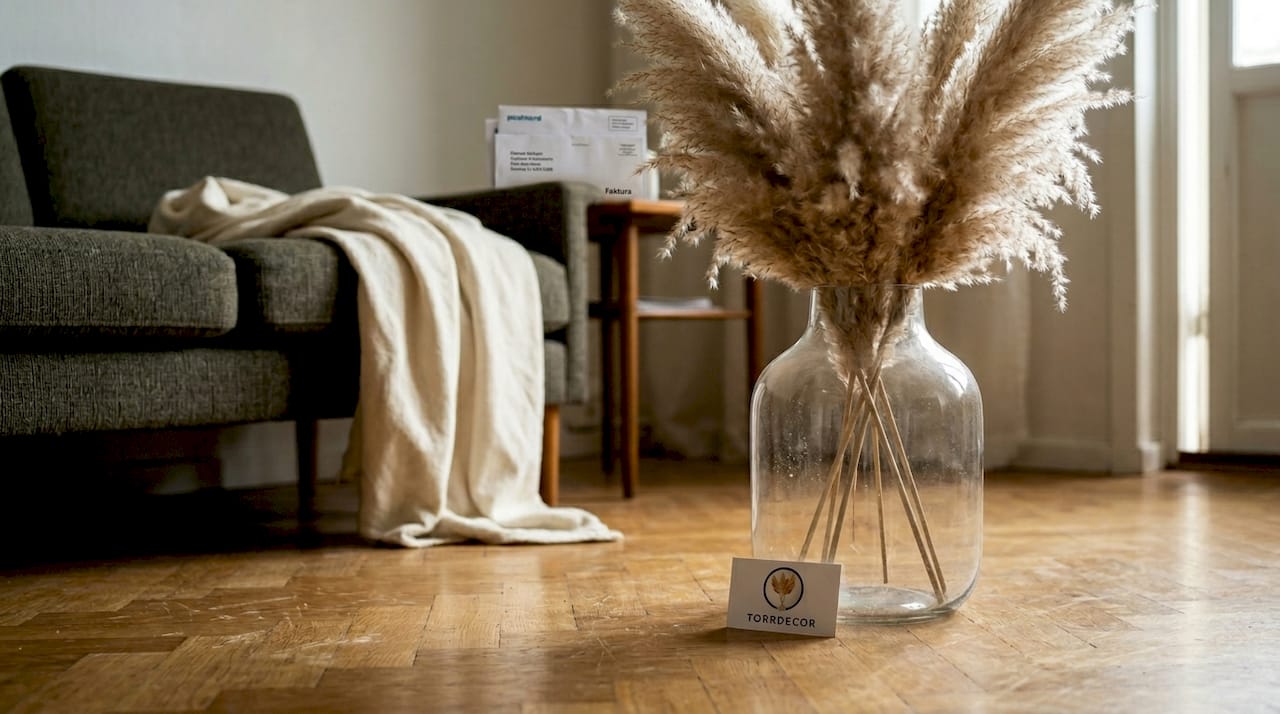
Pampas grass is probably the most iconic option. The large, fluffy plumes create a dramatic and airy impression and are suitable for both tall floor vases and slightly lower variants. They are available in natural beige and white tones, but also in pink and grey variants that fit into modern interior design styles.
Lagurus, also called hare's tail grass, is a softer and more discreet option. The round, oval plumes have an almost velvety surface and are excellent in narrow vases or as part of a bouquet with other dried plants.
Eucalyptus is a third popular choice. Although it doesn't last as long as pampas, eucalyptus provides a nice, natural scent during the first few weeks and has beautiful silver-green leaves that retain their shape well after drying.
Here is a summary of the most common choices:
- Pampas grass: Dramatic, airy, long-lasting and suitable for a tall floor vase
- Lagurus (hare's tail grass): Soft, discreet and good in narrow or medium-sized vases
- Eucalyptus: Scented and natural-looking leaves, good as a bouquet complement
- Statice: Purple or white tones, retains color for a long time and is suitable for smaller arrangements
- Roses and peony buds: Romantic and timeless, good for bedrooms and living rooms
Dried arrangements last longest when placed in dry rooms with good air circulation, away from direct heat sources and windows with intense sunlight.
Placement away from moisture and direct sunlight is central to the lifespan of dried flowers, and that applies no matter which plant you choose.
When it comes to vase models, there are three basic types to know. Narrow glass vases enhance elegance and are suitable for single stems or narrow bouquets. Stoneware pots provide weight and a rustic, earthy look that works well with pampas and dried herbs. Clay vases, especially those in white or cream-colored clay, are versatile and timeless and can be used in almost any room.
Pro tip: Combine three vases of different heights and place them in a group on the floor in the hallway or next to the sofa. Choose the same material but vary the size for a cohesive but interesting look.
Also consider textures and height differences when building an arrangement. A tall pampas grass vase next to a lower arrangement with statice and lagurus creates a dynamic and vibrant impression, even if everything is dried and still. For more decorative interior design with dried plants, there are plenty of creative ideas to draw inspiration from. You can also check out trendy tips for interior design to see what's current right now.
DIY: How to Dry Plants for Decorative Use
If you want to create a personalized and affordable interior detail, it's easy to dry your own plants at home. It requires neither special equipment nor extensive experience. With the right technique and patience, you can get a result that lasts for several years.
A practical method for drying your own plants is to pick, bundle, hang upside down in a dark and cool place, and then store them dry and dark until use. That's the basic idea, and below is the process step-by-step.
-
Pick the flowers at the right time. Choose flowers that are almost fully open but not overripe. Roses and peonies should be semi-open, while pampas and lagurus should be picked when the plumes are dense and have not started to scatter.
-
Remove excess leaves. Leaves along the stem absorb moisture and slow down the drying process. Remove leaves from the lower half of the stem, but leave the top ones for a more natural look.
-
Bundle together with an elastic band. Use rubber bands instead of string, as the stems shrink during drying and a tight string can cause them to fall apart. Bundle 5 to 10 stems per bouquet, depending on thickness.
-
Hang upside down in a cool, dark place. A dark wardrobe, a storage room, or a basement works perfectly. A dark space preserves the colors better. Let them hang for 2 to 4 weeks depending on the flower type and humidity.
-
Store dry until you want to decorate. If you're not going to use the bouquet immediately, place it in a cardboard box with tissue paper to protect the plumes and flowers from dust and physical damage.
Never hang drying plants in direct sunlight. The light fades the colors quickly and results in a washed-out look that won't last as long.
Pro tip: Try drying lavender, achillea (yarrow), and globe amaranth as three complementary plants in the same bouquet. They dry at approximately the same rate and create a harmonious color palette of purple, yellow, and white that works in almost any interior design style.
Some plants require a little extra care. Hydrangeas can become brittle and lose their flowers if subjected to bumps during drying. Peonies need to dry quickly, preferably with good air circulation, to prevent mold damage in the heart of the flower. If you live in an area with high humidity, take that into account and make sure the flowers are completely dry before putting them in a vase.
For those who want to learn more about how to dry flowers at home, there are good guides to follow, and if you want inspiration for creating sustainable bouquets, there are also step-by-step resources to help you all the way.
Comparison: Dried Plants vs. Fresh Flowers for Interior Design
To determine what suits best, we also need to take a closer look at the pros and cons of dried versus fresh. Both options have their place, but they suit different situations and lifestyles.
| Feature | Dried Plants | Fresh Flowers |
|---|---|---|
| Lifespan | Months to years | 5 to 14 days |
| Care | Minimal, no watering | Daily watering, trimming |
| Cost per month | Low | High (repurchase required) |
| Allergy risks | Low | Can be high (pollen) |
| Scent | Faint or none | Often strong and fresh |
| Environmental impact | Low | Higher (transport, water) |
| Color variation | Natural, muted tones | Wide and vibrant colors |
| Placement | Dry rooms, no direct sun | Bright but not direct sun |
Place dried bouquets away from moisture and direct sunlight for best durability, while fresh flowers require water and more frequent care. This is a clear difference that is noticeable in everyday life.
The clearest advantages of dried plants:
- Time-saving: No daily watering or leaf removal
- Economical: An investment that lasts at least a year instead of a week
- Allergy-friendly: No active pollen to trigger reactions in sensitive individuals
- Climate-smart: Less transport and water usage compared to cultivated cut flowers
- Flexible: Can be easily moved and rearranged without damage
Fresh flowers still have their place. A bouquet of peonies or tulips on the table for dinner creates a lively and fragrant atmosphere that dried plants cannot fully replace. But for everyday decor and ongoing decoration, dried plants are a distinctly more practical and sustainable option.
Cost is another argument. A bouquet of dried plants can cost about the same as a nice fresh bouquet, but the fresh bouquet lasts barely two weeks. Over a year, this means a big difference in total cost. For those who want to compare the options carefully, there is more information about dried vs. fresh flowers and what actually suits different needs and lifestyles best.
Interior Design Tips: How to Integrate Dried Plants into Different Rooms of Your Home
With an understanding of the comparison, the question remains: how can dried plants and vases be integrated neatly and practically into a real home? The answer varies from room to room, but the basic principle is the same: the right plant, the right vase, and the right place.
Dried arrangements should avoid full sunlight to minimize rapid fading and be placed in dry conditions for long-lasting durability. This is a fundamental rule that governs everything else.
Here are concrete tips for different rooms in your home:
- Hallway: Place a large pampas grass vase on the floor or on a sideboard for a welcoming impression right at the entrance. It requires no maintenance and stays fresh all season.
- Living room: Combine three vases of different heights on a table or shelf. A tall one with pampas, a medium one with lagurus, and a small one with statice provides depth and variation.
- Bedroom: Choose discreet and calming plants like lavender or dried roses in a small vase on the nightstand. Avoid overly large arrangements that might feel overwhelming in a bedroom.
- Home office: A simple bouquet of eucalyptus or a small clay pot with dried herbs on the desk adds a natural and calming element without taking up too much space.
- Kitchen and bathroom: Generally avoid these rooms, but if you still want plants there, choose synthetic alternatives or replace them regularly.
| Room | Recommended Plant | Vase Model | Placement in Room |
|---|---|---|---|
| Hallway | Pampas Grass | Tall floor vase | Floor against the wall |
| Living Room | Lagurus, Statice | Medium clay pot | Shelf or coffee table |
| Bedroom | Lavender, Roses | Small glass vase | Nightstand |
| Home Office | Eucalyptus, Herbs | Small clay pot | Desk |
| Dining Room | Peonies, Yarrow | Medium vase | Dining table |
Pro tip: Don't be afraid of empty spaces. A single, large pampas grass in a stylish vase often makes more of an impact than many small arrangements scattered throughout the room. Simplicity is often more powerful than a cluttered and busy impression.
Feel free to combine different textures to create a more interesting overall impression. A coarse stoneware pot next to a fluffy pampas grass creates a tension between soft and hard that is appealing to the eye. Read more about trendy interior design tips and see how caring for dried flowers can be made even easier with just a few routines.
Our View on Decorating with Dried Plants: What the Experts Don't Say
There's a lot of talk about dried plants as a trend. And sure, they're everywhere on social media and in interior design magazines. But we want to be clear about something that isn't always highlighted: dried plants are not a fad. They are a return to a traditional way of decorating that actually works better for most modern households.
What we see with our customers is that the challenge is rarely about finding the right plant. It's about daring to combine and place them correctly. Many choose beautiful plants but place them in the wrong room, against the wrong light source, or in a vase shape that doesn't suit the nature of the stems. The result is that the plants wither too soon or look clumsy, and then people conclude that dried plants aren't for them.
That's not true. The problem is almost always placement and combination, not the plant itself.
Another greatly underestimated aspect is how much a small, simple arrangement can affect the feeling of a room. It doesn't have to be a big investment. Three stems of lagurus in a small clay pot on a desk can change the entire atmosphere of a study. It's about details, not volume.
Color restraint is also important. We recommend sticking to natural, earthy tones and avoiding heavily dyed dried plants. The artificially colored varieties may look appealing in the store but rarely harmonize with other decor in the long run. Natural tones age beautifully and always fit in.
If you want to succeed with dried flowers in the long term, it's simple: choose the right place, keep it simple, and invest in good quality vases.
Explore Sustainable Choices with Torrdecor
If this guide has piqued your curiosity and you want to see concrete products that fit your decor, Torrdecor has just what you need. Our assortment is carefully selected with a focus on long-lasting sustainability, minimal care, and beautiful design suitable for Swedish homes.

We offer everything from classic pampas grass for interior design in natural beige tones to handmade clay vases made in Portugal. Whether you want to decorate a hallway, a living room, or an office, you'll find combinations that work immediately without fuss. Browse the assortment, get inspiration, and find your favorite combination of dried plants and unique vase models. We help you create a home that looks good, lasts a long time, and requires minimal maintenance.
Common Questions About Decorating with Dried Plants
How long do dried plants last in home decor?
With proper placement and environment, dried plants can last from several months to several years. Placing them away from moisture and direct sunlight significantly extends their lifespan and helps them retain their shape and color for a long time.
Can I dry my own flowers at home and use them in a vase?
Yes, it's entirely possible and a great way to get personal and affordable decorations. Pick, bundle, and hang flowers upside down in a dark and cool place for 2 to 4 weeks for the best results before placing them in a vase.
Which rooms are best for dried plants?
Place dried plants in dry and bright rooms such as hallways, living rooms, and bedrooms. Avoid moisture and direct sunlight, as well as rooms with high humidity like bathrooms and kitchens, to preserve their durability.
Do dried plants require any special care?
They don't need watering and are easy to care for daily. Keep them away from direct sunlight and moisture, and they will stay beautiful without any further effort.
0 comments