

In short:
- Durable bouquets of dried plants such as pampas grass, lavender, and hydrangea have a long lifespan and low environmental impact. They suit all styles, from bohemian to minimalist, and require minimal care. Proper placement and drying methods extend their life and preserve their aesthetics and scent.
Durable bouquets are floral arrangements based on dried or locally sourced plants like pampas grass, lavender, and hydrangeas, combining longevity with a low environmental impact. Unlike cut flowers, dried flowers require neither water nor regular replacement. They last 1–3 years with proper care, making them a practical choice for homes, offices, and events. This guide provides concrete examples of durable bouquets in various styles, explains which materials are suitable for different settings, and demonstrates how to care for them properly.
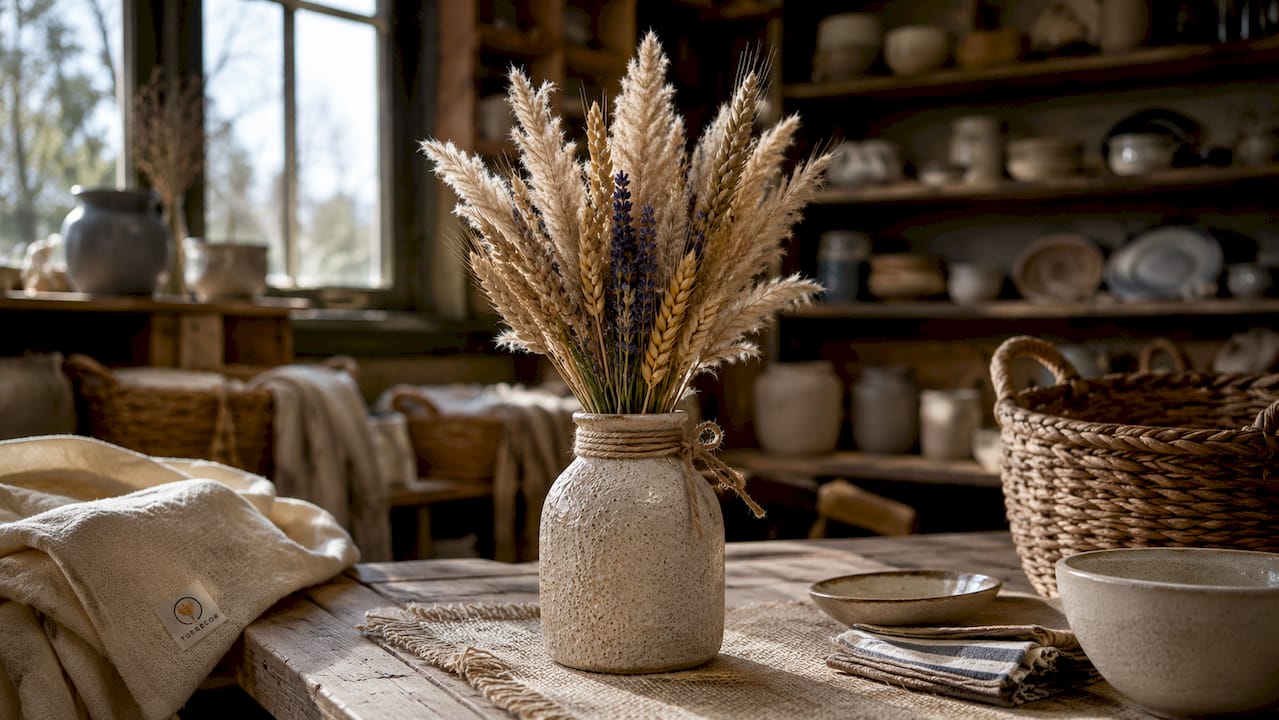
1. Examples of durable bouquets by style
Durable bouquets are naturally divided into four main styles: bohemian, romantic, rustic, and minimalist. Each style is defined by specific material choices and conveys a distinct aesthetic expression. Understanding these differences makes it easier to select the right bouquet for the right room or occasion.
Bohemian style relies on pampas grass, dried sunflowers, and long stems with natural movement. Pampas grass is sought after for its durability and minimal maintenance, making it an obvious choice for bohemian arrangements. A large vase with beige pampas grass and a few dried eucalyptus sprigs is enough to set the style in a living room.
Romantic style uses lavender, roses, and hydrangeas. Lavender is fragrant and romantic, while hydrangeas add volume but are sensitive to moisture. Combine dried pink or white roses with lavender bouquets in a narrow vase for a classic bedroom arrangement.
Rustic style is characterized by oats, wheat, and dried herbs. Oats and wheat create a rustic feel and work well in kitchens or hallways. A simple bundle of wheat tied with a linen ribbon is one of the most timeless examples of eco-friendly bouquets.
Minimalist style prioritizes a few elements with clear forms. A single pampas grass stem or three dried protea flowers in a narrow vase provides a clean and modern expression without taking up too much space.
2. Which flowers and plants are used in durable arrangements?
The most common materials in durable floral arrangements are pampas grass, lavender, hydrangeas, roses, oats, and wheat. Each variety has its own strengths and limitations.
- Pampas grass: Durable, voluminous, and trendy. Maintains its shape for several years without care.
- Lavender: Fragrant and romantic. Dries quickly and retains its purple color well.
- Hydrangea: Provides significant volume but is sensitive to moisture. Best suited for dry rooms.
- Roses: Classic and beautiful but require careful handling during drying to retain their shape.
- Oats and wheat: Robust and rustic. Withstands handling well and is suitable for kitchens and hallways.
- Eucalyptus: Adds greenery and fragrance. Dries while maintaining shape and color.
Dried flowers are an eco-friendly alternative because they avoid the high energy consumption and chemical use often required for cut flowers. The transport and greenhouse cultivation of cut flowers generate significant carbon dioxide emissions, making dried plants a clearly better choice from a climate perspective.
Pro tip: Choose flowers with low moisture content in their petals, such as lavender and oats, if you want to dry them yourself. They hold their shape best and reduce the risk of mold.
3. How to create durable bouquets in four different styles?
Arranging a bouquet is about balancing form, color, and texture. Here are four concrete examples with material lists and suggested uses.
1. Bohemian bouquet for the living room Combine three to five stems of beige pampas grass with dried sunflowers and eucalyptus sprigs. Place in a tall clay or ceramic vase. This bouquet suits corners with natural light and gives the room a relaxed and airy feel.
2. Romantic bouquet for the bedroom Mix dried pink and white roses with lavender bouquets and a few hydrangea heads. Keep the bouquet compact and round. Place in a low, wide vase near the headboard. The scent of lavender contributes to a calm atmosphere.
3. Rustic bouquet for the kitchen Tie a bunch of wheat or oats with a linen ribbon and place it in a simple clay pot. Add some dried herbs like thyme or rosemary for fragrance. This is one of the most practical examples of natural bouquets that also serve a function in the kitchen.
4. Minimalist bouquet for the office Choose a single large pampas grass stem or three dried protea flowers. Place in a narrow, tall vase in a neutral color. The arrangement takes up little space and requires no maintenance, making it ideal for office environments.
Pro tip: Think of the bouquet as a whole rather than individual flowers. Vary height and texture to give the arrangement depth and movement.
4. How to dry and preserve flowers in the best way?
The correct drying method determines how long a bouquet lasts and how well it retains its color. The two most common methods are air drying and silica gel.
| Method | Time | Color preservation | Difficulty |
|---|---|---|---|
| Air drying | 2–4 weeks | Medium | Easy |
| Silica gel | 3–7 days | High | Medium |
Air drying takes about 2–4 weeks and requires a dark, dry, and ventilated space. It is the simplest method but does not always yield the best color results. Silica gel is faster and preserves color better, but requires placing the flowers in a sealed container with gel crystals.
Here's how to care for your dried bouquets for the longest possible lifespan:
- Place the bouquet out of direct sunlight to prevent fading.
- Avoid rooms with high humidity, such as bathrooms.
- Dust gently with a soft brush or hairdryer on a low cool setting.
- Lightly spray the bouquet with hairspray to reduce fragmentation and extend its life.
Dried bouquets can last 1–3 years with proper placement and care. This is a direct consequence of them no longer containing moisture that can cause decay.
5. How to choose the right bouquet for different rooms and occasions?
Material selection and bouquet size should be adapted to the room's light, humidity, and function. Different rooms place different demands on durable flowers.
- Living room: Large, voluminous bouquets with pampas grass or hydrangeas. Spacious rooms can accommodate more elements and stronger forms.
- Bedroom: Romantic bouquets with lavender and roses. The scent of lavender is a bonus in sleeping environments.
- Kitchen: Rustic bundles with wheat, oats, or herbs. Choose materials that can withstand a bit more handling.
- Office: Minimalist arrangements with few elements. Small space, no maintenance, and neutral aesthetics.
- Bathroom: Robust dried plants like eucalyptus. Avoid hydrangeas and roses in humid environments.
Durable bouquets also work excellently as gifts and for events. Durable bouquets for events reduce costs and environmental impact compared to fresh cut flowers. A dried bouquet as a gift lasts a long time and reminds the recipient of the occasion for months, not days.
Pro tip: Choose seasonal materials when creating bouquets as gifts. Wheat and oats are perfect for autumn, lavender for summer, and pampas grass year-round.
Key Insights
Durable bouquets made from dried plants such as pampas grass, lavender, and hydrangea offer longevity, low environmental impact, and minimal maintenance for both homes and businesses.
| Point | Details |
|---|---|
| Choose the right style | Bohemian, romantic, rustic, and minimalist styles require different materials and suit different rooms. |
| Drying determines lifespan | Silica gel preserves color best; air drying takes 2–4 weeks but is easiest to do at home. |
| Placement is crucial | Avoid direct sunlight and high humidity to keep the bouquet fresh for 1–3 years. |
| Adapt to the room | Humid rooms require robust plants; bedrooms and living rooms can handle more delicate varieties. |
| Sustainability as a gift | Dried bouquets last months longer than cut flowers and reduce carbon dioxide emissions. |
My thoughts on durable bouquets and what truly works
I've been working with sustainable interior design for a long time, and one thing always strikes me: most people underestimate how much placement matters. It doesn't matter how beautiful a bouquet is if it's in direct sunlight or a humid bathroom. It will fade or deteriorate within weeks.
What I also notice is that many people choose too many elements for their bouquets. Three to five carefully selected varieties always yield a better result than ten mediocre ones. A single large pampas grass stem in the right vase trumps an overcrowded mixed bouquet every time.
Another rarely mentioned point: the combination of texture is more important than color. Soft pampas grass against hard dried protea flowers creates visual interest that a monochrome bouquet can never achieve. It's that kind of detail that distinguishes a thoughtfully designed bouquet from a generic one.
Finally, choose materials that suit your lifestyle. If you live in a humid climate or have a home with a lot of sunlight, opt for robust varieties like pampas grass and eucalyptus. Save the more delicate roses for protected environments. It's not complicated, but it requires some thought.
— a4
Torrdecor's selection for durable bouquets
Torrdecor offers a wide range of dried plants and vases to suit all styles and rooms. The most popular choice is pampas grass 110 cm in beige, a durable and trendy material that works in everything from bohemian to minimalist arrangements. For those who want a more natural and wild feel, Pampas grass ‘VILDA’ is an excellent alternative. Complementing it with a cream-colored vase from Torrdecor's Portuguese collection gives the bouquet the right support and a cohesive look. All products are selected for long durability and minimal maintenance.
Frequently Asked Questions
How long does a durable bouquet last?
Dried bouquets last 1–3 years with proper care. Avoid direct sunlight and high humidity for the best results.
Which flowers are best suited for durable bouquets?
Pampas grass, lavender, oats, wheat, and hydrangea are the most common choices. They combine durability with distinct aesthetic expressions in various styles.
How do you dry flowers at home?
Air drying is the easiest method and takes 2–4 weeks in a dark, dry, and ventilated space. Silica gel is faster and provides better color preservation.
Are dried bouquets eco-friendly?
Yes. Dried flowers avoid the energy consumption and chemical use that cut flowers require for transport and greenhouse cultivation.
Can durable bouquets be used in offices and events?
Absolutely. Dried bouquets require no maintenance and last a long time, making them cost-effective and eco-friendly for both office environments and events.
Recommendation
- Create thematic bouquets: Styles, tips, and sustainable ideas – Torrdecor
- Bouquets: Inspiration, trends, and selection for sustainable interior design – Torrdecor
- How to use bouquets for beautiful and sustainable events – Torrdecor
- What's included in dried bouquets? Materials, tips, and styling – Torrdecor
0 comments