

In short:
- Dried flowers are a sustainable and low-maintenance material for retail environments, adding a natural character. Correct selection of flowers, drying techniques, and strategic placement extend their lifespan and visual impact. Careful planning is required to avoid mold, fading, and fragmentation, and to create inviting and sustainable interiors.
Dried flowers are a decorative material that requires minimal maintenance and provides retail environments with a natural, timeless character. Creating a retail environment with dried flowers is one of the most sustainable interior design solutions you can choose, as the material lasts for months or years without water or care. Torrdecor, IKEA, and a growing number of interior designers confirm that dried plants are now a standard choice for stores that want to combine aesthetics with low operating costs. This guide provides concrete steps for material selection, drying techniques, placement, and maintenance in a professional retail setting.
Creating a Retail Environment with Dried Flowers: Choose the Right Material
The right flower choice determines how long and how well your store decoration lasts. Choose flowers with low moisture content and sturdy petals for the best drying results and durability in a retail environment. This means that flowers with thick, dense petals dry better than delicate varieties with high water content.
The following flower types and plants are proven choices for retail interiors:
- Pampas grass provides volume and softness. It holds its shape for a long time and fits into everything from minimalist to bohemian store concepts.
- Lavender adds fragrance and a purple hue. It is more delicate and requires protective spray after drying.
- Statice retains its color well and is one of the most durable options for longer arrangements.
- Roses dry with their shape preserved but lose color intensity. They are best suited for neutral or pastel-colored arrangements.
- Eucalyptus provides green structure and a subtle scent. The leaves hold their shape well and are easily combined with other materials.
- Gypsophila (baby's breath) creates airiness and is used as filler material in larger arrangements.
| Flower Type | Durability | Aesthetic Expression | Requires Protective Spray |
|---|---|---|---|
| Pampas Grass | Very High | Volume and Texture | No |
| Statice | High | Colorful and Compact | No |
| Lavender | Medium | Fragrant and Delicate | Yes |
| Roses | Medium | Classic and Romantic | Recommended |
| Eucalyptus | High | Green and Structured | No |
| Gypsophila | Medium | Airy and Light | Yes |
Feel free to combine pampas grass with eucalyptus and statice for an arrangement that provides both volume, color, and structure. It's a combination that works in most retail styles and requires minimal maintenance.
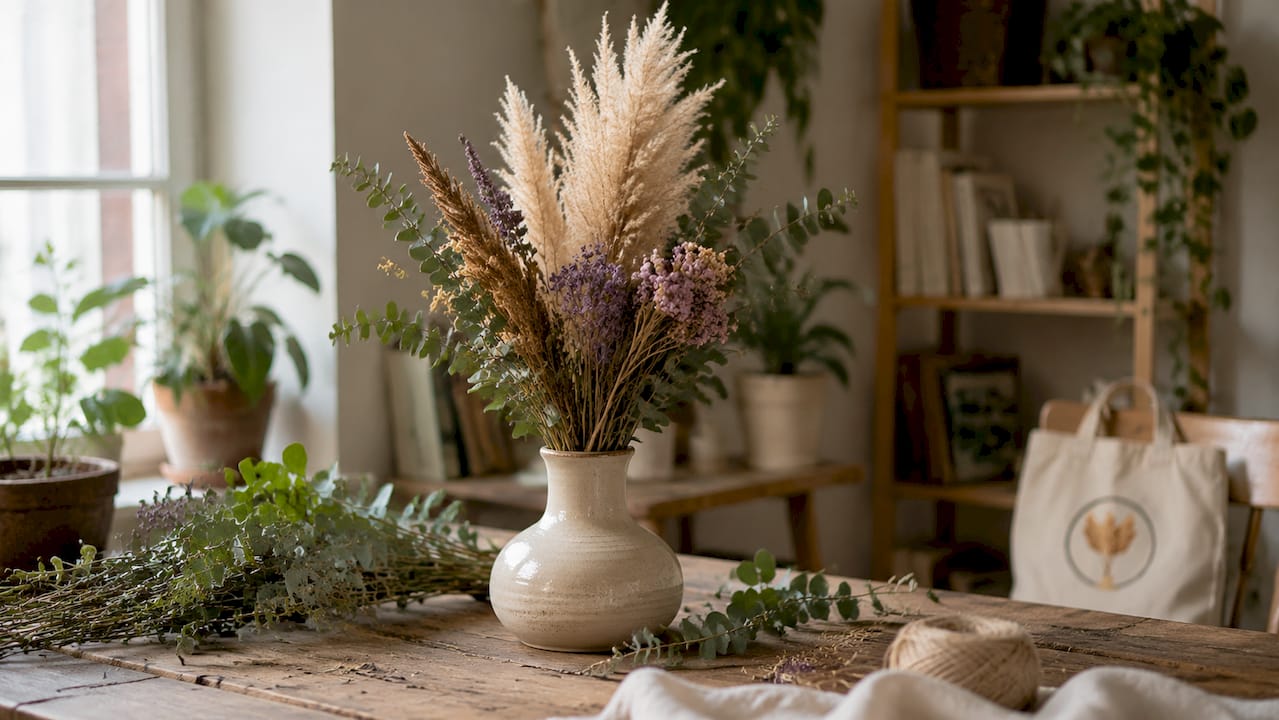
What techniques are used to dry flowers for store decoration?
The drying method directly affects the quality of the final result. Air drying takes 2–4 weeks in a dark, dry, and ventilated space. It is the most common method and requires no special tools.
Silica gel is an alternative that preserves color better but is more labor-intensive. This method takes 1–2 weeks and is best suited for individual flowers with high water content, such as roses and peonies.
Here's how to air dry correctly:
- Gather flowers in loose bunches. Tight bunches hinder air circulation and increase the risk of mold.
- Hang the bunches upside down. This keeps the stems straight and the petals in the correct position during drying.
- Choose the right space. A dark, dry, and well-ventilated pantry or storage room is ideal. Avoid kitchens and bathrooms.
- Check after one week. Feel the stems. They should feel dry and firm, not soft or damp.
- Spray with hairspray when the flowers are completely dry. This reduces fragmentation and extends their lifespan, especially for lavender and statice.
Pro Tip: Never dry more flowers than the space allows with good air circulation. Tight bunches in a small space lead to uneven drying and can ruin the entire batch.
Mold occurs with high humidity and poor air circulation. It is one of the most common mistakes when drying, and the result is irreversible. Plan drying in smaller batches to avoid this problem.
How do you arrange dried flowers in the store for maximum effect?
Placement and arrangement determine whether the decoration enhances the store's profile or merely takes up space. Dried flowers fit in vases, bowls, and still lifes and create variation from small discrete details to large expressive installations. IKEA emphasizes that balance combined with different material surfaces is key to a successful result.
Strategic placements that work in retail environments:
- The entrance. A large pampas grass arrangement in a neutral vase creates an immediate impression and sets the tone for the entire store.
- The checkout. Smaller bouquets or individual stems in narrow vases create a personal and thoughtful impression at the time of purchase.
- Shelves and displays. Dried flowers as decorative details between products break up the monotony and create depth in the shelf display.
- The window. Arrangements in the window are visible from outside and attract customers. Avoid direct sunlight which fades the material.
- Fitting rooms or lounge areas. Dried plants in these areas create a calm and welcoming atmosphere.
Direct sunlight fades colors and makes the material brittle. High humidity significantly shortens its lifespan. Always place arrangements in indirect light and keep them away from humid surfaces such as near coffee machines or sinks.
Pro Tip: Combine dried flowers with vases made of neutral materials such as ceramics, clay, or concrete. The contrast between the organic material and a smooth vase surface enhances the visual impact without appearing cluttered.
Dried flowers and plants can be combined with various furniture and interior surfaces throughout the store. Arrangements in vases and still lifes create scent, color, and structure with low maintenance requirements. This makes them a practical choice for stores with limited time for interior maintenance.
How do you integrate dried flowers into different retail concepts and events?
Dried flowers suit almost all retail styles, but the expression varies depending on the choice of material and arrangement. A sustainable interior with dried flowers can be adapted to the store's profile without needing to replace the entire decoration every season.
Here are concrete examples of how different retail concepts can use dried plants:
- Fashion store. Pampas grass in tall vases at fitting rooms and the entrance gives a modern and minimalist look. Choose neutral tones like beige, white, and gray.
- Flower shop or garden center. Mix dried and fresh flowers to showcase the breadth of the assortment. Dried arrangements serve as permanent displays.
- Café or restaurant with a retail section. Lavender and eucalyptus in smaller vases on tables and counters create a relaxed and welcoming atmosphere.
- Event planning. Dried flowers are a cost-effective alternative to fresh flowers for events. They can be prepared in advance and reused.
- Wellness or beauty salon. Soft, pastel-colored arrangements with roses and gypsophila enhance the feeling of care and quality.
Pro Tip: Replace individual parts of an arrangement each season instead of changing the entire decoration. Add autumn-colored branches in October or white pampas grass for winter. This provides a fresh impression without significant cost.
Dried flowers strengthen the brand profile when chosen with care. A store that consistently uses natural materials in its interior communicates sustainability and quality to its customers. It's a message that lingers long after the customer has left the store. You can find more trendy interior design ideas to adapt the expression to your specific store profile.
Common Challenges and Solutions in Retail Interior Design with Dried Plants
The most common problems with dried flowers in retail environments are mold during drying, fading due to incorrect placement, and fragmentation of more delicate materials. All three problems can be prevented with proper planning.
-
Mold during drying. The cause is always excessive humidity or overly tight bunches. The solution is to dry in smaller batches with good spacing between bunches. Check the area with a hygrometer and keep humidity below 60 percent.
-
Fading colors. Direct sunlight is the most common cause. Move arrangements away from windows with direct sun and use UV-protective window film if the store layout does not allow for repositioning.
-
Fragmentation and dust. Delicate materials like lavender and statice lose petals over time. Spray with hairspray after drying to reduce fragmentation and increase durability. It's a simple and economical way to protect the material.
-
Uneven drying in tight bunches. Plan drying in smaller batches with good air circulation. Tight bunches and humid spaces yield poor and irreversible results.
-
Dust accumulation on arrangements. Dust collects on dried flowers faster than on living plants. Use a soft brush or a hairdryer on a low, cool setting to gently remove dust without damaging the material.
"Patience and the right environment are crucial for achieving the best drying results, more so than the technique used. A flower hung in a dark, well-ventilated pantry dries better than in a trendy open room with poor air circulation." Torrdecor
It is normal for dried flowers to change slightly over time. Colors gradually fade, and materials may become a bit more brittle. This is part of the material's natural character and not a sign that the decoration is poor. Plan to refresh parts of the arrangements approximately once a year to keep the store looking fresh. Read more about sustainable indoor decoration with dried plants for more concrete advice.
Key Insights
Creating an attractive retail environment with dried flowers requires the right material selection, correct drying methods, and thoughtful placement to ensure long-lasting and professional results.
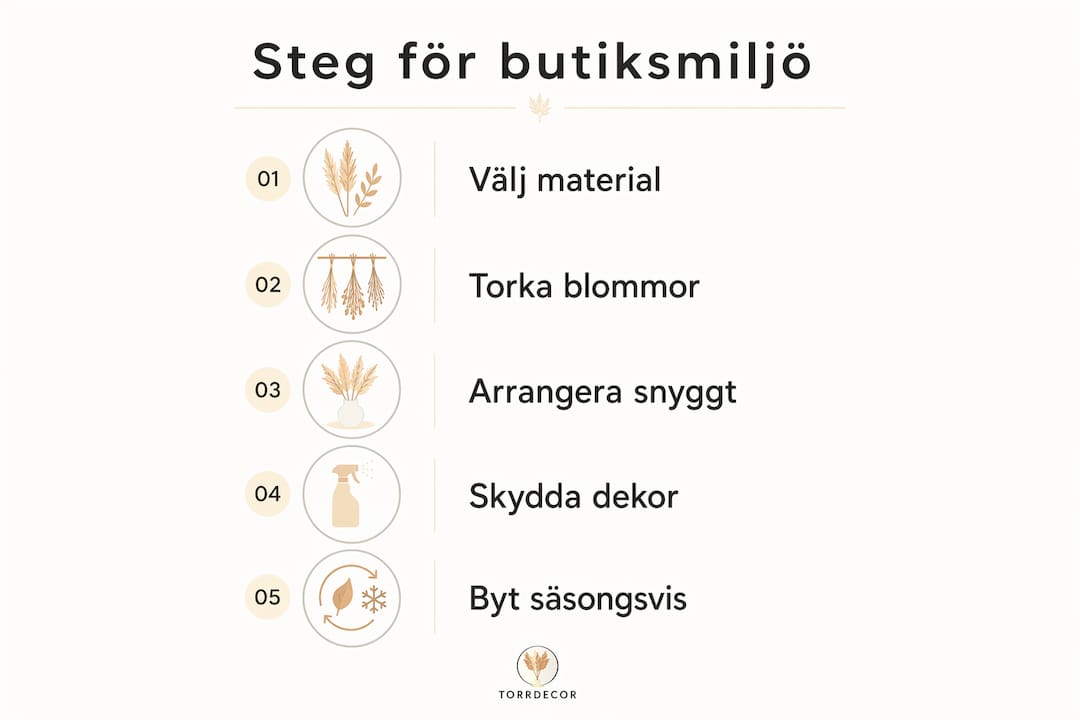
| Point | Details |
|---|---|
| Choose the right flower type | Pampas grass, statice, and eucalyptus offer the best durability and aesthetics in a retail environment. |
| Dry in the right environment | Dark, dry, and well-ventilated space in loose bunches ensures even and mold-free results. |
| Place strategically | Avoid direct sunlight and high humidity to extend the lifespan of arrangements. |
| Protect delicate material | Spray lavender and statice with hairspray after drying to reduce fragmentation. |
| Adapt to store profile | Replace parts of arrangements seasonally for a fresh look without significant cost. |
What I've Learned from Working with Dried Flowers in Retail Environments
Having worked with interior design for stores and events for many years, my clearest experience is this: most mistakes with dried flowers don't happen in the store, but in the drying space. Store owners spend time and money on beautiful vases and thoughtful displays, but rush through the drying process. The result is arrangements that look good for a week and then start to fall apart.
What I've also seen is that stores underestimate how much placement matters. I've visited stores where expensive pampas grass arrangements stood in a sunny window and were bleached in three months. The same material in indirect light would have lasted two years. It's not the material that's the problem, it's the placement.
Another thing rarely mentioned: dried flowers communicate something about the store. A store that chooses natural, sustainable materials in its interior signals care and long-term vision. Customers perceive this, even if they don't articulate it. It's one of the simplest ways to strengthen a brand's feel without changing a single product assortment.
My advice to you, if you plan to use dried plants in store interiors: start with one or two well-placed arrangements instead of decorating the entire store at once. Learn how the material behaves in your store's specific light conditions and humidity. Then expand gradually. This leads to a more thoughtful result, and you won't have to replace everything at once.
— Torrdecor
Torrdecor's Assortment for Professional Retail Interior Design
Torrdecor offers a wide range of dried plants and vases designed for professional retail interior design and events. Pampas grass 110 cm is one of the most popular choices for stores that want to create volume and softness in the entrance or at displays. For stores seeking a more dramatic expression, Pampas grass 'VILDA' 110 cm offers a wilder and more textured character. Torrdecor also provides B2B solutions for stores and salons, with products that require minimal maintenance and last a long time. Visit Torrdecor to view the full assortment and find the right materials for your retail environment.
Frequently Asked Questions
How long do dried flowers last in a retail environment?
Dried flowers last for 1–3 years if placed in indirect light and in a low-humidity environment. Direct sunlight and high humidity significantly shorten their lifespan.
Which dried flowers are best suited for retail environments?
Pampas grass, statice, and eucalyptus are the most durable choices for store interiors. They require no maintenance after drying and retain their shape for a long time.
How can mold be avoided when drying flowers?
Dry the flowers in loose bunches in a dark, dry, and well-ventilated space. Tight bunches and high humidity are the most common causes of mold during drying.
Can dried flowers be used for events and temporary installations?
Yes, dried flowers are an excellent choice for events because they can be prepared in advance and reused. They require no water and maintain their shape throughout the event.
How do you protect dried flowers from falling apart?
Spray delicate varieties like lavender and statice with hairspray immediately after drying. This reduces fragmentation and extends the lifespan of the arrangements.
0 comments