

In short:
- Binding a dried bouquet requires the right materials and technique for it to last for several years.
- Rubber bands are the best binding material because they shrink as the stems dry, providing stability.
- To create an even and durable bouquet, prepare and work methodically following a clear step-by-step guide.
Binding a dried bouquet is the process of assembling dried flowers and plants into a decorative arrangement for lasting interior decor. Unlike fresh bouquets, dried arrangements last for months or years with minimal care. This makes them one of the most practical decor choices for modern homes. The right materials, such as rubber bands, raffia, and sharp scissors, are crucial for a durable and aesthetic result. This guide will show you exactly how to bind a dried bouquet from scratch, select the right plants, and care for the bouquet to preserve its beauty for a long time.
What materials do you need to bind a dried bouquet?
The right materials determine whether your bouquet lasts a year or falls apart in three weeks. At least three types of dried flowers or plants yield the best aesthetic and durable results. Variation in texture, height, and color creates depth in the arrangement.
Dried plants that work well
Choose materials with low moisture content and robust petals. These types are tried and tested and readily available:
- Pampas grass adds volume and softness. Torrdecor's pampas grass 110 cm is a popular choice for large arrangements.
- Lavender adds fragrance and a purple hue. The stems are thin but strong.
- Statice retains its purple or white color for a long time and is easy to handle.
- Eucalyptus provides green tones and a natural shape.
- Wheat and rye create texture and a rustic feel.
Tools and binding materials
| Material or tool | Function |
|---|---|
| Sharp scissors or floral knife | Cuts stems cleanly without crushing them |
| Rubber bands | Keeps the bundle together as stems shrink |
| Raffia or hemp | Neat natural finish that hides the rubber band |
| Floral tape | Secures individual stems as needed |
| Ruler or measuring tape | Checks for even stem height |
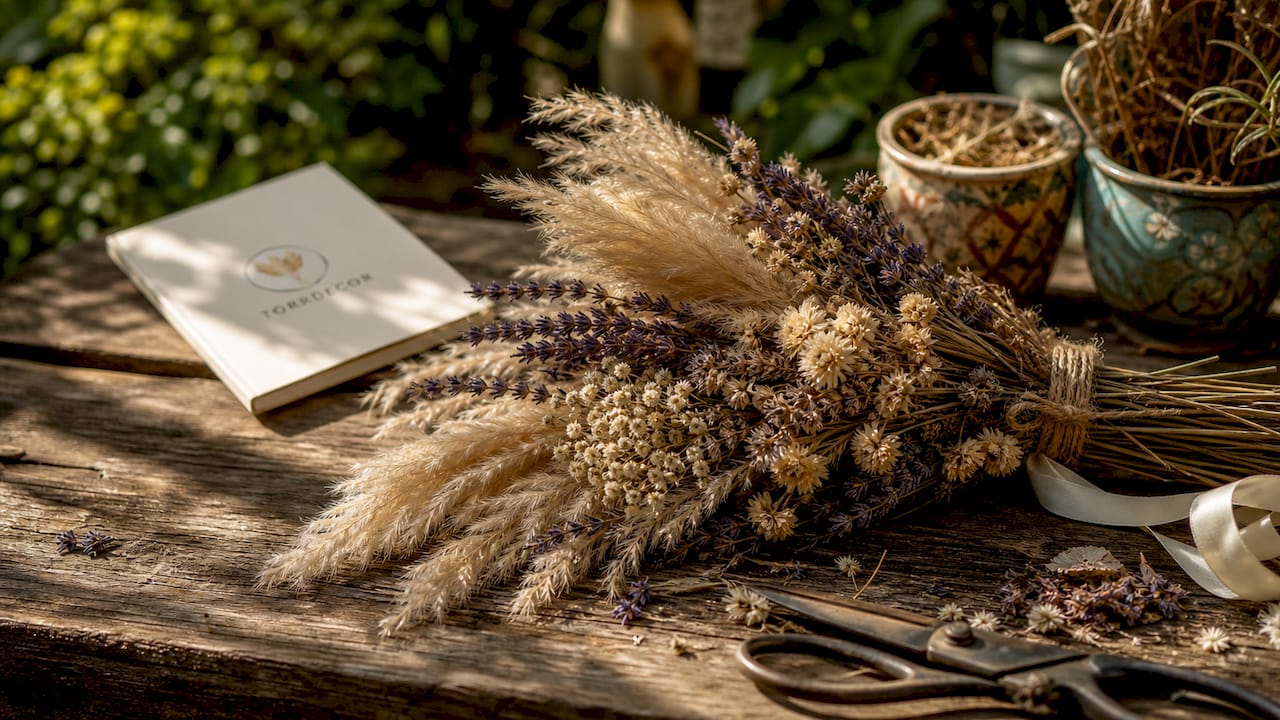
Rubber bands are superior to string for bouquet binding. They shrink as the stems dry and hold the bundle firmly without the need for re-tying. String loosens when the material shrinks, causing the bouquet to lose its shape.
Pro tip: Buy raffia in a natural beige color. It blends seamlessly with most dried arrangements and gives a professional-looking craft without extra effort.
How to bind a dried bouquet step by step?
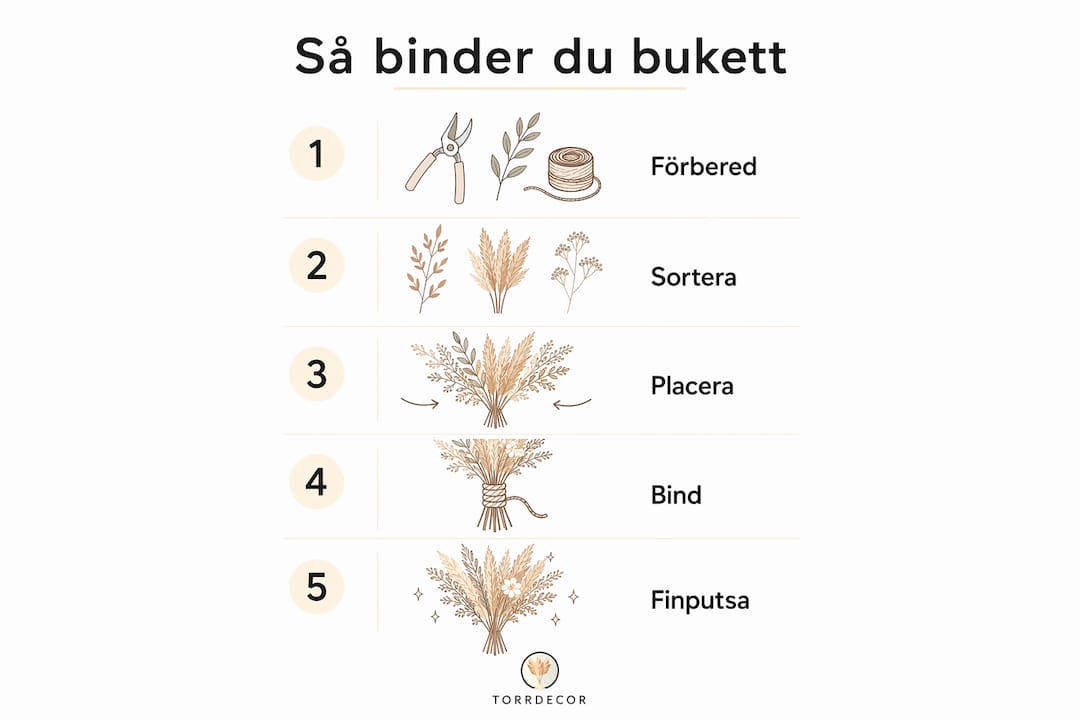
Binding dried flowers follows a clear order. If you skip a step, you risk the bouquet looking uneven or losing its shape after a few weeks. Below is the method that yields the best results for lasting decor.
Preparation of materials
Start by cleaning all stems. Remove leaves and unnecessary twigs before you begin binding. Any remaining leaves and twigs increase the risk of mold and negatively affect durability. Cut the stems to roughly the same length, but allow the flowers that will be prominent at the top to be slightly longer.
Step-by-step method
-
Create the base. Begin with the coarser and heavier materials, such as pampas grass or eucalyptus. Hold them in one hand, allowing them to form the base of the bouquet. The base provides structure for the entire arrangement.
-
Add the middle layer. Place statice, lavender, or similar materials around the base. Hold the stems in a slight spiral, meaning each new stem is added at an angle to the previous one. The spiral technique allows the bouquet to open naturally and appear fuller.
-
Finish with details. Add thin or delicate flowers last. They need the protection of the coarser materials around them. Adjust the height of individual stems so that the bouquet looks balanced from all sides.
-
Bind with a rubber band. Place the rubber band tightly just below the flower heads, about one-third up from the bottom of the stems. Pull it tight. Check that all stems are secure and none are loose.
-
Trim the stems. Cut the bottom of the stems straight with sharp scissors. A clean cut surface looks neat and makes it easier to place the bouquet in a vase.
-
Finish with raffia or hemp. Wrap raffia or hemp around the binding point and tie a simple knot or bow. The natural material hides the rubber band and gives the bouquet a finished look.
Pro tip: Hold the bouquet in front of a mirror while binding. You'll quickly see if anything is out of place and can adjust before tightening the rubber band.
Feel free to divide the material into smaller bundles of 5–10 stems if you are working with a large arrangement. Large bundles dry unevenly in the middle and are harder to hold during binding. Tie the smaller bundles together to form a whole once each part is complete.
If you want more ideas for dried flowers and creative combinations, there is plenty of inspiration to draw from for 2026 trends.
How to care for dried bouquets for longevity?
Caring for dried flowers is simple but requires avoiding a few specific environments. A well-cared-for bouquet lasts for several years. A poorly placed bouquet will lose color and shape in just a few months.
Placement in the home
Direct sunlight quickly fades colors and makes the material brittle. Place the bouquet in a bright room but protected from direct sun, for example, on a shelf against an interior wall or in a corner with indirect light. Moisture is as damaging as sunlight. Kitchens and bathrooms are therefore poorer places for dried arrangements.
Cleaning and maintenance
- Dust the bouquet with a soft brush or a hairdryer on a cool setting once a month.
- Avoid wiping the flowers with a damp cloth. This adds moisture and can cause mold.
- Move the bouquet away from the window during summer months when sunlight is strongest.
- Regularly check that the rubber band is still secure. Replace it if it seems to have loosened.
Hairspray as protection
Hairspray reduces fragmentation and extends the durability of delicate dried materials such as lavender and statice. Hold the can approximately 30 centimeters away and spray a thin layer over the entire bouquet. Let it dry completely before handling the arrangement again. It is a simple and inexpensive way to protect your bouquet.
Pro tip: Spray hairspray outdoors or in a well-ventilated room. Indoors, it can otherwise leave a sticky residue on furniture and floors around the bouquet.
If you want to delve deeper into care and drying tips, there is a complete checklist for dried bouquets that covers the most common questions.
What mistakes ruin a dried bouquet?
Several common errors negatively affect the bouquet's durability and appearance. Most are easy to avoid once you know what to look out for.
- Flowers with too much moisture. Fresh flowers that are not completely dry when you start binding risk molding from the inside. Ensure all material is completely dry before assembling the bouquet. Air drying takes 2–4 weeks in a dark, dry, and well-ventilated environment.
- Bundles that are too large. A bundle with too many stems dries unevenly in the middle and is difficult to keep in shape. Stick to 5–10 stems per bundle.
- String instead of rubber bands. String loosens as the stems shrink. Rubber bands adapt and keep the bundle together without needing to be re-tied.
- Incorrect drying location. A damp or dark cellar without air circulation is a poor drying location. Choose a space with good ventilation and low humidity.
- No regular care. Dust quickly accumulates on dried flowers, making them gray and lifeless. Regular dusting with a soft brush keeps the bouquet fresh.
Knowing these mistakes beforehand saves both time and material. A bouquet that is bound and cared for correctly from the start rarely needs later adjustments.
Key insights
Binding a dried bouquet requires the right materials, spiral technique, and consistent care for a result that lasts for several years.
| Point | Details |
|---|---|
| Choose at least three material types | Variation in texture and color creates a fuller and more aesthetic arrangement. |
| Use rubber bands, not string | Rubber bands shrink with the stems and keep the bouquet together without loosening. |
| Remove leaves and twigs | Remaining leaves increase the risk of mold and shorten the bouquet's lifespan. |
| Place away from sun and moisture | Indirect light preserves colors and prevents the material from becoming brittle. |
| Spray with hairspray after drying | A thin layer of hairspray reduces fragmentation and extends durability. |
Patience is the tool most people forget
I've worked with dried arrangements long enough to know that the most common mistake isn't about technique. It's about haste. Many want to put the bouquet together immediately, without waiting for the material to be properly dry. The result is an arrangement that looks good for a week and then starts to smell and fall apart.
What truly distinguishes a durable bouquet from one that lasts three months is the choice of material combined with patience. Pampas grass, lavender, and eucalyptus are my personal favorites precisely because they are forgiving. They hold their shape and color for a long time, and they complement each other in texture and height in a way that requires minimal adjustment.
One thing rarely mentioned in standard guides is that the bouquet's placement in the home affects how you perceive it. A bouquet in a corner with indirect light looks different in the morning than in the evening. It's worth trying different locations during the first few days before deciding on a permanent spot.
I always recommend starting with a smaller arrangement. Three to five types of materials, a simple spiral technique, and a neat finish with raffia. This gives you a feel for how the material behaves without investing too much time or money in a first attempt. Once you've done it once, the next bouquet is significantly easier.
— Torrdecor
Find the right materials for your next bouquet
Torrdecor offers a wide range of dried plants and accessories for those who want to create their own arrangements at home.

Popular choices for bouquet binding include Pampas grass 'VILDA' 110 cm and the classic Pampas grass 110 cm in beige. Both add volume and a natural feel that suits most interior styles. If you want a complete package for smaller arrangements, the White Pampas grass 60 cm in a 25-pack is an affordable option. Complement with a stylish Vase 'BÅGE' cream for a finished and cohesive look in your home.
Frequently asked questions
What is the difference between a dried bouquet and a fresh bouquet?
A dried bouquet is an arrangement of flowers and plants that have been dried to preserve their shape and color. It requires no watering and lasts for months or years with minimal care.
How long does a dried bouquet last?
A well-cared-for dried bouquet lasts 1–3 years depending on the material and placement. Avoid direct sunlight and moisture to prolong its lifespan.
Can you bind a dried bouquet from flowers you've dried yourself?
Yes, absolutely. Air-drying bouquets requires a dark, dry, and well-ventilated place and usually takes 2–4 weeks for the best results.
What binding material is best for dried bouquets?
Rubber bands are the best choice for keeping the stems together. Then finish with raffia or hemp for a neat and natural appearance.
How do you clean a dried bouquet without damaging it?
Dust the bouquet with a soft brush or a hairdryer on a cool setting. Avoid damp cloths and strong cleaning agents as they damage the dried materials.
0 comments