

In short:
- Handmade vases are unique artistic objects that enhance the atmosphere of an interior. They offer timeless durability and can create authentic, personal expressions in professional styling.
Handmade vases are ceramic or clay vessels shaped by hand, and they are one of the most effective tools in professional styling. Unlike mass-produced vases, each handmade vase bears traces of its creator: a slightly uneven edge, a unique surface texture, a personal imprint. It is precisely this character that makes them so sought after in professional interior design. The question of why handmade vases play such a central role in professional styling ultimately comes down to the difference between a room that looks like a showroom and a room that actually feels alive.
What aesthetic advantages do handmade vases offer compared to ordinary vases?
Handmade ceramic vases are unique with an artistic expression that enhances the atmosphere of the interior. This is a quality that mass-produced vases simply cannot replicate. A factory-made vase is always identical to the next in the series. A handmade vase never is.
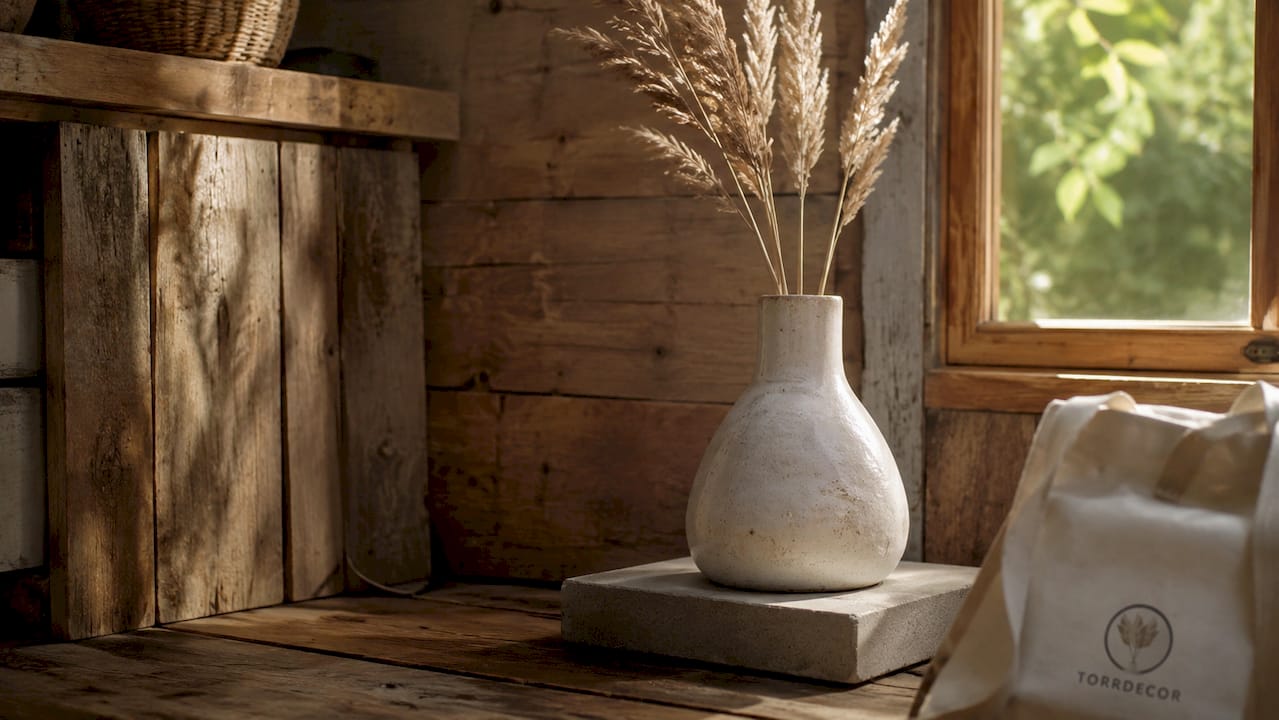
The shape of a handmade vase creates depth in the room. A slightly asymmetrical neck or an irregular belly gives the eye something to linger on, making the entire still life feel more thoughtfully composed. Texture plays an equally important role: a matte, sanded surface absorbs light differently than a glossy glaze, giving the room a softer, warmer feel.
Material and surface treatment vary widely within handmade ceramics:
- Stoneware gives a heavy, earthy feel with natural shades of gray and brown.
- White clay creates a clean, organic expression that works in most interior styles.
- Raku-fired ceramics yield dramatic, unpredictable surfaces with metallic elements.
- Terracotta adds warmth and a Mediterranean-inspired tone to the room.
Each material communicates something different. That's what makes handmade vases an active styling tool, not just a container.
Pro tip: Mix two handmade vases in the same color family but with different finishes, for example, one matte and one semi-gloss. This creates contrast without disturbing the overall look.
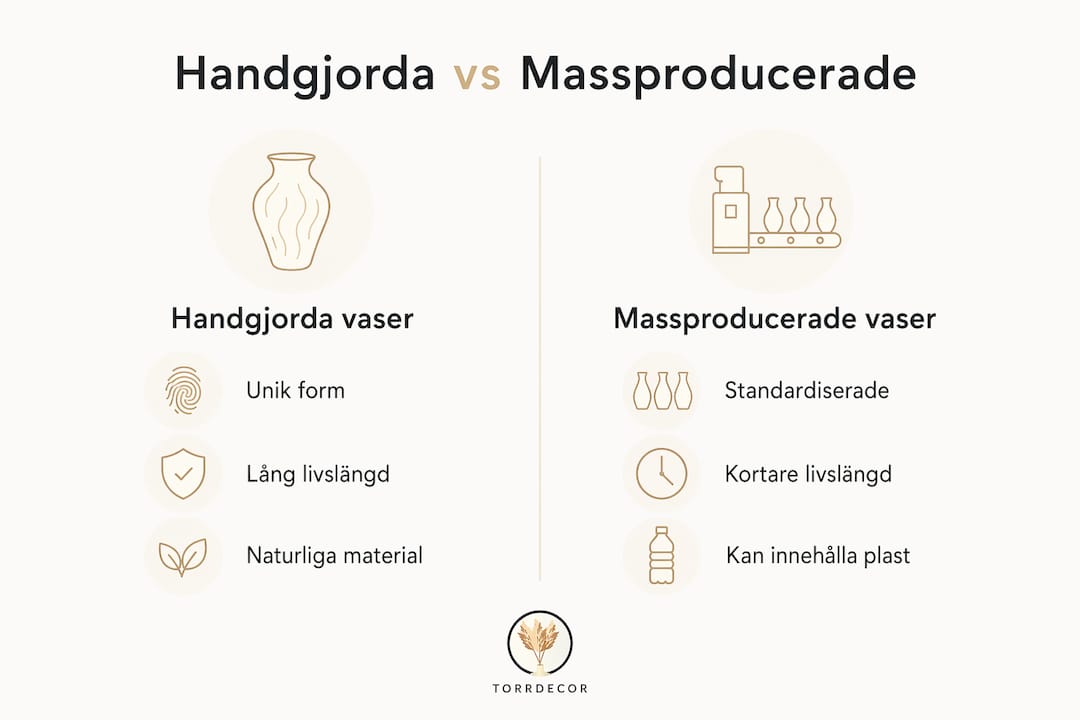
How do handmade vases support sustainable and timeless interior design?
White, handmade vases offer a timeless and sustainable design that outlives trends. It's a conscious design choice that retains style and relevance for a long time, unlike vases in trendy colors that can quickly feel dated.
Ceramics and clay are natural materials with a long lifespan and minimal maintenance. A well-made ceramic vase can last for decades without losing its aesthetic quality. This is a clear contrast to cheap plastic imitations that crack, yellow, and end up in the trash within a few years.
| Property | Handmade Ceramic Vase | Mass-produced Vase |
|---|---|---|
| Lifespan | Decades with proper handling | Often limited |
| Surface finish | Unique per item | Identical in series |
| Material choice | Natural clay, stoneware, terracotta | Often plastic or thin glass |
| Maintenance | Minimal | Varies |
| Trend sensitivity | Low, timeless design | High |
Sustainable decorative vases made of ceramic also pair perfectly with dried flowers and pampas grass. Dried bouquets require no water and retain their color and shape for a long time, making the combination one of the most low-maintenance interior design solutions available.
Pro tip: Choose a white ceramic vase as a basic investment. It works with dried arrangements, fresh flowers, and as a sculptural detail entirely without contents.
How are handmade vases practically used in professional styling?
Professional stylists use handmade vases as both functional and decorative elements to create balance in rooms and still lifes. Placement is as important as the choice of vase.
Four concrete ways to use handmade vases in styling:
-
As a sculptural element without content. A well-formed vase needs nothing within itself. Place it alone on a shelf or a side table to let its form speak for itself. This works particularly well with stoneware vases or those with a distinct handmade texture.
-
In a group with varying heights. Gather three vases of different sizes on a tray or directly on a table. Uneven heights create movement and make the group more interesting than three identical vases in a row.
-
With dried arrangements like pampas grass. Pampas grass in a tall, slender handmade vase is one of the most photographed interior choices right now. The combination of the organic grass and the handmade ceramic visually enhances each other.
-
As room dividers in open-plan layouts. A large floor vase with a tall arrangement defines zones in an open room without building walls. This is a trick professional interior designers use to give large areas structure.
Combining vases and flowers requires considering proportions: the vase's height should be approximately one-third of the total arrangement's height for best balance.
Why do handmade vases carry a story that enhances the interior?
A handmade vase can tell a story and function as an artistic expression that creates an emotional connection to the room. This is a quality rarely discussed but immediately recognized by professional stylists.
Variations in shape and surface finish are part of the craft's charm and create personal character. No handmade vase is exactly like another, and that is precisely what makes them more than mere decoration. They are objects with an origin, a process, and a human imprint.
"A handmade vase is proof that someone put time and care into creating something. It shows in the room, even if the visitor cannot articulate why."
That sense of authenticity is difficult to achieve with mass-produced products. Interior designers who work with exclusive environments, such as shops, hotels, and private homes in the premium segment, choose handmade vases precisely because they signal care and quality without needing to flaunt it. These are unique interior details that make a room feel thoughtful rather than merely assembled.
Key insights
Handmade vases are the single most effective way to add authenticity, depth, and timeless aesthetics to professional styling.
| Point | Details |
|---|---|
| Unique aesthetics | Each handmade vase differs in shape and finish, enhancing the interior's atmosphere. |
| Timeless design | White ceramic vases work with all interior styles and outlast trends. |
| Durability | Natural materials like clay and stoneware offer long lifespan with minimal maintenance. |
| Practical styling | Grouping, varying heights, and combining with dried arrangements yield the best results. |
| Narrative value | Handmade vases create an emotional connection and signal care in the room. |
What no one says about handmade vases in styling
I've seen many interior designers make the same mistake: they buy an expensive sofa, invest in the right lighting, and carefully choose rugs, but then fill the shelves with identical vases from the supermarket. The result always looks a bit empty, even if everything else is right.
Handmade is not a luxury choice. It's a precision decision. A single handmade ceramic vase in the right place does more for a room's feel than ten matching mass-produced ones. I've tested it in practice, and the difference is immediate and clear to anyone who walks into the room.
The most common mistake is choosing too small a vase. A handmade vase needs space to be seen. Give it that, and it will do the work for you.
— a4
Handmade vases from Torrdecor for your styling
Torrdecor offers a carefully selected range of handmade vases made in Portugal, from white clay with an organic finish. The vases are designed to function equally well as sculptural elements or with dried arrangements.
The ‘BÅGE’ vase in cream is a great starting choice for anyone who wants to understand what a well-made handmade vase does for a room. Combine it with pampas grass 110 cm for an arrangement that stays fresh without maintenance. Torrdecor delivers throughout Sweden and also offers B2B solutions for stores and events that want to work with sustainable, artisanal interior details.
Frequently Asked Questions
What distinguishes handmade vases from mass-produced ones?
Handmade vases have unique form and surface finish per item, while mass-produced vases are identical in series. This difference is immediately noticeable in a room and affects the sense of authenticity.
What materials are most common in handmade vases?
Stoneware, white clay, and terracotta are the most common materials. White clay provides a timeless, organic expression that works with most interior styles.
How to best style handmade vases?
Group three vases of different heights, or place a single vase as a sculptural element. Combining them with dried flowers or pampas grass yields a durable and visually strong result.
Do handmade vases suit all interior styles?
White ceramic vases work with most styles, from minimalist to rustic and Scandinavian interiors. The shape and finish determine which style the vase best suits.
How long does a handmade ceramic vase last?
A well-made ceramic vase lasts for decades with proper handling and requires minimal maintenance. This makes it a more sustainable choice than cheaper alternatives in plastic or thin glass.
Recommendation
- How to choose vases: guide to the right choice – Torrdecor
- Types of vases: Find the right shape and style for your room – Torrdecor
- Can ceramic vases hold water? The difference between water-resistant vase vs decorative vase – Torrdecor
- Examples of decorative vases for sustainable interior design – Torrdecor
0 comments