

In short:
- The height, opening, and width of a vase shape affect the form and volume of a floral arrangement. A well-chosen vase enhances the bouquet's expression and makes it last longer. Fewer, well-considered vase models offer greater variety for homes and events.
The role of vase shape in floral arrangements is to control the bouquet's volume, balance, and visual appearance through the vase's height, width, and opening. The right vase shape elevates the flowers and creates harmony. The wrong vase shape causes the arrangement to lose its form, no matter how beautiful the flowers are. Three dimensions determine the result: height, opening diameter, and vase width at the waist. Understanding these relationships makes it easier to create creative floral arrangements that last long and look well thought out, whether you are decorating your home or planning an event.
How the vase shape's height and opening affect the arrangement's style
The vase's height and opening directly determine how the flowers fall and spread. A narrow opening gathers the stems, while a wide opening spreads them out, creating a more airy look. This is the most important rule to keep in mind when choosing a vase.
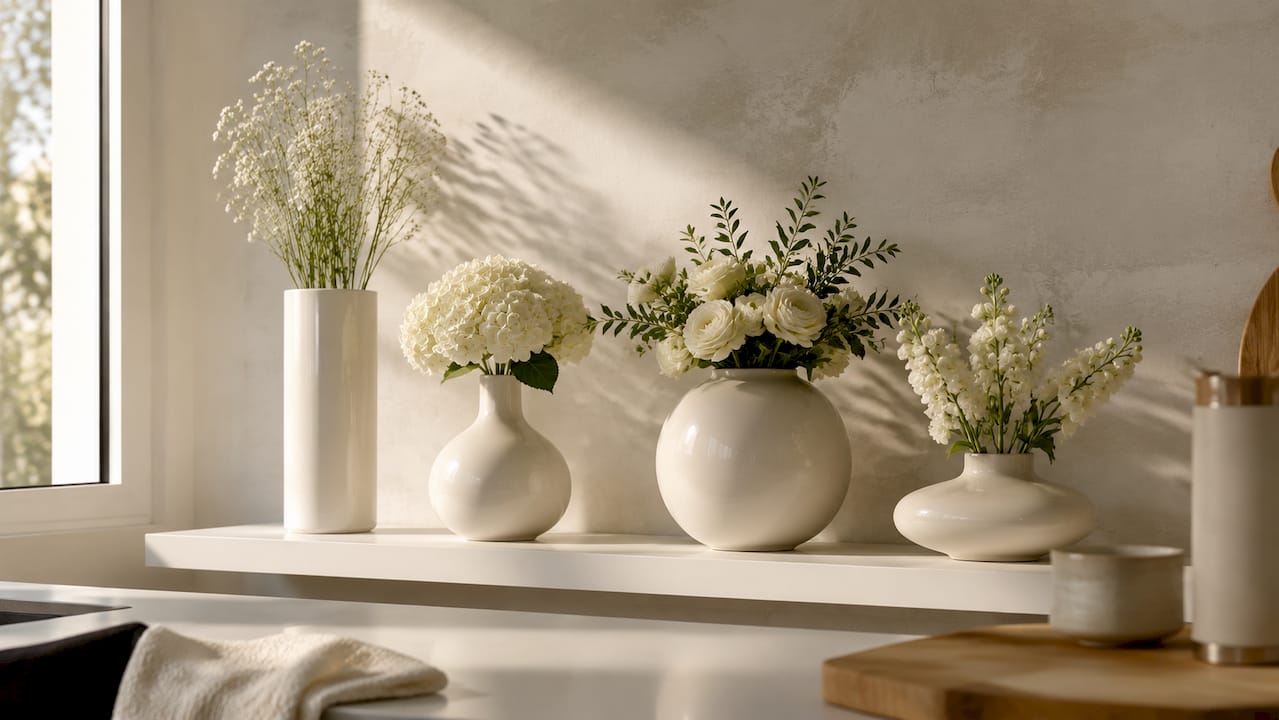
Narrow cylindrical vases suit simple, long stems and give an elegant, sleek impression. They work excellently for tulips, sunflowers, and pampas grass. Round and wide vases spread out the flowers, creating a fuller, more relaxed feel. They are best suited for mixed bouquets with shorter stems.
The height ratio also plays a crucial role. The vase's height should be approximately half to two-thirds of the flowers' stem length to create a harmonious relationship between vase and bouquet. A vase that is too tall hides the flowers. A vase that is too low gives the arrangement an unstable and heavy appearance.
Here are the most common vase shapes and their typical expressions:
- Cylindrical vase: Straight, narrow shape that gathers the bouquet. Suitable for long, simple stems and gives a modern impression.
- Globular vase: Round with a wide middle and narrower opening. Keeps the bouquet together but adds volume in the center.
- Funnel-shaped vase: Wide opening that spreads flowers naturally. Suitable for loose, free arrangements.
- Floor vase: Tall and wide, designed for large arrangements with pampas grass or branches.
Pro tip: Test the vase's opening with your hand before buying. If your fist fits loosely in the opening, it's probably too wide for a compact bouquet.
How does vase shape affect the sense of volume in an arrangement?
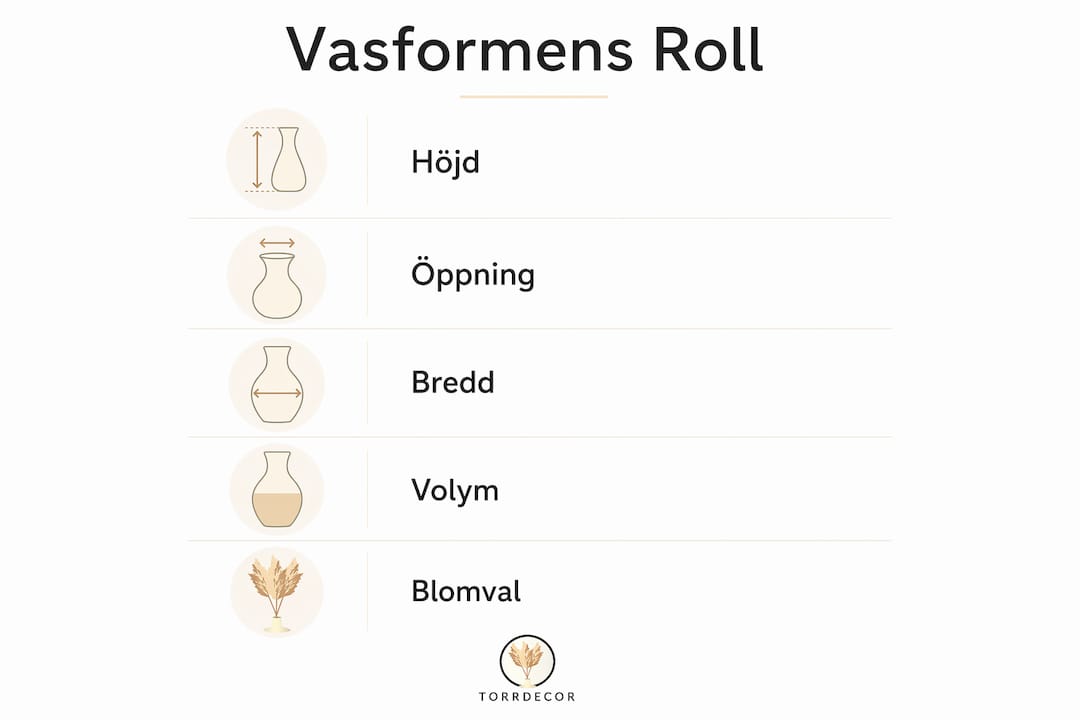
Volume in a floral arrangement refers to how much space the bouquet visually occupies. Wide, globular vases provide more volume and a more airy impression by spreading out the stems. This makes them the best choice when you want the arrangement to fill a room.
The vase's width in relation to its opening determines how the flowers behave. A vase with a wide middle but a narrow opening keeps the stems gathered at the bottom but allows the flowers to open up at the top. This creates natural volume without the bouquet falling apart. A vase with a wide opening all the way up requires more flowers to fill the shape properly.
Four strategies for balanced volume in different arrangements:
- Choose vase width according to bouquet density. A dense bouquet with many flowers fits into a narrower vase. A sparse bouquet with few stems needs a narrower opening to maintain its shape.
- Adjust stem length to vase height. Cut stems so that flowers sit approximately one and a half times the vase's height above the rim.
- Use the vase's shape as support. A globular vase holds stems in place without extra aids. A cylindrical vase may need a flower grid or tape to keep flowers separated.
- Mix vase shapes in groups. Three vases of different heights create more visual volume than a single large vase.
Pro tip: Place a narrower vase inside a wide floor vase to control how the stems fall. This gives you the volume of the large vase without the bouquet losing its shape.
How to choose the right vase shape for different flowers?
A basic vase wardrobe with four vase models covers most needs for home and events. A basic set includes a solitaire vase (10–15 cm), a medium-sized globular vase (15–25 cm), a tall cylindrical vase (25–35 cm), and a floor vase (30–40 cm). With these four, you can handle everything from a single flower on the bedside table to a large arrangement in the hallway.
Combining vases and flowers is about matching flower type with vase shape. Here are the most important combinations:
- Tulips and ranunculus: Best suited for a cylindrical vase or a globular vase with a narrow opening. Stems are soft and need support.
- Pampas grass and dried plants: Suitable for a tall floor vase or cylindrical vase. The long, stiff stalks need height to look proportionate.
- Mixed bouquets: Suitable for a globular vase with a medium-sized opening. The shape keeps the stems in place and provides natural volume.
- Single large flowers: Suitable for a solitaire vase or narrow cylindrical vase. Simplicity enhances the flower.
Material choice also affects the overall impression. Glass vases showcase flowers and stems, suitable for transparent arrangements. Ceramic vases provide weight and contrast, working well for dried plants and pampas grass. Vases in white clay, like those offered by Torrdecor from Portugal, give a calm and timeless expression that suits most interior styles.
| Vase type | Suitable for flowers | Occasion |
|---|---|---|
| Solitaire vase (10–15 cm) | One to three flowers | Everyday decoration, windowsill |
| Globular vase (15–25 cm) | Mixed bouquet | Dining table, sideboard |
| Cylindrical vase (25–35 cm) | Tulips, pampas grass | Hallway, living room |
| Floor vase (30–40 cm) | Large dried arrangements | Floor, entrance |
Common mistakes when choosing vase shape for floral arrangements
The most common mistake is choosing a vase that is too tall in relation to the flowers. The flowers then disappear into the vase, and the arrangement looks empty from above. The rule that the flowers should be clearly visible above the vase's rim always applies.
- Too wide opening: A vase with too wide an opening makes the bouquet lose its shape and look messy. Choose a vase whose opening is slightly narrower than the bouquet's diameter.
- Overfilled vase: Stuffing too many flowers into a small vase gives a cramped and cluttered impression. Volume is created by the vase shape, not by the number of flowers.
- Wrong proportions: A small vase with large flowers looks unstable. A large vase with few, short flowers looks half-empty. The proportion between vase and flower determines the overall look.
- Ignoring the vase's shape: Always using the same vase shape regardless of flower type limits the result. Adapt the vase shape to the flowers' natural movement and length.
Choosing the right vase shape is a skill that quickly improves with a little awareness of these basic proportions.
Key insights
The role of vase shape in floral arrangements is determined by three factors: height, opening, and width, and all three must match the flowers' length and volume.
| Point | Details |
|---|---|
| Height and proportion | The vase's height should be half to two-thirds of the flowers' stem length. |
| Significance of the opening | A narrow opening gathers the bouquet, a wide opening spreads it out and requires more flowers. |
| Basic vase wardrobe | Four vase models (10–40 cm) cover most home and event needs. |
| Most common mistake | A too-wide opening makes the bouquet lose its shape and look messy. |
| Material and style | Ceramic and clay suit dried plants, glass suits fresh flowers with visible stems. |
Vase shape is more than a container
I've worked with floral arrangements and interior design long enough to see a clear pattern: most people buy flowers first and think about the vase afterward. That's backward. The vase is the arrangement's skeleton. The flowers are the clothes.
What truly transforms a room is not the number of flowers but the combination of vase shape and flower type. A single stylish floor vase with pampas grass does more for a room than ten randomly chosen bouquets. A vase can also function as a work of art even when empty, especially if it has a distinctive shape or color. This is an argument for sustainable interior design that is rarely highlighted enough.
My recommendation is to build a small vase wardrobe with three to four well-chosen vase shapes instead of collecting many similar models. Variation in height and opening gives you the flexibility to adapt the arrangement to the season, flower type, and occasion. It's the simplest and most cost-effective upgrade you can make for your home.
— a4
Torrdecor helps you put vase knowledge into practice
Knowing which vase shape suits is one step. Having the right material to fill it with is the next.
Torrdecor offers a wide selection of decorative interior vases made in Portugal, designed to suit everything from simple everyday arrangements to large floor vases. For the vases, pampas grass 110 cm is excellent, with its natural length and fullness creating balance in tall cylindrical vases and floor vases. Dried plants require no maintenance and retain their shape and color for a long time. This makes them a practical and sustainable choice for anyone who wants beautiful arrangements without daily upkeep.
Frequently asked questions
What determines the role of vase shape in a floral arrangement?
The vase's height, opening, and width determine how the flowers fall, spread, and are visually perceived. All three dimensions must match the flowers' length and volume.
How tall should the vase be in relation to the flowers?
The vase's height should be approximately half to two-thirds of the flowers' stem length. This creates a harmonious proportion between vase and bouquet.
Which vase shapes should one have at home?
A basic vase wardrobe with four models covers most needs: a solitaire vase (10–15 cm), a globular vase (15–25 cm), a cylindrical vase (25–35 cm), and a floor vase (30–40 cm).
Can a vase look good without flowers?
A vase with a distinctive shape or color functions as a decorative object even when empty. This makes it a sustainable interior choice that does not require flowers to contribute to the room's expression.
Why does the bouquet lose its shape in a wide vase?
A vase with too wide an opening gives the stems too much space to fall apart. Choose an opening that is slightly narrower than the bouquet's diameter to maintain its shape.
0 comments