

In brief:
- Natural materials in interior design create a healthy and sustainable home by regulating humidity and reducing chemical emissions. They last longer with proper care and contribute to a relaxing, biophilic atmosphere. Torrdecor offers sustainable plants and pampas grass for easy decoration with a natural feel.
Natural materials in interior design are the most direct path to a home that feels warm, healthy, and sustainable all at once. Wood, linen, wool, and stone belong to what is known in the design world as biophilic design, a concept describing how contact with natural elements positively affects our physiology. Biophilic design lowers stress levels and improves well-being in a measurable way. Research also shows that synthetic materials can emit volatile organic compounds, or VOCs, which degrade indoor air quality. Natural materials offer a concrete alternative that benefits both aesthetics and health.
How do natural materials affect the indoor environment and health?
Natural materials regulate moisture in a way that synthetic materials cannot. Wood fiber and hemp fiber in wall systems absorb and release moisture depending on the climate, making the building vapor-open and reducing the risk of mold and condensation. This property directly impacts the air quality in the home.
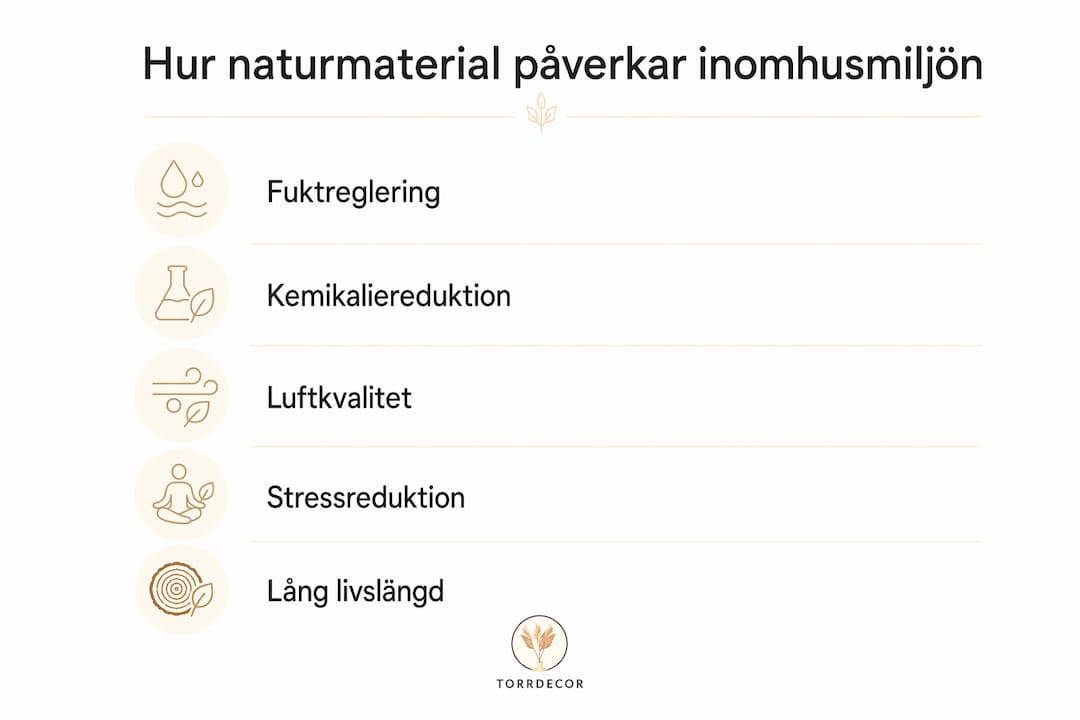
VOCs are another central argument for natural materials. Indoor VOC levels can be 1–10 times higher than outdoor air, especially with poor ventilation. Synthetic flooring, furniture, and textiles often contribute to these levels. Wood generally emits lower amounts of VOCs and also helps to buffer moisture fluctuations in the room.
Linen and wool textiles contribute to comfort on a tangible level. Linen breathes well and stays cool, while wool insulates and regulates temperature naturally. Both materials are biodegradable and require no chemical additives to function.
- Moisture regulation: Wood and hemp fiber buffer moisture and reduce the risk of condensation.
- Lower VOC emissions: Natural materials emit fewer harmful substances than many synthetic alternatives.
- Tactile comfort: Linen and wool provide a soft, pleasant feel against the skin.
- Biodegradation: Natural materials do not burden the environment in the same way as plastic and synthetic fibers.
Pro tip: Always choose furniture and textiles with low-emission labels, even if they are marketed as natural materials. Adhesives, finishes, and binders can affect VOC emissions as much as the raw material itself.
How long do natural materials last in home decor?
Longevity is at the core of sustainability. Proper wood protection, detailing, and maintenance extend the lifespan of natural materials and reduce the need for replacements. It is more resource-efficient to maintain a quality material than to replace a cheaper alternative every five years.
Durability is therefore not just about which material you choose, but about how you use and care for it. An oak parquet floor that is oiled regularly can last for generations. An untreated wooden surface in a damp bathroom deteriorates quickly. The right material in the right place is the basic rule.
FSC certification is the clearest guarantee of responsible forestry. FSC traces wood from the forest to the product and ensures environmental and social considerations throughout the chain. When you buy FSC-certified wood, you know that the raw material comes from a forest management that takes responsibility.
Four steps for longer lifespan
- Choose the right material for the room. Damp environments require wood species and finishes that can withstand moisture, such as oiled teak or hardwax oil on oak.
- Treat the surface correctly from the start. Untreated wood absorbs dirt and moisture quickly. A basic treatment immediately after installation protects the material.
- Maintain regularly. Wood needs to be re-oiled or re-lacquered at regular intervals depending on wear and placement.
- Choose FSC-certified timber. This guarantees that the raw material is sustainably produced and gives you a transparent choice.
| Material | Lifespan with proper maintenance | Requires protection against moisture |
|---|---|---|
| Solid wood (oak, ash) | Very long | Yes, in damp environments |
| Hemp fiber (wall panels) | Long | No, vapor-open |
| Linen textiles | Long | No, withstands washing well |
| Wool textiles | Long | No, naturally dirt-repellent |
What aesthetic advantages do natural materials offer in the living room?
Natural materials create an atmosphere that synthetic alternatives rarely manage to imitate. Linen cushions, wool blankets, and rugs made of natural materials are used in Nordic interior design to create relaxing and cozy environments. This is no coincidence. Natural textures activate the senses in a way that smooth, plastic surfaces do not.
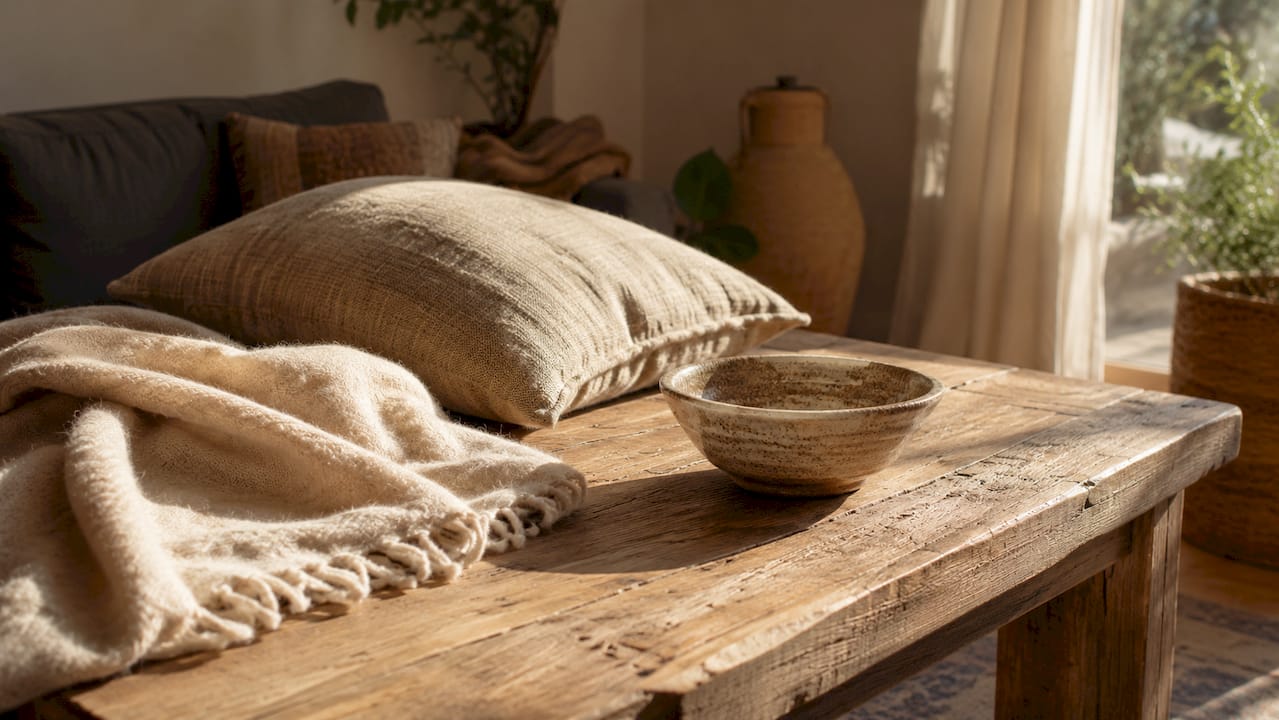
Biophilic design explains the mechanism behind this. Humans are biologically programmed to react positively to natural forms, textures, and colors. Wood with visible grain, a stone slab with natural variations, or a grass with soft plumes signal security and rest to the nervous system. This is why a room with natural materials feels calmer than a room with only synthetic surfaces.
The color palette that natural materials bring is also an advantage. Beige, sand tones, warm gray, and deep brown shades harmonize with each other without requiring advanced color schemes. You can combine textures and colors from wood, stone, and textiles and still achieve a cohesive feel.
- Texture creates depth. A smooth concrete wall next to a wooden bench and a wool rug gives the room a three-dimensional character.
- Natural colors harmonize. Earth tones from wood and linen fit together without requiring a strict color scheme.
- Sensory comfort. Soft surfaces of natural materials feel inviting to touch, which affects how long you enjoy being in the room.
Pro tip: Always mix at least three different textures in a room, for example, wood, textile, and an organic element such as dried plants or pampas grass. This creates balance without the room feeling cluttered.
Practical tips for using natural materials correctly in the home
The right choice of natural materials depends on the room and the climate you live in. Humid environments like kitchens and bathrooms require materials that can withstand moisture, while living rooms and bedrooms offer more freedom. Natural interior design in a harmonious home is about matching materials with function.
- Adapt the material to the room. Use moisture-resistant wood in kitchens and bathrooms. Choose linen and wool in bedrooms and living rooms where comfort is prioritized.
- Ensure good ventilation. Natural materials work best in well-ventilated rooms. Poor air circulation increases moisture load and shortens the material's lifespan.
- Choose low-emission alternatives. Even natural materials can be treated with adhesives and surface layers that emit VOCs. Always ask for low-emission certification when purchasing.
- Mix materials consciously. Combine wood with textiles and organic decorations to create warmth and texture. Avoid filling a room with a single material; it gives a flat impression.
- Plan maintenance. Set up a simple routine for oiling wooden floors and washing textiles. Regular maintenance is the single most important factor for long-lasting durability of natural materials.
Pro tip: Dried plants and pampas grass are an easy way to add an organic natural material without maintenance requirements. They need no watering, no soil, and retain their shape for several years.
Key insights
Natural materials in interior design improve indoor air, regulate moisture, reduce chemical exposure, and create an aesthetic atmosphere that synthetic alternatives cannot replace.
| Point | Details |
|---|---|
| Biophilic design | Natural materials like wood and linen lower stress levels and improve well-being. |
| Moisture regulation | Wood fiber and hemp fiber buffer moisture and reduce the risk of mold in the home. |
| Lower VOC levels | Natural materials generally emit fewer harmful substances than synthetic alternatives when chosen correctly. |
| FSC certification | Choose FSC-certified wood to ensure responsible forestry and transparent sustainability. |
| Maintenance determines lifespan | Proper care and placement are as important as material selection for long-term sustainability. |
Natural materials are an investment, not an expense
I have been following the interior design trend with natural materials for a long time, and what strikes me is how often people underestimate the role of maintenance. They buy a beautiful oak parquet floor or a linen cushion, thinking the job is done. It's not. Natural materials reward you with a long lifespan, but only if you give them the right conditions.
What truly convinced me about biophilic design was not the research itself, but how clear the difference is in practice. A room with wood, wool, and organic elements feels physically calmer to be in. It's not nostalgia or a trend. It's biology.
I also see that many confuse eco-friendly decor with expensive choices. That's not true. A dried bouquet, a couple of linen cushions, and a wooden table are enough to change the feeling of a room. The price of natural materials varies enormously, and there are good options in all price ranges. It's more about conscious choices than about budget.
My strongest recommendation is to start with one room and one material. Add texture with a natural material, see how it changes the atmosphere, and build from there. It's a more sustainable way to decorate than buying everything at once.
— a4
Natural materials from Torrdecor for your home
Torrdecor offers a range of dried plants and pampas grass that fit directly into a nature-inspired home decor. The products require no maintenance and retain their shape and color for several years, making them one of the most manageable natural materials you can choose.
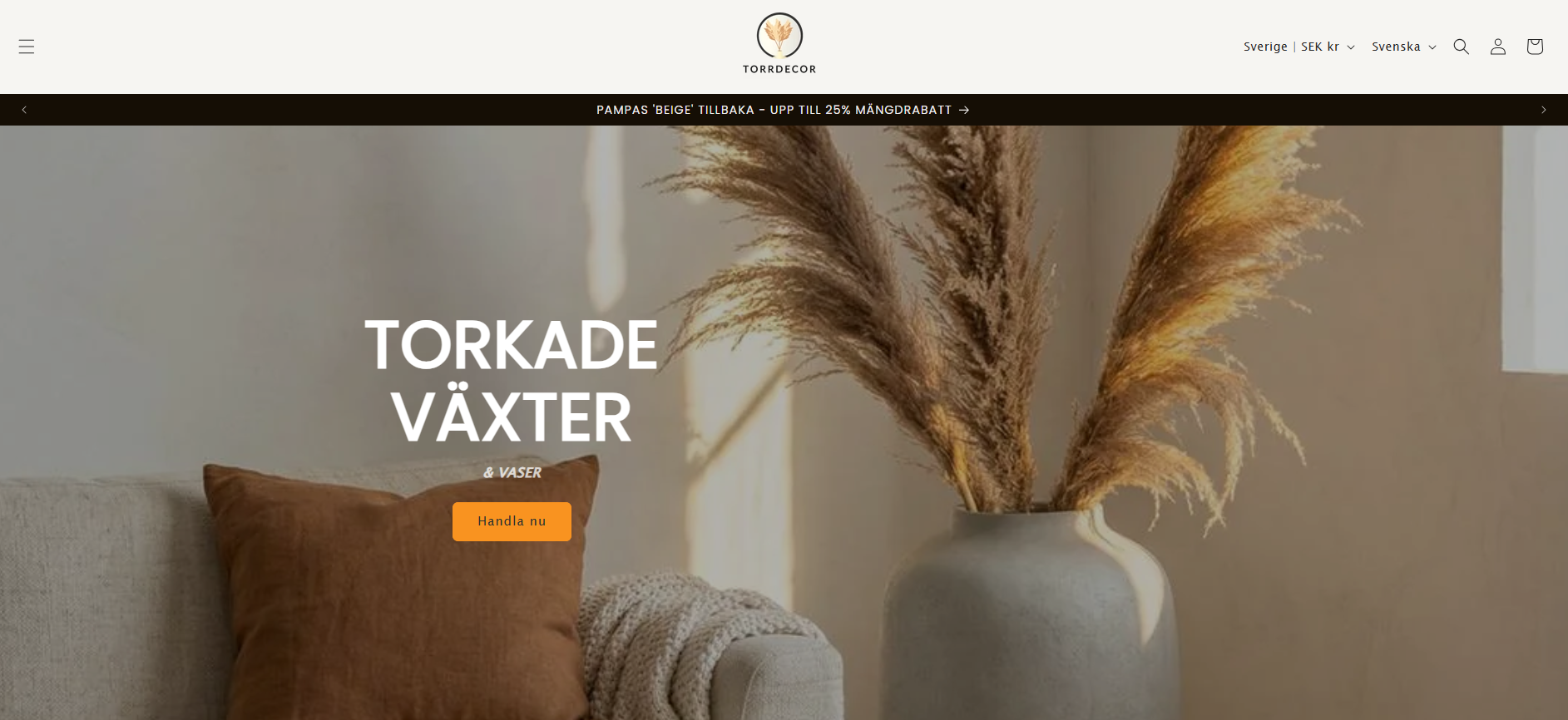
Pampas grass 110 cm is a popular choice for living rooms and bedrooms. It adds texture, organic form, and a warm beige tone that harmonizes with wood and linen. Torrdecor is one of Sweden's leading suppliers of pampas and dried bouquets, with a focus on sustainability and simplicity. You can find the entire range at torrdecor.se.
Frequently Asked Questions
What is biophilic design and how does it relate to natural materials?
Biophilic design is a design concept based on the human biological connection to nature. Natural materials such as wood, stone, and linen are central elements in biophilic design and contribute to lower stress levels and increased well-being.
Do natural materials emit no chemical substances at all?
Natural materials do not automatically emit zero chemical substances. Adhesives, finishes, and binders can affect VOC emissions, which is why low-emission alternatives should always be prioritized when purchasing.
Why is FSC certification important when buying wood?
FSC certification traces wood from the forest to the finished product and ensures that forestry takes environmental and social considerations into account. It is the clearest guarantee of a responsible material choice.
How long do natural materials last in decor?
The lifespan depends on material choice, placement, and maintenance. Solid wood with proper finish and regular care can last for generations, while untreated wood in damp environments deteriorates quickly.
Can dried plants be considered natural materials in decor?
Dried plants like pampas grass are natural materials in the true sense of the word. They add organic texture and form without requiring maintenance, and retain their character for several years with minimal effort.
0 comments