

Vardagsrum inspiration: skapa ett hållbart och mysigt rum
Kort sagt:
- Hållbar vardagsrumsinredning bygger på att använda naturmaterial och säsongsanpassade textilier.
- Genom smart möbelplacering, belysning i tre nivåer och varma färger skapas ett trivsamt och tidlöst rum.
Vardagsrum inspiration handlar om att kombinera hållbara material med genomtänkt styling för att skapa ett rum som känns både trivsamt och tidlöst. Inredning av vardagsrum kräver inte stora budgetar eller ständiga ombyten. Det räcker med rätt textilier, smart möbelplacering och en genomtänkt färgpalett för att förvandla rummet. Trenden varm minimalism, som kombinerar skandinavisk enkelhet med naturmaterial och mjuka texturer, är det starkaste inredningsmönstret för 2026. Den visar att hållbarhet och stil går hand i hand.
1. Lager-på-lager med textilier för ett ombonat vardagsrum
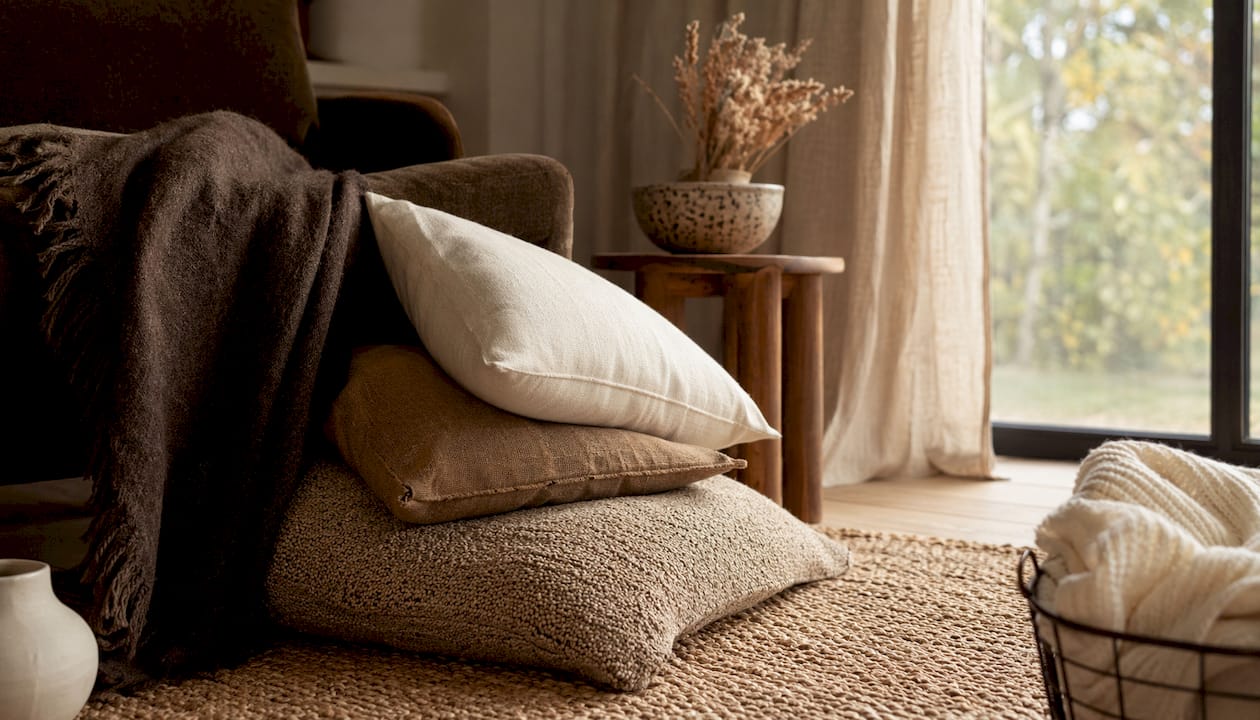
Textilier är den viktigaste faktorn för ett trivsamt vardagsrum. Minst tre lager textilier rekommenderas för att uppnå den mysighet de flesta söker. Det innebär en matta på golvet, kuddfodral i olika storlekar på soffan och en mjuk pläd som läggs löst över armstödet.
Materialet spelar lika stor roll som antalet lager. Linne, bomull och ull är hållbara val som åldras med värdighet och tål tvätt utan att tappa form. Textilier med olika texturer ger inte bara värme utan också visuell komplexitet som förhöjer rummet utan att det känns rörigt.
Säsongsanpassning är ett kostnadseffektivt sätt att hålla vardagsrummet fräscht. Byt ut kuddfodral och plädar när hösten kommer och välj ljusare lin och bomull till våren. Du behöver inte köpa nya möbler för att rummet ska kännas nytt.
- Matta: Välj en stor matta som rymmer hela soffgruppen, inte bara soffbenet.
- Kuddar: Blanda storlekar, 50x50 cm och 65x65 cm, och variera texturer som sammet, lin och stickad ull.
- Pläd: Lägg den löst, inte vikt, för ett avslappnat och inbjudande intryck.
- Gardiner: Välj skira tyger som släpper in dagsljus och ger avskildhet utan att tynga ner rummet.
Proffstips: Köp basplagg i neutrala färger och byt ut ett eller två kuddfodral per säsong. Det ger stor förändring till låg kostnad.
2. Möbelplacering som skapar luft och funktionella zoner
Möbelplaceringen avgör hur ett rum upplevs mer än vad de flesta tror. Att flytta soffgruppen 10–20 cm från väggen skapar en luftigare och mer genomtänkt känsla. Rummet upplevs som större och mer välplanerat, trots att ytan är densamma.
Tänk i zoner, inte i enskilda möbler. Ett vardagsrum med öppen planlösning vinner på att delas upp i tydliga funktionsområden: ett sittområde, ett läshörn och eventuellt en arbetsyta. En stor matta under soffgruppen markerar sittzonens gränser utan att du behöver sätta upp väggar.
- Placera soffan med ryggen mot ett naturligt flöde, inte mot ingången.
- Flytta soffan och fåtöljerna från väggarna för att skapa ett sammanhållet samtal.
- Använd ett sidobord eller en pall som avgränsning mellan zoner.
- Placera en golvlampa i ett hörn för att mjuka upp skarpa vinklar.
- Lägg en matta under hela soffgruppen, inte bara under soffbordet.
Att gruppera prydnadsföremål i kluster skapar visuell ro och är bättre än många lösa dekorationer utspridda i rummet. Tre vaser i olika höjder på en hylla ger mer harmoni än sex enskilda prydnadssaker utan sammanhang.
Proffstips: Fotografera rummet från dörröppningen innan och efter du flyttar möblerna. Kameran ser proportioner som ögat missar.
3. Belysning som styr stämningen i vardagsrummet
Belysning är det snabbaste sättet att förändra ett rums känsla. Tre nivåer av belysning ger full kontroll: allmänbelysning för grundljus, punktbelysning för läsning och arbete, och stämningsbelysning för avkoppling. De flesta vardagsrum har bara en av dessa nivåer, vilket gör rummet antingen för mörkt eller för hårt upplyst.
Installation av dimmer är avgörande för att reglera atmosfären från arbetsljus till avkoppling. En dimmer kostar lite men ger stor flexibilitet. Det är en av de mest kostnadseffektiva uppgraderingarna du kan göra i ett vardagsrum.
Belysning som faktiskt förändrar ett rum handlar om placering lika mycket som om ljusstyrka. Ljus som riktas uppåt mot taket ger ett mjukare och mer ombonat rum än ljus som riktas rakt ner.
- Allmänbelysning: Taklampa eller inbyggda spotlights med dimmer för grundljus.
- Punktbelysning: Läslampa vid fåtöljen eller en bordslampa på sidobordet.
- Stämningsbelysning: Ljuslyktor, stearinljus eller en golvlampa med varmt ljus (2 700–3 000 K).
- Naturligt ljus: Använd skira gardiner för att maximera dagsljuset under dagen.
4. Färgval och material för varm minimalism
Varm minimalism är 2026 års starkaste inredningstrend för vardagsrum. Den kombinerar skandinavisk enkelhet med värme från naturmaterial och textilier för att undvika kyliga och sterila miljöer. Resultatet är ett rum som ser ordnat ut men känns inbjudande att vara i.
Färgerna som dominerar 2026 är beige, naturgrönt, terrakotta och varma gråtoner. Dessa nyanser fungerar som bas och kompletterar naturmaterial som trä, kork och lera. En guide till färgharmoni visar hur du kombinerar dessa toner utan att rummet blir enformigt.
Naturmaterial som trä och natursten ger ett långsiktigt stilrent vardagsrum. De åldras vackert och behöver inte bytas ut när trender skiftar. Kombinera ett trägolv eller en träbänk med mjuka textilier i ull eller lin för att balansera hårt och mjukt.
| Färg | Känsla | Passar med |
|---|---|---|
| Beige | Varm och neutral | Trä, lin, terrakotta |
| Naturgrönt | Lugn och organisk | Beige, vit, natursten |
| Terrakotta | Varm och jordnära | Beige, gråbrun, koppar |
| Varm grå | Modern och stilren | Vitt, trä, svart |
Dekorativa textilier på väggarna kan ge stor atmosfärförändring utan att du målar om. En stor väggbonad eller ett textilt konstverk mjukar upp hårda ytor och tillför textur till rummet.
5. Hållbar inredning med återbruk och tidlösa basmöbler
Hållbar inredning av vardagsrum bygger på en neutral bas av kvalitetsmöbler som håller länge. Återbrukade möbler ökar i popularitet och bidrar till en tidlös stil som inga nytillverkade trendmöbler kan matcha. Loppis och second hand är förstahandsval för den som vill inreda hållbart.
Strategin är enkel: investera i basmöbler av naturmaterial och byt sedan ut textilier och accessoarer när du vill förnya. En massivträ soffa eller ett återbrukat soffbord håller i decennier. Kuddfodral och plädar kan bytas ut för några hundra kronor. Läs mer om varför naturmaterial i inredning skapar bättre hem på lång sikt.
- Köp basmöbler second hand: Sök efter massivträ, rotting eller metall med tidlös form.
- Undvik trendmöbler i plast eller spånskiva: De åldras dåligt och hamnar snabbt på tippen.
- Byt textilier per säsong: Det är det billigaste sättet att hålla vardagsrummet aktuellt.
- Laga och renovera: En ny klädsel på en gammal fåtölj kostar mindre än ett nyköp och ger ett unikt resultat.
- Välj tidlösa former: Enkla, rena linjer fungerar i fler inredningsstilar och håller längre visuellt.
Kontraster i texturer och toner rekommenderas för dynamisk inredning. Kombinera matta ytor mot glansiga och mörka toner mot ljusa för att ge rummet liv utan att det känns rörigt.
6. Styling tips för att förnya vardagsrummet utan stora inköp
Snabba förändringar behöver inte kosta mycket. Fokus på lager-på-lager med textilier är det mest kostnadseffektiva sättet att förnya ett vardagsrum utan stora möbelinköp. En ny matta, två kuddfodral och en pläd kan helt förändra rummets känsla på en eftermiddag.
Tänk på skala när du väljer dekor. Stora konstverk och stora mattor ger mer effekt än många små prydnadsföremål. Ett enda stort fotografi på en vägg ser mer genomtänkt ut än tio små ramar utan sammanhang.
Torkade växter och pampasgräs är ett konkret exempel på hållbar styling. De kräver ingen skötsel, håller i flera år och tillför textur och naturlig känsla till rummet. Placera dem i en vas på golvet eller på en hylla för ett omedelbart lyft. Torrdecor erbjuder ett brett sortiment av torkade växter och vaser som passar direkt in i en varm minimalistisk inredning.
Proffstips: Byt plats på befintliga möbler och dekorationer innan du köper något nytt. Ofta räcker det för att rummet ska kännas fräscht igen.
7. Vinterinspiration och vårinspiration för vardagsrummet
Vardagsrummet kan anpassas efter årstid utan att du köper nya möbler. Vinterinspiration för vardagsrum handlar om att lägga till värme: tjockare plädar i ull, stearinljus i grupp och varmare belysning med lägre kelvintal. Mörka nyanser av terrakotta och djupgrönt passar vinterns ljus.
Vårinspiration för vardagsrum är motsatsen: lyft bort de tyngre textilierna och ersätt dem med ljusare lin och bomull. Byt ut mörka kuddfodral mot beige eller blekgrönt. Flytta in en krukväxt eller en vas med torkade blommor för att signalera årstidsskiftet.
Nyckeln är att ha en neutral bas som fungerar hela året. Basmöblerna och väggfärgen förblir konstanta. Det är textilierna och accessoarerna som bär säsongens känsla. Det är ett hållbart och ekonomiskt sätt att hålla vardagsrummet aktuellt utan att köpa nytt varje år.
Viktiga insikter
Hållbar vardagsrumsinredning bygger på en neutral bas av naturmaterial som uppdateras med textilier, belysning och accessoarer per säsong.
| Punkt | Detaljer |
|---|---|
| Textilier i lager | Minst tre lager, matta, kuddar och pläd, ger den mysighet ett vardagsrum behöver. |
| Möbelplacering | Flytta soffan från väggen och gruppera dekor i kluster för luftigare och harmonisk känsla. |
| Belysning i tre nivåer | Kombinera allmän-, punkt- och stämningsbelysning med dimmer för full atmosfärkontroll. |
| Varm minimalism | Naturmaterial och jordnära färger som beige och terrakotta ger tidlös och inbjudande stil. |
| Hållbar bas | Investera i återbrukade basmöbler och byt textilier per säsong för lång livslängd och låg kostnad. |
Varför jag alltid börjar med textilier, inte möbler
De flesta som söker vardagsrum inspiration börjar på fel ställe. De tittar på soffor och soffbord när de egentligen borde börja med textilier och belysning. Det är ett misstag jag sett om och om igen, och det leder till dyra inköp som inte löser grundproblemet.
Ett rum som känns kallt och sterilt behöver inte en ny soffa. Det behöver en stor matta, rätt kuddar och en golvlampa i ett hörn. De förändringarna kostar en bråkdel av ett möbelinköp och ger ofta ett bättre resultat.
Det jag också lärt mig är att varm minimalism inte handlar om att ha få saker. Det handlar om att varje sak har ett syfte och en plats. En torrkad bukett i en vas av lera, en ullpläd på armstödet och ett par böcker på soffbordet. Det är tillräckligt. Mer än så börjar ofta kännas rörigt.
Den svåraste delen är att motstå trender som inte passar det egna hemmet. Trender är ett bra filter för att hitta nya idéer, men de ska aldrig styra inredningen helt. Det som fungerar i ett ljust loft i Stockholm fungerar kanske inte i ett äldre hus med lågt tak. Anpassa alltid till ditt eget rum, ditt ljus och din livsstil.
— a4
Torrdecors produkter för ett hållbart vardagsrum
Torrdecor specialiserar sig på torkade växter och dekorativa vaser som passar direkt in i en hållbar och modern vardagsrumsinredning. Produkterna kräver ingen skötsel och håller i flera år, vilket gör dem till ett konkret alternativ till levande växter för den som vill ha naturlig känsla utan underhåll.
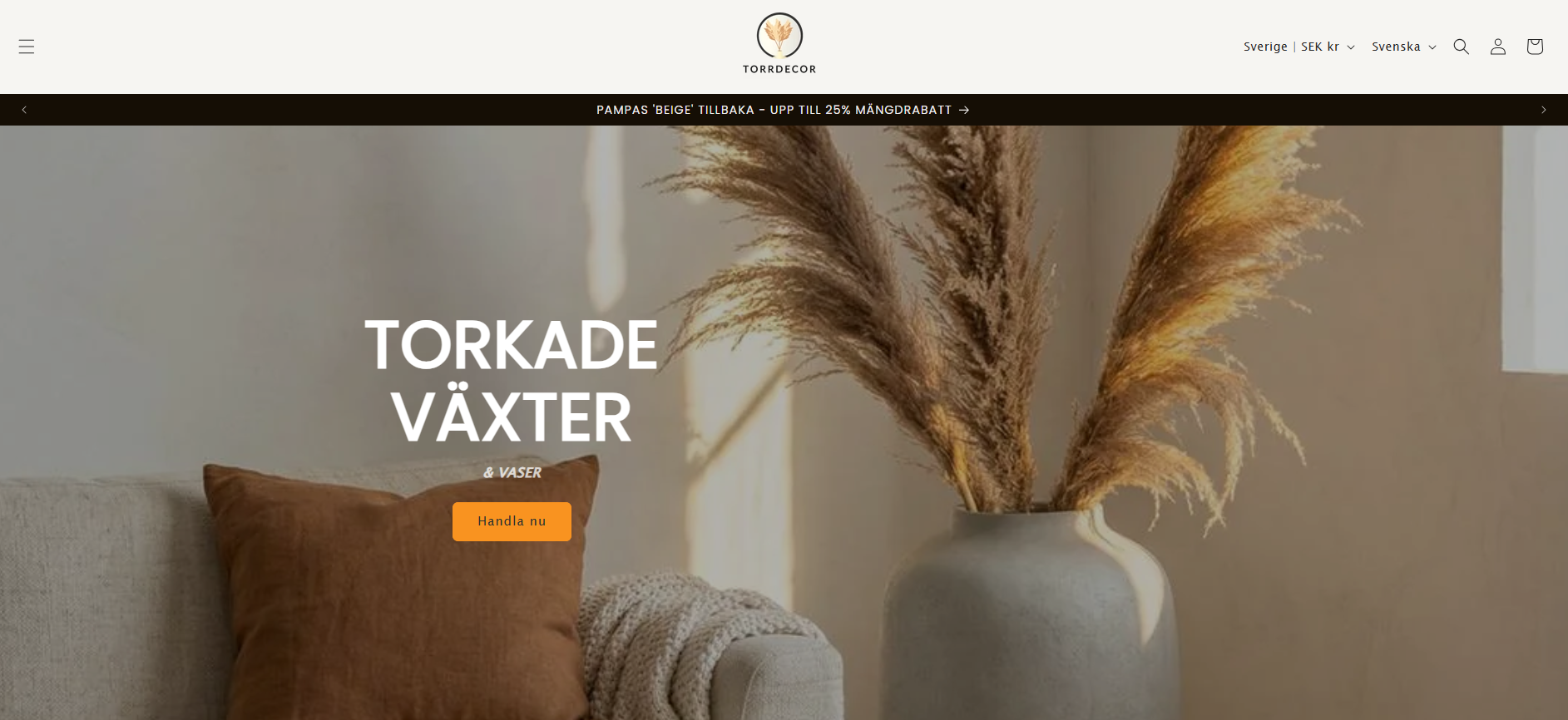
Pampasgräs 110 cm i beige är ett av Torrdecors mest populära val för vardagsrummet. Det tillför mjukhet, textur och naturlig känsla till ett rum utan att ta upp golvyta. Kombinera det med en stilren vas i cream för ett genomtänkt och hållbart dekorationsval som fungerar i både minimalistiska och varma inredningsstilar.
Vanliga frågor
Hur skapar man ett mysigt vardagsrum?
Minst tre lager textilier, matta, kuddar och pläd, kombinerat med stämningsbelysning och dimmer, ger ett trivsamt och ombonat vardagsrum.
Vilka färger passar i ett modernt vardagsrum 2026?
Beige, naturgrönt, terrakotta och varma gråtoner dominerar 2026 och fungerar väl med naturmaterial som trä och lera.
Hur möblerar man ett litet vardagsrum?
Flytta soffgruppen 10–20 cm från väggarna och använd en stor matta under hela soffgruppen för att skapa en luftigare och mer sammanhållen känsla.
Vad är varm minimalism i inredning?
Varm minimalism kombinerar skandinavisk enkelhet med naturmaterial och mjuka textilier för att skapa ett ordnat men inbjudande rum utan kyla eller sterilitet.
Hur inreder man hållbart på liten budget?
Köp basmöbler second hand i naturmaterial och byt ut textilier och accessoarer per säsong. Det ger stor förändring till låg kostnad och lång livslängd.