

TL;DR:
- Interior design accessories are smaller decorative and functional items that give a room personality and style. They include hooks, cushions, vases, and lighting, which can quickly and affordably transform a home or event. The right selection and placement of these details create a more inviting and welcoming room with atmosphere.
Interior design accessories are defined as smaller decorative and functional items used to create style, order, and the right ambiance in a room or at an event. This doesn't refer to sofas, dining tables, or wardrobes, but rather to details like hooks, cushions, and decorative lighting that give a room its personality. Torrdecor works daily with clients who want to understand the importance of interior design accessories and how these details can elevate an entire home or event setting. This guide explains what accessories are, what types exist, how to use them practically, and what to consider for the best results.
What are interior design accessories and why do they matter?
Interior design accessories are all the smaller items and fixtures that complement a room's basic furnishings. The industry's accepted terms are decorative accessories or interior details, but in everyday language and search engines, "interior design accessories" is often used as a collective term. It's important to distinguish these from fixed interior elements like wallpaper and flooring, and from furniture like coffee tables and beds.
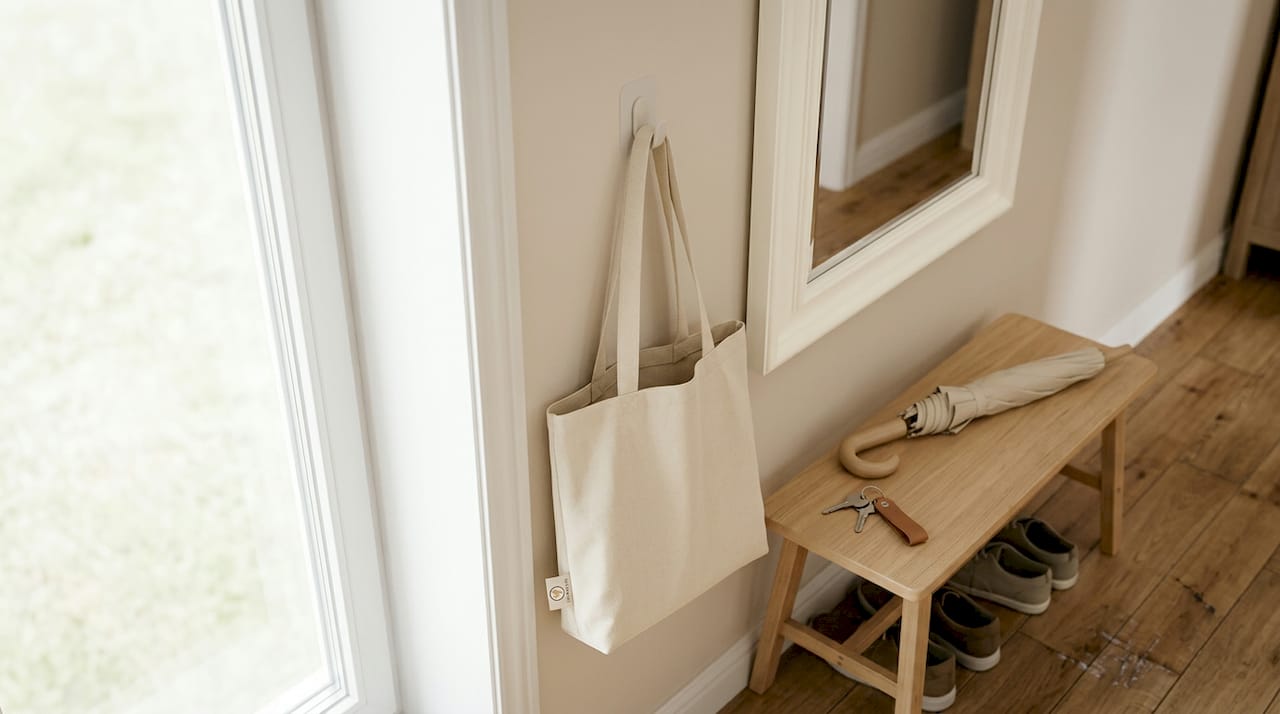
Examples of interior design accessories include self-adhesive hooks like IKEA VALASJÖN, towel rails from Hill Ceramic, decorative lighting such as the IKEA GOKVÄLLÅ LED moon lamp, cushions, throws, vases, dried bouquets, and candle holders. These items serve two functions simultaneously: they are practical and aesthetic. A hook holds up your jacket while also adding a design element to the wall.
The role of accessories in interior design is to create the final ten percent of a room that makes the difference between a neutral space and a home with character. Without these details, a room with expensive furniture can still feel empty and impersonal. With the right accessories, a simple room can feel thoughtfully designed and welcoming.
What types of interior design accessories are there and how do you use them?
Interior design accessories are naturally divided into several categories based on function and placement. Understanding these categories makes it easier to choose correctly and combine them in a way that works in practice.
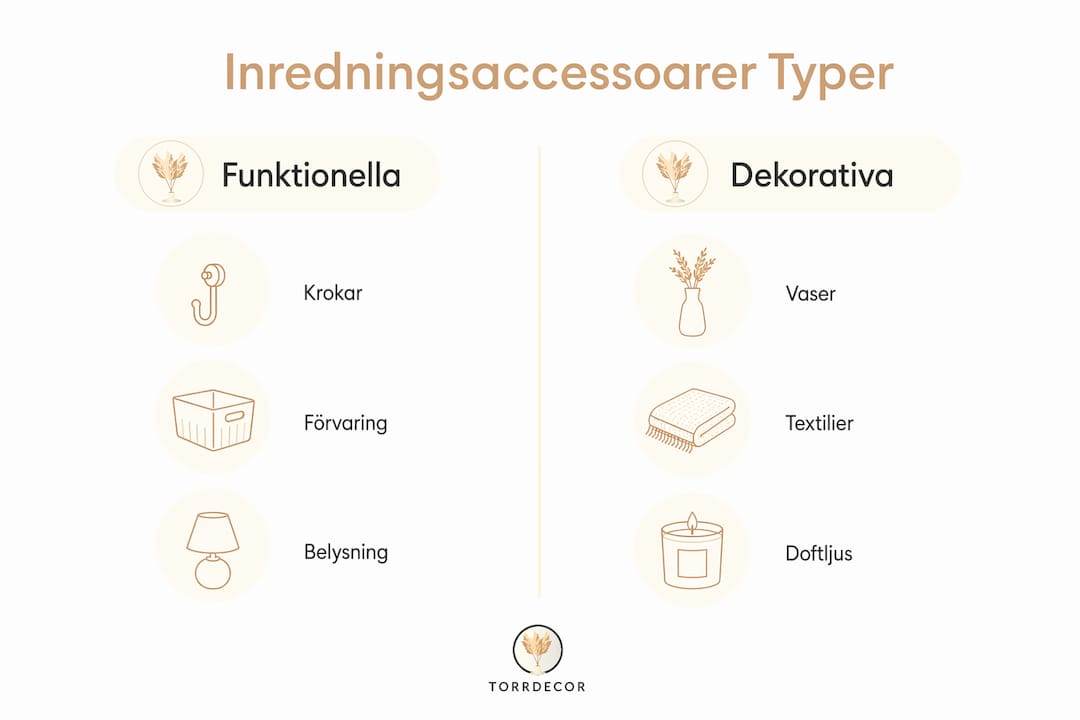
Functional accessories for order and structure
Functional accessories solve a practical problem while also looking good. The most common examples are:
- Self-adhesive hooks like IKEA VALASJÖN, which are installed without tools and are suitable for hallways, kitchens, and bathrooms
- Towel rails in ceramic or metal, for example from Hill Ceramic, which give the bathroom a cohesive look
- Storage boxes and baskets in natural materials like rattan or linen, which hide clutter and add texture
- Trays and dishes in ceramic or wood, which neatly collect loose items on tables and shelves
These accessories are often the first you should invest in because they combine utility with aesthetics. A hallway with well-chosen hooks and a small shelf looks organized and functions better in everyday life.
Decorative accessories for style and ambiance
Decorative accessories have no direct practical function but exist solely to create a feeling or visual interest. These include vases, sculptures, dried flowers, art objects, and decorative candle holders. Dried plants and vases are a popular choice right now because they require no maintenance and last a long time without losing their beauty.
Decorative accessories are strategically placed to create focal points. A large vase with pampas grass in a corner draws the eye and gives the room a natural focal point. Three smaller ceramic objects on a shelf create a composition that looks thoughtful without being overdone.
Textiles as accessories
Cushions, throws, curtains, and rugs are all considered interior design accessories when used for decorative purposes. Textiles add texture, color, and softness to a room in a way that hard materials cannot. Natural materials like linen and cotton in textiles provide a warm and tactile feel and age beautifully over time. This means that an investment in quality textiles actually lasts longer and looks better the more they are used.
Pro Tip: Choose cushions and throws in three different textures but within the same color palette. For example, combine a striped linen cushion, a knitted throw, and a velvet cushion in the same shades of beige and terracotta. The result looks professional without needing to hire an interior designer.
Lighting as an accessory
Decorative lighting is one of the most underrated types of interior design accessories. An LED table lamp like the IKEA GOKVÄLLÅ provides 250 lumens of warm light and works equally well as a decorative item as it does as a light source. String lights, candles, and decorative lanterns belong to the same category and are used to create layers of light in a room.
How can you change your interior design with accessories without replacing furniture?
Changing accessories is the fastest and cheapest way to a new style in your home. IKEA describes this as one of the most effective ways to refresh the living room feel without investing in new furniture. This is true in practice: a cushion cover costs a fraction of what a new sofa does, but can transform the entire room's expression in ten minutes.
Here's a step-by-step method to refresh a room with accessories:
-
Start with an inventory. Go through what you already have and identify what feels worn out, outdated, or doesn't fit with the rest of the decor. Often, simply removing three to four items makes the room feel more airy.
-
Choose a new accent color. Decide on an accent color you want to highlight. It could be a deep green, a warm terracotta, or a soft blue. Then buy two to three accessories in that color, for example, a cushion, a vase, and a small art piece.
-
Change textiles seasonally. Changing cushions, throws, and curtains creates variety while maintaining the overall feel. In autumn, warm earth tones and heavier materials like velvet and wool work well. In summer, lighter linen and cotton are more suitable.
-
Add a natural element. A vase with dried flowers, a rattan basket, or a ceramic bowl with pinecones adds an organic element that softens a room with many hard surfaces. Dried plants are particularly practical because they don't require water or maintenance.
-
Adjust the lighting. Replace a ceiling lamp with a table lamp and add a couple of candle holders. This costs little but changes the room's atmosphere more than most other measures.
Pro Tip: Photograph the room with your phone before you start and then compare it with a photo afterward. It's difficult to see the change with the naked eye when you are in the room, but the camera captures the whole picture and clearly shows what works.
Scent is an accessory that many forget. A scented candle, a diffuser with essential oils, or a small potpourri affects how a room is perceived in a way that is hard to put into words. The room feels more cared for and welcoming, even if nothing visual has changed.
What should you consider when using self-adhesive interior design accessories?
Self-adhesive interior design accessories are practical but require correct handling to work as intended. Incorrect mounting is the most common reason for hooks and holders coming loose or leaving marks on the wall.
Follow these steps for best results:
- Clean the surface thoroughly before mounting. Dust, grease, and dirt significantly reduce adhesion. Use a clean cloth with a little water or isopropyl alcohol and let the surface dry completely.
- Apply even and firm pressure for at least 10 seconds when attaching the accessory. Uneven pressure means the tape won't adhere properly along the entire surface.
- Wait 24 hours before hanging anything on the hook or holder. The tape needs time to bond properly to the surface.
- Check the maximum load capacity for the specific product. IKEA VALASJÖN, for example, is intended for lighter items and should not be used for heavy bags or tools.
- Remove carefully when the time comes. Pull the tape slowly along the wall instead of straight out to reduce the risk of it leaving marks or pulling off paint.
Dusty or uneven walls negatively affect adhesion and can lead to marks when removed. It's normal for the tape to adhere less well to textured wallpaper or whitewashed walls. In such cases, it's better to choose a hook that is mounted with screws.
| Surface Type | Self-adhesive effective? | Recommendation |
|---|---|---|
| Smooth painted walls | Yes, works well | Standard mounting according to instructions |
| Tiles and glass | Yes, works very well | Clean thoroughly with isopropyl alcohol |
| Textured wallpaper | No, works poorly | Choose screw-mounted hook |
| Whitewashed wall | No, works poorly | Choose screw-mounted hook |
| Wood paneling | Yes, often works | Test on a small area first |
The maximum load capacity for self-adhesive hooks varies between products. Most standard hooks can hold 0.5 to 2 kg, which is sufficient for towels, light bags, and keys. Always check the product description before hanging anything heavier.
How do lighting and textiles create a stronger atmosphere in a room?
Lighting and textiles are the two types of interior design accessories that have the greatest impact on how a room is perceived, but they are often planned last and with the least thought. This is a mistake that is easy to correct.
Layers and levels of lighting
Multiple light sources at different levels create a cozier and more vibrant impression than ceiling lighting alone. It's about building up lighting in layers: a central light that provides general illumination, supplementary light at lower levels such as table lamps and floor lamps, and decorative light sources like string lights and candles for ambiance.
A decorative LED table lamp like IKEA GOKVÄLLÅ acts as a focal point and creates a soft, cozy glow. With 250 lumens and warm light, it is not intended to illuminate a room but to create a feeling. This is the difference between functional lighting and decorative lighting, and both are needed in a well-planned room.
Warm light sources with lower intensity are better suited for living rooms and bedrooms than cold, bright lamps. A rule of thumb is to use lamps with a color temperature below 3000 Kelvin in rooms where you want a relaxing feel.
The role of textiles for texture and seasonal adaptation
Textiles do more than add color. They create texture, softness, and a sense of cozy comfort that hard materials cannot replace. A sofa with three cushions in different textures looks more inviting than the same sofa with no cushions at all, no matter how beautiful the sofa itself is.
Textiles and decorations are effective for creating rooms that feel sustainable over time because they can be changed according to season and mood without major renovations. This means you can have a home that always feels current and thoughtful without spending large sums on new furniture every year.
| Accessory Type | Function | Best for |
|---|---|---|
| Cushions and throws | Texture, color, comfort | Living room, bedroom |
| Curtains | Light regulation, room feel | All rooms |
| Rugs | Zone demarcation, softness | Living room, bedroom, hallway |
| Decorative lighting | Ambiance, focal point | Living room, bedroom, events |
| Vases and dried plants | Natural element, decor | All rooms, events |
The combination of proper lighting and thoughtful textiles is what distinguishes a room that looks good in pictures from a room that actually feels good to be in. Start with lighting, then add textiles, and finish with decorative accessories like vases and artworks.
Summarizing insights on interior design accessories
Interior design accessories are the details that determine whether a room feels thoughtfully designed or unfinished, and the right combination of textiles, lighting, and decorative items provides the greatest effect at the lowest cost.
| Point | Details |
|---|---|
| Definition and meaning | Accessories are smaller decorative and functional items, not furniture or fixed fixtures. |
| Types to know | Functional hooks and holders, decorative vases and dried plants, textiles, and lighting. |
| Quick change without furniture | Change cushion covers, throws, and accessories for a new style without buying new furniture. |
| Self-adhesive mounting | Clean the surface, press for 10 seconds, and wait 24 hours for best adhesion and durability. |
| Lighting and textiles | Multiple light sources at different levels and natural materials in textiles provide the greatest atmospheric effect. |
My thoughts on accessories as interior design tools
There's a common misconception that interior design is all about big investments. Many believe they need to change their sofa, buy a new dining table, or hire an interior designer for their home to feel better. My experience suggests otherwise.
The rooms I remember as most welcoming and personal almost always had one thing in common: thoughtfully chosen details. Not expensive furniture, but the right accessories in the right place. A vase with pampas grass in a corner, a throw draped over the armrest of a sofa, a couple of candle holders on the windowsill. These are the details that create the feeling.
The most common mistake I see is people either buying too many accessories and filling every surface, or avoiding them entirely because they don't know where to start. Both extremes yield a poorer result than a thoughtful selection of fewer, better-chosen items. The rule of removing three items for every new one you add is simple yet effective.
Another thing often forgotten is the balance between function and aesthetics. A hook placed at the wrong height, a lamp that shines too brightly, or a rug that is too small for the room looks wrong even if the items themselves are beautiful. Accessories need to work in their context, not just look good in pictures. Torrdecor's range of decorative vases and dried plants is a good example of accessories that combine function and aesthetics without requiring maintenance.
Also, dare to use accessories to express your personal style. Interior design doesn't have to follow trends to be good. A home that reflects its inhabitant is always more interesting than a home that looks like a catalog page.
— Torrdecor
Torrdecor: sustainable interior design accessories with long lifespan
Torrdecor is one of Sweden's leading suppliers of sustainable interior accessories, focusing on dried plants, pampas grass, and decorative vases in white clay. The assortment is designed for those who want beautiful decor without demanding maintenance.
All products are selected for their timeless design and long durability, making them suitable for both homes and for shops and events. The vases are manufactured in Portugal and combined with dried bouquets and pampas grass for a natural and thoughtful expression. Visit Torrdecor About Us to learn more about the assortment and find the right accessories for your home or next event.
FAQ
What are interior accessories?
Interior accessories are smaller decorative and functional items such as hooks, cushions, vases, and decorative lighting. They complement furniture and give a room its personality and atmosphere.
What is the difference between accessories and interior decorations?
Interior decorations are a subset of interior accessories and refer to items that exist purely for aesthetic purposes, such as sculptures and dried flowers. Accessories are a broader concept that also includes functional items like hooks and towel rails.
How do you start decorating with accessories?
Start by removing what doesn't work or feels worn, then choose an accent color and buy two to three accessories in that color. Add a natural element like a vase with dried plants and adjust the lighting with a table lamp or candle holders.
How long do self-adhesive interior accessories last?
Self-adhesive hooks and holders last for several years if the surface is thoroughly cleaned before installation and if the product is not loaded beyond what the manufacturer specifies. Incorrect installation or excessive load are the most common reasons they come loose prematurely.
Which interior accessories are suitable for events?
Decorative lighting such as string lights and lanterns, dried bouquets, vases, and textiles like table runners and cushions work well for events. Dried plants are particularly popular for events because they do not wilt during the day and require no maintenance.
0 comments