

TL;DR:
- Long-lasting durability in plants means they maintain their appearance and function for an extended period without frequent replacements. Plant establishment and proper care are crucial for their longevity and sustainability in the home. Dried plants such as pampas grass are the most durable decor options and require minimal maintenance.
Long-lasting durability in plants is defined as the ability to maintain their fresh appearance and function for an extended period in their environment, without requiring frequent replacements or extensive care. This concept is central for those who want to create an interior that endures over time, both aesthetically and economically. Long-lasting durability is about a low turnover rate: you buy plants less often and avoid recurring costs. It also connects to environmentally conscious interior design, as fewer purchases and less waste are a direct result of choosing the right plants from the start.
What does long-lasting plant durability mean and what is establishment?
Long-lasting plant durability largely depends on how well a plant is adapted to its environment and how stably it is rooted. The term "well-established" is central here. A well-established plant has a strong root system and requires less support to survive and grow. The establishment period can be a year or more, and for larger plants even longer. It is during this period that the plant builds up its resistance to drought, temperature fluctuations, and other stress factors.
The strength of the root system directly determines how long a plant can survive without problems. A plant with a weak or damaged root system withers faster, loses leaves, and requires more care. That's why it pays to buy plants that are already well-established, rather than young seedlings that have not yet built up their stability.
Proper placement in the home plays as important a role as the strength of the root system. A plant placed in the wrong light conditions or in a room with too dry air establishes itself poorly and lasts for a shorter time. Matching the plant's natural needs with the environment you provide is the fastest way to extend its lifespan.
Here are the factors that affect establishment and thus durability:
- Root system size and health at the time of purchase
- Light conditions that match the plant's original environment
- Humidity and temperature in the room
- Soil quality and pot size that give roots space to grow
- Watering frequency adapted to the plant's actual needs
Pro tip: Always buy plants in a pot that is at least 2 cm wider than the root system. This gives the roots space to establish themselves without being choked, which directly extends the plant's lifespan in your home.
Which plants are best for long-lasting durability indoors?
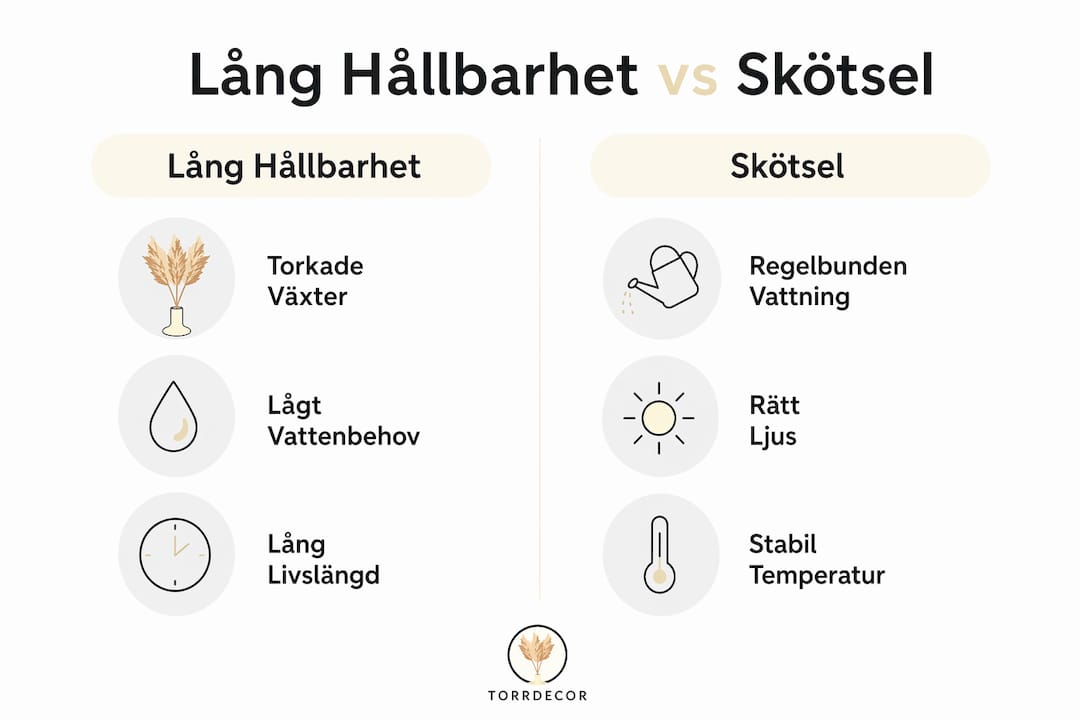
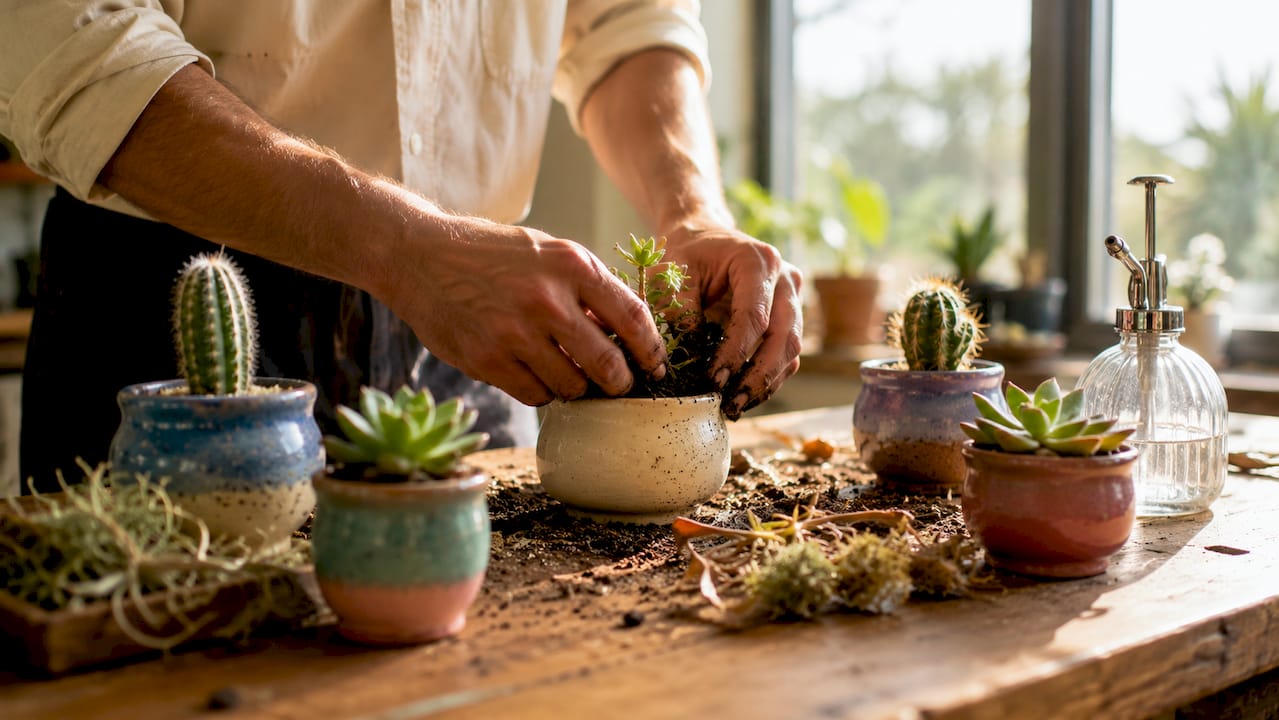
Perennials and dried plants are the clearest choices when you want longevity in your decor. Perennials return year after year and require relatively little maintenance once established. Dried plants are naturally long-lasting indoors and need no water at all. This makes them a unique option for those who want greenery in their home without having to think about weekly care.
| Plant Type | Indoor Lifespan | Care Requirements | Suitable for |
|---|---|---|---|
| Dried plants (e.g., pampas grass) | Several years | Minimal, no watering | All rooms, low maintenance ambition |
| Perennials (e.g., freesia, lavender) | Returns annually | Moderate, seasonal | Garden and bright windows |
| Succulents and cacti | 5 to 20 years | Low, infrequent watering | Sunny windowsills |
| Tropical indoor plants (e.g., monstera) | 5 to 10 years | Moderate, regular watering | Bright rooms with high humidity |
| Cut flowers | 1 to 3 weeks | High, daily care | Temporary decoration |
Dried plants stand out in the comparison. Dried plants as decor offer a sustainable solution that requires minimal care and retains its appearance for a long time. Pampas grass, dried bouquets, and similar products do not change with the seasons and do not need light or water to look good.
Succulents and cacti are another strong option for those who want living plants with a long lifespan. They are adapted to dry environments and do well in Swedish homes where the air is often dry during winter. Monstera and similar tropical plants require more care but can live for many years if placed correctly.
If you choose dried plants over fresh cut flowers, you save both time and money. Cut flowers rarely last more than three weeks, while a bunch of dried flowers can stay in the same vase for several years without losing their character.
How do care and environment affect the durability of indoor plants?
Proper care is crucial for keeping plants fresh and long-lasting. Plants that are cared for correctly are exposed to less stress and can maintain their appearance longer. It's not about spending a lot of time, but about doing the right things at the right time.
Follow these steps to maximize the durability of your indoor plants:
- Adapt watering to the plant's needs. Overwatering is the most common reason indoor plants die. Feel the soil before watering. If it is still moist, wait a few more days.
- Place the plant in the right light. A shade-loving plant placed in direct sunlight will burn its leaves and quickly lose its shape. Check the plant's light requirements at the time of purchase and choose a spot based on that.
- Keep the temperature stable. Most indoor plants thrive best in temperatures between 15 and 22 degrees Celsius. Avoid placing them near radiators, drafts, or cold windows during winter.
- Wipe the leaves regularly. Dust on the leaves blocks light absorption and makes the plant work harder to survive. A damp cloth once a month is sufficient.
- Provide nutrients during the growing season. Liquid fertilizer in spring and summer gives the plant the resources it needs to stay strong and healthy.
Pro tip: Do not move plants unnecessarily. Every time you change a plant's location, it takes time for it to adapt to new light and temperature conditions. Stable conditions are one of the simplest ways to achieve long-lasting durability.
Professional planning and knowledge of the plant's needs make a noticeable difference to durability, both in the home and in public environments. It's not the size of the effort that determines, but how accurate it is.
Long-lasting durability compared to other sustainability aspects for plants
Long-lasting durability and sustainable cultivation are two different concepts, but they reinforce each other when combined. Long-lasting durability is about how long a plant looks good and functions in its environment. Sustainable cultivation is about how the plant was produced, what resources were used, and what environmental impact the cultivation had. Both aspects are relevant for those who want to make conscious choices in their decor.
Long-lasting durability reduces the need for recurring purchases, which saves resources and reduces waste. There is a direct link between economic and environmental sustainability. Every time you avoid throwing away a withered plant and buying a new one, you save on transport, packaging, and production resources.
Here are the most important differences and connections:
- Long-lasting durability focuses on the plant's lifespan and appearance in your environment
- Sustainable cultivation focuses on ecological cultivation methods, water management, and chemical use during production
- The combination of both yields the lowest total environmental impact per year of decoration
- Dried plants often combine both aspects: they require no resources after purchase and last a long time
| Aspect | Long-lasting durability | Sustainable cultivation | Combination |
|---|---|---|---|
| Environmental impact per year | Low (infrequent replacement) | Low (during production) | Lowest overall |
| Cost over time | Low | Varies | Low |
| Care requirements | Low to moderate | Not relevant after purchase | Low |
| Examples | Pampas grass, succulents | Organically grown perennials | Organically dried bouquets |
Plants that are well adapted to their environment and receive stable care conditions usually live longer and look better over time. This means that sustainable decor is not just about the plant itself, but about the right place and resource-efficient care throughout the plant's lifespan. Choosing a plant with a long natural lifespan and placing it correctly is the most effective way to reduce your decor's total environmental impact.
Key takeaways
Long-lasting durability in plants is achieved through proper plant selection, good establishment, and adapted care, and dried plants like pampas grass are the option that requires the least resources over time.
| Point | Details |
|---|---|
| Definition of long-lasting durability | Plants maintain their appearance for a long time and rarely need replacement, reducing costs and waste. |
| Establishment is crucial | A strong root system and the right environment during the first year determine how long the plant lasts. |
| Dried plants last longest | Pampas grass and dried bouquets require no water and retain their shape for several years. |
| Care extends lifespan | Proper watering, light, and stable temperature reduce stress and keep the plant healthy longer. |
| Durability is more than lifespan | Combine long lifespan with ecological growing methods for the lowest total environmental impact. |
Why long-lasting durability is the smartest choice for modern decor
I've followed the trend of indoor plants for a long time, and what strikes me most is how often people make the wrong choice from the start. They buy beautiful cut flowers that wither after ten days, or tropical plants that require more care than they are willing to give. The result is frustration, waste, and a decor that never quite settles.
What truly works in a modern home are plants with long natural durability. Not because it's easiest, but because it's most honest about how we actually live. Most of us don't have time to water, prune, and fertilize every week. We want beautiful homes without it becoming a project.
Dried plants, and pampas grass in particular, have changed how I think about plant decor. They demand nothing from you after you've placed them. They don't change with the seasons. They fit in all types of homes, from minimalist apartments to more rustic environments. It's a form of sustainable decor that actually delivers on its promise.
What I also appreciate is the economic honesty of it. A bouquet of dried flowers that lasts for three years costs, in practice, a fraction of what you pay for fresh flowers every month. It's a choice that benefits both your wallet and the environment, without you having to compromise on aesthetics.
My recommendation is simple: start by identifying which rooms in your home actually get the right light and temperature for living plants. Place hardy plants like succulents or monstera where the conditions are suitable. In other rooms, choose dried plants like pampas grass or dried bouquets. It's a setup that lasts a long time and looks good constantly.
— Torrdecor
Torrdecor helps you choose right from the start
Torrdecor specializes in sustainable plant solutions for homes, shops, and events, focusing on products that last a long time without requiring daily care.
Torrdecor's assortment includes pampas grass in several varieties, dried bouquets, and decorative vases made in Portugal. Each product is chosen for its ability to maintain its appearance for a long time, making them a natural choice for those who want beautiful decor without high maintenance requirements. Torrdecor is one of Sweden's leading suppliers of pampas and also offers care guides for dried plants for those who want to maximize the lifespan of their decorative plants. Read more about the philosophy and assortment on Torrdecor's About Us page.
FAQ
What does long-lasting durability in plants mean?
Long-lasting durability in plants means they maintain their appearance and function for an extended period without requiring frequent replacements. The term is often used synonymously with low turnover rate in interior design contexts.
Which plants have the longest durability indoors?
Dried plants such as pampas grass and dried bouquets have the longest durability indoors because they don't need water and are unaffected by seasonal changes. Succulents and cacti are the best option among living plants, with lifespans of up to 20 years.
How long does it take for a plant to become well-established?
The establishment period is at least one year for most plants, and for larger specimens, it can take even longer. A well-established plant has a strong root system and can manage with less support and care.
How do I extend the lifespan of my indoor plants?
Adapt watering to the plant's actual needs, place it in the right light, and maintain a stable temperature between 15 and 22 degrees Celsius. Proper care reduces stress and helps the plant retain its appearance longer.
Are dried plants a sustainable choice for decor?
Dried plants are one of the most sustainable choices for decor because they require no resources after purchase and maintain their appearance for several years. Combined with reducing the need for recurring purchases, they contribute to both lower costs and reduced environmental impact.
0 comments