

TL;DR:
- White terracotta pots are popular interior design accessories that can be glazed or unglazed, which affects their properties and function. Unglazed pots are porous and regulate moisture naturally, while glazed ones are denser and require better drainage to prevent root rot. Proper care and cleaning extend the life of the pots, making them durable, stylish additions to the home.
White terracotta pots, or white-glazed and white-patinated terracotta pots as they are called in the industry, are one of the most talked-about interior design accessories right now. But the question of what white terracotta pots are is rarely answered completely correctly. Many people believe that all white pots are the same, but the difference between a glazed and an unglazed white terracotta pot affects both the well-being of the plants and the lifespan of the pot. This guide provides concrete answers about materials, properties, care, and decoration possibilities so you can make an informed choice for your home.
Table of Contents
- Key Takeaways
- What are white terracotta pots: materials and manufacturing
- Properties and benefits of white terracotta pots
- Differences between white and other terracotta pots
- How to care for and clean white terracotta pots
- Creative ways to use white terracotta pots
- My view on white terracotta pots in the home
- Find the right white terracotta pots at Torrdecor
- Frequently Asked Questions
Key Takeaways
| Point | Details |
|---|---|
| White color varies in type | White surface can be glaze or surface treatment, which directly affects porosity and breathability. |
| Breathability is crucial | Unglazed white terracotta pots regulate moisture naturally, providing a healthier environment for roots. |
| Cleaning extends lifespan | Thorough cleaning and drying reduce the risk of pests and diseases when reusing. |
| Stylish and timeless aesthetic | White pots suit most interior styles and combine easily with dried or living plants. |
| Paint for new life | Old terracotta pots can be renovated with acrylic or spray paint instead of buying new. |
What are white terracotta pots: materials and manufacturing
White terracotta pots are essentially pots made of fired clay, i.e., terracotta or ceramic, where the white color comes either from a glaze, a surface treatment, or from a naturally light clay material. The term "white terracotta pot" is a broad collective name used by readers and consumers, but in the ceramic tradition, there is a clear distinction between glazed and unglazed examples. The difference is not only aesthetic but also affects how the pot functions in practice.
Unglazed white terracotta pots
An unglazed white terracotta pot has a porous surface through which air and water can pass through the pot's walls. It is the classic terracotta pot, but made of a lighter clay material or treated with white lime paint. The matte, natural surface gives a stripped-down and organic look that fits well with Scandinavian interiors.
Since the surface is open and porous, there is a natural moisture regulation. Excess water evaporates through the walls, which reduces the risk of overwatering. This is precisely the property that has long made breathable terracotta pots considered one of the best options for plant health.
Glazed white terracotta pots
A glazed white terracotta pot has a layer of glaze applied and fired in the kiln, forming a dense, non-porous surface. The surface looks smooth and shiny, or matte depending on the glaze type. Moisture and air cannot pass through the walls in the same way.
Glazed pots are less porous than unglazed ones, which means that water management and drainage through the bottom hole become extra important. Without a functioning bottom hole, water can remain and cause root rot.
Manufacturing process and its impact
Manufacturing takes place in large kilns where the clay is fired at high temperatures. The temperature and firing time determine the pot's hardness and porosity. A lower firing temperature results in a more porous pot, while a higher temperature or a glaze seals the surface. White color can come from glaze or surface treatments, meaning that function and appearance vary depending on how the pot has been treated.
The most common types you encounter in stores and online are:
- White terracotta: Classic fired clay in a light clay material, porous and breathable.
- White-glazed ceramic: Dense surface with a glossy or matte finish, limited moisture penetration.
- White-washed ware: Older pots treated with lime paint, giving a rustic and country look.
- Stoneware with white glaze: Heavier and more durable, common in more robust interior styles.
- Portuguese white clay: Handmade pots in a light clay material, often with unique shapes and textures.
Properties and benefits of white terracotta pots
White terracotta pots combine practical plant properties with an aesthetic that works in many different environments. It is the combination of these two factors that makes them so popular for sustainable home decor.
Porosity and plant well-being
The most important property of an unglazed white terracotta pot is its porosity. Through the microscopic pores in the pot's walls, oxygen can reach the roots. This is not a small detail. Roots need oxygen to absorb nutrients and water, and a pot that suffocates internally due to poor air circulation leads to unhealthy plants.
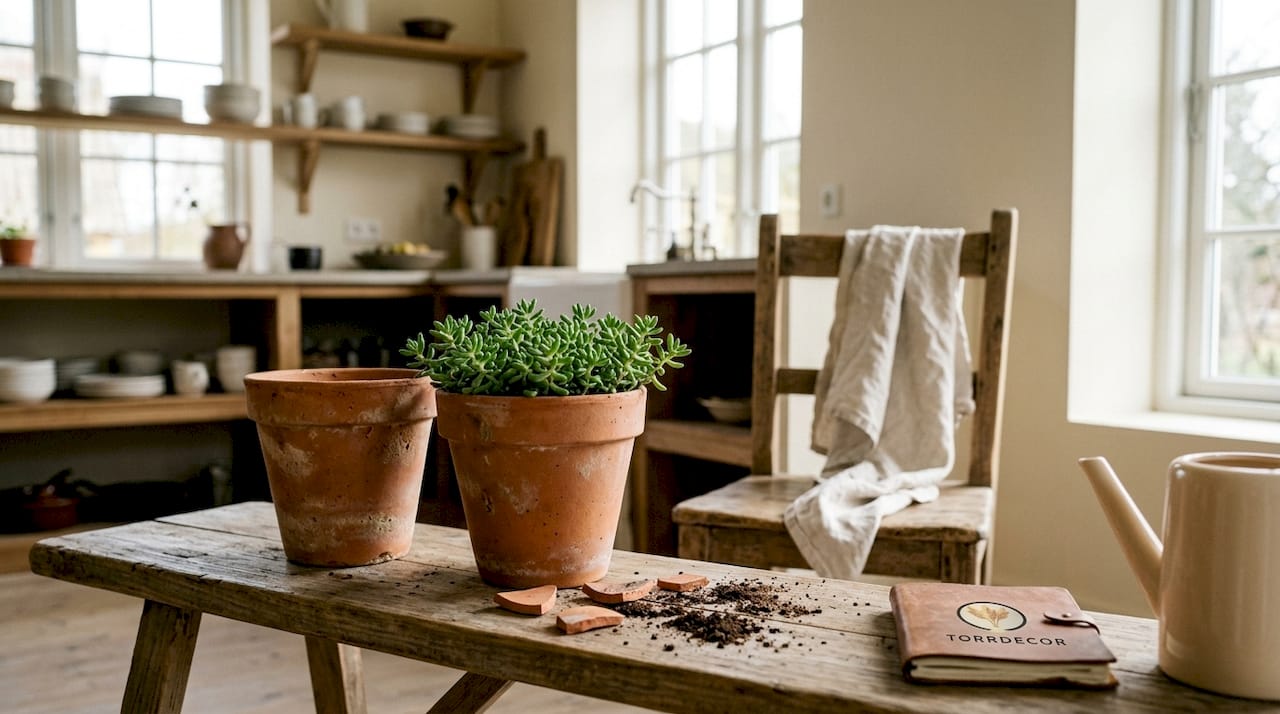
Terracotta pots allow air and water penetration, actively supporting root development and healthy growth. This is most noticeable for plants that are sensitive to overwatering, such as cacti, succulents, and many herbs.
Moisture regulation in practice
Another concrete advantage is moisture regulation. An unglazed terracotta pot absorbs some of the water you pour in, and then gradually evaporates it through the walls. This creates a more stable moisture flow around the roots compared to a plastic pot where all moisture remains. This is the normal behavior of terracotta pots and nothing to worry about.
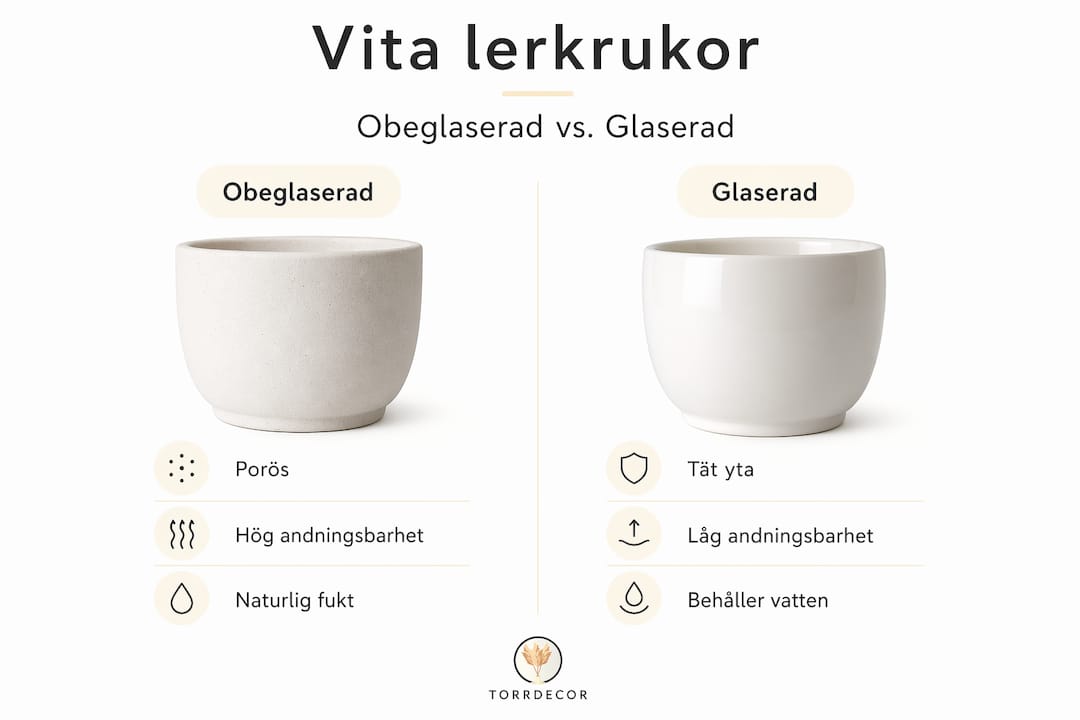
| Property | Unglazed white terracotta pot | Glazed white terracotta pot |
|---|---|---|
| Breathability | High | Low |
| Moisture regulation | Natural evaporation | Requires drainage hole |
| Surface maintenance | Can develop white patina | Easier to wipe clean |
| Aesthetic expression | Matte, natural | Glossy or matte finish |
| Suitability for sensitive plants | Very good | Good with proper drainage |
Insulating properties and durability
Clay insulates against temperature fluctuations, protecting roots from rapid temperature changes. This is beneficial for plants that thrive with stable soil temperatures. Indoors, it plays a smaller role, but for pots on a partially covered patio or balcony, it can be noticeable during seasonal changes.
An important thing to know about durability: terracotta pots should not be left outdoors during winter as they can crack in freezing temperatures. Indoors, with proper care, they can last for many years. This makes them a truly sustainable choice compared to plastic pots, which often break down and are discarded.
Pro Tip: Never place an unglazed white terracotta pot directly on a wooden surface. The moisture evaporating through the walls can discolor or damage the surface underneath. Use a saucer or a cork mat.
Aesthetic diversity and style possibilities
White pots are a timeless element in Scandinavian and modern interior design thanks to their clean expression. They do not draw attention away from the plants but serve as a neutral background that highlights the green or dried material. They are easily combined with wood, concrete, natural materials, and textiles in various shades, making them flexible whether you have a minimalist or a more eclectic home.
If you want to delve deeper into how ceramic vases and pots contribute to sustainability and style in the home, there is much to explore regarding material choices.
Differences between white and other terracotta pots
Choosing white pots over terracotta-colored or dark clay pots is about more than just aesthetics. There are concrete differences that affect how you care for your plants and your decor.
Color and light reflection
White color reflects light and heat more than dark colors. This means that a white pot maintains a slightly lower soil temperature than a black or dark brown pot that absorbs sunlight. In a sunny window or on a south-facing balcony, this can actually be an advantage, as roots in dark pots can be stressed by high heat.
Black terracotta pots absorb heat faster and can be a better choice during colder months or in environments with little light, as the extra warmth stimulates root development. This is a difference most people don't consider until they notice problems.
Differences between white and black terracotta pots: a direct comparison
| Property | White terracotta pot | Black terracotta pot |
|---|---|---|
| Light reflection | High, maintains lower soil temperature | Low, absorbs more heat |
| Aesthetics | Neutral, stylish | Dramatic, high contrast |
| Visibility of lime stains | More visible with darker deposits | Less visible |
| Suitability for sunny locations | Excellent | Can get too hot |
| Combination in decor | Suits most styles | Suits industrial and modern styles |
The role of the drainage system
Regardless of color, a functioning drainage system is crucial to prevent overwatering and root problems. Always use pots with drainage holes and complement with a saucer. This is especially true for glazed white pots where water cannot evaporate through the walls.
Misconceptions about white patina
A common misconception is that the white, chalk-like coating that forms on unglazed terracotta pots is a sign of poor quality or dirty pots. This is normal. It is salts and minerals from water and fertilizers that migrate through the porous walls and crystallize on the surface. This does not negatively affect the plant's well-being. If you want to remove it, simply scrub with a soft brush and a little water.
The right size and drainage holes are also important not only for plant growth but also for home aesthetics, as a pot that constantly overflows creates more problems than joy.
How to care for and clean white terracotta pots
A well-maintained white terracotta pot lasts a long time and provides value year after year. Cleaning is the single most important measure to prevent the spread of pests and diseases when changing plants or reusing a pot.
Thorough cleaning of terracotta pots reduces the risk of pests and diseases spreading to the next plant you pot. It's not just good hygiene. It's the difference between a pot that brings joy for ten years and one that ruins your plants over and over again.
Step-by-step: cleaning and disinfection
- Remove all soil and roots with an old fork or spoon. Scrape the inside of the walls thoroughly to remove embedded soil particles.
- Soak the pot in warm water for 15 to 20 minutes if there is stuck-on dirt or mineral salts. This dissolves deposits without requiring harsh scrubbing.
- Scrub with warm water and dish soap using a brush. Focus on edges, drainage hole, and inside.
- Rinse thoroughly with clean water until all soap suds are gone. Soap residue can irritate plant roots.
- Disinfect if necessary. If the previous plant had problems with diseases or pests, mix 1 part white vinegar with 4 parts water and let the pot soak for 30 minutes. Then rinse again.
- Dry completely before repotting. Terracotta pots require gentle cleaning and complete drying before reuse to function optimally.
- Store dry. Do not stack pots that are still damp. This creates an environment where mold and bacteria thrive.
Pro Tip: Never put wet terracotta pots in plastic bags for storage. Moisture that cannot evaporate quickly creates mold spores. Always store in an airy, dry place.
Maintaining the white surface
Over time, the surface of a white terracotta pot can turn yellow or become discolored, especially if it has been in the sun or stained by fertilizers. There is a simple way to restore its appearance without buying a new pot. White terracotta pots can regain their fresh appearance by being repainted with acrylic paint or spray paint after thorough cleaning and drying. It is a sustainable alternative to buying new and gives the pot a whole new look. Choose a paint designed for ceramics or stone for the best results.
Hygiene is central to sustainable reuse, and in many cases, it is more important than the material of the pot when it comes to preventing pests and diseases.
Creative ways to use white terracotta pots
White pots are flexible. They work just as well with a lush monstera as with a bunch of dried eucalyptus. Here are concrete ideas for how you can use them in your home.
With living and dried plants
White terracotta pots are excellent for dried plants for the home because the neutral white color highlights the natural material without overpowering it. Dried flowers, pampas grass, and eucalyptus look particularly good in a matte white terracotta pot. The combination is easy to care for and durable, making it perfect for those who want stylish decor without daily maintenance.
- Pampas grass in white terracotta: The airy, feathery pampas contrasts beautifully with the heavy, solid pot.
- Dried bouquets with eucalyptus: A neutral white background allows the scent and textures of eucalyptus to take all the attention.
- Succulents and cacti: Work excellently in unglazed white terracotta pots as moisture regulation benefits these water-sensitive plants.
- Herbs in the kitchen: A row of white terracotta pots with basil, thyme, and rosemary looks both practical and decorative on a kitchen counter.
Paint and renovate old pots
Old terracotta pots that have lost their luster are excellent raw material. Spray paint and acrylic paint are used after thorough cleaning and drying to give a fresh look. You can create a pattern with masking tape, paint only the outside white and leave the inside natural, or cover the entire pot in a shade that matches your room.
Combination with other materials and colors
White pots serve as a neutral base in interior design. They naturally combine with:
- Wood and rattan: Creates a warm and organic expression.
- Concrete surfaces: Creates a modern and industrial impression.
- Dark textiles: The contrast between a white pot and dark linen fabric provides a sophisticated result.
- Gold and brass: A white terracotta pot with a small brass saucer underneath looks elegant and well-planned.
Placement and styling tips per room
In the living room, a cluster of three white terracotta pots of different heights next to a sofa works well as a focal point. In the bedroom, a single, oval white pot with a dried twig creates a calm and refined feeling. In the bathroom, if you have natural light, a small white terracotta pot with a moisture-tolerant plant like a fern is a practical and stylish choice. And in the hallway, place a tall, cylindrical white pot with pampas grass for a welcoming impression right at the entrance.
For more inspiration on white vases in sustainable decor, you can find many ideas and product choices.
My take on white terracotta pots in the home
I've worked with interior details for a long time, and one of the pieces of advice I give most often is about material over appearance. It's easy to get caught up in aesthetics when choosing pots, but the real difference is noticeable after six months when a plant either thrives or struggles to survive.
What I've learned from practical experience is that unglazed white terracotta pots are the most forgiving for beginners. They communicate with you. If the surface looks dry and light, the soil is dry. If it looks dark and moist near the base, you should wait to water. That signal is completely absent in glazed or plastic-based pots. It's a simple visual aid that most people never think about until they hear it.
Another thing I often hear is that white pots get dirty quickly. It's true that limescale stains are visible, but that's not dirt. It's a natural sign that the pot is doing its job. I see it more as proof that the material works. If you want an easier-to-maintain option without the white stains, a glazed alternative is something to look at.
The most common misconception I encounter is that white terracotta pots are fragile. They are actually sturdier than they look. With proper indoor storage, away from frost, they last for decades. It's a one-time investment with high aesthetic returns. And once you start combining white pots with dried plants, you'll understand why they never really go out of style. It's not trends that drive their popularity. It's that they genuinely work, year after year.
— Torrdecor
Find the right white terracotta pots at Torrdecor

Torrdecor has built its assortment around exactly what you're looking for: durable interior details with a long lifespan and minimal maintenance. White terracotta pots and vases made from Portuguese white clay are a central part of the range, manufactured with a focus on quality, form, and function. They are equally suitable for those who want to display pampas grass or dried bouquets as for those seeking a neutral pot for a living plant.
Torrdecor offers unique vase models with genuine forms manufactured in Portugal, and each product is carefully selected to suit modern homes. Combine a white terracotta pot with a bunch of dried eucalyptus or pampas grass for a stylish result that lasts a long time without maintenance. Read more about Torrdecor's view on sustainable interior design and about Torrdecor's products to find what's right for your home. The range is continuously growing and suits private individuals, interior designers, and companies alike.
Frequently asked questions
What is the difference between a glazed and unglazed white terracotta pot?
An unglazed white terracotta pot is porous and breathable, which naturally regulates moisture and benefits the roots. A glazed white terracotta pot has a dense surface and requires good drainage through bottom holes to avoid water accumulation.
Why do white terracotta pots get white stains on the outside?
These are salts and minerals from water and fertilizer that migrate through the pores and crystallize. This is normal behavior for unglazed terracotta pots and does not negatively affect the plant's health.
Can I use white terracotta pots outdoors all year round?
Terracotta pots should not be left outdoors during winter as they can crack in freezing temperatures. Bring them inside if there's a risk of frost. Indoors, they will last for many years with proper care.
What fits well in white terracotta pots for decoration?
White pots work excellently with dried plants such as pampas grass and eucalyptus, succulents, herbs, and green houseplants. The neutral color highlights the decorative material without competing with it.
How do I clean a white terracotta pot correctly?
Scrape off soil, soak in warm water, scrub with dish soap and a brush, rinse thoroughly, and let dry completely. Disinfect with diluted vinegar if the previous plant had diseases or pests.
0 comments