

TL;DR:
- Long-lasting interior design relies on natural materials, durable construction, and continuous maintenance to extend lifespan. Timeless design and correct installation are crucial for the interior to remain functional and relevant for many years. Choosing quality furniture, maintaining it regularly, and combining a timeless base with interchangeable details creates a sustainable interior that reduces unnecessary consumption.
What exactly is long-lasting interior design? It's a concept many use but few properly define. Long-lasting interior design isn't just about an item looking good for ten years. It's about the interplay between materials, construction, function, and ongoing care. Many believe that new is always better and that used items are short-lived, but research shows the opposite. This article will go through what truly determines the lifespan of interior design and provide you with concrete tools to make smarter choices, whether you're furnishing a home or a commercial space.
Key Takeaways
| Point | Details |
|---|---|
| Materials form the foundation | Natural materials like wood, stone, and wool age well and retain their attractiveness over time. |
| Construction is crucial | The frame and joints of furniture play a greater role than surface materials for long-term durability. |
| Maintenance extends life | Proper care can double a piece of furniture's lifespan, while improper handling dramatically shortens it. |
| Timeless design lasts longer | Interior design that doesn't rely on trend-sensitive details remains relevant and functional for decades. |
| Used can be better | Furniture with solid construction often has a longer remaining lifespan than new budget alternatives. |
What is long-lasting interior design?
The industry term for what we are discussing is sustainable interior design or long-life interior design, and these concepts cover more than just aesthetics. Understanding what long-lasting interior design entails is the first step towards making conscious purchasing decisions that truly last.
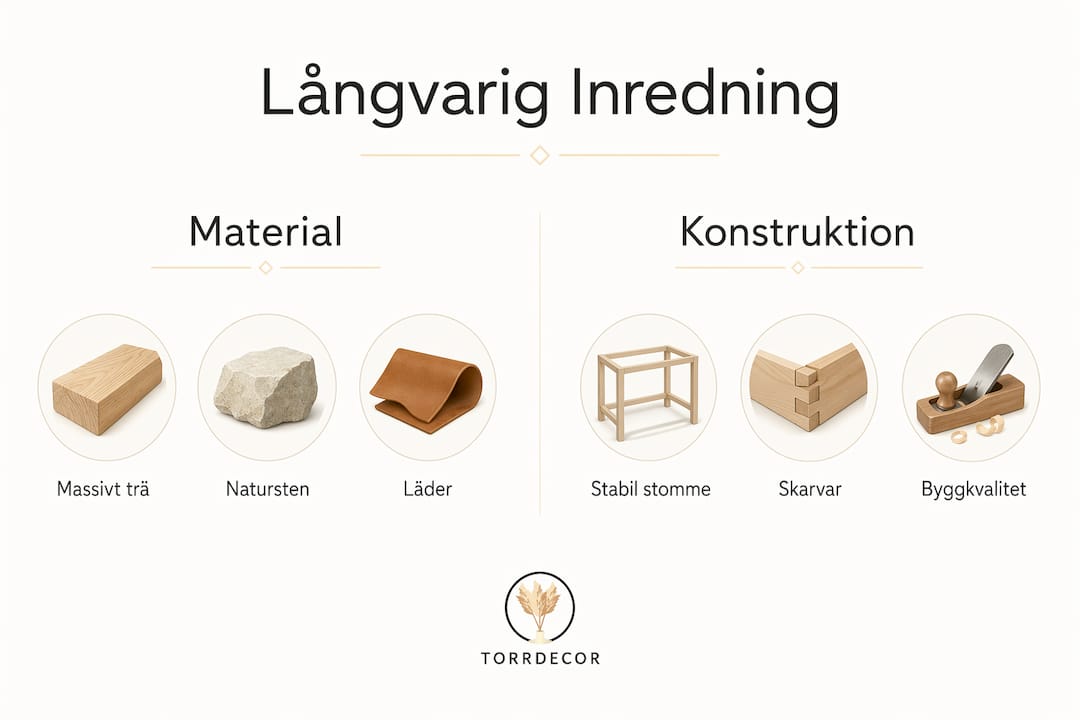
Timeless interior design includes fewer but better pieces of furniture made from natural materials such as wood, stone, and wool—materials that maintain their attractiveness over time. There isn't a simple correlation between price and lifespan. An expensive piece of furniture made from the wrong material in the wrong environment will last a shorter time than an affordable piece of furniture of the right quality with proper care.
Three factors always interact in long-lasting interior design:
- Material: What the furniture or decorative object is made of, and how that material ages under normal conditions.
- Construction: How well it is built, especially the frame, joints, and seams that bear stress.
- Maintenance: How you care for the interior over time, including cleaning, inspection, and any necessary repairs.
There are plenty of common misconceptions. Many believe that "sustainable interior design" only refers to environmentally friendly materials, or that a high-priced piece of furniture will automatically last a long time. Others believe that a used item is worn out and short-lived. All three assumptions are poorly aligned with reality. Sustainable interior design involves a holistic approach where thoughtful choices reduce unnecessary consumption and waste, creating spaces that function for many years without needing renovation.
Pro Tip: Before buying a piece of furniture, ask yourself if you can see yourself using it in ten years. Not if you like it today, but if it will still fit your life then.
What characterizes long-lasting interior design?
There are clear characteristics of interior design that truly lasts. Timeless proportions, simple forms, and neutral or classic color palettes are common denominators. Interior design that doesn't rely on the year's trendy color or a specific design movement remains relevant longer. Materials and proportions should interact calmly and relevantly over time, without relying on trend-sensitive details.
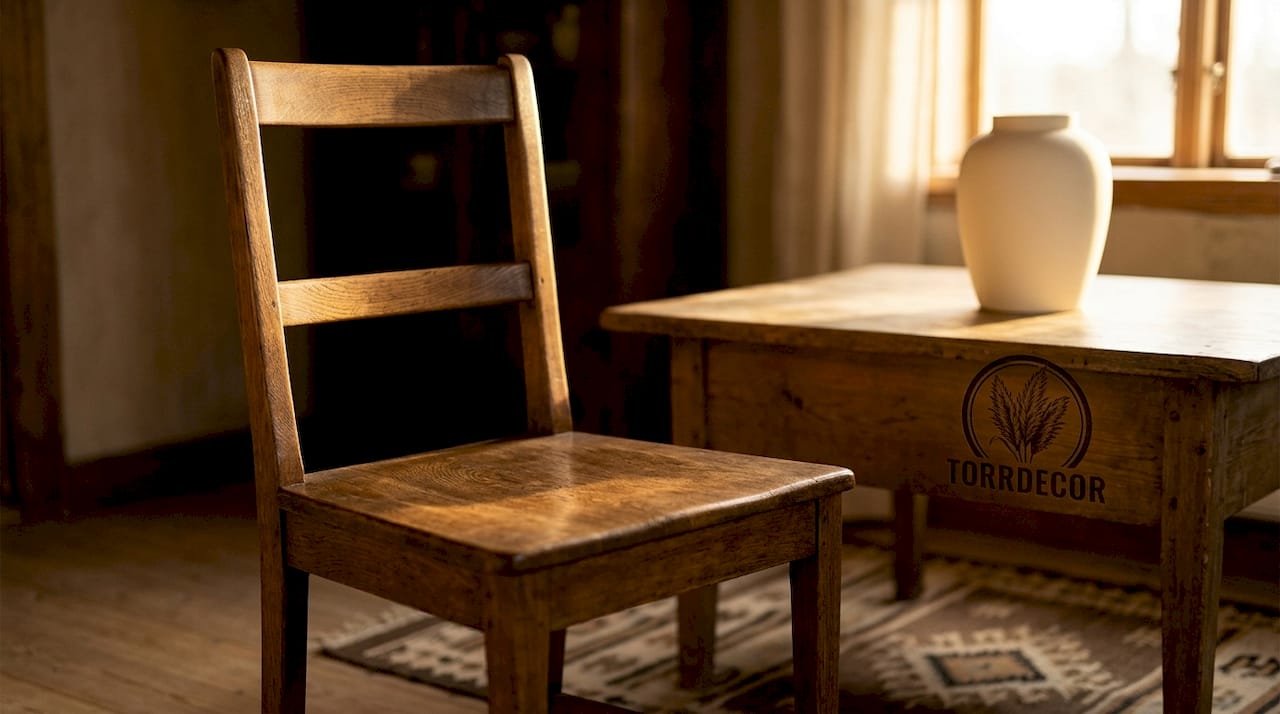
Function is just as important as form. A chair that looks fantastic but is uncomfortable to sit in for long periods, or a cabinet with doors that start to malfunction after two years, is not long-lasting interior design regardless of the material choice. Long durability requires that the interior is used, not stored away for preservation.
Fundamental principles of materials and construction
The choice of material sets the framework for how long interior design can last. Natural materials like solid wood, natural stone, metal, leather, wool, and linen have a natural ability to age gracefully. They rarely fade unattractively, they can be refurbished, and they carry history that makes them more interesting with age.
Synthetic materials and particle board can look similar at a lower cost, but they age differently. Surface layers come off, swelling occurs with moisture, and repair options are limited. This doesn't mean all synthetic materials are bad, but it requires you to know what you are choosing and why.
The hidden role of construction
Build quality, especially the frame and joints of furniture, is often more decisive than the surface material when it comes to longevity. A sofa with a solid wood frame and well-stitched joints will remain stable for decades. A sofa with a thin-walled metal frame and glued joints will start to loosen and jam long before the fabric is even worn out.
This is something you rarely see in a furniture store. The appearance of the surface is marketed, not what's inside. Ask the salesperson about the frame's material and construction. Turn the furniture over, feel if it's stable, and check if the joints are screwed, doweled, or merely glued.
Pro Tip: Lift one corner of the sofa or chair. A solid construction feels heavy and stable. If the entire piece of furniture wobbles and creaks at the slightest movement, the construction is likely not built for long-term durability.
The impact of care and maintenance on longevity
It is a common mistake to underestimate the need for proper maintenance. Many people buy quality interior furnishings but handle them carelessly, dramatically shortening their lifespan as a result.
Extending the lifespan of your interior requires a systematic approach. Here are the most important actions in order of priority:
-
Regular cleaning: Dust, dirt, and moisture are the three most common culprits behind wear and tear. Clean surfaces regularly using the correct methods for each material. Wood should be wiped with a damp cloth, not wet. Leather needs to be conditioned a couple of times a year.
-
Inspection of joints and seams: Annually check if screws need tightening, if joints have started to loosen, and if moving parts are functioning as they should. Small problems addressed early cost little. The same problems ignored for three years can require expensive repairs.
-
Moisture and temperature control: Wood moves with humidity. Stone cracks with extreme temperature changes. Do not place sensitive materials near radiators, in drafts, or directly against cold exterior walls without air circulation.
-
Correct maintenance products: The lifespan and maintenance of wood-based materials are strongly affected by ongoing supervision and proper care, for example, keeping surfaces free from dirt and moisture. Use product-specific maintenance agents, not generic all-purpose cleaners that can damage surface layers.
-
Document your interior: Keep product sheets, assembly instructions, and maintenance recommendations. When a problem arises, you will know exactly how the material should be handled and can contact the manufacturer with the correct information.
The importance of installation
Incorrect installation can dramatically shorten the lifespan, which in the best case can be up to 50 years. This applies not only to building elements but to all interior furnishings that are assembled. Shelves that are not correctly anchored to the wall, kitchen cabinets that hang crookedly, or window frames that are not properly aligned, all create stresses that no construction is designed for.
Take your time with the installation. Hire professionals if you are unsure, and always check that adjustments are straight, stable, and carried out according to the manufacturer's instructions.
Function, dimensions, and rules for sustainable interior design
Long-lasting interior design must be correctly dimensioned and placed. This is not about taste, but about actual functional requirements that determine whether a space will work well for decades.
The Swedish National Board of Housing, Building and Planning (Boverket) has clear functional requirements for dwellings. The cooking area must be at least 1.80 m in a dwelling up to 35 square meters, with corresponding requirements for storage and entrance. These dimensions are not arbitrary. They are based on ergonomics and actual use, and interior design that respects them will remain in use longer.
| Space | Functional requirement | Consequence if ignored |
|---|---|---|
| Kitchen | Cooking area at least 1.80 m (dwelling up to 35 m²) | Insufficient workspace leads to incorrect movement patterns and faster wear |
| Storage | Sufficient volume for normal household needs | Overfilled cabinets stress hinges and lead to mechanical wear |
| Entrance | Space for dressing and undressing | Crowding creates abnormal wear on walls and floor near the door |
| Commercial areas | Industry-specific requirements for circulation space and accessibility | Incorrect dimensioning can violate building codes and require costly reconstruction |
Specific challenges of commercial environments
In commercial settings, the consequences of poor interior design are direct and costly. Durable commercial environments require interior design to be viewed as part of a larger system that includes risk minimization and operational economy. A restaurant that chooses cheap chairs saves money in the short term but replaces them three times during the period quality chairs would have lasted. Over ten years, the cost of the cheap chairs is often higher, and operational disruptions are an added factor.
Correct interior design in a commercial environment involves choosing products that can withstand frequent use, cleaning agents, and the wear and tear associated with high traffic. Materials must tolerate regular chemical cleaning, and the construction must handle daily, intensive use without breaking down.
New or used: what lasts longest?
The simple answer is that lifespan depends on construction and maintenance, not whether a piece of furniture is new or used. The most common misconception is that new is automatically better. A 15-year-old solid wood sofa can last another 15 to 20 years with proper care, while budget sofas made of particle board and thin upholstery fabric can noticeably deteriorate after just 3 to 5 years.
There's also an argument for used items that is rarely highlighted: furniture that has already been tested in real-world use for ten years has proven its construction quality. If a sofa is still stable and functional after a decade, you know the frame joints hold, the springs are intact, and the fabric is aging gracefully.
Here is a comparison of typical lifespans based on segment:
| Furniture Type | Quality Level | Expected Lifespan |
|---|---|---|
| Sofa | Budget (particle board/synthetic) | 3 to 5 years |
| Sofa | Mid-range | 8 to 12 years |
| Sofa | Solid wood, quality fabric | 20 to 30 years |
| Chair | Budget | 2 to 5 years |
| Chair | Quality craftsmanship | 15 to 40 years |
| Dining table | Particle board with surface layer | 5 to 8 years |
| Dining table | Solid wood | 30 to 50 years or more |
Furniture built with solid craftsmanship lasts for decades, showing that quality over time is crucial. This applies whether the furniture is new or bought second-hand.
Advantages of high-quality used furniture:
- Proven construction that has already stood the test of time
- Natural patina that adds character and authenticity
- Lower purchase price for the same or longer lifespan than new budget alternatives
- Reduced environmental impact compared to buying new products
Pro Tip: When buying used, prioritize furniture made of solid wood or metal over those with particle board construction. Check that joints are stable and that moving parts function smoothly. A piece of furniture that has lasted 15 years without problems likely has another 15 years left.
Practical tips for sustainable interior design
Creating interiors for lifelong use requires a structured approach. It's about making the right decisions at the time of purchase, but also about maintaining and adapting the interior on an ongoing basis.
A timeless base combined with flexible details is one of the most effective strategies. Gradually replacing trend-sensitive details within a timeless design base makes the interior flexible and long-lasting. The base furniture—sofa, dining table, bookshelf—is chosen for its timelessness and high construction quality. Trendy details like cushions, textiles, and decorative objects can be swapped out as tastes change without needing to buy new furniture.
- Choose a neutral and timeless base: Furniture made from natural materials and in neutral colors works in more contexts and for longer periods without feeling outdated.
- Decorate with durable natural materials: Dried plants, pampas grass, and flowers are examples of durable interior details that require minimal care and maintain their shape and color for a long time.
- Choose the right product for the right place: A solid wood chair suits a high-traffic kitchen. The same chair made of MDF with a thin lacquer might be more suitable for a bedroom with less wear. Always place furnishings according to the actual stress the location entails.
- Schedule maintenance: Create a simple annual routine where you check joints, clean materials thoroughly, and address small problems before they escalate.
- Avoid overly complex designs: Interior items with many moving parts, complicated mechanisms, and ephemeral finishes create more points of failure. Simplicity is a strength for longevity.
Pro Tip: Dedicate half a day each year to reviewing all the interior furnishings in your home. Check for stability, look for moisture damage, and make a list of what needs to be addressed. It's one of the cheapest ways to extend the lifespan of your interior.
If you want to learn more about concrete care and maintenance for natural materials in home decor, Torrdecor's care guide for dried plants provides a good starting point for understanding how natural materials are best cared for.
My view on long-lasting interior design
I have long worked with issues concerning sustainable interior design and have seen the same pattern repeat. People buy what looks good in the store and hope it lasts. Then they wonder why their furnishings feel worn out after five years. It's not bad luck. It's a predictable result of not asking the right questions at the time of purchase.
What I've learned is that sustainability is never an isolated characteristic. It's always an interplay between materials, construction, and maintenance. You can have the best material in the world, but if the construction is flawed or maintenance is neglected, the material matters little. All three factors must be in place.
One aspect that surprises me is how often installation is underestimated. I've seen high-quality furniture damaged after a couple of years, not because it was poor quality but because it was assembled incorrectly. A crookedly hung kitchen cabinet puts uneven stress on the hinge. It won't last in the long run, no matter how good the hinge is.
What I've also come to realize is that timeless interior design isn't about avoiding personality. It's about understanding the difference between what is part of your core identity and what is a trend impulse. The base furniture should reflect the former. Details can gladly reflect the latter, but they should be interchangeable.
Long-lasting interior design is an investment in the environment and in your own well-being. Every piece of furniture you don't have to replace in five years is a win on both fronts.
— Torrdecor
Torrdecor's Sustainable Interior Solutions
Torrdecor specializes in interior design products with a truly long lifespan. Dried plants, pampas grass, and handmade white clay vases are products that require minimal care and retain their shape and beauty for many years. This is precisely what sustainable interior design is all about: products that don't need to be replaced season after season.
Whether you're furnishing a home, a store, or an office environment, Torrdecor offers solutions that combine timeless aesthetics with practical longevity. The assortment includes a wide selection of pampas, dried bouquets, and unique vase models manufactured in Portugal.
Read more about Torrdecor's philosophy and product range on our About Us page and take the first step towards an interior that lasts.
FAQ
What is the difference between sustainable and long-lasting interior design?
Sustainable interior design often refers to eco-friendly material choices and reduced environmental impact, while long-lasting interior design focuses on actual in-use lifespan. The two concepts overlap, but a product can be eco-friendly without lasting long, and vice versa.
How long does high-quality furniture last?
Solid wood furniture with sturdy construction can last 30 to 50 years or more with proper care. Budget furniture made of particleboard and synthetic materials often deteriorates noticeably after just 3 to 5 years.
Does it matter if the furniture is new or used for its lifespan?
No, the lifespan primarily depends on construction quality and maintenance, not whether the furniture is new or used. A well-maintained used piece of solid wood furniture can have more remaining lifespan than a new budget piece.
What are the most common mistakes that shorten the lifespan of interior furnishings?
The most common mistakes are incorrect installation, inadequate cleaning, exposure to moisture and temperature fluctuations, and ignoring early signs of wear such as loose joints or malfunctioning hinges.
How do you combine timeless and trendy interior design without compromising sustainability?
Build a base of timeless furniture in natural materials and neutral colors, then add trend-sensitive details via textiles, cushions, and decorative objects that can be easily replaced when tastes change. This provides flexibility without having to replace the basic furnishings.
0 comments