

TL;DR:
- Ceramic vases are versatile decorative objects made from clay, stoneware, or porcelain, and their properties depend on the material and glaze. The glaze makes the vase waterproof and can have various surface textures and colors to suit different styles. The choice of shape, size, and finish affects both function and aesthetics in the home.
A ceramic vase is more than just a vessel for flowers. It is one of the oldest and most versatile decorative objects available, yet many people don't know exactly what distinguishes a ceramic vase from a porcelain vase, or why some vases hold water while others don't. The answer lies in the material, manufacturing process, and, not least, the glaze. This article clarifies what a ceramic vase actually entails, how it's made, the types available, and how you can use it to create a stylish and personal home environment.
Table of Contents
- Key Points
- What is a Ceramic Vase and What Materials Are Used?
- Types of Ceramic Vases and Their Properties
- Ceramic Vases in Interior Design and Styling
- Maintenance and Durability
- My View on the Value of Ceramic Vases in the Home
- Find Your Ceramic Vase at Torrdecor
- Frequently Asked Questions
Key Points
| Point | Details |
|---|---|
| Ceramics is a broad term | It encompasses clay, stoneware, and porcelain with different properties and uses. |
| Glaze determines water resistance | Without glaze, ceramic vases are porous and best suited as decorative vases without water. |
| Shape dictates function | Narrow vases suit simple bouquets, while wide models serve as focal points. |
| Craftsmanship provides uniqueness | Handmade ceramic vases have individual details that make each piece unique. |
| Care extends lifespan | Mild soap and lukewarm water are sufficient to keep ceramic vases beautiful for a long time. |
What is a Ceramic Vase and What Materials Are Used?
Ceramics is a collective term for materials made from clay or other mineral-based raw materials that are shaped and then fired in a kiln at high temperatures. A ceramic vase is thus a vessel formed from such material, fired until it becomes hard and stable. It sounds simple, but there are important differences within the ceramic family that affect how the vase looks, feels, and what it can withstand.
Clay, Stoneware, and Porcelain
The three most common materials in ceramic vases are clay, stoneware, and porcelain. Regular clay yields a softer and more porous result. Stoneware is fired at higher temperatures and becomes denser and heavier, making it more durable. Porcelain is the finest option and is made from a specific white clay called kaolin. This results in a translucent, glossy, and very hard material.
The difference between ceramics and porcelain is not that one is ceramic and the other is not. Porcelain is a subcategory of ceramics, but with stricter requirements for raw materials and firing temperature. Porcelain is thinner and more translucent, while stoneware and clay result in thicker and more rustic vases.
The Decisive Role of Glaze
Glaze is the thin mineral layer that melts during firing, making ceramic objects waterproof and aesthetically appealing. Without glaze, ceramics are porous, meaning water can penetrate the material. An unglazed ceramic vase is therefore not suitable for fresh flowers with water, but can work excellently as a decorative vase for dried arrangements.
The kiln temperature often exceeds 1200 degrees during glaze firing, creating a hard and protective layer on the ceramic vase's surface. This layer gives the vase its shine, color, and waterproofness. The glaze can be clear, colored, matte, or glossy, which opens up an enormous spectrum of aesthetic expressions.
Pro Tip: Always check if a ceramic vase is glazed on the inside before filling it with water. A vase that is only glazed on the outside can still be porous on the inside and risk leaking or being damaged by moisture.
Manufacturing Process in Brief
Ceramic vases can be made in several ways:
- Potter's Wheel: Clay is shaped by hand on a spinning wheel. This is the traditional method and results in organic, asymmetrical forms.
- Casting: Liquid clay is poured into molds and solidifies. Common in industrial production, it yields more uniform results.
- Hand-building: Clay is built up by hand with slabs or coils. This offers great freedom in form and expression.
- Industrial Pressing: Used for mass production and results in precise and uniform dimensions.
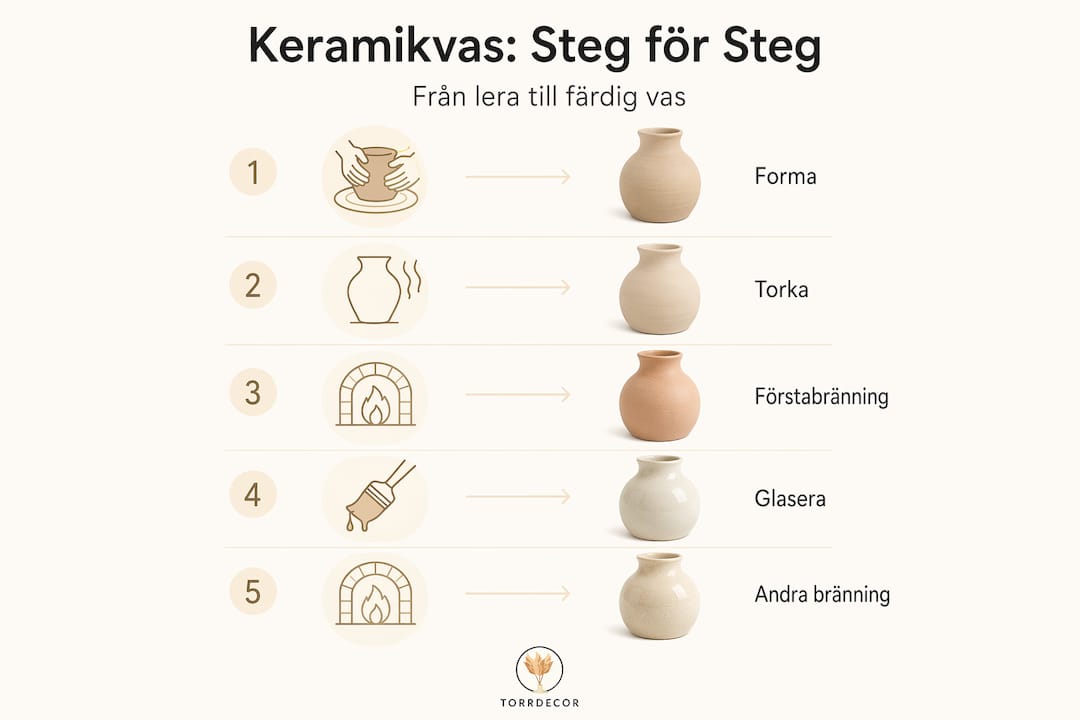
After shaping, the vase is dried, fired a first time, glazed, and then fired again. This process determines the final product's quality and durability.
Types of Ceramic Vases and Their Properties
Ceramic vases come in a wide range of shapes, sizes, and surface textures. Understanding the differences will help you choose the right vase for the right place and purpose. Ceramic vases come in various shapes and sizes, from minimalist and narrow to wide and decorative models, and each form can emphasize different interior design styles and functions.
Shapes and Styles
The shape of a ceramic vase is not just aesthetic. It directly influences what you can use the vase for and how it is perceived in the room.
| Vase Shape | Character | Best suited for |
|---|---|---|
| Narrow and tall | Elegant and discreet | Single flower stems, minimalist decor |
| Wide and low | Stable and decorative | Dried bouquets, statement placement |
| Round and bulbous | Soft and classic | Mixed bouquets, Scandinavian style |
| Cylindrical | Modern and straight | Office environments, contemporary design |
| Irregular | Artistic and unique | Sculptural decoration without flowers |
Narrow vases highlight single flower stems and create a clean and stripped-back expression. Wide vases serve as focal points in themselves and don't always need to contain anything to make an impression.
Texture, Color, and Finish
Ceramic vases can have different surface textures that affect both the appearance and feel of the decor. Textures can be smooth, matte, rough, or glazed for various effects and functions.
A matte finish gives a muted and earthy impression that suits Scandinavian and nature-inspired decor. A glossy glaze reflects light and gives a more formal and polished look. Rough textures with visible fingerprints or uneven surfaces signal craftsmanship and authenticity.
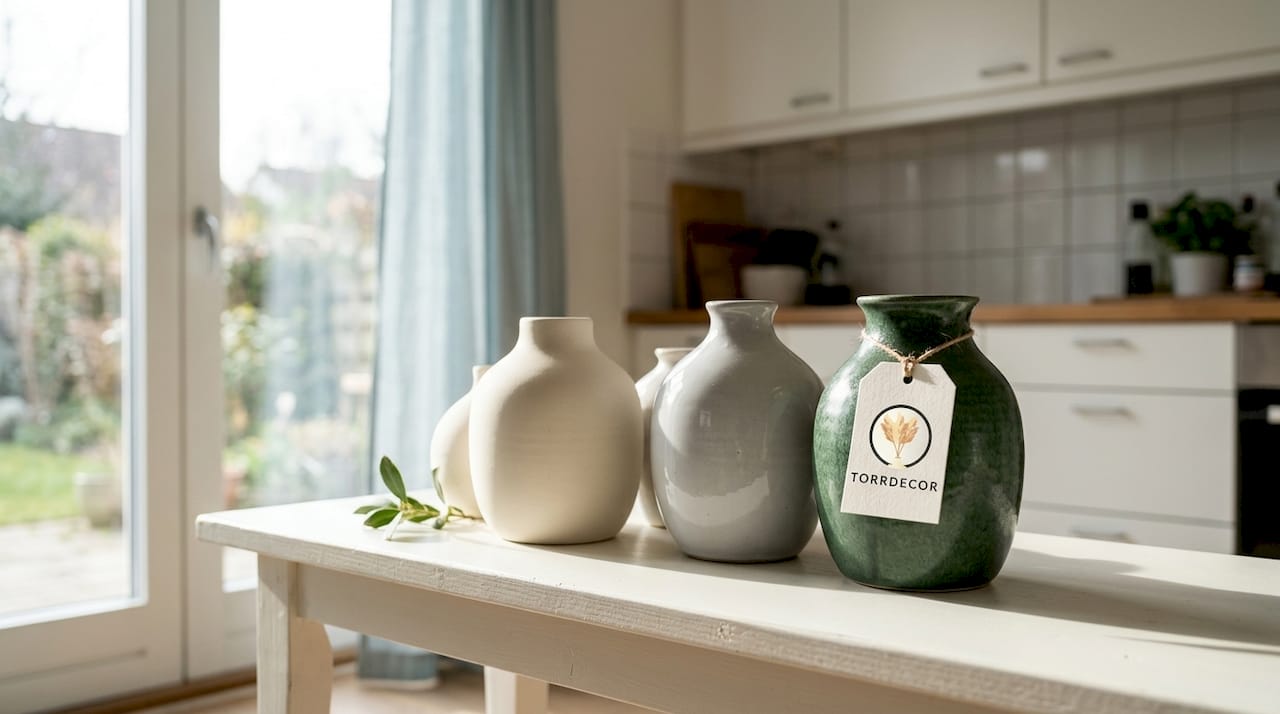
The choice of color also plays a significant role. Neutral tones like white, beige, and gray are timeless and easy to combine. Deeper colors like dark blue, terracotta, or olive green add more character and can serve as an accent color in the room.
Decorative vs. Water-Resistant Vase
It's important to understand the difference between a decorative vase and a water-resistant vase. Ceramic vases can be both functional as water vessels and decorative without liquid function, depending on the glaze and manufacturing. The difference affects how you can practically use the vase in your home.
Decorative vases without glaze on the inside are perfect for dried flowers, pampas grass, and artificial arrangements. They require no water and can be placed anywhere without risk of moisture damage. Water-resistant vases with complete glaze can hold fresh flowers and be regularly filled with water.
- Decorative vase: Suitable for dried plants, pampas grass, and artificial flowers
- Water-resistant vase: Suitable for fresh flowers and requires regular cleaning
- Partially glazed vase: Can be used for dried arrangements but not for water
Ceramic Vases in Interior Design and Styling
Designing with ceramic vases is about understanding how form, color, and placement interact with the rest of the room. It's not difficult, but it requires a little thought. Ceramic vases can be combined with colors and materials in the interior to create harmonious or contrasting expressions.
How to Choose the Right Vase for the Right Room
Choosing a ceramic vase is not just about finding something pretty. It's about understanding the room's scale, lighting, and existing materials. Here's a step-by-step guide:
- Assess the room's scale. A large living room can handle one or more large vases as focal points. In a small room, smaller vases work better so as not to dominate.
- Match or contrast. Choose a vase that either harmonizes with the room's color palette or stands out as a deliberate accent color.
- Consider the surface the vase will sit on. A heavy stoneware vase on a thin shelf might be impractical. A light porcelain vase on a stable table works better.
- Decide if the vase should contain anything. Will you have dried plants, fresh flowers, or use the vase as a sculptural decoration itself? This determines the shape and glaze you need.
- Combine several vases in a group. Three vases of different heights but similar style create more visual dynamics than a single vase.
- Place with intention. A vase on the floor by a window creates a completely different impression than the same vase on a bookshelf. Test different locations before deciding.
White ceramic vases are excellent for Scandinavian style, while rustic, rough vases enhance rustic decor. It's a simple but effective way to reinforce a room's character without buying new furniture.
Pro Tip: Never mix too many different vase shapes and colors in the same group. Choose a common theme, such as the same color family or the same material, and let the shapes vary. This creates a deliberate and stylish impression rather than a cluttered one.
Ceramic Vase in Different Rooms
The role of the ceramic vase in the home varies depending on where it is placed:
Living Room: Here you can be generous with size and shape. A large bulbous vase with pampas grass or dried twigs on the floor next to the sofa creates an organic and relaxed impression.
Bedroom: Choose smaller and calmer vases in muted tones. Matte surface textures and neutral colors create a soothing feeling.
Kitchen and Dining Area: A narrow vase with a single flower stem or a small bunch of herbs on the kitchen island or dining table is discreet but effective.
Hallway: The hallway is the first room visitors see. A striking ceramic vase on a hall table or on the floor sets the tone for the rest of the home.
Handmade ceramic vases combine artistry and functionality and are unique in design and finish. Each vase is created with particular attention to detail and becomes a personal interior detail. This makes them more than just decoration. They tell something about the person who lives in the home.
Sustainable Decor with Ceramic Vases
Ceramics is a material that lasts a long time if properly cared for. Ceramics is a sustainable material that can contribute to long-term and timeless home decor, and ceramic vases are robust and can be repaired or reused over time. This makes ceramic vases a smart choice for those who want to invest in decor that doesn't need to be replaced every season.
Feel free to combine ceramic vases with dried plants and pampas grass for an arrangement that lasts for months or years without maintenance. It's a way to create beautiful decor that doesn't require ongoing upkeep.
Maintenance and Durability
Caring for a ceramic vase is simple, but there are a few things worth knowing to keep the vase looking good for a long time.
Cleaning Ceramic Vases
Proper cleaning and care of ceramic vases can extend their lifespan and preserve their beauty. Avoid harsh chemicals and use mild soap and lukewarm water for cleaning. This applies to both glazed and unglazed vases, but for different reasons.
On glazed vases, strong cleaning agents can damage the glaze surface, making it dull or discolored. On unglazed vases, chemicals can be absorbed by the porous material and be difficult to rinse off completely.
Practical cleaning tips:
- Rinse the vase with lukewarm water immediately after use if you had water in it
- Use a soft brush to reach into narrow vases
- Allow the vase to dry completely before putting it back
- Avoid putting ceramic vases in the dishwasher unless the manufacturer states it's okay
- Wipe dusty decorative vases with a dry or slightly damp cloth
Common Mistakes and How to Avoid Them
There are a few common mistakes that can shorten a ceramic vase's lifespan:
- Temperature shocks: Never pour boiling water directly into a cold ceramic vase. Rapid temperature changes can cause cracks.
- Improper storage: Do not stack ceramic vases without protecting them with fabric or paper in between. Ceramic against ceramic can cause scratches and cracks.
- Water in unglazed vases: An unglazed vase filled with water can swell and crack as moisture penetrates the material.
- Placement in direct sunlight: Strong sun can fade colored glazes over time, especially on brightly colored vases.
The properties of the glaze largely determine how sensitive the vase is. A thick and even glaze provides better protection than a thin or uneven one. This is one of the reasons why manufacturing quality matters, not just for appearance but also for durability.
My View on the Value of Ceramic Vases in the Home
I have seen many interior design styles come and go, but ceramic vases have never lost their place. This is not because they are trendy. It is because they are genuine.
What fascinates me most about handmade ceramic vases is that they bear traces of their creator. A slight imperfection in the shape, a fingerprint in the glaze, a color tone that varies from top to bottom. These are details that mass-produced items can never replicate. And it is precisely these details that make a ceramic vase feel alive in a room.
I also notice that many underestimate how much a single vase can transform a room. Not because it is large or expensive, but because it sets a tone. A rustic stoneware vase with pampas grass on the floor says something completely different from a glossy porcelain vase with a single tulip on a side table. Both are ceramic vases. But they tell different stories.
What I think is important to understand is that the value of a ceramic vase is not measured in price. It is measured in how well it fits into the life you lead and the environment you want to create. A vase you find at a flea market that perfectly suits your kitchen is worth more than an expensive designer vase that never quite belongs.
Looking ahead, I see a clear movement towards more earthy materials and craftsmanship in interior design. Ceramics fit perfectly into this trend, and I believe that ceramic vases and sustainability will become an even more important topic for those who want to decorate with care.
— Torrdecor
Find Your Ceramic Vase at Torrdecor
Torrdecor offers a curated selection of ceramic vases made in Portugal, focusing on quality, sustainability, and timeless design. The vases are shaped from white clay and are equally suitable as decorative vases for dried arrangements or in a more classic interior.

What makes Torrdecor's vases special is that they are chosen with how they work with dried plants and pampas grass in mind. You don't have to guess if the shape fits or if the material will last. Torrdecor has made that choice for you. Visit about Torrdecor to learn more about the range and the philosophy behind the selection. You'll also find guides and inspiration on how to combine vases with dried plants for results that last long and look good without ongoing maintenance. Explore the right vase shape for your room and take the next step towards an interior you enjoy every day.
Frequently asked questions
What is the difference between ceramics and porcelain?
Porcelain is a subcategory of ceramics and is made from a specific white clay called kaolin. It is fired at a higher temperature, resulting in a thinner, harder, and more translucent material than ordinary ceramics or stoneware.
Are all ceramic vases waterproof?
No, they are not. A ceramic vase must be glazed on the inside to be waterproof. Unglazed vases are porous and are best suited as decorative vases for dried arrangements without water.
What is the best way to clean a ceramic vase?
Use mild soap and lukewarm water. Avoid harsh chemicals and dishwashers unless the manufacturer states it's safe. Let the vase dry completely before putting it back.
What is suitable to put in a ceramic vase?
Dried plants, pampas grass, and dried bouquets are suitable for decorative vases without water. Fresh flowers require a waterproof and glazed vase. Ceramic vases also work excellently as sculptural decoration entirely without contents.
How do I choose the right size ceramic vase?
Adapt the size to the scale of the room and what you want to put in the vase. A large vase with pampas grass suits a spacious living room, while a small, narrow vase works better on a bedside table or kitchen counter.
Recommendation
- How ceramic vases bring durability and style to your interior – Torrdecor
- Are ceramic vases waterproof? The difference between a water-resistant vase vs. a decorative vase – Torrdecor
- Types of vases: Find the right shape and style for your room – Torrdecor
- Decorating with vases: Create harmony in your home with unique vases – Torrdecor
0 comments