

TL;DR:
- Dried grass is a sustainable and low-maintenance interior design detail that can last for several years.
- It suits many interior styles and reduces environmental impact compared to fresh flowers.
- Optimized use involves alternating between simplicity, proportion, and contrast for the best results.
Dried grass has long been associated with dusty shelves and forgotten 1970s living rooms. But that image is no longer accurate. Today, dried grasses such as pampas grass, miscanthus, and rye straw are among the most sought-after interior design elements in Sweden, and for good reason. The trend is driven not only by aesthetics but also by a growing interest in sustainable choices for the home. Dried grass lasts for several years and reduces waste, making it a smart alternative for those who want beautiful environments without constantly replacing decorations. In this article, we will go through what dried grass actually is, why it has become so popular, how it compares to fresh flowers, and how to best use it at home or at events.
Table of Contents
- What does dried grass mean in modern interior design?
- Why are more and more people choosing dried grass? The most important advantages
- Comparison between dried grass and fresh flowers
- How do you decorate smartly with dried grass?
- Our view: What most people miss about dried grass and interior design
- Explore sustainable alternatives at Torrdecor
- Frequently asked questions about dried grass
Key Insights
| Point | Details |
|---|---|
| Dried grass is sustainable | Dried grass lasts for years, requires no water, and reduces waste. |
| Easy to decorate with | The grass requires minimal maintenance and is equally suitable for living rooms and events. |
| Style and variety | Properly used, dried grass becomes a modern and stylish complement in any setting. |
| Environmentally friendly choice | Since it lasts a long time and is reused, dried grass contributes to more sustainable decor. |
What does dried grass mean in modern interior design?
Dried grass is exactly what it sounds like: grasses and grass-like plants that have been harvested and dried to preserve their shape and color for a long time. It differs from other dried plants, such as dried flowers or leaves, by its light and airy character. The stems are often long and elegant, and the soft tops create a natural movement that gives rooms a lively feel without requiring water or maintenance.
Historically, dried plants have been used in decor for hundreds of years, but they fell out of fashion during the 1980s and 1990s when artificial plants and fresh flowers took over. Now they are back, and this time with a clearer connection to sustainability and minimalist design. Social media, especially Pinterest and Instagram, has played a major role in spreading the trend globally, and Swedish interior design blogs and stores have quickly followed suit.
The most popular grass species in interior design today are:
- Pampas grass (Cortaderia selloana): Large, fluffy, and iconic. Available in natural beige, white, and pink shades. Suitable as a statement piece in living rooms and hallways.
- Miscanthus: Narrower and more discreet than pampas. Provides an airy and natural impression. Suitable for bouquets and mixed arrangements.
- Rye straw: Classic and earthy. Often used in autumn decor and rustic settings.
- Lagurus (hare's-tail grass): Small and soft. Suitable for table decorations and narrow vases.
One of the most important characteristics of dried grass is its durability. Unlike fresh flowers, it needs no water, nutrients, or special lighting. It tolerates temperature fluctuations well and retains its shape for several years if handled carefully. It is a climate-smart choice that lasts a long time and reduces resource needs compared to alternatives that need to be replaced regularly.
Statistic to know: High-quality dried grass can last for three to five years or longer, depending on how it is stored. This means that a single investment can provide years of decoration without additional costs.
There is also a practical dimension that is rarely highlighted: dried grass is hypoallergenic. Since it does not produce pollen or emit scents, it is an excellent choice for homes with allergy sufferers. It allows you to enjoy natural materials without the drawbacks that living plants sometimes entail.
For those who want to build a sustainable decorative interior with a long lifespan, dried grass is a natural starting choice. And for those curious about how dried plants can generally transform a home, there is much to learn from smart decoration choices with dried flowers.
Now that we understand what dried grass is and why it has had a renaissance, let's delve into the concrete benefits that drive its popularity.
Why are more and more people choosing dried grass? The most important advantages
With these characteristics in mind, we can also examine why this trend appeals to so many different types of homes and businesses. The benefits are numerous, covering both practical and aesthetic needs.
-
Long durability and less environmental impact. Dried grass lasts for several years without needing to be replaced. This means fewer transports, less packaging waste, and lower overall resource consumption. It is a fact that dried grass reduces environmental impact by lasting longer and requiring fewer resources than fresh alternatives. For those who want to make more conscious choices in the home, it is an easy step in the right direction.
-
Easy to care for without watering. There's no need to remember to water, change water in the vase, or remove withered leaves. Dried grass requires virtually no active maintenance. It also tolerates temperature fluctuations, making it suitable for rooms that can get warm in the summer or cool in the winter. It is a perfect choice for summer houses, offices, and other environments where regular maintenance is difficult to maintain.
-
Style and variety that suits many homes. Dried grass comes in a variety of shapes, sizes, and natural colors. It fits equally well in a modern minimalist home as in a more classic or rustic interior. The soft, neutral tones of beige, white, and gray harmonize with most color palettes. This makes it easy to integrate into existing decor without having to replace anything else.
-
Flexibility for events and seasonal changes. Dried grass is easy to move, rearrange, and combine with other items. It is equally suitable as party decor at a wedding as it is for permanent decor in a living room. Since it does not wilt, you don't need to plan purchases right before an event, which saves both time and money. It is an excellent choice for those who want climate-smart and practical floral decor at the same time.
"Properly placed dried grass can elevate the entire room without overpowering it. It's about finding the balance."
A common misconception is that more is always better. But when it comes to dried grass, the opposite is often true. A few well-chosen stalks in the right vase create a stronger impression than an overfilled arrangement. It is also easier to keep clean and tidy when the quantity is limited.
Pro tip: Opt for two to three long pampas stalks in a tall, narrow vase for a maximum statement with minimal material. This creates a clean and intentional look that suits most modern homes.
For those who want to go further in their sustainable choices, there is also much inspiration in low-maintenance flowers as a complement to dried grass. The combination of different dried materials adds depth and texture without increasing the maintenance burden.
Comparison between dried grass and fresh flowers
Now that we know the advantages, we can compare dried grass with fresh flowers and see what works best in different situations.
| Feature | Dried grass | Fresh flowers |
|---|---|---|
| Durability | Several years | 1–3 weeks |
| Care | Minimal, no watering | Daily watering, changing water |
| Cost over time | Low (one-time investment) | High (recurring purchases) |
| Aesthetics | Natural, neutral, timeless | Vibrant, colorful, seasonal |
| Allergy risk | Low (no pollen) | Can be high depending on variety |
| Environmental impact | Low (long lifespan) | Higher (transport, water, waste) |
| Flexibility | High (can be used all year round) | Limited by season and durability |
The clearest difference is in lifespan and maintenance. A bouquet of fresh flowers requires daily attention and must be replaced after one to three weeks. Dried grass requires virtually nothing and can remain in the same place for years without losing its character. This is a huge practical difference, especially for those with a busy schedule.
Financially, dried grass is also a better long-term choice. A bouquet of fresh flowers might cost 150 to 300 SEK and last for two weeks. If you buy fresh flowers every month for a year, you spend 1,800 to 3,600 SEK. A quality pampas might cost 200 to 400 SEK and last for three to five years. Calculated per year, the difference is significant.
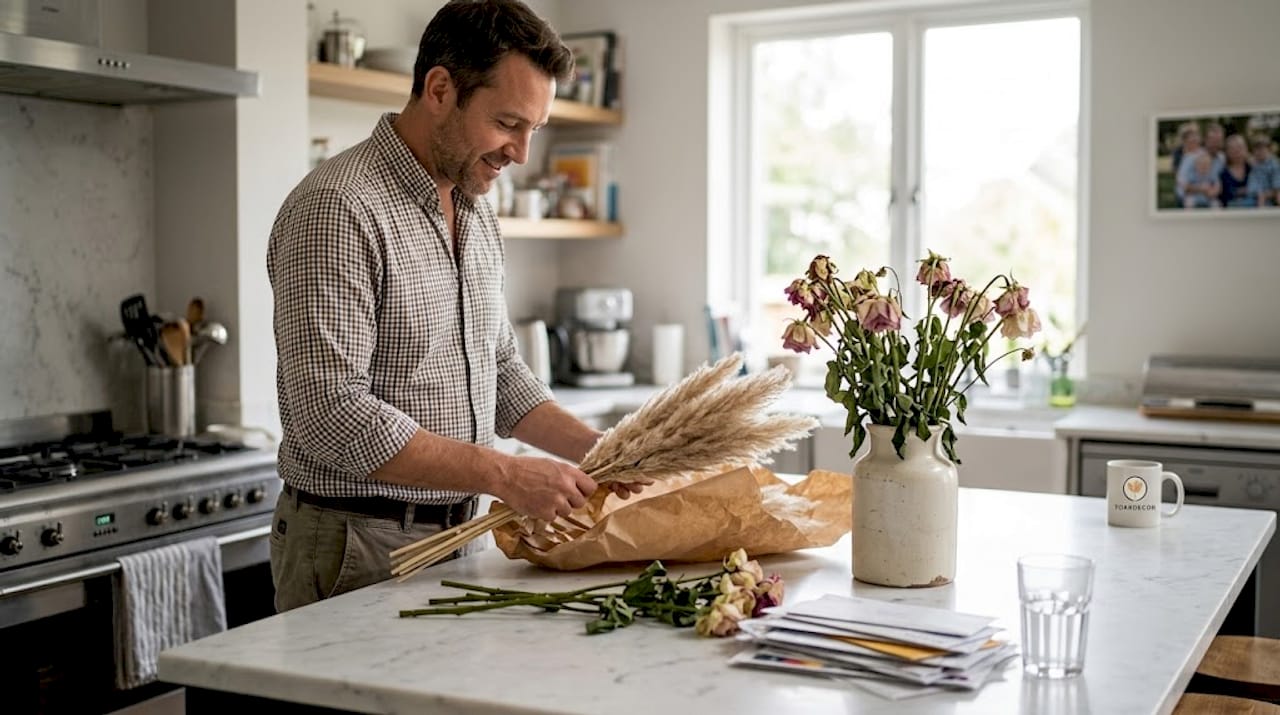
When it comes to aesthetics, it's more a matter of taste and situation. Fresh flowers offer an immediate vibrancy and scent that dried grass cannot match. But dried grass has a timeless, natural elegance that suits permanent decor better. It doesn't look like a temporary element but rather a conscious part of the home's style.
The fact that dried grass requires less water and produces less waste is an important aspect for those who consider the environmental impact of dried flowers and want to make more conscious choices.
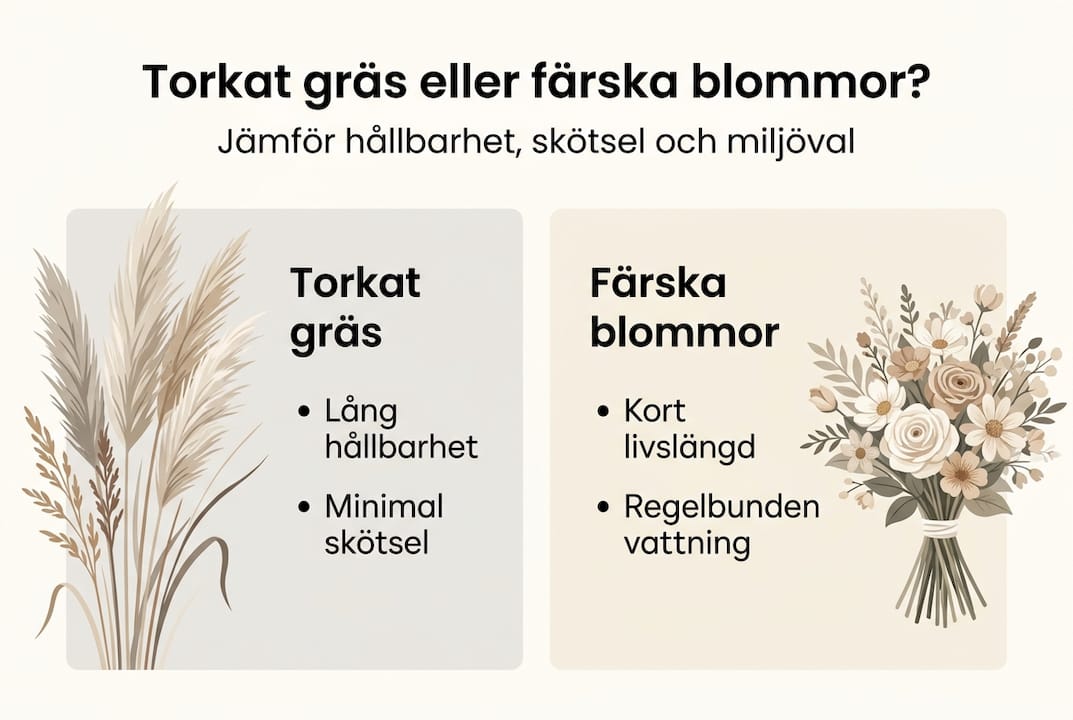
Pro tip: Combine a few fresh flowers with a fixed arrangement of dried grass. The fresh flowers provide seasonal color and scent, while the dried grass provides stability and structure. When the fresh ones wilt, the dried grass takes over as the base, and you only need to replace the small amount.
Dried grass is particularly suitable for environments where maintenance is difficult, such as on high shelves, in narrow niches, or in warm rooms near windows. It is also an excellent choice for those who travel frequently or are not always at home. A more detailed comparison between dried plants and fresh flowers can help you decide what suits your home best.
How do you decorate smartly with dried grass?
Now you know the differences and benefits. So how can you use dried grass for the best possible effect at home or at an event?
The most important thing is to consider placement and proportion. A couple of long pampas stalks in a tall vase by the sofa create a natural focal point without taking up too much space. In the bedroom, a small bouquet of lagurus or miscanthus in a narrow vase on the bedside table can give a calm and natural impression. At a wedding or a party, dried grass can be used in large arrangements along the table or in entrance decorations to create a warm and inviting atmosphere.
One of the most common mistakes is to use too much. Overfilled arrangements look messy and create precisely the dusty impression many want to avoid. The key is to allow each stalk room to breathe. As properly placed dried grass shows, minimalist and elegant design creates the strongest impressions.
Five creative uses for dried grass:
- Large pampas grass as a statement piece in an empty corner of the living room
- Small bouquets in narrow vases on the kitchen counter or bathroom shelf
- Mixed arrangements in baskets or terracotta pots for a rustic feel
- Event decor along dining tables or as a backdrop for photos
- A gift in simple packaging, a sustainable and timeless alternative to fresh flowers
| Environment | Recommended grass | Vase type | Effect |
|---|---|---|---|
| Living room | Pampas grass, large | Tall clay or ceramic vase | Statement, natural elegance |
| Bedroom | Lagurus, miscanthus | Narrow glass or ceramic vase | Calm, discreet presence |
| Kitchen | Rye straw, miscanthus | Short, wide vase | Rustic and warm feel |
| Event/wedding | Pampas, miscanthus | Large baskets, floor arrangements | Dramatic and inviting |
| Office | Lagurus, miscanthus | Simple vase on the desk | Natural, stress-reducing |
The choice of vase plays a big role in the final expression. A white clay or ceramic vase gives a modern and clean impression, while a basket or a rustic terracotta pot creates a more earthy feel. Match the vase with the room's other materials and colors for a cohesive result. You will find plenty of trendy interior design tips on how to combine grass and vases in the best way.
Also, remember to adjust the quantity to the size of the room. In a small room, one or two stalks are enough. In a large room with high ceilings, you can increase the volume without it looking overdone. For those who want to create trendy environments with the right accessories, there is plenty of inspiration and practical advice to draw upon.
Our view: What most people miss about dried grass and interior design
There's a lot of talk about dried grass as a trend, but rarely about what actually determines if it looks good or not. Our experience shows that it's more about proportions and placement than about how much you buy.
Many who try dried grass for the first time buy too much. They fill a large vase to the brim and then wonder why it looks messy. The truth is that one or two prominent pampas stalks in the right vase create a stronger contrast and a clearer expression than ten stalks in an overflowing bouquet. Less is almost always more.
Another thing that is rarely brought up is the importance of mixing textures. Dried grass looks best when combined with other materials, such as a ceramic vase with an uneven surface, a wooden bowl next to it, or a linen curtain in the background. It is the contrast between the soft grass and the hard material that creates depth and interest.
We also see that many choose dried grass solely because it is trendy, without considering whether it suits the room's overall style. The result is a decorative element that feels tacked on rather than natural. The key is to choose grass and a vase that reflect the room's existing character. When done correctly, as in creating sustainable environments, dried grass becomes a natural part of the home rather than a temporary addition.
The feel of a home is more governed by proportions and material choices than by the amount of decoration. This is an insight that applies to all interior design, but it is particularly clear when it comes to dried grass.
Explore sustainable alternatives at Torrdecor
After this review, it's easy to see why dried grass has become a natural choice for so many. It combines sustainability, simplicity, and timeless aesthetics in a way that few other decorative options can achieve.
At Torrdecor, you'll find a carefully curated selection of dried grasses, bouquets, and decorative vases. We are one of Sweden's leading suppliers of pampas grass and dried plants, and we help you find the right product for your home or event. A popular starting choice is our dried beige pampas grass, which fits into most environments and provides an instant natural and elegant impression. Whether you are decorating a home, planning a wedding, or looking for sustainable alternatives for your store, we are here to help you make the right choice.
Frequently asked questions about dried grass
How long does dried grass last as decor?
Dried grass can last for several years without water as long as it is kept dust-free and protected from moisture. With proper placement, it is a durable decoration that lasts up to five years or more.
Does dried grass require any special care?
No, it requires minimal care without watering but may need gentle dusting periodically. It is one of the most low-maintenance decorative options available, confirmed by the fact that dried grass requires no water to stay beautiful.
Is dried grass better for the environment than fresh flowers?
Yes, because it lasts longer and reduces waste compared to fresh alternatives. The fact that dried grass reduces waste makes it a more environmentally friendly choice for those who consider their consumption.
How do you prevent dried grass from looking dusty?
Place the grass in airy, small groups and dust gently when needed. As the contrast between the right amount and overuse shows, just a few stems are enough for a stylish and well-maintained result.
Recommendation
- How to Dry Pampas Grass for Sustainable Decoration – Torrdecor
- Benefits of Pampas Grass: Trendy and Sustainable Decor – Torrdecor
- Dried Plants for the Home: Sustainable Decorative Interior Design – Torrdecor
- Get Inspired by Dried Flowers: 10 Trendy Decor Tips – Torrdecor
- Ideeën voor succulente decoratie: Manieren om je huis te style
0 comments