

TL;DR:
- The right drying method and patience are crucial for achieving durable pampas grass.
- Pampas grass should be harvested when the plumes have just opened and dried in a dark, dry place.
- Dried pampas grass can retain its volume and beauty for several years with proper care.
Pampas grass shedding and losing volume after just a few weeks is a common problem. This almost always happens when the grass has not been dried correctly or harvested at the wrong time. But with the right technique and a little patience, you can create arrangements that last for several years without requiring any real maintenance. This guide covers everything you need: what materials you need, how to choose the right variety, a clear step-by-step process, common mistakes, and how to know when the grass is actually ready. Whether you want to fill a floor vase or create a bouquet, the answers are here.
Table of Contents
- What do you need to dry pampas grass?
- Step-by-step: How to dry pampas grass at home
- Common problems and solutions when drying pampas grass
- How to know your pampas grass is ready and inspiration for stylish decoration
- What no one tells you: Why patience is key when drying pampas grass
- Time for decoration? Find dried pampas grass and accessories here
- Frequently asked questions about drying pampas grass
Key Insights
| Point | Details |
|---|---|
| Choose the right pampas grass | Different varieties and degrees of maturity significantly impact the final appearance. |
| Hang pampas grass to dry | A dark and airy space provides the best drying results and preserves volume. |
| Patience yields the best results | Allow at least two weeks and do not disturb the process to prevent shedding. |
| Prevent shedding | Lightly spray with hairspray and place the grass in the right spot for durability. |
What do you need to dry pampas grass?
Now that you have an overview, it's time to gather your materials and choose the right type of pampas grass. Preparation is actually the step most people skip, and it's also where most mistakes happen.
Materials you need
You don't need much to get started. The most important thing is to have the right tools available before you begin:
- Pruning shears or sharp scissors for cutting stems cleanly without crushing them
- String or rubber bands for bundling the plumes
- Clothes hangers or hooks to hang the bundles on
- Dark and dry space such as a storage room, basement, or a dark room with good air circulation
- Hairspray (optional but recommended) to fix the plumes after drying
A dark space is important. Direct sunlight quickly bleaches colors and makes the grass look dull even before it's ready.
Which varieties are best for drying?
All varieties of pampas grass can be dried, but the results vary. Pampas grass, especially red and white varieties, are well-suited for drying and produce beautiful, fluffy plumes that retain their shape for a long time. Red varieties tend to retain their color better than beige varieties if dried in the dark.
You can read more about different types of pampas grass to find the variety that suits your decor and style. There are significant differences in plume size, density, and color depending on the variety.
Prepare the grass properly
Before hanging the grass to dry, you need to prepare it. Shake off loose seeds and particles outdoors, preferably with a gentle motion. Remove damaged or brown stalks along the stem. Make sure the plumes are not too tightly packed in the bundle, otherwise air won't circulate properly.
| Preparation Step | Why it matters |
|---|---|
| Shake off loose particles | Reduces shedding later |
| Remove damaged stalks | Provides a cleaner final result |
| Keep the bundle airy | Prevents mold and uneven drying |
| Choose the right space | Protects color and volume |
Pro tip: Harvest or buy pampas grass when the plumes have just opened. If they are already fully bloomed, they risk shedding more during drying. Timing plays a big role in the final result, and it's a tip that dried flowers in decor generally benefit from.
For more information on evergreens and grasses suitable for drying, there are good resources available.
Step-by-step: How to dry pampas grass at home
Once everything is prepared, it's time to start the drying process itself. Follow the steps below carefully to increase your chances of a fluffy and durable result.
-
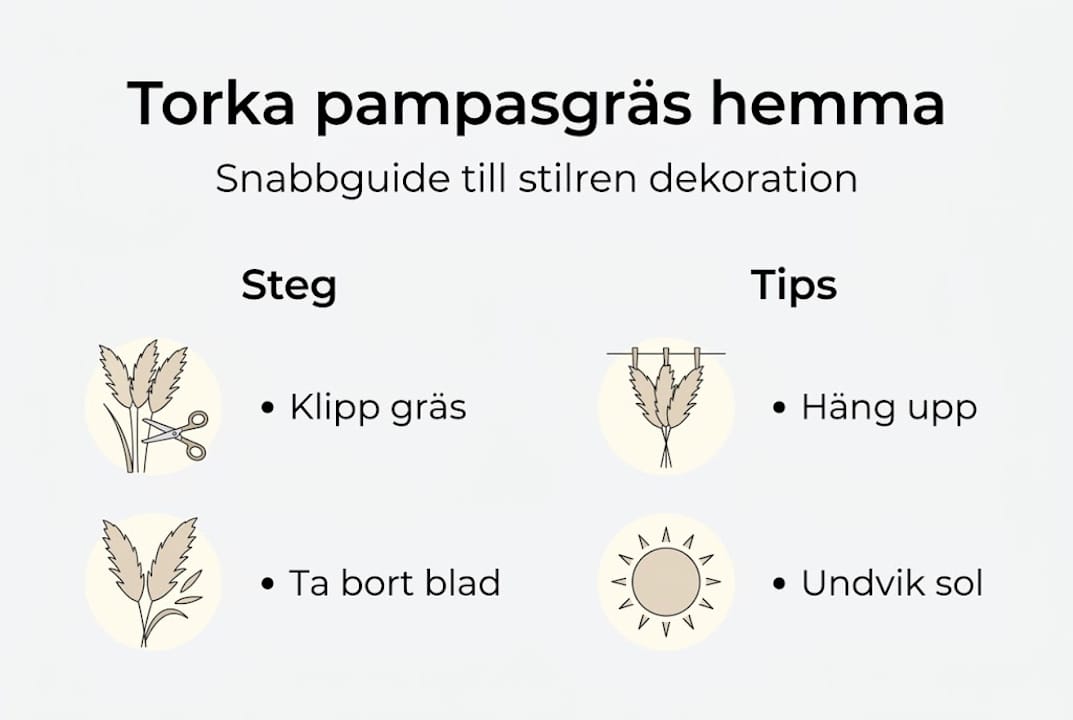
Harvest or choose the right plumes. Look for plumes that have just opened. They should be soft and lightly fluffy but not fully bloomed. Cut the stems at least 60 to 80 cm to give the arrangement good proportions.
-
Bundle 5 to 10 stalks. Keep the bundle airy, not too tight. Tie the string or rubber band around the stalks approximately 10 cm from the bottom.
-
Hang upside down. This step is crucial. Hanging them upside down helps the plumes retain their shape and prevents them from collapsing. Hang them on a hook or clothes rack.
-
Place in a dark and dry space. Avoid damp areas like bathrooms or basements with poor ventilation. A temperature of around 18 to 22 degrees Celsius is ideal.
-
Wait 2 to 3 weeks. This is the most common timeframe. Check the grass after two weeks by feeling the stem. It should be completely dry and hard.
-
Fix with hairspray. When the grass is ready, take it down and lightly spray the plumes with hairspray. This binds loose fibers and reduces shedding.
To make pampas grass fluffy after drying, there are additional techniques to try, such as gently shaking and airing the plumes.
Comparison: Red vs. White Variety when Drying
| Characteristic | Red variety | White/beige variety |
|---|---|---|
| Drying time | 2 to 3 weeks | 2 to 3 weeks |
| Color retention | Good in the dark | May fade slightly |
| Volume after drying | Medium to large | Large and fluffy |
| Shedding risk | Lower | Slightly higher |
Volume and movement in dried pampas grass arrangements are best achieved when you don't compress the plumes during the drying time. Give them space to breathe.
Pro tip: Don't hang too many bundles on the same hook. Air circulation around each bundle is what determines whether the plumes dry evenly. Five bundles with good air around them yield better results than ten tightly packed ones. Feel free to read about the trendy benefits of pampas grass to understand why proper drying is the foundation of everything.
A guide to grasses that can be dried can provide further insight into which varieties are best suited for home use.
Common problems and solutions when drying pampas grass
Even if you follow the process, small obstacles can still arise, but don't worry, they can usually be solved.
Shedding
Shedding is the most common problem, and it's normal for a little to fall off. But if it sheds a lot, there's likely an explanation. The plumes may have been harvested too late, or the grass is drying in an environment with too high humidity. You can read more about how to reduce shedding on pampas grass for concrete actions.
- Harvest or buy the grass at the right stage
- Dry in a dry space with low humidity
- Fix with hairspray after drying
- Place the vase away from drafts and ventilation openings
Lack of volume
If the plumes look flat and lifeless after drying, it may be because they were packed too tightly during the drying period. Try gently shaking and airing them out. Hold the plume by the stem and shake lightly in a circular motion. This helps the fibers open up.
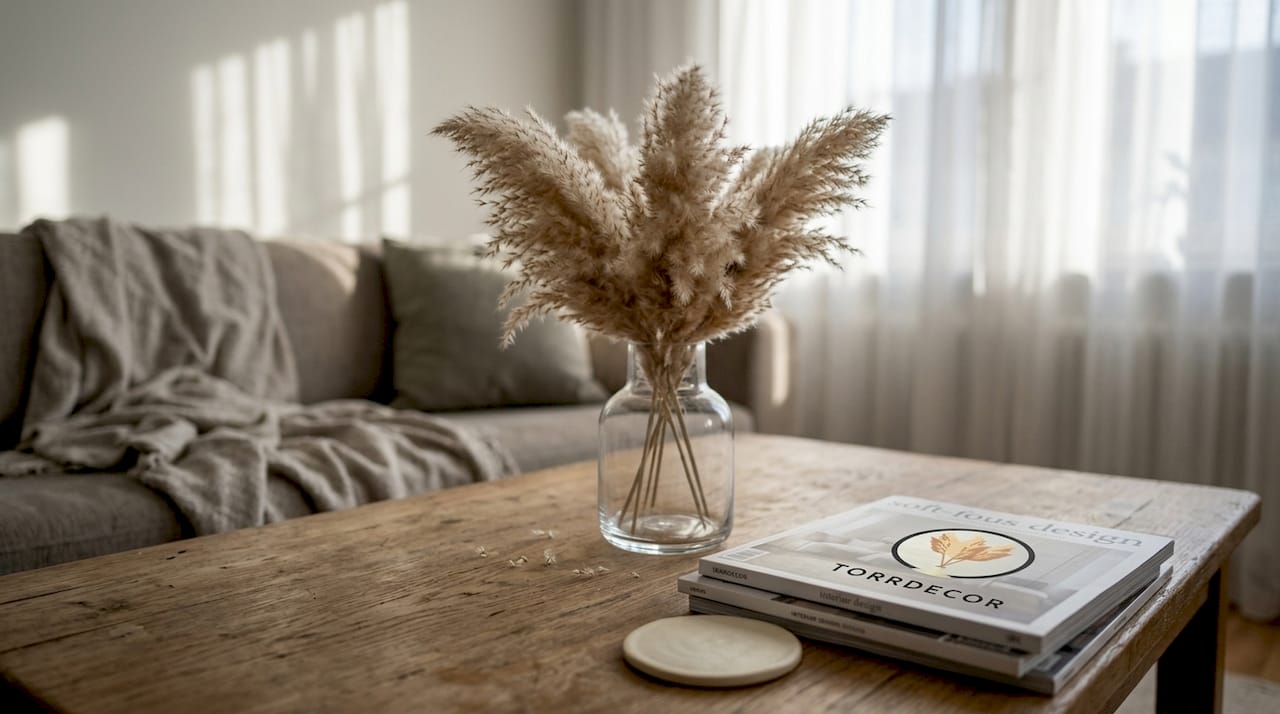
The right technique gives pampas grass volume and better durability, and this applies whether you're working with red, white, or beige varieties.
Faded colors
Direct sunlight is the most common reason for pampas grass to fade. Move it to a shadier spot during the drying period and after it's ready. Keep in mind that smart decorative choices with dried flowers always involve protecting them from direct light to preserve their color longer.
“Patience is the most important ingredient when drying pampas grass. If you rush the process, you risk damaging the plumes and losing both shape and volume. Give the grass the time it needs.”
For ongoing care of dried plants, there is good advice on how to keep arrangements fresh longer. It often comes down to simple things like placement, dusting, and avoiding moisture.
Different pampas grasses for drying also have different properties, which affects how susceptible they are to these problems.
How to know your pampas grass is ready and inspiration for stylish decoration
Once all the drying steps are complete, it's time to see the result and start decorating.
How do you know it's ready?
There are simple ways to check if the grass is truly ready:
- Feel the stem. It should be completely dry and hard, not pliable or slightly damp.
- Lift the bundle. Dried pampas grass is noticeably lighter than fresh.
- Feel the plume. It should be fluffy and dry, not heavy or compact.
- Listen. Dry grass makes a slight rustling sound when you touch it.
Dried pampas grass retains volume and movement with proper handling and can be used in many different arrangements for a long time.
Inspiration for placement
Once the grass is ready, the possibilities are endless. Here are some ideas:
- Floor vase: Place three to five long stems in a tall vase for a dramatic yet simple statement.
- Table arrangement: Shorter stems in a small vase or as part of a centerpiece.
- Bouquet: Mix pampas grass with dried flowers for a warm and textured look.
- Wall decoration: Tie a bundle together and hang it on the wall as a natural work of art.
For more ideas on how to use dried plants in interior design, there is plenty of inspiration to be found.
Care instructions for long durability
Dried pampas grass requires minimal care, but a few simple things extend its lifespan:
- Gently dust with a hairdryer on a cool setting.
- Avoid placing near radiators, fireplaces, or windows with direct sunlight.
- Spray with hairspray once a year to reduce shedding.
Statistic: Well-maintained dried pampas grass can last for three to five years indoors. Proper placement and minimal handling are the most important factors. Read more about how to care for dried flowers to maximize the durability of your arrangements.
What no one tells you: Why patience is key when drying pampas grass
Many first-time pampas grass dryers try to speed up the process. They put the grass in a warm room, use a tumble dryer, or take it down after just a week. The result is almost always the same: flat, lifeless plumes that shed after only a few days in the vase.
We've seen it time and time again. There's a strong temptation to want quick results, especially when you see how beautiful finished pampas grass can look. But what makes dried pampas grass beautiful is precisely the slow process. The fibers in the plume need time to stabilize and settle into the correct position.
The most beautiful specimens we've seen have taken 2 to 3 weeks to dry properly. And then they last for several years without losing significant volume. This is a huge difference compared to grass that was rushed in a week and starts to look dull after a month.
Feel free to compare with dried vs. fresh flowers to understand why durability is one of the real advantages of dried plants. It's not just an aesthetic matter; it's a matter of giving the process the respect it deserves. Patience is not an obstacle; it is the method.
Time for decoration? Find dried pampas grass and accessories here
Ready to take the next step with your newfound pampas grass? If you want to skip the drying time or supplement your own arrangements with ready-made materials, there are simple options.

At Torrdecor.se, you'll find dried pampas grass in various colors and sizes, from compact tabletop models to long stems for floor vases. Everything is pre-dried and ready to be placed directly in your vase. We also offer matching vases and accessories to make it easy to create a complete and stylish arrangement. Want to know more about us and what we offer? Visit About us at Torrdecor and read about our passion for sustainable decor. We are happy to share our knowledge and help you find the right fit.
Frequently asked questions about drying pampas grass
How long does it take to dry pampas grass?
Allow approximately 2 to 3 weeks for pampas grass to dry properly at room temperature. Pampas grass is suitable for drying and yields the best volume when the process is not rushed.
Does pampas grass need to be hung when drying?
Yes, it is best to hang the plumes upside down in a dark, dry space. Volume and movement in arrangements are best preserved this way, as the plumes are not compressed by their own weight.
How do you prevent pampas grass from shedding after drying?
Dry thoroughly for at least two weeks, then fix with a light layer of hairspray. Pampas grass can maintain volume and reduce shedding with proper treatment and placement away from drafts.
Can you dry pampas grass year-round?
Yes, but the best results are achieved if you harvest in late summer or early autumn when the plumes are mature. The right timing and treatment yield the most beautiful and long-lasting results.
0 comments