

TL;DR:
- Dried plants are durable and require minimal care, making them perfect for indoor decor. By choosing the right drying method and placement, they can retain their shape and color for months or years. Regular dusting and gentle protection extend their lifespan and create beautiful interiors.
Dried plants are decorative plants that have undergone a controlled drying process to preserve their shape and color without the need for water or ongoing care. With the right tips for dried plants indoors, you can create arrangements that last for months, sometimes years, without needing to do more than dust them occasionally. Methods such as air drying, silica gel, and oven drying yield different results depending on the flower you are working with. Correct placement in the home, away from moisture and direct sunlight, is as crucial as the drying method itself. This article provides concrete steps for each part of the process.
1. Tips for dried plants indoors: choose the right drying method
The drying method you choose directly determines how long your plants last and how they look afterward. Three methods dominate for home use: air drying, silica gel, and oven drying. Each method suits different flower types and yields different results.
Air Drying
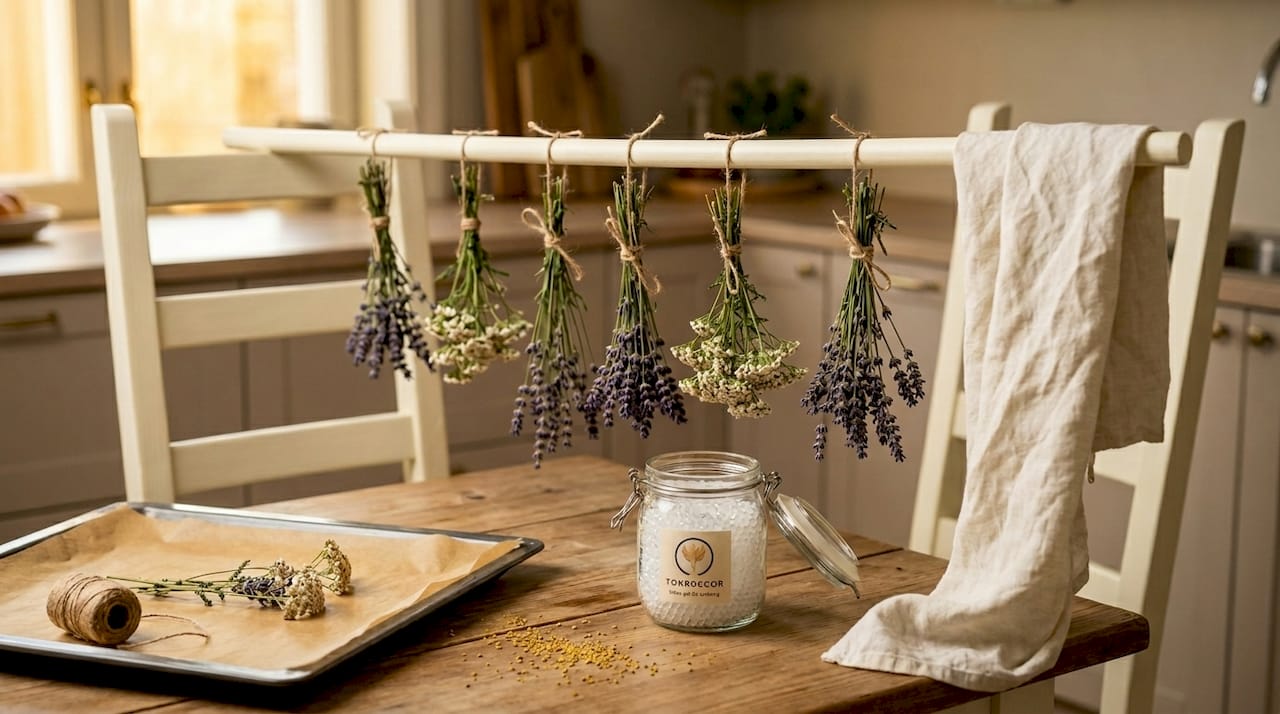
Air drying is the simplest method and works best for robust flowers such as lavender, pampas grass, and yarrow. You bundle the stems with a rubber band, hang them upside down in a dry and dark place, and let them hang for two to three weeks. Air drying preserves the shape better than faster methods but takes longer. It is the method that poses the least risk of brittleness if you have patience.
Silica Gel
Silica gel is a desiccant that absorbs moisture and preserves the flowers' color and three-dimensional shape in a way that air drying cannot. You place the flowers in an airtight container, cover them completely with silica gel, and wait three to seven days depending on the flower type. This method is suitable for more delicate varieties such as roses and peonies. The drawback is that the flowers can become brittle if left too long in the granules.
Oven Drying
Oven drying is fast but requires careful control. You place the flowers on parchment paper in the oven at 40 to 50 degrees Celsius and check them every 30 minutes. This method works for leaves and citrus slices but risks changing the shape of more delicate flowers. Faster methods risk brittleness and shape changes, making oven drying a secondary choice for most flowers.
Pro Tip: Always use rubber bands instead of string when bundling flowers for air drying. The stems shrink during the drying process, and a rubber band will automatically hold the bundle together, whereas string can loosen.
| Method | Time | Suitable for | Risk |
|---|---|---|---|
| Air Drying | 2 to 3 weeks | Lavender, pampas grass, yarrow | Low |
| Silica Gel | 3 to 7 days | Roses, peonies, delicate varieties | Medium if too long |
| Oven Drying | 1 to 3 hours | Leaves, citrus slices | High for delicate flowers |
2. How to choose and prepare plants for drying
The right choice of plant and the correct time for harvesting are crucial for the final result. Flowers picked too late lose petals during the drying process, while flowers picked too early may lack their full form.
Pick flowers when they are almost fully open but not entirely bloomed. At that point, the petals are still firm and hold their shape better during drying. Roses are best picked when the outer petals have just begun to open. Lavender is picked when approximately half of the flower buds on the stem have opened.
Remove all leaves along the stem before you begin drying. Leaves retain moisture and can cause mold during the drying process, especially with air drying. Simply pull them off with your fingers from top to bottom along the stem.
Combine plants like lavender, yarrow, and everlasting strawflower for a harmonious color range and even drying time. Mixing plants with similar drying times in the same bunch ensures that the entire bouquet is ready simultaneously and appears uniformly dried.
Pro Tip: Cut the stems diagonally with sharp scissors just before hanging them. This doesn't improve the drying process itself, but it gives the bouquet a more professional look when later placed in a vase.
Best plants to start with:
- Pampas grass is excellent for air drying and retains its shape for several years.
- Lavender dries quickly and retains its scent long after drying.
- Roses best preserve their color with silica gel.
- Yarrow is resilient and suitable for beginners trying air drying for the first time.
- Eucalyptus dries easily and adds a green tone to arrangements.
- Everlasting strawflower retains its vibrant yellow color and suits mixed bouquets.
3. Where to place dried plants indoors
Placement is the factor most underestimated. A well-made dried bouquet can be ruined in a few weeks if placed in the wrong spot in the home.
Dried plants should be placed in dry and bright rooms, but never in direct sunlight. Direct sun quickly fades colors and makes stems brittle. A room with natural light from a north or east-facing window is close to perfect.
Humid rooms like bathrooms and kitchens are the worst placements. Vapors from showers and cooking penetrate the dried stems and petals, leading to mold and causing the flowers to lose their shape. It is normal for dried plants to look slightly different in a humid climate, but it is not normal for them to start darkening or smelling.
According to IKEA, dried plants work well in hallways, living rooms, bedrooms, and home offices. The hallway is an excellent choice as it is often dry and well-ventilated. The bedroom is suitable for lavender and eucalyptus, which add a calming scent. The home office is a room where dried plants provide a warm impression without requiring any maintenance.
The vase's material and shape affect both stability and aesthetic impression. Narrow glass vases suit long stems like pampas grass, while wide stoneware or clay pots work better for shorter and fuller bouquets. Vases made of white clay, like those offered by Torrdecor and manufactured in Portugal, provide a neutral and timeless impression that suits most interior styles.
Placement tips per room:
- Hallway: Choose a tall and narrow vase with pampas grass or long eucalyptus branches.
- Living room: Create a still life with a mixed bouquet in a wide pot on a side table.
- Bedroom: Place lavender or dried roses on the bedside table for a calm atmosphere.
- Home office: A small bouquet of yarrow or strawflower on the desk is enough to bring life to the room.
Pro Tip: Silica gel at the bottom of the vase absorbs excess moisture in humid climates and extends the lifespan of your dried plants. Place a thin layer of granules in the vase before arranging the bouquet.
| Room | Recommended placement | Plant to choose |
|---|---|---|
| Hallway | Floor or a high shelf | Pampas grass, eucalyptus |
| Living room | Side table or bookshelf | Mixed bouquet, yarrow |
| Bedroom | Bedside table or windowsill | Lavender, dried roses |
| Home office | Desk or shelf | Strawflower, eucalyptus |
| Kitchen | Avoid if possible | Not recommended |
4. Care of dried plants: daily maintenance and lifespan
Caring for dried plants is minimal compared to live plants. They require no watering, no fertilizing, and no repotting. What they do need is protection from dust and moisture.
Dust your dried plants regularly, about once a month. Dusting and avoiding water are the most important care routines to extend their lifespan. Use a soft brush, a hairdryer on a cool setting, or a gentle fan to blow away dust without damaging the petals. Avoid wiping them with a damp cloth as moisture is what damages them most.
Hair spray in a thin layer on the petals provides a protective coating that holds loose parts in place and reduces dust buildup. Choose an unscented variety so as not to disturb the natural scent of the flowers. Essential oils like lavender oil can be dropped onto the stems to restore the scent if it has faded over time.
Handle dried flowers gently. The petals of dried roses and peonies are fragile and can crumble if handled too roughly. Always lift the bouquet by its stems, never by the petals. If a petal comes loose, it is normal and does not affect the rest of the bouquet.
- Dust once a month with a soft brush or cool-setting hairdryer.
- Apply a thin layer of unscented hairspray to protect loose petals.
- Check the vase and its surroundings for signs of moisture or mold.
- Replace individual stems that have become too brittle or lost their shape.
- Store unused bouquets in a cardboard box with tissue paper for protection.
Pro Tip: Rotate the bouquet a quarter turn every three weeks if it's near a window. This ensures all sides receive equal light and the flower doesn't fade unevenly on one side.
With proper care, dried plants last from six months up to several years. Pampas grass is known to last the longest, often two to three years without losing its shape. Roses and peonies last shorter, typically six to twelve months, but can be extended with hairspray and correct placement.
5. Decorating with dried plants: styles and combinations
Decorating with dried plants suits several different interior styles and is not limited to a specific aesthetic. Boho, Scandinavian minimalism, and rustic style are the three most common contexts where dried plants are used in Swedish homes.
In Scandinavian minimalism, simple arrangements work best. A single large vase with pampas grass or eucalyptus against a white wall gives a clean and stripped-down impression. Choose vases in neutral tones such as white clay, beige stoneware, or clear glass to maintain the calm overall impression.
In boho style, it's the opposite. Here, several different varieties are mixed in the same arrangement, preferably with varying heights and textures. Combine pampas grass with dried roses, yarrow, and everlasting strawflower in a wide basket or a rustic clay pot. The result is a full and organic arrangement that suits a room with patterned textiles and natural materials.
Rustic style uses dried plants as part of a broader nature-inspired theme. Dried twigs, pinecones, and eucalyptus in a wooden basket or dark ceramic give a warm and earthy impression. This works well in dining rooms and kitchens with wooden details and natural materials.
Dried plants for the home also work excellently in shared zones like hallways and living rooms, where they create a welcoming impression without requiring ongoing maintenance. A bouquet in the hallway is the first thing guests see when they step in, and dried plants stay fresh no matter how seldom the room is used.
6. How to dry flowers at home: step by step
Drying flowers at home does not require special equipment. What you need is a dry space, rubber bands, and patience.
Start by gathering three to ten stems per bunch. More stems in a bunch increase the risk of mold because air circulation in the middle of the bunch decreases. Remove all leaves along the stems and cut them to the desired length with sharp scissors. Tie the bunch together with a rubber band about three centimeters from the bottom end of the stems.
Choose a drying location that is dark, dry, and well-ventilated. A storage room, a wardrobe with good air circulation, or a dark corner in a bedroom works well. High humidity is the only thing that can truly ruin the drying process, so avoid basements and bathrooms entirely.
Hang the bunches upside down using string or a hook. The upside-down position ensures the stems dry straight and the petals do not collapse under their own weight. Check the bunches after a week to see if there are signs of mold or if the rubber band needs adjustment.
You can read more about how to dry flowers at home for a more detailed guide with tips on specific flower varieties and environments.
7. Best dried plants for Swedish homes
The best dried plants for Swedish homes are those that can withstand variations in indoor temperature and maintain their shape without special treatment. Sweden has a climate with relatively high humidity during autumn and winter, making robust varieties preferable.
Pampas grass is the most popular choice, and for good reason. It holds its shape for several years, requires minimal care, and fits into almost all interior styles. Torrdecor is one of the leading suppliers of pampas grass in Sweden, offering several varieties in different sizes and shades.
Lavender is an excellent second choice. It dries quickly, retains its purple color for a long time, and adds a natural scent to the room. Eucalyptus is popular for its green hue and its ability to hold its shape without becoming too brittle. Yarrow is a good choice for beginners as it is hardy and dries evenly.
Dried roses are the most delicate option but also the most appreciated for their aesthetics. They are best suited for rooms with low humidity and should be treated with hairspray to keep the petals in place. Peonies are similar to roses in their requirements but offer a fuller and more dramatic impression.
Key takeaways
Dried plants last longest and look best when the right drying method is combined with dry placement and regular dusting.
| Point | Details |
|---|---|
| Choose the right drying method | Air drying suits robust varieties, silica gel preserves color on delicate flowers. |
| Place correctly in the home | Avoid humid rooms like bathrooms and kitchens, choose hallway, bedroom, or home office. |
| Dust regularly | Once a month with a soft brush or cool-setting hairdryer is sufficient. |
| Choose the right vase | Narrow glass vases suit long stems, wide clay pots suit shorter bouquets. |
| Store unused bouquets correctly | Place them in a box with tissue paper to protect them from dust and moisture. |
My experiences with dried plants at home
I have worked with interior design and dried plants long enough to know that most mistakes happen in the first 24 hours. Either the flowers are picked too late, or they are hung in the wrong place. The result is a bouquet that looks good for a week and then starts to lose petals or darken.
The advice I give to anyone starting with dried plants is to begin with pampas grass. It's almost impossible to fail with it. It requires no special drying method, tolerates variations in humidity better than most flowers, and holds its shape year after year. Then, once you have a feel for how dried plants behave in your home, you can start experimenting with roses and peonies.
Something rarely mentioned in standard guides is that dried plants actually change with the seasons. In the summer, when the air is drier, they look their best. In autumn and winter, when indoor humidity rises due to heating systems and closed windows, they can start to look a bit tired. This is normal. A simple solution is to place a small bag of silica gel near the bouquet during the most humid months.
I've also noticed that combinations of plants with similar drying times yield a much more even result than mixed bunches. When all the stems in a bunch are ready at the same time, you avoid the situation where half the bouquet is perfectly dried and the rest is still semi-damp. It's a small detail, but it makes a big difference to the final result.
Finally: be patient with air drying. Three weeks feels like a long time, but the result is almost always better than what oven drying or silica gel provides for robust varieties. Dried plants are a project that rewards patience.
— Torrdecor
Explore Torrdecor's range of dried plants
Torrdecor specializes in dried plants and sustainable interior design for Swedish homes. The assortment includes pampas grass in several varieties, dried bouquets, and handmade white clay vases produced in Portugal.

Whether you are looking for a single pampas grass for the hallway or a complete bouquet for the living room, you will find products that require minimal maintenance and last a long time. Torrdecor also offers inspiration and care tips directly on its website. Learn more about Torrdecor's history and vision and see the full range of dried plants and decorative vases for your home.
FAQ
How long do dried plants last indoors?
Dried plants last from six months up to several years depending on the variety and placement. Pampas grass lasts the longest, often two to three years, while dried roses and peonies last six to twelve months with proper care.
Can dried plants be kept in a bathroom?
Bathrooms are the worst place for dried plants because moisture from showers and baths quickly penetrates the stems and petals. Instead, choose a hallway, bedroom, or home office for the best durability.
Do dried plants need water?
Dried plants do not need water. Water and moisture are what damage them the most, so the vase should always be dry and placed away from humid environments.
Which drying method is best for beginners?
Air drying is best for beginners because it requires minimal equipment and yields good results for robust varieties such as lavender, pampas grass, and yarrow. Hang the bunches upside down in a dry, dark place for two to three weeks.
How do you clean dried plants?
Dust dried plants once a month with a soft brush or a hairdryer on a cool setting. Avoid damp cloths and water, as moisture damages the dried stems and petals.
0 comments