

Stylingtips hem: skapa ett harmoniskt och personligt hem
Kort sagt:
- Ett välstylat hem bygger på en stabil bas av naturmaterial och ett begränsat färgschema. Genom att använda layering av textilier, belysning och personliga föremål skapas djup och harmoni. Små säsongsanpassade förändringar kan ge stor effekt utan stora kostnader.
Stylingtips för hem är metoden att medvetet välja, placera och kombinera möbler, textilier och dekorativa detaljer för att skapa ett rum som känns sammanhållet och personligt. Det handlar inte om att köpa nytt, utan om att använda det du redan har på ett smartare sätt. Rätt färgschema för hemmet, genomtänkt belysning och välplacerade dekorationer gör mer för rumskänslan än en hel möbelomgång. Den här guiden ger dig konkreta inredningstips för hemmet som fungerar oavsett stil, budget och bostadsstorlek.
Stylingtips hem: bygg en stabil och harmonisk bas
Den starkaste grunden för ett välstylat hem är en fast bas av större möbler i naturmaterial. Trä, sten och linne åldras vackert och passar in i de flesta stilar. En soffa, ett matbord eller en bokhylla i naturmaterial sätter tonen för hela rummet och gör det enklare att addera detaljer utan att det blir rörigt.
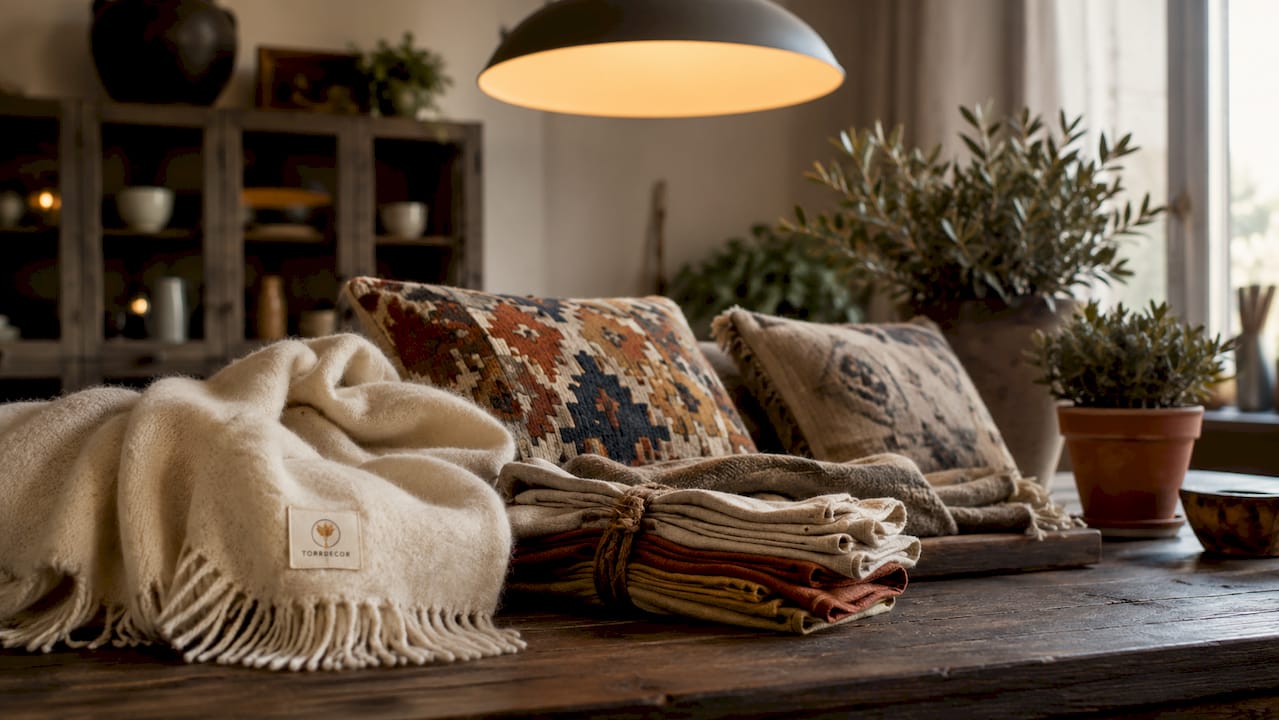
Att begränsa textilier till 3–4 färgtoner undviker rörighet och skapar ett rum som känns färdigt snabbare. Det betyder att kuddar, plädar, mattor och gardiner bör hålla sig inom samma färgfamilj. Väljer du exempelvis beige, vit, terrakotta och mörkgrön som bas, kan du byta ut enstaka detaljer utan att hela rummet tappar sin känsla.
Att låta en basmöbel styra rummets uttryck och sedan addera tydliga ljuspunkter ger en proffsig och sammanhållen inredning. En skulptural golvlampa bredvid soffan eller en pendel över matbordet fungerar som blickfång och binder ihop rummet. Det är ett enkelt knep som inredare använder konsekvent.
- Välj möbler i naturmaterial som trä, rotting eller linne som stomme i rummet.
- Håll dig till 3–4 färgtoner i textilier och mindre möbler för ett lugnt helhetsintryck.
- Låt en basmöbel sätta tonen och bygg resten av inredningen runt den.
- Addera ljuspunkter med lampor som skapar fokus och djup i rummet.
- Kombinera material som trä och keramik för att ge rummet textur utan att det blir plottrigt.
Proffstips: Köp en neutral basplatta, till exempel en ljusgrå eller beige matta, och byt sedan ut kuddar och plädar med årstiderna. Du får ny känsla utan att röra grundstrukturen.
En neutral inredning med genomtänkta färgval ger dig friheten att experimentera med detaljer utan att riskera att rummet ser rörigt ut. Det är just den friheten som gör att hemmet känns levande år efter år.
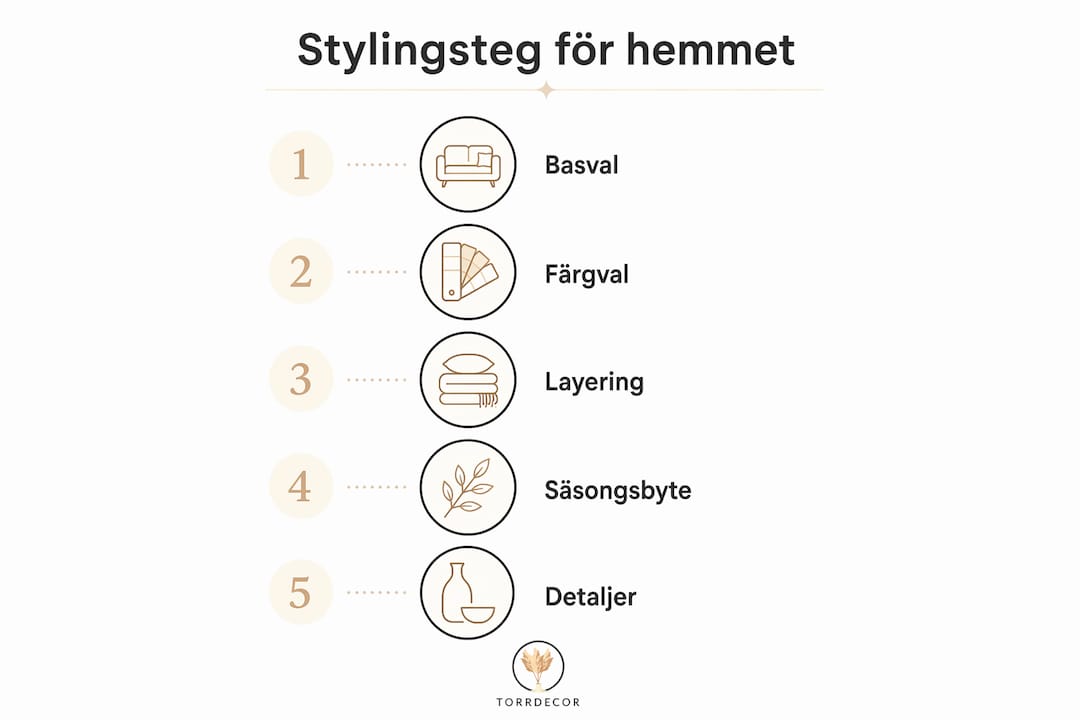
Hur fungerar layering i hemmastyling?
Layering, eller flerskiktsprincipen, är grundläggande för att skapa ombonade hem. Det innebär att du bygger upp rummet i lager: möbler, textilier, belysning och personliga föremål samverkar för att ge djup och värme. Många hem känns livlösa för att de saknar det sista lagret av detaljer som ger karaktär.
Höjdvariation är det mest förbisedda verktyget i hemmastyling. Placera föremål på olika nivåer: en hög vas på golvet, en mellanstor skulptur på bordet och ett litet ljus på en hylla. Att kombinera olika höjder och kontrasterande material lyfter inredningen från möblerad till ombonad. Det är skillnaden mellan ett rum som ser ut som en möbelbutik och ett hem som känns levant.
Så här bygger du upp layering steg för steg:
- Börja med golvet. En matta definierar rummets zon och ger mjukhet under fötterna. Välj en matta som är minst lika bred som soffan.
- Addera textilier i lager. Kuddar i olika storlekar och en pläd kastad över soffans arm tillför textur och inbjuder till avkoppling.
- Placera belysning på flera nivåer. Taklampa, golvlampa och bordslampa skapar olika stämningar beroende på tid på dygnet.
- Använd vaser och naturliga element. En vas med pampasgräs eller torkade grenar ger höjd och organisk form som mjukar upp hårda ytor.
- Avsluta med personliga föremål. Böcker, konst och minnen från resor ger rummet din personlighet.
Proffstips: Mixa mönster utan att det blir rörigt genom att hålla dig till samma färgfamilj. En randig kudde och ett blommigt kast fungerar ihop om de delar minst en färg.
Textilier och belysning samverkar för att skapa djup och harmoni i inredningen. Det är inte ett av dem, utan kombinationen av båda, som binder ihop ett rum. Tänk på belysning som det sista lagret som aktiverar alla andra.
Ett tidlöst hem kombinerar stabila möbler med flexibla textilier och belysning som går att förändra med trender och säsonger. Det är ett smart sätt att hålla hemmet fräscht utan att investera i nya möbler varje år.
Säsongsbetonade stylingtips: enkla förändringar med stor effekt
Att uppdatera hemmet inför en ny årstid kräver inte stora inköp. Små ändringar i textilier och dekorativa detaljer räcker för att ge ett rum ny energi. Att byta ut tunga textilier mot ljusare material och använda accentfärger som grönt, rosa och blått ger en fräsch känsla utan stora inköp.
Inför våren och sommaren fungerar dessa förändringar bäst:
- Byt ut yllekuddarna mot kuddar i linne eller bomull i ljusa toner.
- Ta bort tunga gardiner och ersätt dem med lätta, halvtransparenta tyger som släpper in mer ljus.
- Addera en accentfärg i ett par detaljer, till exempel en grön vas, en blå bricka eller ett rosa kast.
- Rensa och vädra ordentligt. Att putsa fönster och rensa bort vinterdamm ger omedelbart mer ljus och en fräschare känsla i rummet.
- Byt ut torkade arrangemang. Pampasgräs och torkade buketter håller länge, men ett nytt arrangemang i en annan form ger rummet ny karaktär.
Inför höst och vinter gäller motsatsen: addera värme med mörkare textilier, fler ljus och tyngre material som ull och sammet. Accentfärger som rostbrunt, djupblått och olivgrönt fungerar väl. Tanken är att hemmet ska spegla årstiden utan att du behöver byta ut grundinredningen.
Hållbarhet är en viktig faktor när du väljer säsongsdetaljer. Torkade växter och keramikvaser håller i flera år och kräver minimal skötsel. Det är ett mer ekonomiskt och miljövänligt val än att köpa nya dekorationer varje säsong. Läs mer om hur du skapar ett hållbart och stiligt hem med genomtänkta val.
Vilka är de vanligaste misstagen vid hemmastyling?
Det vanligaste misstaget är att övermöblera. För många möbler och för många detaljer gör att rummet känns trångt och svårt att vila i. Regeln är enkel: om du tvekar på om ett föremål hör hemma i rummet, ta bort det och se om du saknar det efter en vecka.
Perfektionism är det andra stora hindret. Många stannar upp i stylingprocessen för att de vill att allt ska se ut som i ett magasin. Stylist Stina Meyerson rekommenderar att sänka prestationsångesten med enkla knep som ett stort överkast eller enfärgade kuddar som är svåra att misslyckas med. Det är ett konkret råd som faktiskt fungerar.
- Undvik för många färger. Mer än 4–5 färger i ett rum skapar visuellt brus.
- Glöm inte höjdvariationen. Alla föremål på samma nivå gör rummet platt och tråkigt.
- Skippa symmetrin ibland. Operfekt symmetri och omaka textilier ger ett piggt och personligt intryck som känns mer levande.
- Tänk på belysningen sist. Många glömmer att byta ut standardlampor mot varmare alternativ, vilket direkt påverkar hur hela rummet upplevs.
“Styling handlar inte om att ha rätt saker. Det handlar om att placera det du har på rätt sätt. Ett rum med tre genomtänkta föremål slår alltid ett rum med trettio slumpmässiga.”
Att göra stylingprocessen enklare handlar om att arbeta i etapper. Börja med basen, lägg till ett lager i taget och utvärdera efter varje steg. Du behöver inte göra allt på en dag. Hemmastyling är ett pågående arbete, inte ett projekt med ett slutdatum.
Rätt inredningsaccessoarer lyfter hemmet utan att det kräver stora förändringar. Det är ofta de sista detaljerna som avgör om ett rum känns färdigt eller inte.
Viktiga insikter
Ett välstylat hem bygger på en stabil bas av naturmaterial, ett begränsat färgschema och genomtänkta lager av textilier, belysning och personliga detaljer.
| Punkt | Detaljer |
|---|---|
| Bygg en stabil bas | Välj möbler i naturmaterial och håll textilier inom 3–4 färgtoner för ett lugnt helhetsintryck. |
| Använd layering medvetet | Addera textilier, belysning och personliga föremål i lager för att ge rummet djup och värme. |
| Uppdatera med årstiderna | Byt ut textilier och accentfärger säsongsvis för ny känsla utan stora inköp. |
| Undvik övermöblering | Ta bort föremål som du tvekar på och utvärdera rummet med färre detaljer. |
| Välj hållbara dekorationer | Torkade växter och keramikvaser håller i flera år och kräver minimal skötsel. |
Styling är ett hantverk, inte en prestation
Jag har sett hundratals hem där ägaren köpt rätt möbler, rätt färger och rätt accessoarer, men rummet känns ändå inte levande. Problemet är nästan alltid detsamma: de har stylt för ögat, inte för känslan. De har placerat föremål symmetriskt, valt matchande kuddar och följt en trend, men glömt att lägga in sig själva.
Det som verkligen lyfter ett hem är det operfekta. En vas som inte riktigt matchar, en bok som ligger öppen på bordet, ett pampasgräs som lutar lite åt sidan. Det är de detaljerna som gör att gäster säger “det är mysigt här” i stället för “det är snyggt här”. Mysigt är bättre. Mysigt betyder att de vill stanna.
Mitt råd till alla som fastnar i prestationsångest är att börja med ett enda rum och ett enda lager. Byt ut kuddarna. Flytta en lampa. Ställ in en ny vas. Se hur det känns efter tre dagar. Styling är inte ett beslut, det är en process. Och processen ska vara rolig.
Jag är övertygad om att trendiga inredningsdetaljer inte handlar om att följa trender. De handlar om att hitta föremål som resonerar med dig och som håller länge. Det är skillnaden mellan ett hem som ser ut som ett showroom och ett hem som faktiskt är ditt.
— a4
Torrdecors produkter för ett välstylat hem
Torrdecor erbjuder ett sortiment av torkade växter, pampasgräs och handgjorda vaser som passar direkt in i layering-principen. Produkterna kräver ingen skötsel och håller sin form och färg i flera år.
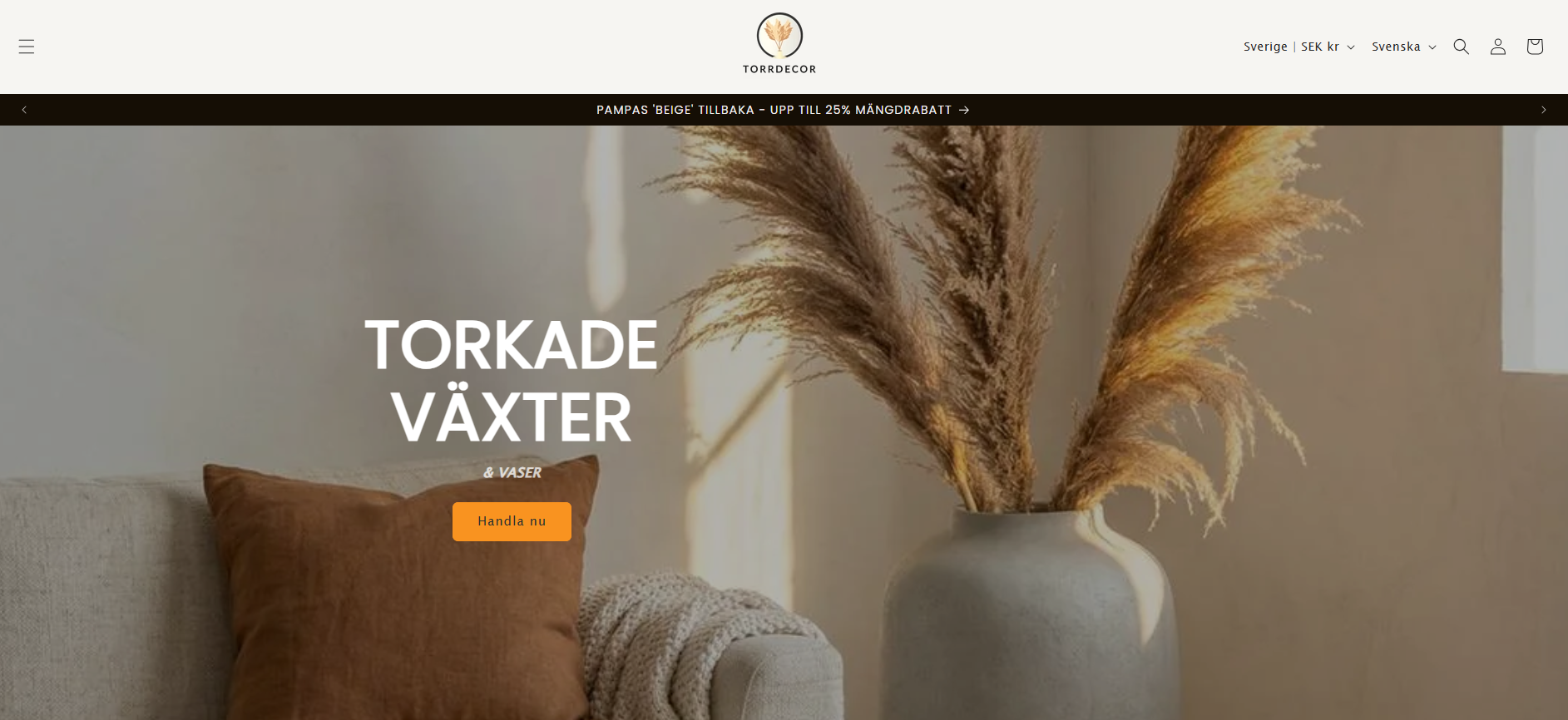
Pampasgräs 110 cm ger omedelbart höjd och organisk textur i ett rum. Det fungerar i en hög golvvas, i ett hörn av vardagsrummet eller som blickfång i en hall. Torrdecors Vas ‘BÅGE’ cream är tillverkad i Portugal och kombinerar skulptural form med praktisk funktion. Tillsammans skapar pampasgräs och en genomtänkt vas exakt det sista lager som gör ett rum levande. Se hela sortimentet på Torrdecor för inspiration och beställning.
Vanliga frågor
Vad är stylingtips för hem?
Stylingtips för hem är konkreta råd om hur du placerar, kombinerar och väljer möbler, textilier och dekorationer för att skapa ett harmoniskt och personligt rum. Det handlar om att använda det du har på ett smartare sätt, inte om att köpa nytt.
Hur väljer jag rätt färgschema för hemmet?
Begränsa dig till 3–4 färgtoner i textilier och mindre möbler. Välj en neutral bas och addera en eller två accentfärger i kuddar, vaser eller konst för ett sammanhållet intryck.
Vad är layering inom inredning?
Layering är flerskiktsprincipen där du bygger upp ett rum i lager: möbler, textilier, belysning och personliga föremål samverkar för att ge djup och värme. Rum utan layering känns ofta ofärdiga och livlösa.
Hur uppdaterar jag hemmet inför en ny årstid?
Byt ut tunga textilier mot ljusare material, addera en accentfärg i ett par detaljer och putsa fönster för mer ljus. Dessa enkla förändringar ger ny känsla utan stora inköp.
Hur undviker jag att hemmet ser rörigt ut?
Håll dig till ett begränsat antal färger, undvik övermöblering och arbeta med höjdvariation i stället för att fylla alla ytor. Ta bort föremål du tvekar på och utvärdera rummet med färre detaljer.