

In short:
- Drying flowers at home means dehydrating them to preserve their shape and color.
- Methods like air drying, silica gel, and oven drying suit different flower types and yield varying results.
Drying flowers step by step is the process where fresh flowers are controllably dehydrated to preserve their shape and color as a lasting decoration. Drying flowers at home doesn't require advanced equipment. The three most common methods are air drying, silica gel, and oven drying. Each method suits different flower types and gives different results. This guide will show you exactly how to proceed, what you need, and how to avoid common mistakes.
Which flowers are best for drying?
The right choice of flower determines the result even before drying begins. Different drying methods suit different flower varieties and desired outcomes, making the choice of flower an important starting point.
Flowers with low moisture content and dense petals retain their shape best. Lavender, roses, hydrangeas, strawflowers, everlasting flowers, and pampas-like grasses are excellent choices. Flowers with thick, succulent stems, such as tulips, dry poorly and risk rotting.
Choose flowers with these characteristics:
- Dense or dry petals, not succulent
- Strong and straight stems without too much foliage
- Flowers that have just opened, not fully bloomed
- Healthy specimens without spots, damage, or signs of wilting
Harvest flowers early in the morning when the temperature is low and the flower is most hydrated. Avoid harvesting after rain as excess moisture increases the risk of mold during drying.
Fresh flowers are crucial for successful drying. Transport stress and micro-damage can cause discoloration and necrosis. Always choose the freshest specimens you can find.
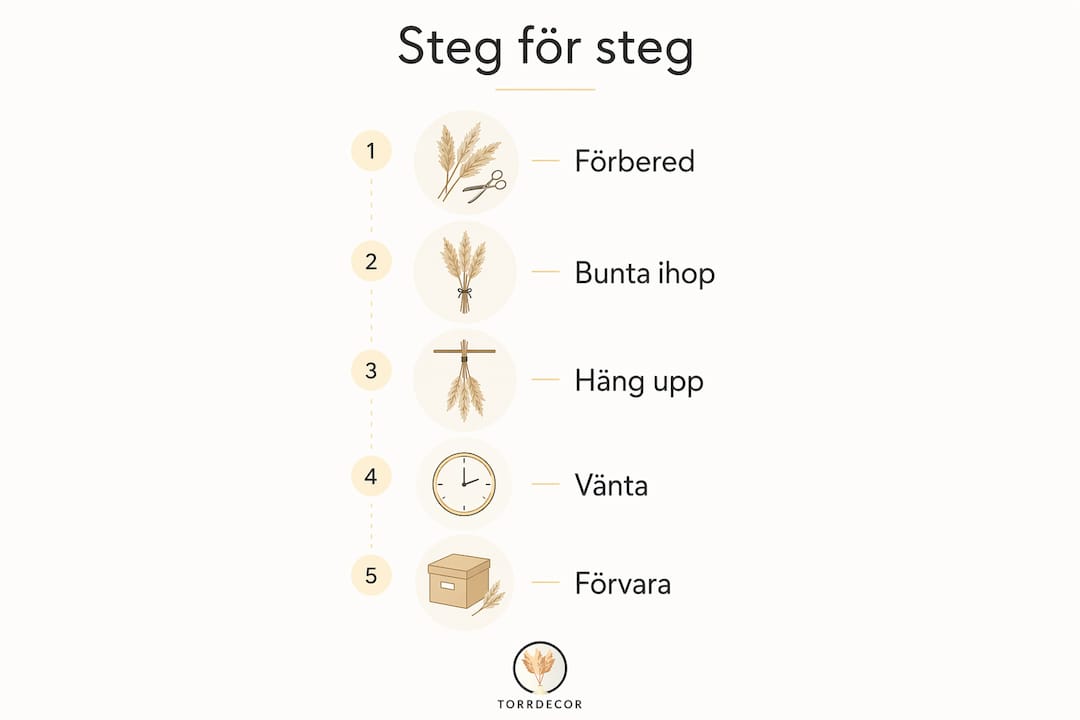
Prepare the flowers immediately after harvesting. Remove any leaves below the point where you intend to tie the stems together. Leaves increase the risk of bacteria and moisture accumulation. Cut the stem with a sharp knife, not scissors, to avoid crushing the tissue and blocking water flow.
Pro tip: Never leave leaves in the water if you store the flowers in a vase before drying. Change the water frequently during the first 24 hours and keep it cool.
Step by step: air drying flowers
Air drying is the simplest and most environmentally friendly method. It requires no extra equipment and is excellent for flowers like lavender and roses.
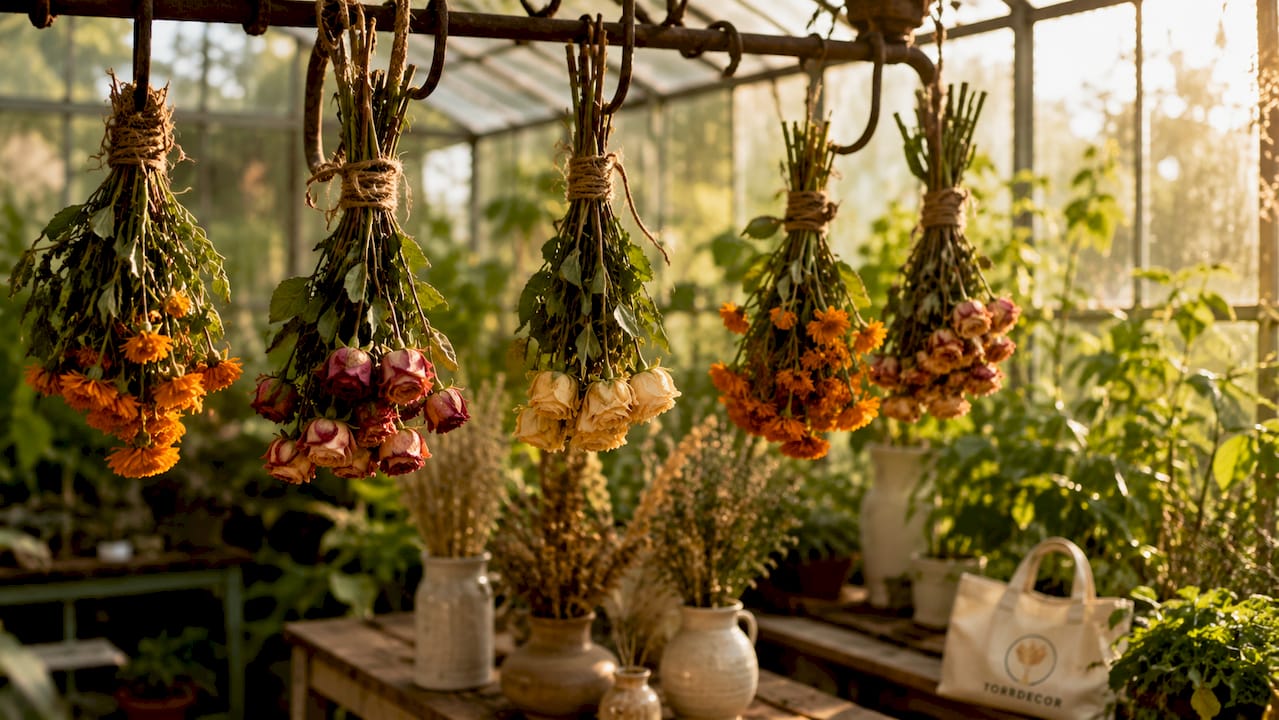
Air drying takes 2–4 weeks and requires a dark, dry, and ventilated place for best results. Darkness protects the colors from fading. Moisture is the biggest enemy and can cause mold.
Follow these steps:
- Prepare bunches. Gather 5–10 stems per bunch. Use rubber bands instead of string, as the rubber band will tighten as the stems shrink during drying.
- Choose the right location. A hanging hook in a dark storage room, a dry cellar, or a well-ventilated room works well. Avoid kitchens and bathrooms where humidity is high.
- Hang the flowers upside down. Turn the bouquet upside down and secure it with the rubber band. The upside-down position helps the stems dry straight and the petals retain their shape.
- Check regularly. Check the flowers every three to four days. Feel if the stems are still soft. Soft stems need more time.
- Test if they are ready. The petals should feel dry and rustle lightly. The stems should be hard and brittle, not flexible.
Air drying produces a natural and rustic result that suits robust flowers. The method is simple but requires patience.
Pro tip: Don't hang bunches that are too large. Dense bunches retain moisture in the center and can mold. Five to seven stems per bunch is ideal.
How do you dry flowers with silica gel?
Silica gel is a desiccant that absorbs moisture quickly and efficiently. This method preserves the flowers' color and shape better than air drying and is significantly faster.
Silica gel dries flowers in 1–2 weeks and preserves color and shape better than the air method. It is the best way to dry flowers when you want a detailed and colorful result.
You will need: silica gel (available at craft stores or online), an airtight plastic container with a lid, a soft brush, and scissors.
- Pour a layer of silica gel into the bottom of the container. The layer should be about 3–4 centimeters deep.
- Place the flowers. Lay the flowers with the petals facing upwards directly on the granules. Leave space between each flower.
- Gently cover the flowers. Pour silica gel around and over the flowers with a spoon. Fill until the entire flower is covered. The silica gel must completely cover the flowers for best results.
- Seal the container tightly. Put on the lid and store the container at room temperature.
- Check after one week. Gently open and feel a petal. If it is dry and stiff, the flower is ready. If it is still soft, close and wait another 3–4 days.
- Remove the flowers. Carefully pour out the granules and lift out the flower. Brush away any residue with a soft brush.
| Method | Time required | Color preservation | Equipment |
|---|---|---|---|
| Air drying | 2–4 weeks | Medium | None |
| Silica gel | 1–2 weeks | Excellent | Silica gel, container |
| Oven drying | 2–4 hours | Low to medium | Oven, baking sheet |
Oven drying flowers: quick method with caution
Oven drying is the fastest method but requires careful control. Incorrect temperature can destroy flowers in minutes.
Oven drying requires a temperature of 30–45 °C, and the oven door should be left ajar to allow moisture to escape. The temperature must be low. High heat will burn the petals and make them brittle and discolored.
Follow these steps:
- Preheat the oven to 35–40 °C. Use the convection function if your oven has it. Insert a wooden spoon into the door opening to keep the door ajar.
- Prepare the flowers. Cut off the stems so that only the flower head remains, or leave a short stem of 5–8 centimeters. Place the flowers on a baking sheet with the petals facing up.
- Place in the oven. Place the baking sheet in the middle of the oven.
- Check every 20–30 minutes. Regular checking reduces the risk of burnt edges. Gently feel a petal with each check.
- Remove when the flowers are dry. The process typically takes 2–4 hours depending on the flower type and size. The flowers should feel dry but not brittle.
Burnt edges and brittleness usually occur due to too high a temperature or poor handling. Low temperature and regular checking are the most important precautions. Flowers with thin petals, such as daisies and marigolds, are best suited for oven drying. Roses with thick petals risk burning on the outside before drying on the inside.
Common mistakes and tips for best results
Most failures when drying flowers are due to a few recurring errors. Knowing them in advance saves time and flowers.
Avoid these mistakes:
- Starting with flowers that are already half-withered or damaged. Micro-damage leads to discoloration and necrosis during drying.
- Hanging bunches in a humid place, such as the kitchen. Moisture causes mold.
- Using too high a temperature in the oven. Burnt edges cannot be repaired.
- Forgetting to remove leaves from the stems. Leaves retain moisture and increase the risk of bacteria.
- Handling the flowers too much after drying. Dried flowers are brittle and break easily.
Store dried flowers in cool, dry, and dark rooms for longer durability. Direct sunlight fades colors quickly. Placement and handling after drying are crucial for preserving the flowers' quality.
Pro tip: Spray finished dried flowers with a thin layer of hairspray or fixing spray. This reduces petal shedding and extends the life of the decoration.
Key insights
Drying flowers requires the right method, healthy flowers, and proper storage to produce durable and beautiful decorations.
| Point | Details |
|---|---|
| Choose the right flower | Dense petals and low moisture content yield the best drying results. |
| Air drying takes time | Allow 2–4 weeks in a dark and ventilated area. |
| Silica gel preserves color | This method provides the best color results and takes 1–2 weeks. |
| Oven drying requires control | Maintain a temperature of 35–40 °C and check every 20–30 minutes. |
| Storage determines durability | A cool, dry, and dark room significantly extends the flowers' lifespan. |
My experiences drying flowers at home
I've tried all three methods, and the most important lesson is simple: patience always pays off more than shortcuts.
Air drying is my favorite for lavender and roses. The result is natural and fits perfectly in rustic homes. Silica gel, on the other hand, gives a completely different result when I want to preserve a special flower with a strong color, such as a deep red rose or a blue delphinium. The difference in color quality is clear. I only use oven drying when I'm in a hurry, and then I'm always extra careful with the temperature.
The small thing that makes the biggest difference is the starting material. I've tried drying semi-withered flowers, and the result is always poor. Fresh flowers, properly prepared, yield a result that lasts for years. Another thing I've learned is not to hang bunches that are too large. Five stems per bunch is better than ten, every time.
If you want durable dried bouquets that truly last, invest time in the preparations. That's where the result is decided, not during the drying itself.
— a4
Complement your dried flowers with the right decoration

Dried flowers look best when combined with the right vessel and complementary plants. Torrdecor offers a wide range of pampas grass and handmade vases that perfectly suit homemade dried bouquets. Pampas grass is one of the most popular choices for dried decor right now. It requires zero maintenance and maintains its shape for years. Torrdecor's pampas grass 110 cm in beige is a classic choice that works in most homes. If you want something more dramatic, Pampas grass 'VILDA' is an excellent fit. Combine with a vase 'BÅGE' cream for a complete and stylish expression.
Frequently asked questions
How long does it take to dry flowers?
Air drying takes 2–4 weeks, silica gel takes 1–2 weeks, and oven drying takes 2–4 hours, depending on the flower type and size.
Which flowers are easiest to dry at home?
Lavender, roses, hydrangeas, and everlasting flowers are the easiest to dry. They have low moisture content and dense petals that retain their shape well.
Can you dry flowers without a microwave or oven?
Yes. Air drying and silica gel do not require an oven at all. Air drying only needs a dark, dry, and ventilated place.
Why do my dried flowers mold?
Mold occurs when the humidity is too high during drying or when leaves are left on the stems. Always choose a dry place and remove all foliage before drying.
How do you store dried flowers for the longest durability?
Store dried flowers in a cool, dry, and dark room. Avoid direct sunlight and high humidity, such as in kitchens and bathrooms.
0 comments