

Sovrum inspiration: skapa ett mysigt och stilfullt rum
Kort sagt:
- Ett sovrum bör ha rätt färg, textilier och belysning för att skapa harmoni och lugn. Små rum kan optimeras med smart möblering och ljusa färger för att kännas större och mer inbjudande. Säsongsanpassade textilier och varierad belysning bidrar till ett mysigt och välfungerande sovrum året om.
Ett välplanerat sovrum börjar med tre saker: rätt färg, genomtänkta textilier och belysning på flera nivåer. Sovrummet är ett rum där man tillbringar mycket av sitt liv, och det förtjänar mer omsorg än de flesta ger det. Här är de viktigaste grunderna att utgå från:
- Färg: Lugna blå, gröna och neutrala beige och gråtoner skapar bäst förutsättningar för ro, enligt Jotuns experter.
- Textilier: Arbeta med lager på lager, mattor, gardiner, plädar och sängkläder av god kvalitet.
- Belysning: Undvik stark takbelysning. Använd flera ljuskällor på olika nivåer.
- Möblering: Placera sängen med vägg bakom och fri sikt mot dörren för trygghet och harmoni.
- Detaljer: Färre men större dekorationsobjekt ger ett lugnare intryck, särskilt i små rum.
Vilka färger passar bäst i sovrummet?
Jotuns färgexperter delar in sovrumspaletter i fyra tydliga grupper: lugnande blå och gröna toner, tidlösa neutrala nyanser, mörka och stämningsfulla kulörer samt naturliga jordnära toner. Rätt val beror på rummets storlek och hur mycket dagsljus det får.
| Färggrupp | Känsla | Passar bäst för |
|---|---|---|
| Blå och gröna toner | Frisk, rogivande | Rum med gott om ljus |
| Neutrala beige och grå | Varm, tidlös | De flesta rumsstorlekar |
| Mörka toner (plommon, burgundy) | Omslutande, stämningsfull | Större rum med hög takhöjd |
| Jordnära toner (persika, gyllene rosa) | Varm, levande | Sovrum med lite naturligt ljus |
Beige sovrum fungerar särskilt bra när du kombinerar flera nyanser av sand, linne och vitt med naturliga material som trä och sten. Resultatet är ett rum som känns varmt och levande utan att bli rörigt. För ett litet sovrum med lite dagsljus är ljusgrå eller mjuk beige ett säkrare val än mörka toner, som kräver mer yta för att inte kännas trångbott.
- Välj en basfärg och lägg till en accentfärg i kuddar eller textilier.
- Måla gärna taket i samma nyans som väggarna för en omslutande effekt.
- Testa färgprover i det verkliga ljuset innan du bestämmer dig, ljuset förändrar nyansen markant.
Proffstips: En fondvägg bakom sängen i en mörkare ton ger karaktär utan att hela rummet känns tungt. Håll övriga väggar ljusa.
Rätt färgval i inredning handlar inte om att följa trender blint, utan om att hitta den nyans som ger dig ro när du kliver in i rummet.
Hur inreder du ett litet sovrum smart?
Små sovrum kräver tydliga prioriteringar. Det handlar om att välja rätt möbler och hålla nere antalet detaljer, inte om att kompromissa med stil.
I mycket små sovrum kan en bäddsoffa med inbyggd förvaring vara ett klokt alternativ till en traditionell säng, eftersom den frigör golvyta under dagen. Akustikpaneler i mörkare kulör är en trend som samtidigt dämpar ljud och skapar en tydlig fondvägg bakom sängen.
- Välj en säng med förvaring under madrassen för att slippa extra byrå.
- Använd vägghängda nattduksbord i stället för fristående för att frigöra golvyta.
- Sätt upp hyllor högt på väggarna för förvaring som inte tar golvyta.
- Välj ljusa väggar för att ge ett luftigare intryck.
- Placera en stor spegel för att optiskt fördubbla rummets djup.
Färre men större dekorationsobjekt fungerar bättre i ett litet sovrum än många små föremål. Gruppera det du har, till exempel på en bricka på nattduksbordet, i stället för att sprida ut det. Det ger visuell ro och gör rummet mer lättskött.
Hur skapar du mysighet med textilier och belysning?
Textilier är det snabbaste sättet att förändra känslan i ett sovrum. Lager på lager-principen innebär att du kombinerar matta, gardiner, plädar och sängkläder i god kvalitet för att skapa värme och dämpa ljud. En mjuk matta vid sängkanten gör morgonen märkbart trevligare.
Belysningen avgör hur resten av inredningen upplevs. Stark takbelysning bör ersättas med punktbelysning på flera nivåer: en bordslampa i fönsterkarmen, läslampor vid sängen och gärna levande ljus för extra stämning. Lampan i fönstret skapar en lugn fokuspunkt som ögat gärna stannar vid.
- Investera i sängkläder av hög kvalitet. Det märks direkt och håller länge.
- Lägg till ett överkast och kuddar i olika storlekar för en mer ombonad känsla.
- Använd gardiner från golv till tak för att ge rummet höjd och mjukhet.
Proffstips: Flerskiktsbäddning med sängkappa och flera kuddar i olika storlekar ger en lyxigare hotellkänsla utan att du behöver byta ut sängen.
Var ska sängen stå och hur möblerar du för harmoni?
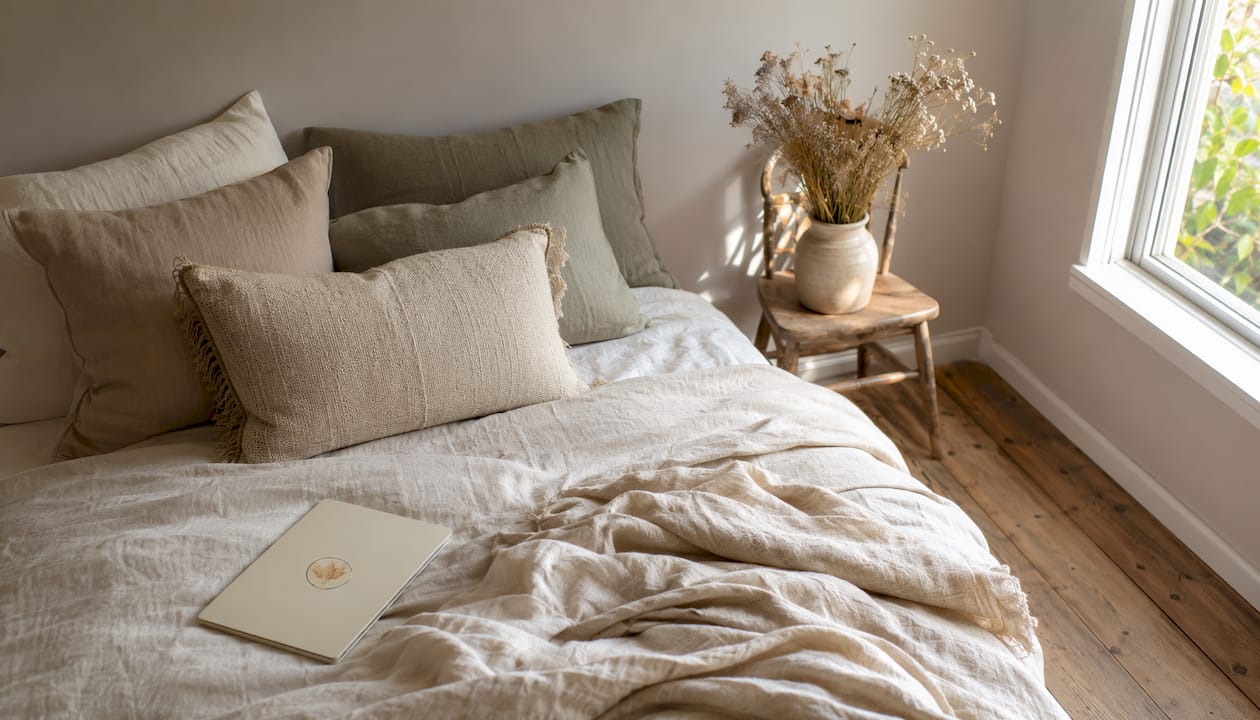
Sängens placering påverkar hela rummets känsla. Placera den med en solid vägg bakom och med fri sikt mot både fönster och dörr. Undvik att ha sängen i rak linje med dörren, det ger ett oroligare intryck och sämre sömnkvalitet enligt feng shui-principerna.
Förvaring fungerar bäst när den kombinerar ordning och estetik. En garderob med skjutdörrar tar mindre plats än en med svängdörrar. Öppna hyllor passar för snygga detaljer, stängda skåp för det som ska döljas. Balansen mellan öppet och dolt avgör om rummet känns luftigt eller rörigt.
- Centrera sängen på den längsta väggen för symmetri och balans.
- Placera nattduksbord på båda sidor om möjligt, även i ett litet rum.
- Lämna minst 60 cm gångyta på varje sida om sängen.
En neutral inredning med få möbler och tydliga linjer gör det lättare att hålla ordning och ger rummet ett lugnare uttryck över tid.
Hur använder du väggdekorationer och konst i sovrummet?
Väggarna i sovrummet är en möjlighet att sätta personlig prägel utan att röra möblerna. Rätt väggfärg och konst kan förvandla sovrummet till en privat fristad och bidra till att du lättare kopplar av. Välj motiv som styr rummet mot lugn, inte mot stimulans.
En tavelvägg bakom sängen fungerar som en naturlig fondvägg. Blanda ramar i samma ton men olika storlekar för ett sammanhållet uttryck. Alternativt räcker en enda stor tavla för att ge sängen en tydlig ram. Väggtatueringar och tapeter med naturmotiv, som gräs, löv eller abstrakta former, är ett annat alternativ som ger textur utan att kräva inramning.
Håll färgskalan i konsten nära rummets övriga palette. En tavla med starka kontraster kan störa mer än den tillför i ett sovrum som annars är nedtonat.
Vilka växter passar i sovrummet?
Gröna växter och snittblommor bidrar med lugn och en känsla av natur i sovrummet. En större krukväxt på golvet ger tyngd och liv, medan snittblommor i en vas på nattduksbordet tillför en mer tillfällig och säsongsanpassad touch.
Torkade växter är ett praktiskt alternativ för den som vill ha naturliga inslag utan skötsel. Pampasgräs i en snygg vas ger textur och volym och passar i de flesta sovrumstilar, från minimalistiskt till bohemiskt. Torrdecors pampasgräs i beige är ett populärt val för just sovrumsdekoration, eftersom det håller sin form och färg utan vatten eller underhåll.

Vill du ha mer textur och ett vildare uttryck passar Torrdecors VILDA-modell utmärkt som ett blickfång i ett hörn eller bredvid sängen.
Hur anpassar du sovrummet efter årstid?
Sovrummet är ett av de rum som lättast anpassas efter säsong utan stora ingrepp. Byt ut textilier och detaljer efter årstid för att hålla rummet fräscht och relevant.
Vinter: Lägg till tjockare plädar i ull eller fleece, byt till mörkare kuddfodral och tänd levande ljus för extra värme och stämning. Mörka toner som burgundy och djupgrön passar extra bra under de mörka månaderna.
Vår och sommar: Byt till lättare sängkläder i linne eller bomull, ta in snittblommor och välj ljusare kuddfodral. Öppna gardiner på dagen för att släppa in mer ljus och ge rummet ett luftigare uttryck.
Att byta ut ett par kuddar, en pläd och en vas med säsongsblommor tar under en timme och förändrar rummets känsla markant. Det är den typen av heminredning som ger stor effekt utan stor budget.
Viktiga insikter
Sovrummet skapar bäst vila när färg, textilier och belysning samverkar mot samma känsla, och det kräver inte en stor renovering för att uppnå.
| Punkt | Detaljer |
|---|---|
| Färgval avgör stämningen | Lugna blå, gröna och neutrala beige toner ger bäst förutsättningar för ro. |
| Textilier i lager skapar mysighet | Kombinera matta, gardiner, plädar och sängkläder för värme och ljuddämpning. |
| Belysning på flera nivåer | Ersätt stark takbelysning med bordslampor och läslampor för mjukare ljusmiljö. |
| Sängens placering spelar roll | Vägg bakom och fri sikt mot dörren ger trygghet och bättre sömnkvalitet. |
| Säsongsanpassa med textilier | Byt kuddar, plädar och blommor efter årstid för ett fräscht och levande sovrum. |
Vanliga frågor
Hur gör man ett sovrum mysigt?
Börja med mjuka textilier i lager, en matta, pläd och sängkläder av god kvalitet, och komplettera med belysning på flera nivåer. Undvik stark takbelysning och välj i stället bordslampor och läslampor för ett varmare sken.
Vilken färg är lugnande i sovrummet?
Lugna blå, gröna och mjuka neutrala beige och gråtoner är de mest rogivande valen enligt Jotuns färgexperter. Dessa toner sänker den visuella stimulansen och gör det lättare att varva ner.
Vilka färger bör man undvika i sovrummet?
Starka kontraster och klara, mättade färger som klarrött eller klarorange kan göra det svårare att koppla av. De fungerar bättre som accentfärger i små doser än som väggfärg.
Hur ska sängen stå i ett sovrum?
Sängen bör stå med en solid vägg bakom och med fri sikt mot både dörr och fönster. Undvik att placera sängen i rak linje med dörröppningen, det ger ett oroligare intryck och sämre sömnkvalitet.