

TL;DR:
- Maintenance-free plants require minimal upkeep and are available as dried, artificial, or easy-care living varieties. Dried flowers are trendy, sustainable, and cost-effective, while artificial ones are hypoallergenic and practical. Combining dried and living plants creates stylish and long-lasting decor.
Many believe that flowers and plants in the home require daily attention, regular watering, and a green thumb. But that is no longer true. There is a growing range of maintenance-free options that look fantastic year after year, without you having to spend a single minute on upkeep. In this article, you will learn the difference between dried, artificial, and easy-care living plants, how to choose the right variety for your environment, and how to create trendy and long-lasting decor.
Table of Contents
- What are maintenance-free flowers?
- The most common types of maintenance-free flowers
- Pros and Cons: Maintenance-free vs. Living Flowers
- How to decorate with maintenance-free flowers in practice
- Our View: Why we choose maintenance-free flowers in modern homes
- Make it easy: Choose sustainable, maintenance-free flowers from Torrdecor
- Frequently Asked Questions about maintenance-free flowers
Key Insights
| Point | Details |
|---|---|
| Different maintenance-free options | Dried, artificial, and extremely low-maintenance living plants offer various benefits to your home. |
| Maintenance-free and sustainable | Maintenance-free flowers save time, last a long time, and require almost no care. |
| Stylish and hypoallergenic decor | These flowers also work where you want to avoid allergens or have high demands on appearance over time. |
| Value for both private and public environments | Maintenance-free flowers provide long-term solutions for both home and workplace. |
What are maintenance-free flowers?
The term "maintenance-free flowers" is often used a bit loosely, but it essentially refers to plants and flowers that require minimal or no upkeep at all. This can involve three completely different categories, and it's important to understand the distinction before making a purchase.
The first category is dried flowers and plants. These are natural plants that have been dried and preserved, allowing them to retain their shape and color for a long time. Dried and artificial flowers require no watering or soil, making them one of the most practical options for modern homes. You can read more about how to use dried plants at home to create stylish and sustainable decor.
The second category is artificial flowers. These are made from plastic, fabric, or silk and are increasingly realistic. They require no maintenance whatsoever and are a good choice for environments where light and humidity are difficult to control, such as basements, offices, or retail spaces.
The third category is extremely easy-care living plants. These are biological plants that can withstand drought, low light, and infrequent watering. They are not entirely maintenance-free, but they require so little care that they fall into the same practical category for most households.
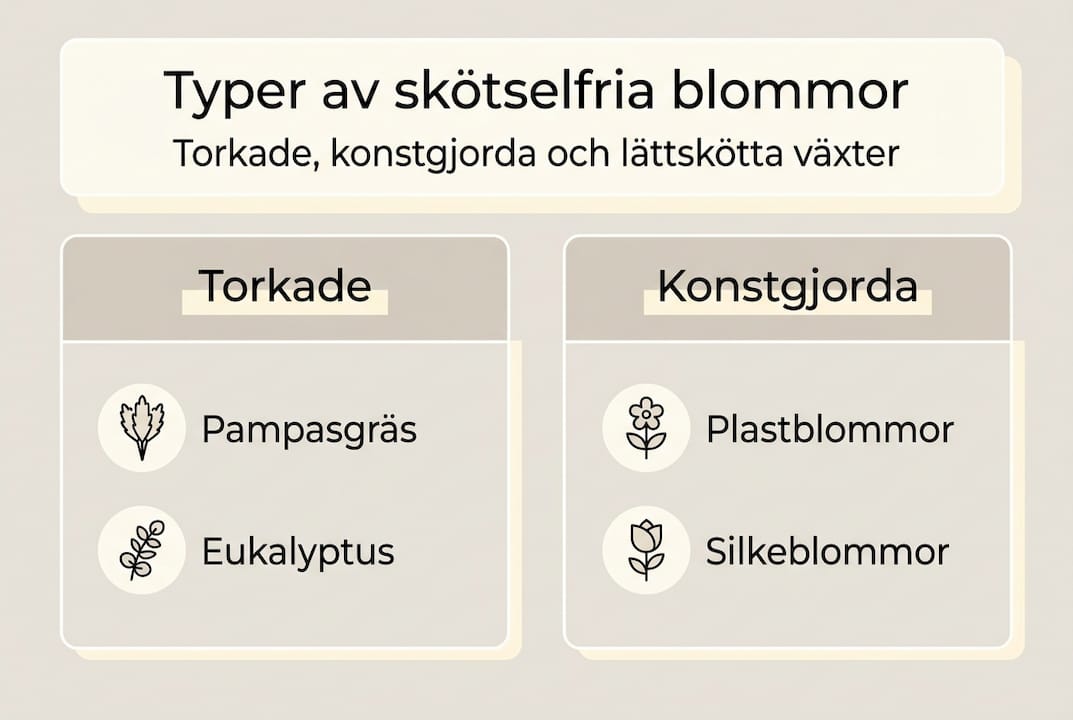
Here's a quick overview of the three types:
| Type | Care | Lifespan | Natural appearance |
|---|---|---|---|
| Dried flowers | None | Several years | Yes |
| Artificial flowers | None | Unlimited | Varies |
| Easy-care living | Minimal | Years with care | Yes |
When choosing a type, you should consider:
- Light conditions in the room, such as north-facing windows or dark corners
- Allergies in you or your guests
- Decorating style and whether you want a natural or polished look
- Budget in the long run, not just the purchase price
A common mistake is to only look at the price. A dried flower bouquet may cost more than a living flower, but it lasts for several years without extra costs.
The most common types of maintenance-free flowers
Now that you know what maintenance-free flowers are, let's take a closer look at the most popular varieties and why they are suitable for homes and public spaces.
Artificial flowers have come a long way in recent years. Modern varieties made of silk or high-quality plastic look almost identical to real flowers. They are hypoallergenic because they do not produce pollen, and they can withstand dust and moisture without deteriorating. The downside is that they can feel plastic-like if the quality is low, and they lack the natural scent and texture that real plants have.
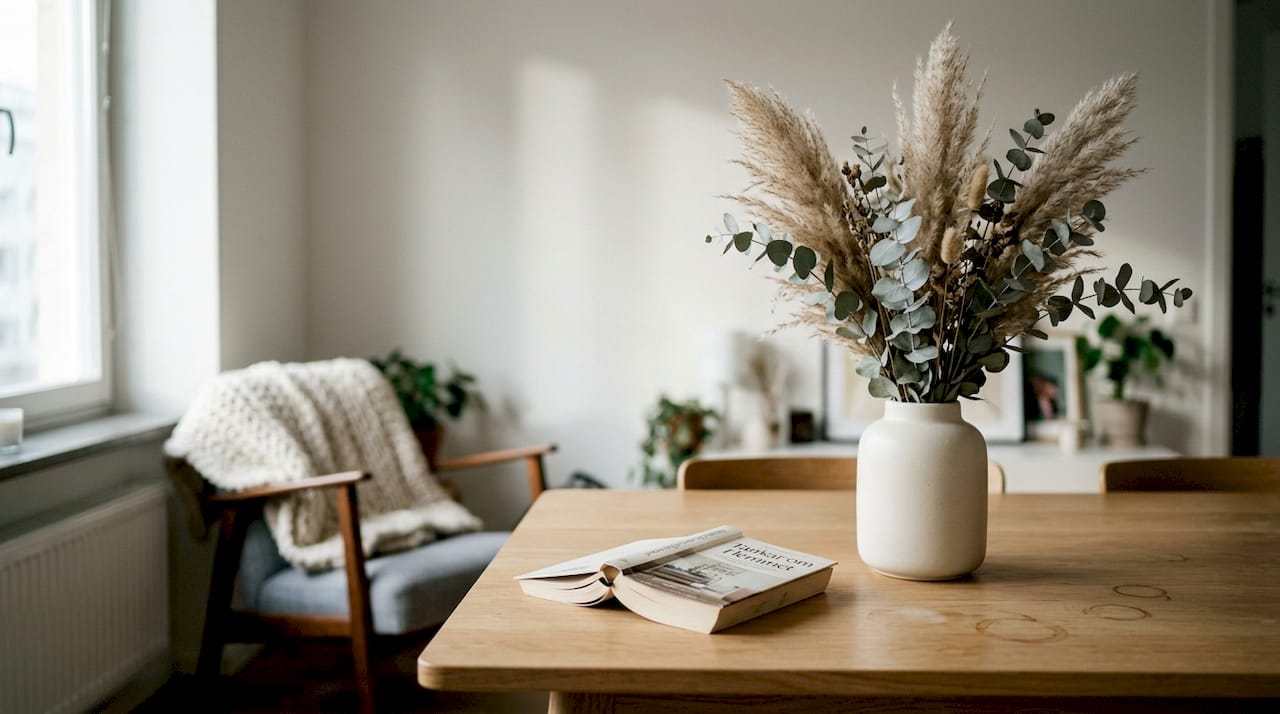
Dried flowers are currently one of the strongest interior design trends in Sweden. Pampas grass, lagerstroemia, eucalyptus, and lavender are examples of plants that are dried and used in bouquets and arrangements. They have a warm, organic feel that fits perfectly in Scandinavian interiors. Dried flowers require no watering and do not need to be in soil. You can find advice on care for dried plants to keep them beautiful longer. They are also excellent for event decor with dried flowers where durability and appearance are crucial.
Drought-tolerant living plants like snake plant, ZZ plant, and Hoya require infrequent watering and thrive in various light conditions. These plants are a good intermediate option for those who want something living but don't want to risk it dying during the first vacation.
Here is a comparison of the three most popular options:
| Feature | Artificial | Dried | Easy-care living |
|---|---|---|---|
| Watering | No | No | 1-2 times/month |
| Hypoallergenic | Yes | Partially | No |
| Natural feel | Varies | Yes | Yes |
| Cost over 3 years | Low | Low | Medium |
The three best types of easy-care living plants:
- Snake plant tolerates drought and low light and lives for many years.
- Hoya blooms for a long time and requires minimal watering.
- ZZ plant thrives at room temperature and rarely needs repotting.
Pro tip: Combine dried flowers with one or two easy-care living plants to create a decor that feels alive without requiring daily attention.
Pros and Cons: Maintenance-free vs. Living Flowers
With different types discussed, it's important to understand what you gain and lose with each choice.
Living plants have real biological benefits. They can improve air quality and contribute to a sense of well-being in the home. It is documented that living low-maintenance plants offer air purification, while artificial flowers are hypoallergenic and durable. This means that with living plants, you can get a biological effect in the room, but you must also accept that they require some care and can cause allergic reactions in sensitive individuals.
Dried and artificial flowers have no air-purifying properties, but they compensate with other strengths:
- Allergy safety: No pollen, no spores, no allergens
- Time-saving: Zero minutes per week on care
- Durability: Dried flowers can last for several years with proper placement
- Flexibility: Can be placed anywhere, regardless of light and temperature
From an environmental perspective, the picture is more nuanced. Artificial plastic flowers are not biodegradable, but they replace the need to buy fresh flowers every week, which reduces transport emissions and waste. Dried flowers are a natural material and biodegrade biologically. You can read about the benefits of dried flowers for a deeper dive into sustainability aspects, and see a detailed comparison with fresh flowers if you are unsure which option suits you.
Dried flowers are a natural material with a long lifespan. They require no watering, no light, and no special environment to maintain their appearance.
Financially, maintenance-free flowers are often a better choice in the long run. A bouquet of fresh flowers might cost 150 to 300 Swedish Kronor and last for one to two weeks. A dried bouquet in the same price range can last for three to five years. This means savings of thousands of kronor over time. If you also choose the right ceramic vases for flowers, you can easily change bouquets without having to buy new vases every time.
The only real disadvantage of dried flowers is that they can become brittle over time and that they do not tolerate high humidity, for example, in bathrooms. Place them in dry, well-ventilated areas, and they will last a long time.
How to decorate with maintenance-free flowers in practice
After the analysis, the practical question remains: how do you translate knowledge into stylish and trendy decor?
Placement is the most important step. Dried flowers thrive best in dry rooms with good air circulation. Avoid bathrooms, kitchens near the stove, and windowsills with direct sunlight, as UV light can quickly fade colors. Dried flowers and robust potted plants facilitate long-lasting, trendy decor when placed correctly from the start.
To create harmonious environments, you should consider:
- Choose a color palette and stick to it. Neutral tones like beige, white, and gray work with most interior styles and match the natural colors of dried flowers.
- Vary heights and sizes. Combine tall arrangements of pampas grass with smaller bouquets of lavender or eucalyptus for a dynamic look.
- Use odd numbers. Three vases or five stems look more natural than even numbers, which is a classic decorating trick.
- Mix materials. Combine dried flowers with ceramics, wood, and linen for a warm and textured feel.
- Test before committing. Place the arrangement in the room and live with it for a couple of days before deciding on the final placement.
Common mistakes to avoid:
- Placing dried flowers in direct sunlight, which fades them quickly
- Buying too many arrangements at once, which can give a cluttered impression
- Mixing too many colors without a thought-out theme
- Forgetting to dust arrangements with a soft brush or hairdryer on low heat
Pro tip: Start with a simple arrangement in one room and see how it changes the feel. Many interior designers recommend starting in the living room or hallway, as these rooms set the tone for the entire home. You can find more inspiration in our guides on floral decor and concrete advice on how to decorate with vases for a cohesive result.
Our View: Why we choose maintenance-free flowers in modern homes
There's a perception that maintenance-free flowers are a choice for those who don't care about interior design. We believe the opposite. Choosing dried or easy-care options is an active and thoughtful decision that reflects how we live in 2026.
Time is a limited resource. Spending it on watering and caring for delicate plants is a choice, not a requirement. Maintenance-free flowers free up time and give you the freedom to travel, work, and live without worrying about coming home to dead plants.
What we see in the industry is that most people underestimate the trend potential. Dried flowers and pampas grass are not a passing fad; it's an interior design style that has grown strong over several years and continues to dominate Swedish homes. The value for allergy sufferers is also significant, and the long-term economics speak for themselves. Read more about smart decor choices if you want to delve into how dried flowers fit into a sustainable lifestyle.
Make it easy: Choose sustainable, maintenance-free flowers from Torrdecor
Want to make decorating even easier? Here's the fastest way.
At Torrdecor, you'll find a carefully selected range of dried plants and arrangements suitable for both private homes and professional environments. Our dried bouquets are handpicked for quality and durability and are delivered ready to be placed directly in your favorite vase. If you want a clear statement piece in the room, our pampas grass is an excellent choice, with its natural beige tone and impressive height. All products require zero maintenance and retain their beauty for several years. This is decor that works for your everyday life, not the other way around.
Frequently Asked Questions about maintenance-free flowers
Which flowers require the least care but are still living?
Snake plant, ZZ plant, and Hoya tolerate drought, need little care, and live a long time. They thrive in various light conditions and suit most homes.
How long do dried flowers last?
Dried flowers can remain beautiful for years with proper handling. Place them in a dry area, protected from direct sunlight for the best results.
Are artificial flowers suitable for allergy sufferers?
Yes, artificial flowers lack bio-benefits but excel in allergy safety as they do not produce pollen or spores.
Do I need special vases for maintenance-free flowers?
You can use regular vases, but make sure they provide support and stability, especially for dried and artificial arrangements that don't have water to hold stems in place.
0 comments