

TL;DR:
- Floral accessories are crucial for the stability, durability, and aesthetics of arrangements. They include kenzan, floral foam, water tubes, and hanataba, suitable for various needs. The choice of accessories affects durability and interior design trends, especially minimalist and sustainable styles.
Many believe that a beautiful floral arrangement is all about choosing the right flowers and a stylish vase. However, the result often ends up lopsided, unstable, or short-lived without the proper support. Floral accessories are the tools and materials that hold the entire arrangement together, both technically and aesthetically. They determine how long the flowers stay fresh, how stable the arrangement is, and how well it fits the interior design style. In this guide, we'll explore what floral accessories actually are, the different types available, how to compare traditional versus modern alternatives, and how to use them to create minimalist and trendy environments that last.
Table of Contents
- What are floral accessories?
- The most important types of floral accessories
- Traditional vs. modern and sustainable accessories
- Interior Design Trends: Floral Accessories for Minimalist and Trendy Environments
- Expert Level: Advanced Tips and Common Pitfalls
- What most people miss about floral accessories
- Transform Your Arrangements with Sustainable Floral Accessories
- Frequently Asked Questions about Floral Accessories
Key Insights
| Point | Details |
|---|---|
| The right accessories determine the result | A thoughtful choice of floral accessories extends durability and enhances the appearance of arrangements. |
| Choose sustainable and reusable | Kenzan and glass vases offer long-lasting and eco-friendly solutions compared to disposable options. |
| Adapt to style and flower type | Minimalist environments often require narrow vases and simple supports, while larger arrangements may need sturdier accessories. |
| Expert tips make a difference | Small adjustments and the right tools prevent common mistakes and elevate the decor of your home or premises. |
What are floral accessories?
Floral accessories are tools and materials used to create, stabilize, and extend the lifespan of floral arrangements. It's not just about vases and tape. The range is wide, and each product serves a specific function in the arrangement.
The most common floral accessories include:
- Kenzan (also called flower frog or fakir): A heavy metal base with dense steel pins that hold stems in place without requiring foam or glue.
- Hanataba: A tool for creating spiral bouquets with even distribution and natural form.
- Water tubes: Small plastic containers attached to stems to keep them moist during transport or in dry arrangements.
- Water beads: Gel beads that absorb and slowly release moisture to the stems.
- Floral foam (oasis): Porous foam that holds water and provides mechanical stability to arrangements.
- Vases: From narrow cylinders to wide bowls, the shape directly affects which accessories work best.
Each accessory solves a specific problem. Kenzan provides mechanical stability without concealing the stems. Floral foam retains moisture and shape but is a disposable material. Water tubes extend the life of individual stems in dry arrangements.
| Accessory | Function | Reusable |
|---|---|---|
| Kenzan | Mechanical stability | Yes |
| Floral foam | Moisture and form | No |
| Water tubes | Moisture retention per stem | Partially |
| Hanataba | Bouquet creation | Yes |
| Water beads | Slow moisture release | Yes |
For floral decor in homes and businesses, the choice of accessories is as important as the choice of flowers. An arrangement with incorrect support will lose its shape within hours. With the right accessories, the same arrangement can remain stable and look professional for days or weeks.
Typical uses for floral accessories:
- Home decor: Living rooms, hallways, and kitchens where arrangements need to last long without daily care.
- Stores and events: Where quick setup and long durability are crucial.
- Wedding decorations: Where precision and aesthetics are as important as stability.
- Office environments: Where low maintenance and durability are priorities.
Understanding what each accessory does is the first step towards arrangements that actually work.
The most important types of floral accessories
Once you know what floral accessories are, the next step is to understand how the different types vary in practice. Kenzan has steel pins for ikebana, hanataba creates spiral bouquets, and water tubes prevent evaporation. Each type is best suited for specific situations.
Kenzan is the most versatile option for those who want control over each stem's placement. It is primarily used in ikebana, the Japanese art of flower arrangement, but works equally well in modern minimalist arrangements. Its weight keeps it in place at the bottom of the vase.
Hanataba is a tool that helps you build a spiral bouquet step by step. It is particularly useful when working with many stems and wanting an even, natural spread without having to hold the entire bouquet in your hand throughout the process.
Water tubes are narrow plastic containers with a small amount of water and a lid that attaches around the stem. They are perfect for sustainable floral decor where flowers need to stay fresh without access to a vase. According to plastic flower water tubes, they are one of the most effective ways to extend the shelf life of cut flowers.
Floral foam (oasis) is the classic flower foam that absorbs water and holds stems in place. It is easy to use but is a disposable material that creates waste.
How to choose the right accessories:
- Identify the flower type. Heavy stems like roses need stronger support, such as kenzan or floral foam. Light dried grasses can manage with a narrow vase.
- Determine the environment. Should the arrangement be in a home, a store, or at an event? Durability requirements differ.
- Choose reusable whenever possible. Kenzan and hanataba last longer and reduce waste compared to floral foam.
- Match the vase. A narrow vase requires kenzan or no accessories at all. A wide bowl needs more support.
- Consider aesthetics. Should the accessories be visible or hidden? Kenzan can be part of the design in an open arrangement.
Pro tip: Combine a small kenzan with a narrow cylinder vase for airy, minimalist bouquets with dried plants and decor. The kenzan holds the stems exactly where you want them, and the narrow vase enhances the pared-down style.
| Accessory | Stability | Durability | Design Possibilities |
|---|---|---|---|
| Kenzan | High | High | High |
| Floral foam | Medium | Low (disposable) | Medium |
| Water tubes | Low | High | Low |
| Hanataba | Medium | High | High |

Traditional vs. modern and sustainable accessories
The choice between traditional and modern floral accessories is not just about technique. It's about environmental impact, aesthetics, and how long you want to use your accessories. Traditional accessories like floral foam and tape offer quick and easy handling, but modern reusable alternatives like kenzan and hanataba have clear long-term advantages.
Traditional accessories like floral foam, florist tape, and floral wire are still common in flower shops. They are easy to find and require little preparation. However, floral foam is made of plastic foam that does not decompose in nature. Each arrangement requires a new block, which creates unnecessary waste.
The advantage of floral foam is that it is easy to shape and retains moisture effectively. The disadvantage is that it cannot be reused and contributes to plastic waste.
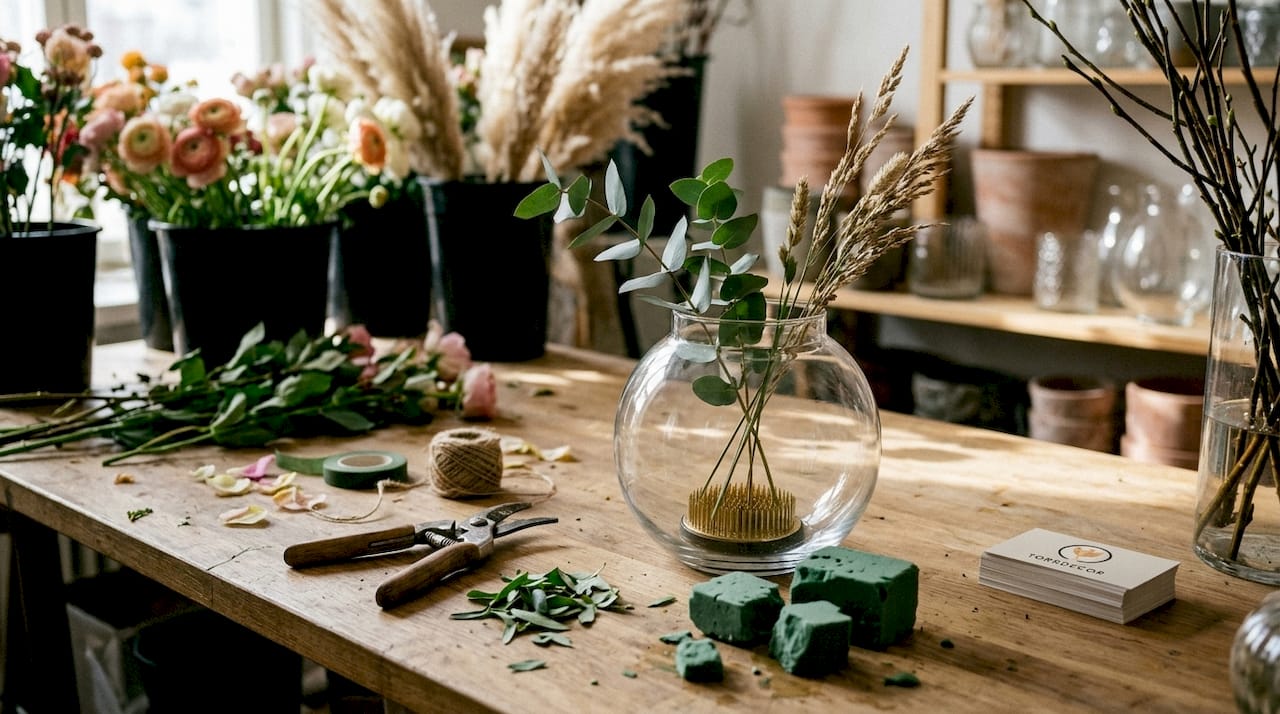
Modern and sustainable alternatives like kenzan and hanataba are designed to last a long time. A good quality kenzan can be used hundreds of times if properly cared for. Hanataba is a mechanical tool without consumables.
Sustainable alternatives to choose from:
- Stainless steel kenzan
- Hanataba for spiral bouquets
- Reusable water tubes
- Ceramic and clay vases that last long
- Dried flowers that require no water at all
When it comes to dried or fresh flowers, dried is the most sustainable choice. They require no water tubes, no foam, and minimal handling. This drastically reduces the need for disposable accessories.
Replacing floral foam with kenzan is one of the easiest ways to reduce waste from floral arrangements without compromising quality.
For those interested in the environmental impact of different flowers and accessories, it is worth noting that dried flowers combined with reusable accessories are the option with the lowest environmental impact over time. Fresh flowers require water, cold storage, and regular replacement, which increases overall resource consumption.
The choice is simple if you think long-term: invest in reusable accessories and combine them with dried plants for arrangements that last long and look good without constant care.
Interior Design Trends: Floral Accessories for Minimalist and Trendy Environments
Interior design trends in recent years clearly point towards simplicity, natural materials, and sustainability. Minimalist arrangements are best made with narrow tall vases and dried grasses, as well as small kenzan. It's no coincidence that pampas grass and dried bouquets dominate interior feeds on social media.
The choice of accessories directly reinforces the interior design style. A wide, heavy vase with floral foam and dense flowers suits a classic style. A narrow ceramic vase with kenzan and a couple of dried pampas stems is minimalism in its purest form.
Trends to know for 2026:
- Hanging arrangements: Dried flowers and grasses in suspended structures, often without a vase at all.
- Monochromatic arrangements: A single flower type in a single color, where the vase and accessories are as important as the flower.
- Natural materials: Ceramics, clay, and wood as accessories and vases, preferably handmade.
- Dried grasses: Pampas grass, lagurus, and stipa as main elements, not as filler.
Practical tips for trendy and sustainable floral decor:
- Avoid direct sunlight for dried arrangements, as it quickly fades colors.
- Use water tubes if you mix fresh and dried elements.
- Choose vases with narrow openings to reduce the need for support accessories.
- Don't replace the arrangement too often; dried flowers last months with minimal care.
- Draw inspiration from trend tips with dried flowers for concrete ideas.
Pro tip: For a minimalist arrangement, place three stems of dried pampas grass in a narrow cylinder vase with a small kenzan at the bottom. No tape, no foam. The result is airy, modern, and lasts long without maintenance. Read more about caring for dried flowers to keep the arrangement fresh.
Expert Level: Advanced Tips and Common Pitfalls
Even experienced interior designers make mistakes with floral accessories. The most common errors are easy to avoid once you know what to look for. Softer stems use smaller kenzan, avoid overwatering with water tubes, and a massive mix of flowers in a small vase creates instability.
Common mistakes to avoid:
- Wrong vase for heavy bouquets. A narrow vase can easily tip over if the bouquet is heavy. Choose a wide, heavy base or use kenzan to distribute the weight.
- Mixing dried and fresh flowers without the right accessories. Fresh flowers need water; dried ones are damaged by too much moisture. Use separate holders or water tubes for the fresh stems.
- Overwatering floral foam. Floral foam that is too wet causes stems to rot. Moisten it until it sinks, no more.
- Kenzan too large for a narrow vase. The kenzan should fit at the bottom without pressing against the sides. Measure the vase before buying.
- Ignoring stem thickness. Soft or thin stems, like tulips or anemones, need a kenzan with denser and shorter pins to avoid damage.
Pro tip: A small kenzan in a cylinder vase provides both stability and design flexibility. You can move the stems without the entire arrangement collapsing, and you can reuse the kenzan again and again. It's one of the smartest investments for anyone working with maintenance-free flowers in interior design.
For those who want to combine dried and fresh flowers in the same arrangement, it is important to give each type of flower the right conditions. Use water tubes for fresh flowers and place them among the dried ones. This way, you don't have to compromise on aesthetics, and each flower gets what it needs.
Edge case to consider: If you are working with very heavy branches or wooden branches, you will need a larger and heavier kenzan, preferably with a rubber base. Standard kenzan for flowers cannot handle the weight and may tip over. Read more about smart choices for dried flowers to avoid such mistakes.
What most people miss about floral accessories
After all the concrete tips, it's worth pausing to consider what is rarely mentioned. Most people who start with floral decor focus on the flowers. Accessories are treated as an afterthought. This is a mistake.
Experience shows that it's the small, invisible choices that determine whether an arrangement looks professional or not. A kenzan that sits correctly at the bottom of the vase allows each stem to be placed exactly where you want it. Without it, the stems will be crooked, the bouquet will lean, and the overall look will be messy, no matter how expensive the flowers are.
There's also a common misconception that more accessories lead to better results. In reality, the opposite is true for minimalist styles. Fewer accessories, chosen correctly, create cleaner lines and a stronger visual impact. A narrow vase and a small kenzan are often all that's needed.
Sustainability and aesthetics don't have to be at odds. Dried flowers with reusable accessories are the clearest example that simplicity, beauty, and responsibility can be combined in the same arrangement. It's about making conscious choices from the start, not about compromising. Read more about low-maintenance floral decor for more ideas on how to combine style and sustainability without hassle.
Transform your arrangements with sustainable floral accessories
Whether you're decorating your home or working professionally with decor, there are sustainable accessories that make a difference. The right kenzan, the right vase, and the right flowers create arrangements that last long and look good without daily maintenance.

At Torrdecor, you'll find a carefully selected assortment with a focus on sustainability and style. From dried pampas grass in classic beige to handmade clay vases from Portugal. The products are chosen to work together and give you the best conditions for beautiful, low-maintenance arrangements. Explore the entire assortment and find the accessories and plants that suit your style and needs, whether you're looking for something for your home, shop, or next event.
Common questions about floral accessories
Which floral accessories are best suited for minimalist arrangements?
A narrow vase, small kenzan, and dried grasses are ideal for minimalist styles. Narrow tall vases for dried grasses and freestanding kenzan provide a floating, airy effect without unnecessary elements.
How do I extend the lifespan of my floral arrangements?
Use water tubes for stems, avoid direct sunlight, and opt for dried flowers for extra long life. Water tubes seal stems for slow evaporation and keep fresh flowers fresh longer.
What is the difference between oasis and kenzan?
Oasis is single-use plastic foam, while kenzan is reusable with steel pins for stability and is a more environmentally friendly choice. Traditional single-use materials like oasis contrast sharply with kenzan, which lasts a long time without creating waste.
Can fresh and dried flowers be combined in the same arrangement?
Yes, but use water tubes for the fresh flowers and separate holders so that each type gets the best conditions. Combine dried and fresh with the right accessories for an arrangement that looks unified and lasts long.
Recommendation
- Be inspired by dried flowers: 10 trendy tips for interior design – Torrdecor
- What is floral interior design: create sustainable environments – Torrdecor
- Sustainable floral decor: low-maintenance, beautiful, and climate-smart – Torrdecor
- Dried plants vs fresh flowers: best for interior design – Torrdecor
0 comments