

In short:
- Scandinavian interior design is based on function, warmth, natural materials, and light. It is globally popular in 2026 and focuses on a practical, personal home. Trends include earth tones, round shapes, and sustainability, with great emphasis on proper lighting and natural materials.
Scandinavian interior design is a design philosophy based on five core pillars: functionality, minimalism with warmth, maximum daylight, connection to nature, and hygge. The style is often referred to in the industry as Nordic interior design and is, in 2026, the most searched interior design style globally. This makes it relevant for anyone who wants to create a home that is both practical and inviting, regardless of budget or living space size. The core is simple: every item should serve a function, the room should feel warm, and light should always be prioritized.
What is Scandinavian interior design and how does it differ?
Scandinavian design is not cold minimalism. The style embraces the warmth of everyday life and allows real-life details to find their place: a blanket on the sofa, a coffee cup on the table, a book left out. Perfection is not the goal. The goal is a home that works for the life you actually live.

The style has its roots in 1950s Nordic design, where architects and designers in Sweden, Denmark, Finland, and Norway prioritized function over ornamentation. What distinguishes Nordic interior design from other minimalist styles is its warmth. Light colors in the interior are combined with natural materials and soft textiles to counteract the impact of the dark climate on well-being.
Nordic homes are built to ward off winter darkness with large windows, light floors, and multiple light sources. It's a practical adaptation to the climate, not just an aesthetic preference. This understanding helps you make better interior design decisions, as every choice has a logic behind it.
What are the current trends in Scandinavian interior design for 2026?
Trends for 2026 show a clear shift from crisp white towards warmer earth tones and softer furniture shapes. The crisp white that dominated the 2010s is now being replaced by terracotta, olive green, and soft beige tones. Rooms feel warmer and more personal without losing their simplicity.
The five clearest trends for 2026:
- Earth tones as a base. Terracotta, olive green, and warm beige replace cold crisp white as accent colors and wall colors.
- Rounded furniture shapes. Soft, organic forms for sofas and armchairs replace angular and strict silhouettes.
- Tactile materials. Bouclé, brushed wood, and handmade ceramics give rooms a lively and inviting feel.
- Mix of new and vintage. Flea market finds and inherited furniture are mixed with new design classics for personality and sustainability.
- Sustainability as a principle. Reuse and long-term purchases are prioritized over fleeting trends.
Tactile materials are particularly important to understand. Bouclé is a wool fabric with an uneven, looped surface that gives a sofa or armchair a warm and inviting feel. Brushed wood has a matte, almost velvety surface that differs from the high-gloss wood that dominated previous decades. Handmade ceramics, with their natural irregularities, add what mass-produced items lack: character.
Pro tip: Start with an earth tone on a single wall or in a textile. It's easier to build from there than to repaint the entire room and regret it.

How to create a Scandinavian home with maximum light and warmth?
Light is the most important tool in Nordic design. Lighting should be layered with warm light sources at different heights, table lamps, floor lamps, and candles. A single strong ceiling lamp as the sole source creates a cold and sterile room, not a Scandinavian home.
Here's how to build up the light in a room:
- Remove distracting curtains. Thin linen curtains or no curtains at all maximize daylight and allow the room to breathe.
- Place lamps at three levels. A floor lamp in a corner, a table lamp on the side of the sofa, and a couple of candles on the table create depth and warmth.
- Install dimmers. Dimmer functions give you control over the mood and distinguish a cozy home from a cold waiting room.
- Choose warm light bulbs. Color temperatures around 2,700 K give a warm, yellow glow similar to candlelight.
- Use mirrors strategically. A large mirror opposite a window effectively doubles the natural light in the room.
Color choice enhances the light effect. Light walls in interior design reflect light and make the room appear larger. Warm accent colors in textiles and accessories add warmth without making the room feel heavy. The combination of light walls and warm details is the core of the Nordic lighting strategy.
Pro tip: Never place a single strong ceiling lamp as the sole light source in a living room. Instead, invest in three smaller lamps with dimmers and feel the difference immediately.
What materials and textures are typical in Scandinavian design?
Natural and tactile materials such as wood, wool, linen, ceramics, glass, and leather are central to Nordic interior design. They are not only beautiful. They age with dignity, withstand everyday wear and tear, and contribute to a home that feels lived-in rather than like a showroom.
Why these materials work:
- Wood visually and acoustically warms up a room. Light birch or ash wood are classic choices in Scandinavian design.
- Wool and linen provide softness and tactile contrast against hard surfaces like wooden floors and ceramics.
- Ceramics add weight and craftsmanship. A handmade bowl or vase tells a story that a mass-produced item cannot.
- Glass allows light through and creates an airy feeling without taking up visual space.
- Leather ages beautifully and adds a warm, organic feel to furniture and accessories.
| Material | Function in the room | Durability |
|---|---|---|
| Wood | Warmth and natural feel | Very high with proper care |
| Wool and linen | Softness and tactile contrast | High, withstands washing and wear |
| Ceramics | Character and craftsmanship | Very high, timeless |
| Glass | Light transmission and airiness | High, easy to maintain |
| Leather | Warmth and patina | Very high, improves with age |
The combination of different textures is what makes an otherwise minimalist room interesting. A room with only smooth surfaces feels sterile. Add a wool throw, a ceramic vase, and a wooden table, and you create the depth the style requires. Natural materials in interior design also create a connection to nature, which is central to the Nordic philosophy.
How to balance function and aesthetics in a sustainable home?
Function is at the core of Scandinavian design. Every item should have a purpose and contribute to the home's daily life. It is not a style for collectors of ornaments but for those who want their home to function smoothly every day.
The principle "buy better, buy less" is central. Investing in sustainable quality products and mixing them with vintage finds creates a home with character and a long lifespan. It is more sustainable economically and environmentally than buying cheap furniture that is replaced every three years.
Practical principles for balance:
- Edit before adding. Remove what doesn't serve a function or bring joy before buying something new.
- "Lagom" is the right amount. The Swedish concept of "lagom" describes the balance perfectly: not too much, not too little.
- Storage as aesthetics. Open shelves with carefully chosen items and hidden storage solutions for everyday items keep the room calm.
- Mix old and new. Inherited items and flea market finds give the home depth and personality that mass-produced furniture lacks.
- Choose timeless over trendy. A classic Wegner chair or a simple linen curtain lasts for decades. A trendy detail can be replaced without the entire room losing its character.
What makes a home unique is not the price of the furniture but how it is combined and what it tells about the person living there. Scandinavian design provides space for that story.
Key insights
Scandinavian interior design is based on functionality, natural materials, and layered lighting to create a warm, sustainable, and personal home that works in everyday life.
| Point | Details |
|---|---|
| Five core pillars | Functionality, minimalism with warmth, daylight, connection to nature, and hygge are the core of the style. |
| Layered lighting | Use multiple warm light sources at different heights and install dimmers for the right ambiance. |
| Natural materials | Wood, wool, linen, and ceramics provide tactile contrast and age beautifully over time. |
| Buy better, buy less | Invest in sustainable quality products and mix with vintage finds for character. |
| Edit before adding | Remove excess before adding new items to keep the room balanced. |
What I've learned about succeeding with Nordic interior design
The most common mistake I see is people treating Scandinavian interior design as a shopping list. They buy the right furniture, paint the walls white, and expect the result to look like a magazine. It rarely does. Authentic homes are built in layers and require time.
It takes years to collect the items that give a room its character. A vase from a flea market in Gothenburg, a blanket inherited from grandma, a lamp found at a market. These items cannot be ordered instantly. They are found and collected with patience.
Lighting is always underestimated. I have visited homes with perfect furniture and the right colors that still feel cold and uninviting. The reason is almost always a strong ceiling lamp as the sole light source. Replace it with three smaller lamps with dimmers, and the room transforms in an hour.
What truly distinguishes a living Scandinavian home from a sterile one is that everyday details are allowed to remain. A coffee cup, an open book, a pair of shoes by the door. The style is not a museum. It is a home.
— a4
Sustainable interior details from Torrdecor for your Nordic home
Torrdecor offers dried plants and decorative vases that fit directly into the Nordic interior design style.
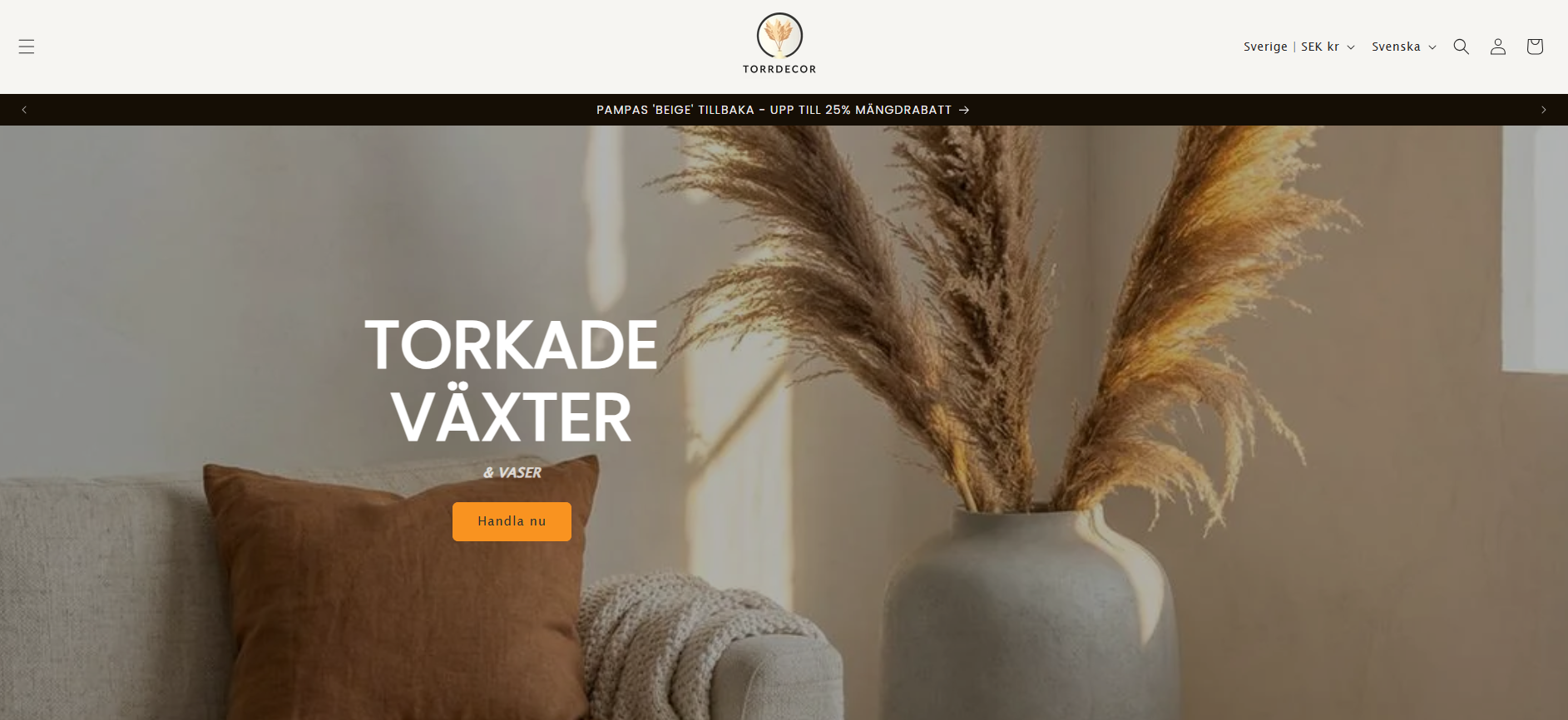
Pampas grass 110 cm is one of the most popular natural decorative elements for Scandinavian homes right now. It requires no maintenance, lasts a long time, and provides the tactile, organic feel that the style is built upon. Torrdecor's VILDA variant offers a slightly wilder and more natural expression that perfectly matches earth tones and bouclé textiles. The BÅGE vase in cream is made in Portugal and combines simple form with craftsmanship, a timeless choice that works both as an ornament and as a container for dried bouquets. Combine pampas grass with the BÅGE vase for a detail that lasts for many years without maintenance.
Frequently asked questions
What is Scandinavian interior design?
Scandinavian interior design is a design style based on five pillars: functionality, minimalism with warmth, maximum daylight, connection to nature, and hygge. The style prioritizes natural materials, light colors, and a home that works in everyday life.
How does Scandinavian design differ from minimalism?
Scandinavian design incorporates warmth and everyday life, while pure minimalism is often colder and more strict. Nordic interior design allows for a blanket on the sofa, candles, and personal items that give the home character.
What colors are used in Nordic interior design in 2026?
Earth tones such as terracotta, olive green, and warm beige dominate in 2026, replacing the crisp white of previous years. Light walls are combined with warm accent colors in textiles and accessories.
How do you create hygge at home?
Hygge is created with layered lighting from warm light sources, soft textiles in wool and linen, and natural materials such as wood and ceramics. Candles and a cozy seating area are the quickest ways to achieve the feeling.
Are dried plants part of Scandinavian interior design?
Dried plants such as pampas grass are a natural element in Nordic interior design. They add organic texture and a connection to nature without requiring maintenance, fitting the style's principle of simplicity and sustainability.
0 comments