

In short:
- Nordic design focuses on simplicity, function, and natural materials to create sustainable, harmonious homes. The right lighting, sparse decorations, and minimalist furniture are key elements. The philosophy of "buy fewer, better" makes the design a long-term, environmentally friendly investment.
Nordic design is a design philosophy that combines simplicity, functionality, and sustainability to create timeless and harmonious environments. The movement emerged in the early 20th century and gained international recognition in the 1950s, when Scandinavian design spread from the five Nordic countries to the rest of the world. The style is based on natural materials, muted colors, and a design language without unnecessary decoration. For those seeking inspiration for Nordic home decor, this guide provides concrete tools, historical background, and practical advice to create a home that is both beautiful and sustainable.
What are the fundamental principles of Nordic design?
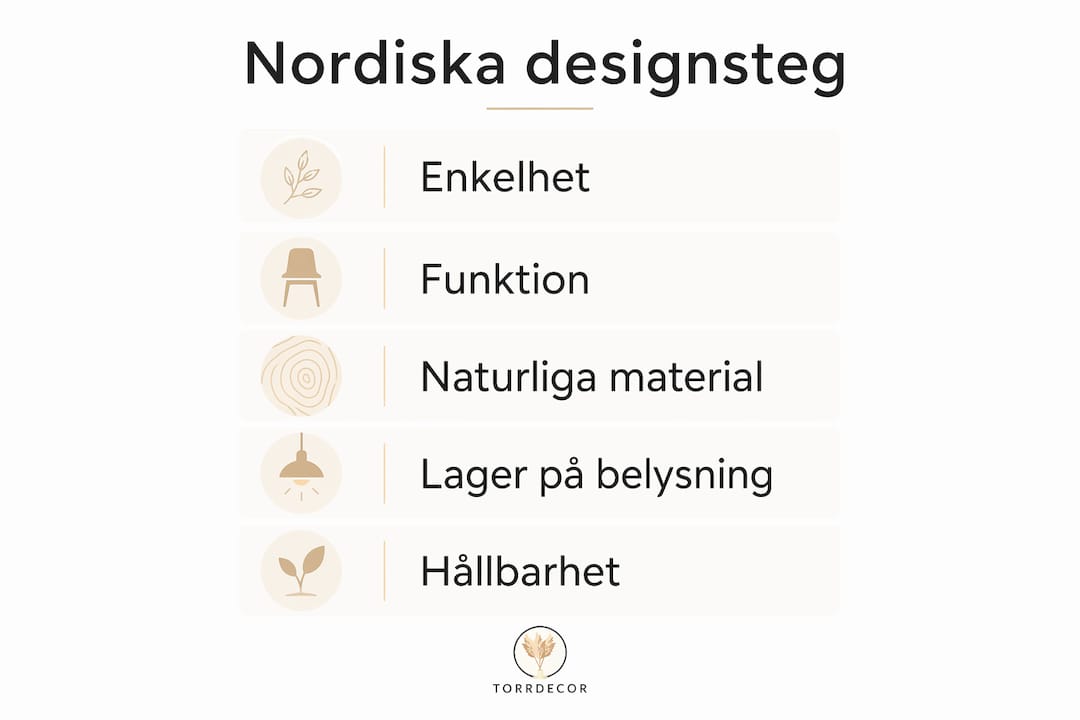
Nordic design prioritizes simplicity, functionality, and minimalism, focusing on harmonious environments without unnecessary decoration. It's not about removing everything, but about ensuring that every item serves a purpose and contributes to the overall aesthetic.
Color palette and material choices
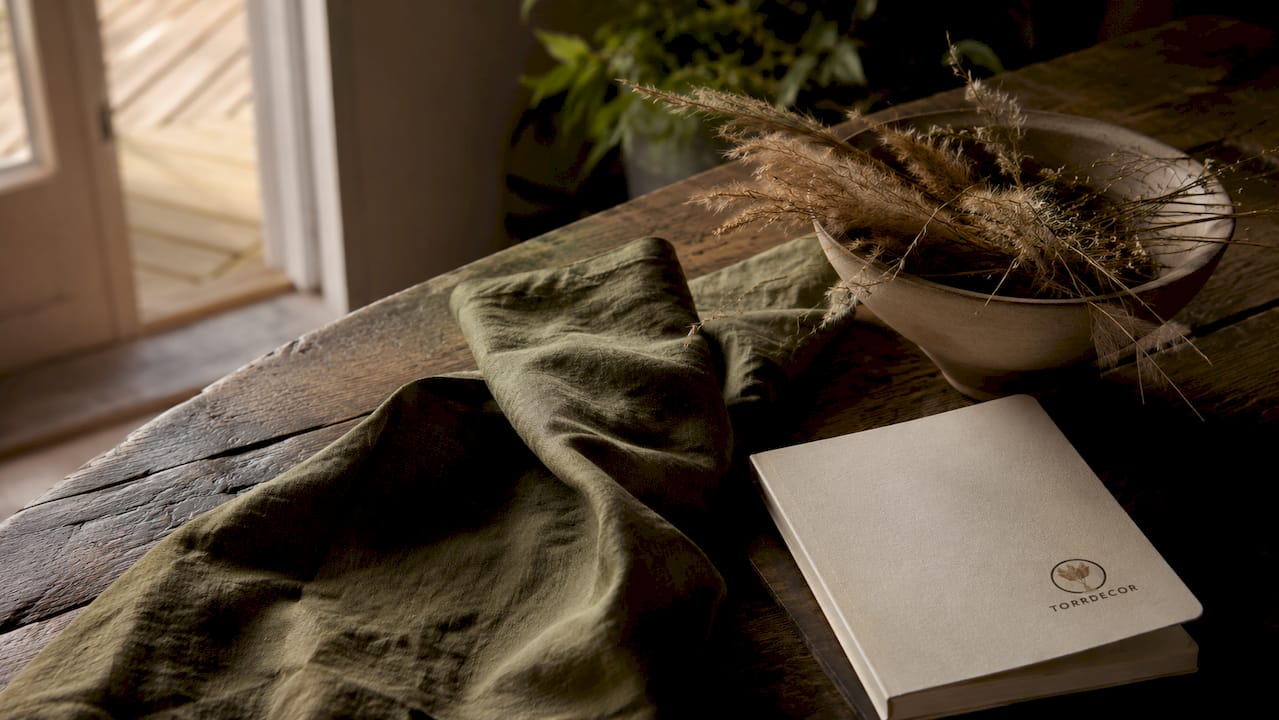
The color palette in Nordic home decor is based on off-whites, light grays, beiges, and natural tones. Muted accent colors like soft blue and forest green are allowed but used sparingly. Natural materials such as wood, wool, and linen are the foundation of authentic Nordic interiors. Combinations of linen, wool, and wood create a sense of warmth and durability that synthetic materials cannot match.
Light and lighting
Light plays a central role in Nordic aesthetics, partly due to the long, dark winters in Scandinavia. The right lighting with warm tones is crucial for creating the characteristic hygge feeling. Recommended light sources have a color temperature of 2,700–3,000 Kelvin. A single cool daylight lamp ruins the impression and breaks the Nordic atmosphere.
Form and surfaces
The form is clean and stripped down. Furniture has clear lines without excessive ornamentation. Empty spaces are a conscious choice, not a lack. They provide visual rest and balance, which is at the core of the Nordic design language.
- Colors: Off-whites, light grays, beiges, and natural tones with muted accent colors
- Materials: Wood, wool, linen, and ceramics in natural shades
- Lighting: Multiple light sources at 2,700–3,000 Kelvin for a warm atmosphere
- Form: Clean lines, minimalist design, and empty spaces that provide breathing room
- Decoration: Few, well-thought-out items with clear function or aesthetic weight
Pro tip: Never choose more than three dominant materials in a room. Wood, linen, and ceramics are a classic Nordic combination that lasts over time.
How has Nordic design been shaped historically?
Nordic design has been influenced by Bauhaus, functionalism, and industrialization, particularly in Denmark and Sweden during the 20th century. The movement emerged from a democratic ambition: to create beautiful, functional objects accessible to everyone, not just the wealthy.
From the welfare state to a global style
The period from the "folkhemmet" (welfare state) in the 1930s and 1940s laid the foundation for affordable functionality. Sweden and the other Nordic countries built a design tradition where furniture, textiles, lighting, and ceramics were made from natural materials with a timeless design language. Famous designers like Alvar Aalto, Poul Henningsen, and Josef Frank helped define the style. Their works are still reference points for design in Scandinavia.
Arne Jacobsen and the holistic principle
Arne Jacobsen is considered a key figure in Nordic design. He is known for his holistic approach to rooms and objects, a principle known in German as Gesamtkunstwerk. This means that every element in the interior is planned together for total harmonious function and aesthetics. His famous Egg and Swan chairs were created as parts of a total spatial system for the SAS Royal Hotel in Copenhagen. This is a clear example that Nordic design is never about individual objects, but always about the whole.
Verner Panton and playfulness
Nordic design is dynamic and invites playfulness and experimentation, despite its minimalist foundation. Verner Panton showed that organic and colorful design can be fully compatible with Nordic values. His work challenged the stereotype that Scandinavian design is always cool and restrained. It is an important reminder that the style has more breadth than many believe.
“Nordic design is not an aesthetic you choose because it looks good in a picture. It is a way of thinking about how objects, rooms, and people interact. Every detail must be motivated by function, feeling, or sustainability, never by trend.”
- 1920s: Nordic design takes shape with influences from Bauhaus and functionalism
- 1950s: International breakthrough with designers like Arne Jacobsen and Alvar Aalto
- 1960s: Verner Panton challenges the style with organic forms and strong colors
- 1970–1990s: Focus on affordable functionality and accessibility for all
- 2000s and beyond: Sustainability and social responsibility take center stage in Nordic design philosophy
How do you create Nordic design in your home?
The best way to create an authentic Nordic style at home is to start by decluttering, not buying. Empty surfaces are an active design choice in Nordic home decor. A common pitfall is over-decorating, which directly counteracts the principle of visual rest and balance.
Color and material in practice
Start with the walls. Choose an off-white or light gray shade as the base. Then add natural materials in furniture and textiles. Natural materials in interior design create an authentic and sustainable feel that synthetic alternatives lack. A linen cushion, a wool blanket, and a wooden floor go a long way.
Furniture with the right form and function
Choose furniture with clean lines and clear function. Avoid furniture with excessive ornamentation or complicated forms. Stylish Nordic decor is based on each piece of furniture being justified by how it is used, not just how it looks. Low wooden coffee tables, simple bookshelves, and chairs with slender legs are typical choices.
Layered lighting
Lighting is the element that most people underestimate. Use multiple light sources in the same room instead of a single ceiling lamp. Floor lamps, table lamps, and accent lighting create depth and warmth. Always choose light bulbs with a color temperature of 2,700–3,000 Kelvin to achieve the Nordic glow.
Pro tip: Place a floor lamp in a corner of the room and turn it on when the ceiling lamp is off. It completely changes the feel of the room and creates a soft, inviting atmosphere.
Practical checklist for Nordic style
| Element | Recommendation |
|---|---|
| Wall color | Off-white or light gray as base |
| Material | Wood, linen, wool, and ceramics |
| Lighting | Multiple sources, 2,700–3,000 Kelvin |
| Furniture | Clean lines, clear function, no ornamentation |
| Decoration | Few items of high quality and clear function |
| Surfaces | Consciously leave empty surfaces for visual rest |
- Remove items that lack function or personal significance
- Choose a limited number of high-quality decorations
- Mix textures, not colors, to create depth without chaos
- Use plants and dried natural materials as subtle focal points
What role does sustainability play in Nordic design?
Sustainability is not just a trend but the core of contemporary Nordic design, where quality products are expected to last for generations. The philosophy of "buy fewer, better" permeates the entire tradition, from how furniture is made to how consumers choose to furnish their homes.
Nordic design encourages long-term investments instead of quick purchases. A well-made solid wood chair lasts 50 years. A cheap replica might last five. That's a concrete economic and environmental difference.
- Material choices: Wood, wool, and linen are renewable and biodegradable
- Production: Nordic manufacturers often prioritize local raw materials and ethical working conditions
- Lifespan: Products are designed for repair and reuse, not to be discarded
- Consumption: Fewer, better items reduce resource consumption and waste
The democratic ambition in Nordic design history is linked to sustainability. Design for all means design that lasts, not design that looks good for a year and then is replaced. It's a principle that is more relevant today than ever.
Dried plants and natural decorations fit perfectly into the Nordic sustainability philosophy. They require no water, no maintenance, and last a long time. It's a concrete way to apply "buy fewer, better" in the home.
Key insights
Nordic design requires natural materials, the right lighting, and conscious choices of empty spaces to create an authentic, sustainable, and harmonious interior.
| Point | Details |
|---|---|
| Basic principles | Simplicity, functionality, and natural materials are at the core of Nordic design. |
| Lighting | Use 2,700–3,000 Kelvin and multiple light sources to create a Nordic atmosphere. |
| Sustainability | The "buy fewer, better" philosophy makes Nordic design a long-term investment. |
| History | Arne Jacobsen and the Gesamtkunstwerk principle define the style as a whole. |
| Common pitfall | Over-decorating counteracts the visual rest that Nordic design is based on. |
Nordic design is more than a style
I have worked with interior design for a long time, and what always strikes me about Nordic design is how little it is about appearance and how much it is about feeling. You can copy the color palette and buy the right furniture, but if you don't understand why empty spaces are there, or why the lighting is layered in three levels, then the room is missing something.
What I see most of today is people confusing minimalism with emptiness. Nordic design is not cold. It is warm, but in a stripped-down way. A wool throw on the sofa, a couple of dried stems in a ceramic vase, a wooden floor with patina. That is Nordic design in practice.
What makes the style relevant in 2026 is the sustainability aspect. Buying an item that lasts for 30 years is not only economically wise. It is an active choice against overconsumption. Nordic design gives you a framework for making fewer, better choices, and that is one of the most concrete things you can do for both your home and the environment.
The future of Nordic design will continue to combine aesthetics with responsibility. It is not a compromise. It is a strength.
— Torrdecor
Nordic design at home with Torrdecor
Torrdecor offers decorations that fit directly into the Nordic design philosophy. Dried plants and natural materials require minimal care and last a long time, just as Nordic design advocates.
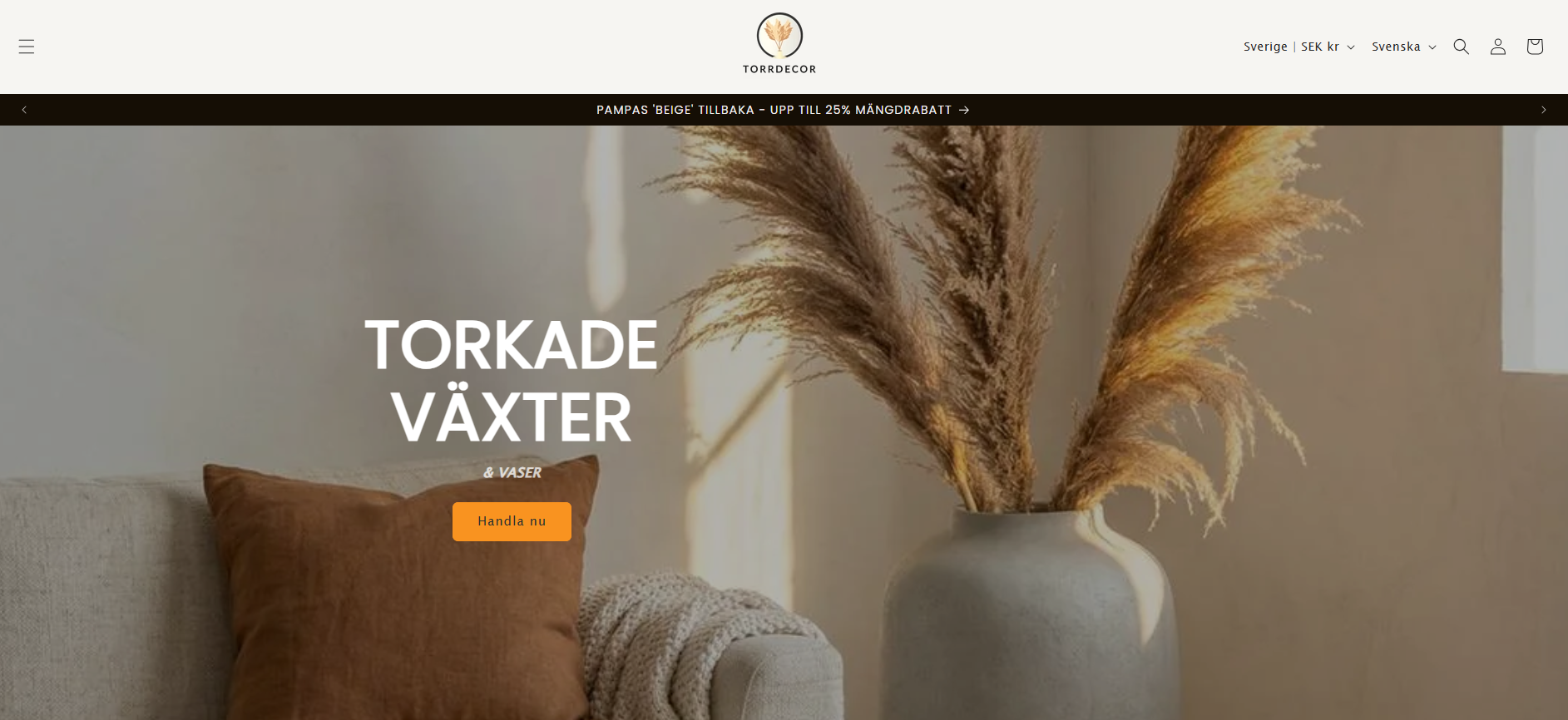
Pampas grass 110 cm in beige is a timeless choice that adds texture and naturalness without overpowering the room. It fits equally well in a minimalist living room as in a retail environment. Torrdecor's vase 'BÅGE' in cream, made in Portugal, combines simple design with high quality and is an example of how a single item can elevate the entire room. Both products follow the principle of choosing fewer, better items with a long lifespan.
Frequently asked questions
What is Nordic design?
Nordic design is a design philosophy from the five Nordic countries that prioritizes simplicity, functionality, and natural materials. The movement gained international recognition in the 1950s.
What colors are used in Nordic home decor?
Off-whites, light grays, beiges, and natural tones are the base. Muted accent colors like soft blue and forest green are used sparingly to add depth without dominating.
How important is lighting in Nordic design?
Lighting is crucial. Multiple light sources with a color temperature of 2,700–3,000 Kelvin create the warm atmosphere characteristic of Nordic homes.
Which designers have shaped Nordic design?
Arne Jacobsen, Alvar Aalto, Poul Henningsen, and Verner Panton are key names. Jacobsen is known for the Gesamtkunstwerk principle, where the entire room is planned as a cohesive work.
How is sustainability related to Nordic design?
Sustainability is at the core of Nordic design philosophy. Products are designed for a long lifespan, and the "buy fewer, better" philosophy encourages conscious choices that reduce resource consumption.
0 comments