

In short:
- Everlasting flowers have a lower environmental impact than fresh cut flowers because they replace recurring purchases and transportation. The right choice of materials, such as dried and preserved plants, significantly reduces the carbon footprint compared to plastic flowers. Choosing sustainable floral alternatives and caring for them properly can contribute to more ecological decor.
The environmental impact of everlasting flowers is generally lower than that of fresh cut flowers, as they replace repeated purchases and eliminate recurring transportation. The term “everlasting flowers” is used in everyday language, but in sustainability research, we refer to preserved, dried, or artificial long-lasting flowers. The distinction is important: dried and preserved varieties have a significantly lower carbon footprint than plastic-based alternatives. This article clarifies what truly determines environmental impact, which materials play a role, and how to choose correctly for a sustainable home.
How the Life Cycle Perspective Explains the Environmental Impact of Everlasting Flowers
The life cycle perspective is the fairest way to assess the environmental impact of flowers. A fresh bouquet may seem cheap at the checkout, but it is bought repeatedly, accumulating high emissions over time.
Everlasting flowers have an initially higher cost but a significantly lower daily cost compared to fresh bouquets over 1–3 years of use. This means that each day you use the same decoration, its total environmental footprint per use occasion decreases.
Transportation is a key factor. Fresh cut flowers are often flown from Kenya, Colombia, or the Netherlands to Swedish stores. Cold chains and air transport significantly increase the environmental burden for these flowers. Everlasting flowers are purchased once and transported once, radically reducing emissions from logistics.
Lifespan determines everything. A dried bouquet that lasts for two years replaces an estimated 24 fresh bouquets if you replace one once a month. That's 24 separate production and transport cycles that never need to happen.
Benefits of everlasting flowers from a life cycle perspective:
- No recurring carbon dioxide emissions from transport
- No need for flower water or pesticides
- Reduced packaging waste from repeated purchases
- Lower resource consumption per decoration day
Pro tip: Store dried flowers away from direct sunlight and humidity. This significantly extends their lifespan and further reduces your environmental footprint.
Which Materials and Manufacturing Processes Affect the Environment?
Not all everlasting flowers are equally sustainable. The raw material and manufacturing process determine the actual ecological impact.
Dried flowers are produced by drying natural plants with air, heat, or silica gel. The process requires minimal energy and no chemicals. Preserved flowers are treated with glycerin or similar substances to maintain their softness, which requires slightly more resources but still remains far below the level of plastic production.
Plastic flowers have a greater ecological impact than dried or preserved varieties due to raw materials and decomposition time. Plastic is made from fossil fuels, does not decompose in nature, and often ends up in landfills after use. This is an important distinction when choosing your decoration.
| Flower Type | Raw Material | Decomposition | Relative Environmental Impact |
|---|---|---|---|
| Dried Flowers | Natural plants | Biodegradable | Low |
| Preserved Flowers | Natural plants + glycerin | Partially biodegradable | Low to medium |
| Plastic Flowers | Fossil fuels | Non-biodegradable | High |
| Fresh Cut Flowers | Natural plants | Biodegradable | Medium to high (transport) |
Energy consumption in manufacturing processes for dried flowers is low compared to plastic production. Plastic molding requires high temperatures and chemical additives, while drying pampas grass or eucalyptus essentially occurs naturally or with simple heat.
Pro tip: Choose dried or preserved flowers over plastic-based varieties. You get a more natural look and a significantly lower environmental footprint.
How Everlasting Flowers Compare to Fresh and Dried Flowers
The numbers speak a clear language. Fresh bouquets generate a carbon footprint of approximately 2.8 kg CO₂e per bouquet, while dried and preserved flowers are around 0.13 kg CO₂e. That's more than 20 times lower climate impact per bouquet.
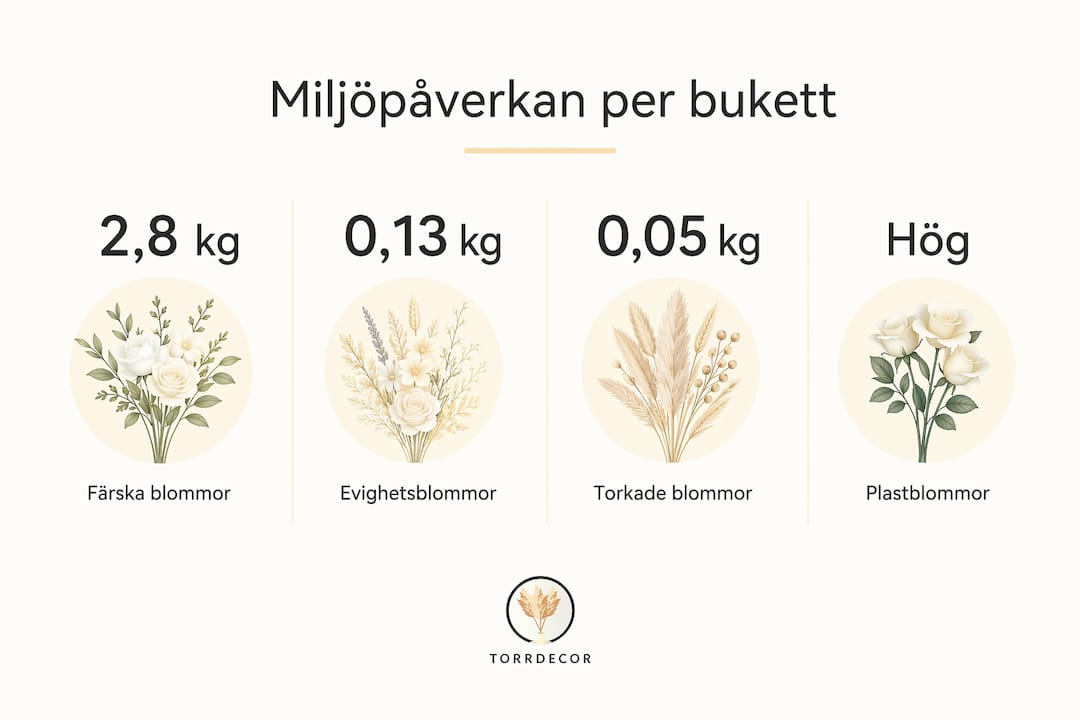
This difference is due to three factors: transport distance, production intensity, and how often you need to replace the decor. Fresh flowers are often flown long distances in refrigerated cargo holds, grown in energy-intensive greenhouses, and discarded after 1–2 weeks. Dried flowers are grown, harvested, and dried, then transported only once.
Comparison of resource use per year of decoration:
- Fresh bouquets require water, fertilizer, and pesticides in cultivation
- Dried flowers require no water or chemicals after drying
- Preserved flowers require minimal maintenance with no chemicals in the home
- Plastic flowers require no resources during the use phase but create waste problems at the end
Care for everlasting flowers requires neither water nor pesticides, which reduces resource consumption over time. This is a practical environmental gain that is easy to forget but adds up to a big difference over a year.
The waste issue is also relevant. A fresh bouquet generates organic waste every week. Dried flowers can be composted when they are worn out, closing the loop naturally.
Practical Tips for Further Reducing Your Environmental Footprint
You can make everlasting flowers even more sustainable by choosing correctly and caring for them well. Here are four concrete steps:
-
Choose dried or preserved flowers over plastic-based varieties. Natural materials are biodegradable and have a lower climate impact throughout their life cycle.
-
Combine with living plants. Artificial flowers with a wire core can be shaped and combined with living plants for natural arrangements with low environmental impact. This provides variety without needing to buy new bouquets.
-
Store correctly for a longer lifespan. Dry, cool, and shady is ideal. Humidity and UV light degrade dried flowers faster and shorten the time you can use them.
-
Choose suppliers with a clear sustainability profile. Ask where the raw materials come from and how the products are transported. Shorter transport routes result in lower emissions.
Pro tip: Dry your own flowers at home from your garden or purchased bouquets. This is the most environmentally friendly option and adds a personal touch to your decor. Torrdecor has a guide on how to dry flowers at home for sustainable decoration.
Everlasting flowers challenge the throwaway culture in the floral trade and contribute to a slower pace of consumption. It's a choice that affects more than just your own carbon footprint.
Key Insights
Dried and preserved everlasting flowers are by far the most environmentally friendly decoration choice thanks to their low carbon footprint, no repeated transport, and minimal resource consumption in the home.
| Point | Details |
|---|---|
| Carbon footprint per bouquet | Dried flowers generate approximately 0.13 kg CO₂e compared to fresh bouquets' 2.8 kg CO₂e. |
| Importance of life cycle | A dried bouquet that lasts for two years replaces up to 24 fresh bouquets and their transport. |
| Material choice is crucial | Plastic flowers have a high ecological impact. Choose dried or preserved natural materials. |
| Care extends lifespan | Store dry and shaded to maximize use time and reduce waste. |
| Cultural change | Everlasting flowers challenge fast consumption and significantly reduce the personal carbon footprint. |
Long-term Thinking Is All That Matters
I've followed the trend of everlasting flowers for a long time, and what strikes me is how often the discussion gets stuck on aesthetics instead of consequences. People ask about color and form, but rarely about what happens when the bouquet is worn out.
The real problem with floral decorations isn't a single bouquet. It's the system behind it. Fresh flowers are bought, wilt, and are discarded at a pace that has normalized enormous emissions and waste. Everlasting flowers break that pattern, but only if you choose the right material. A plastic flower that never degrades doesn't solve the problem, it shifts it.
What I see in consumers who truly think sustainably is a willingness to invest once instead of buying repeatedly. It's a mindset, not just a product choice. Dried flowers and pampas grass fit this philosophy perfectly. They age gracefully, require nothing, and remind you every day that good choices don't need to be repeated.
The culture surrounding floral decorations needs a fundamental change. Everlasting flowers are a concrete step in the right direction, but it requires us to choose natural materials, buy from responsible suppliers, and stop treating decoration as a disposable item.
— Torrdecor
Sustainable Decorations from Torrdecor
Torrdecor offers a wide range of dried plants and pampas grass for those who want to decorate with low environmental impact. The products require no maintenance, no water, and last for several years with proper storage.

The assortment includes, among other things, 110 cm beige pampas grass in natural shades, perfect for homes, shops, and events. For those who want a wilder and more natural feel, there is also Pampas ‘VILDA’ as a stylish alternative. All products are chosen with sustainability in mind and are suitable for environmentally conscious consumers who want to create beautiful decor without compromising their values. Read more about sustainable floral decor and how to create timeless environments with dried plants.
Frequently Asked Questions
What is the environmental impact of everlasting flowers compared to fresh ones?
Dried and preserved everlasting flowers generate approximately 0.13 kg CO₂e per bouquet, compared to about 2.8 kg CO₂e for fresh cut flowers. The difference is mainly due to transportation and how often the bouquet is replaced.
Are plastic flowers a sustainable alternative?
Plastic flowers are not a sustainable alternative. They are made from fossil fuels, do not decompose in nature, and create waste problems at the end of their life cycle.
How long do dried flowers last?
Dried flowers last 1–3 years with proper care. Store them dry, cool, and away from direct sunlight to maximize their lifespan.
Can everlasting flowers be recycled or composted?
Dried and preserved natural material flowers can be composted when they are worn out. Plastic flowers cannot be composted and are difficult to recycle due to mixed materials.
Which everlasting flowers have the lowest environmental impact?
Dried flowers made from natural plants, such as pampas grass and dried bouquets, have the lowest environmental impact. They require minimal energy in production and are biodegradable.
Recommendation
- What are everlasting bouquets and why are more people choosing them? – Torrdecor
- Sustainable flower decor: easy to care for, beautiful, and climate-smart – Torrdecor
- Fresh vs. dried flowers: sustainable and trendy choices – Torrdecor
- Dried plants vs. fresh flowers: best for interior design – Torrdecor
0 comments