

In short:
- Console tables are essential for creating a decorative and functional focal point in the home. The right choice of dimensions, materials, and styling creates a cohesive and harmonious impression.
Console table styling is the art of transforming a narrow table into a decorative and functional focal point in the home. A well-styled console table balances function and decorative effect and suits several rooms, from the hallway to the living room. The standard dimensions for console tables are 80–160 cm in width, 25–45 cm in depth, and 70–90 cm in height. These dimensions directly control what items you can place on the table and how much space you have to work with. Proper styling makes the furniture feel like a natural part of the room, not an afterthought.
Console table styling: which dimensions and materials suit your room?
The dimensions of the console table determine how it functions in the room. A narrow hallway requires a table with little depth, preferably 25–30 cm, to avoid blocking the passage. In a spacious living room, you can choose a wider table of up to 160 cm and a depth of 35–45 cm, which provides more surface area for decoration and storage.
Interior design trends for 2026 clearly point towards natural materials such as oak, walnut, and pine, often combined with glass and metal. Oak is durable and timeless, walnut gives a darker and more exclusive feel, and pine suits a Nordic and relaxed home. MDF is a cost-effective option that works well if you want to paint the table in a specific color.
Material choices and their properties
| Material | Feel and style | Durability |
|---|---|---|
| Oak | Warm, Nordic, timeless | Very high |
| Walnut | Dark, exclusive, modern | Very high |
| Pine | Light, relaxed, rustic | Medium |
| MDF | Neutral, paintable | Medium |
| Metal | Industrial, modern | High |
| Glass | Airy, minimalist | Medium |
The price range on the Swedish market typically lies between 499 SEK and 2,495 SEK depending on material and finish. This means you can find a good console table regardless of budget, but the choice of material affects both the price and how long the table lasts.
Choose material based on three factors:
- The room's existing furniture. Match wood types or finishes for a cohesive feel.
- Area of use. The hallway can withstand more wear and tear than the living room.
- Budget. Solid wood costs more but lasts longer than MDF.
How do you create balanced styling with color and form?
The color choice of the console table sets the tone for the entire room. A white console table reflects light and creates a bright and open impression, while a black table provides contrast and a modern feel. It's about assessing the room's existing light and deciding whether you want to amplify it or balance it.
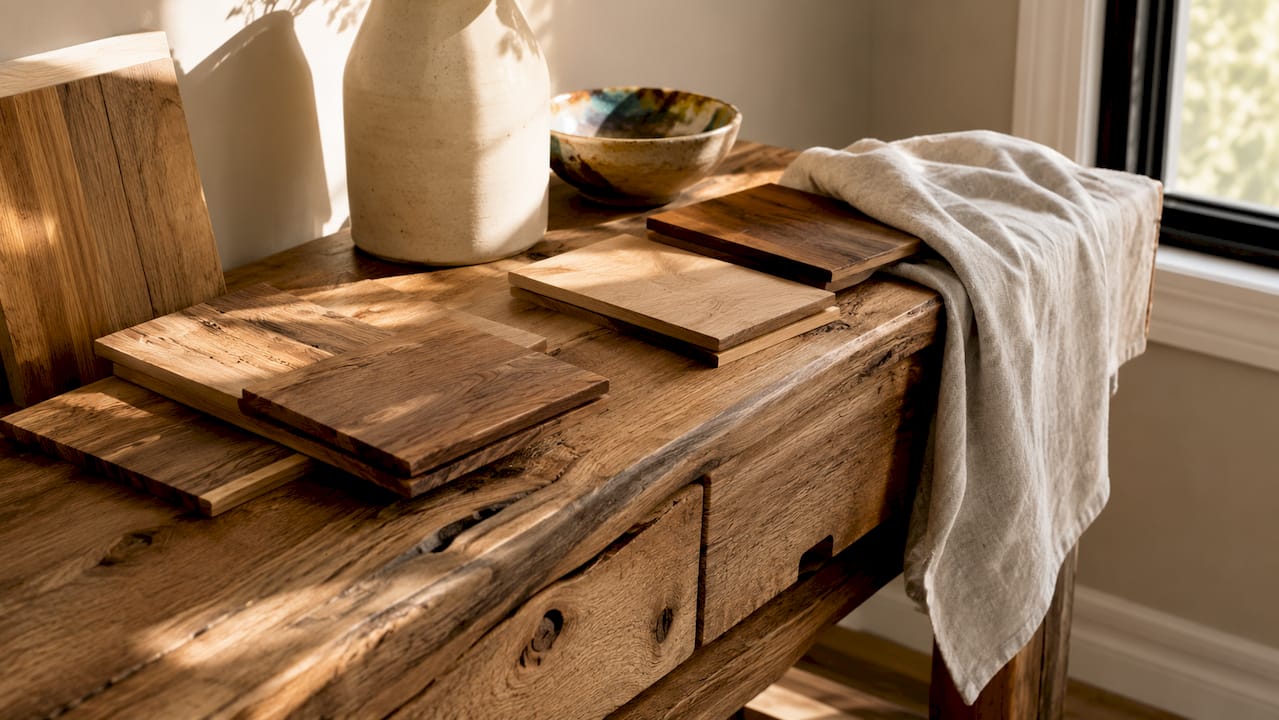
Consistent matching of color, form, and material creates a harmonious whole in the interior design. This means you don't just choose the table's color in isolation, but ensure it connects with the floor, walls, and other furniture. A guide to color choices in interior design can help you find the right balance for your particular room.
Some principles that work in practice:
- Choose a neutral base. White, gray, or beige on the table gives you freedom to play with color in decorative objects.
- Repeat a material. If you have a metal frame on the mirror above the table, choose a candlestick or vase in the same metal.
- Limit the palette. Stick to two or three colors on the tabletop to avoid a cluttered impression.
- Think vertically. The table and the wall above it form a unit. Match the height of decorative objects with any art or mirror on the wall.
Pro tip: Place a small tray or platter on the table and arrange all decorative items on it. This creates a natural boundary and makes it easier to keep organized without the styling feeling messy.
Creative ideas for decorating and styling the console table
Console table styling builds on a simple but effective concept: still life. A still life with art or a mirror above the table connects the vertical and horizontal surfaces and creates a visual unit. It is the single most important detail you can add.
Step-by-step: build your styling
- Choose an anchor point. Start with the largest item, such as a mirror, a piece of art, or a large pampas grass in a vase. This sets the scale for the rest.
- Add varying heights. Combine a tall item with a shorter one. A tall vase next to a small candle creates movement and depth.
- Introduce texture. Mix materials like ceramic, wood, and dried plants. Textures draw the eye.
- Fill in with small details. A small bowl, a couple of books, or a candle fills out without dominating.
- Take a step back. Look at the table from the room's entrance. If something stands out in a distracting way, move or remove it.
Placement tips for different rooms
The hallway is the most common room for a console table. Place it against a wall with a mirror above it, preferably the same width as the table. This makes the hallway feel larger and more welcoming. Add a small basket or box for keys and mail to combine function with style.
In the living room, behind the sofa, the console table acts as a natural divider in an open-plan room. Here, an industrially inspired arrangement with metal details and dark wood suits well. Place the table at the height of the sofa, approximately 70–75 cm, for it to appear proportionate.
Pro tip: Dried plants like pampas grass retain their shape and color for months without maintenance. They provide a natural and warm expression that suits almost any style, from minimalist to bohemian.
Common mistakes to avoid:
- Too many items in too small an area. Choose three thoughtful objects rather than ten random ones.
- All items at the same height. This looks flat and lacks life.
- Forgetting the wall above. The table and wall are visually connected.
- Mixing too many styles. Choose one direction and stick to it.
How do you combine function and aesthetics in styling?
A console table is rarely just decorative. In the hallway, it needs to handle keys, mail, and bags. In the living room, it can hold remote controls, magazines, and chargers. The challenge is to solve these practical needs without losing the decorative feel.
A minimum depth of 45 cm is required to use the console table as a desk for a laptop. Most console tables have a depth of 25–35 cm, making them more suitable for decorative placement than active work. Choose a deeper table if you plan to use it functionally, not just decoratively.
Storage solutions that aren't visible
- Baskets under the table. If the table has a bottom shelf, place a basket there for items you want close at hand but not visible.
- Boxes on the tabletop. A stylish box in wood or leather can hold cables, chargers, and other small items.
- Cable management. Attach cables along the table leg with cable clips to keep the surface clean.
- Trays as dividers. A tray gathers loose items and makes the surface look organized even when it's a bit cluttered.
Depth and width in practice
| Depth | Use |
|---|---|
| 25–30 cm | Narrow hallway, decoration only |
| 30–40 cm | Living room, decoration and light storage |
| 40–45 cm | Wider spaces, more storage |
| 45 cm or more | Possible laptop use |
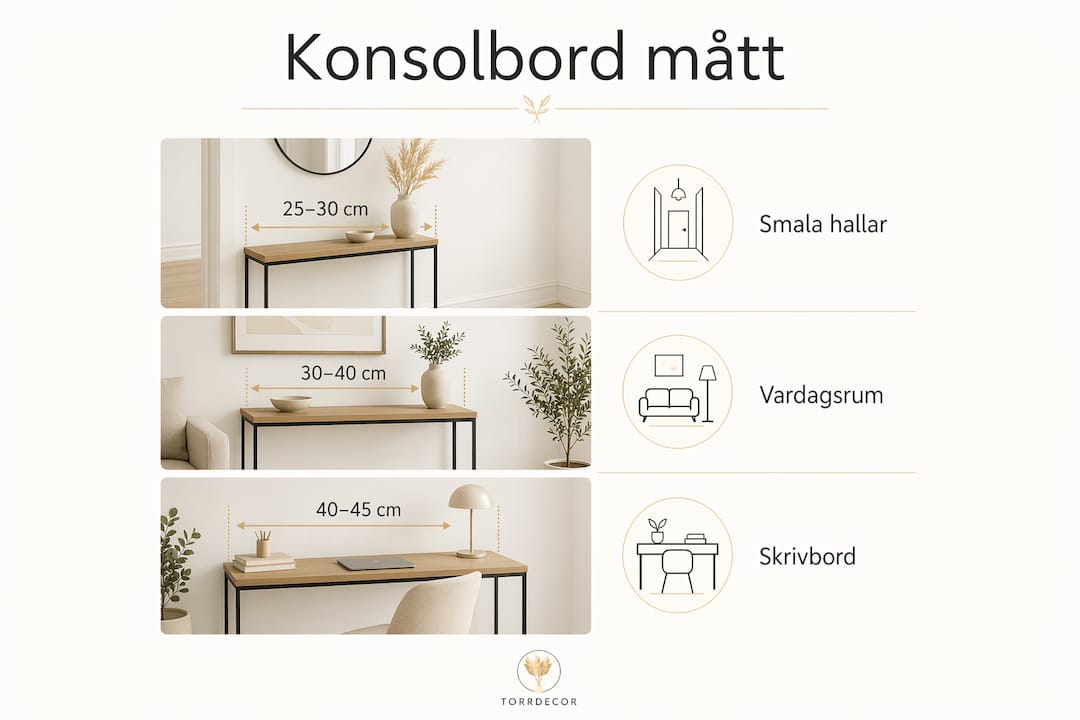
Matching the table's material and color with the room's other furniture creates a cohesive and balanced interior design. This also applies to storage items. A natural material basket fits better in a Nordic home than a plastic basket, even if both serve the same function.
Natural decor with dried plants and natural materials is a simple way to add warmth and texture without filling the table with unnecessary items. A single large vase with pampas grass can be enough as a decorative element, leaving room for practical items alongside it.
Key insights
Console table styling requires the right dimensions, well-considered material choices, and consistent matching of color and form to create a harmonious and functional piece of furniture in the home.
| Point | Details |
|---|---|
| Choose the right dimensions | Standard dimensions of 80–160 cm width and 25–45 cm depth determine what the table can handle. |
| Match material and color | Consistent matching with the room's furniture creates a cohesive whole. |
| Build with varying heights | Combine tall and short items to give the styling a sense of movement. |
| Solve storage discreetly | Baskets, boxes, and trays keep things tidy without disturbing the decorative expression. |
| Think vertically | A mirror or art above the table connects the furniture and wall into a single unit. |
What I have learned about console tables after years of interior design
The console table is the piece of furniture that reveals the most about how meticulous you are with details. It's small enough to ignore but visible enough to set the tone in a room. I've seen homes where everything else is thoughtfully designed, but the console table in the hallway is a messy collection of keys, mail, and random items. It ruins the overall impression immediately.
The most common mistake is to treat the table as a drop-off surface instead of a piece of furniture with a purpose. Decide from the start what the table should do. Is it purely decorative? Should it hold keys and mail? Should it function as a small desk? The answer to that question governs everything else, from depth and material to how you decorate the surface.
I've also noticed that the best styling results always rely on restraint. Three well-chosen items beat ten mediocre ones every time. A tall vase with pampas grass, a candle, and a small bowl are all you need. It looks intentional, not empty. And that's precisely the feeling you're aiming for.
The color choice is underestimated. Many choose the table's color without considering the room's light. A white table in a dark hallway disappears. A black table in an already dark room makes the room feel heavier. Evaluate the light in the room at different times of the day before deciding.
— a4
Torrdecor's natural details for your console table
Torrdecor offers a wide range of dried plants and vases perfect for console table styling. Pampas grass is one of the most popular decorations right now, and for good reason: it requires no maintenance, maintains its shape for months, and fits almost any interior design style.

Torrdecor's pampas grass 110 cm in beige is a timeless choice that works equally well in a minimalist hallway as in a bohemian living room. For those who want a slightly more natural and wild expression, Pampas ‘VILDA’ is available in the same size. Combine the pampas grass with one of Torrdecor's handmade white clay vases from Portugal for a complete and well-thought-out styling result.
Frequently Asked Questions
What are the standard dimensions for a console table?
Standard dimensions for console tables are 80–160 cm in width, 25–45 cm in depth, and 70–90 cm in height. Choose depth and width based on the room's size and the table's intended use.
What material is best for a console table in the hallway?
Oak and walnut are the most durable options and withstand daily wear and tear well. MDF is a cost-effective alternative if you want to paint the table in a specific color.
How do I prevent the console table from looking cluttered?
Limit the number of items on the tabletop to three or four and use a tray to group them. Vary the height of the items and ensure the wall above the table is also thoughtfully considered.
Can I use a console table as a desk?
A minimum depth of 45 cm is required to use the console table as a desk for a laptop. Most console tables are shallower than that and are better suited for decorative placement.
What is the best way to decorate a console table?
Start with a large anchor object, such as a mirror or pampas grass in a vase, and then build with shorter items around it. Consistent matching of color and material with the room's other decor creates the best overall impression.
0 comments