

In short:
- Kitchen interior design combines function and aesthetics to create a sustainable cooking environment. Well-planned zoning reduces unnecessary movement and improves workflow. Storage, material choices, and details shape the kitchen's personality and durability.
Kitchen interior design refers to the fixed components in the kitchen that combine function and aesthetics to create a sustainable and harmonious cooking environment. It's about more than just cabinet doors and countertops. A well-planned kitchen design coordinates storage, material choices, and lighting to form a cohesive whole that works every day. Kitchen renovations that prioritize function and workflow offer a better everyday experience than a purely aesthetic focus. This applies whether you are planning a brand new kitchen or want to improve what you already have.
How do you plan kitchen interior design based on function and zones?
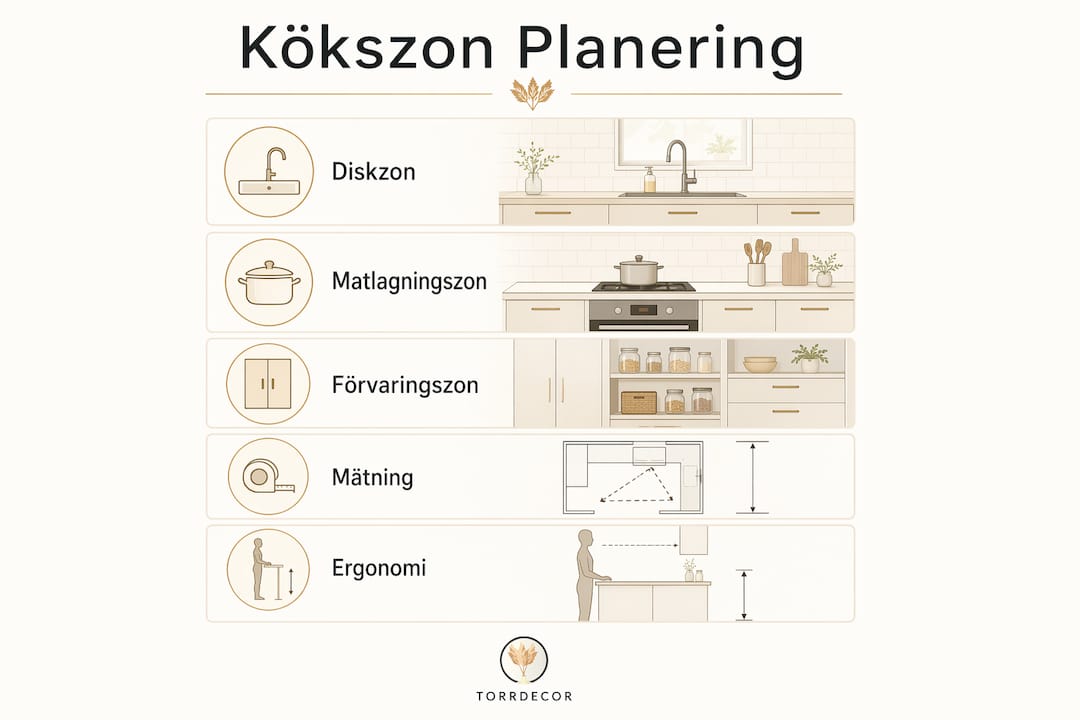
Zone planning is the foundation for a kitchen that truly works. The principle involves dividing the kitchen into three clear zones: washing, cooking, and storage. Each zone should be logically placed in relation to the others to minimize unnecessary movement.
Placing frequently used items at waist to shoulder height improves workflow and reduces strain. This means that plates, glasses, and the utensils you use daily should be easily accessible without you having to bend or stretch. Items you use infrequently, such as holiday baking molds and specialized tools, belong high up or deep inside.
Three steps for planning kitchen zones
- Map your usage pattern. Think through what tasks you perform daily and in what order. The breakfast routine differs from dinner preparation, and the kitchen should work for both.
- Place the washing zone near a window or ventilation. Natural light and good air circulation make dishwashing more pleasant and reduce moisture problems.
- Group the cooking zone around the stove. Spices, cutting boards, and common pots should be within reach without you having to move.
Pro tip: Measure opening angles, internal dimensions, and hinge type before buying drawer inserts. Incorrect measurements mean that inserts and pull-outs won't fit, which is a common and expensive mistake.
Ergonomics is not a luxury requirement. It is a basic prerequisite for the kitchen to function without causing physical strain. A well-planned kitchen design reduces the number of steps you take and makes cooking faster and more enjoyable.
What materials and colors are suitable for sustainable kitchen design?
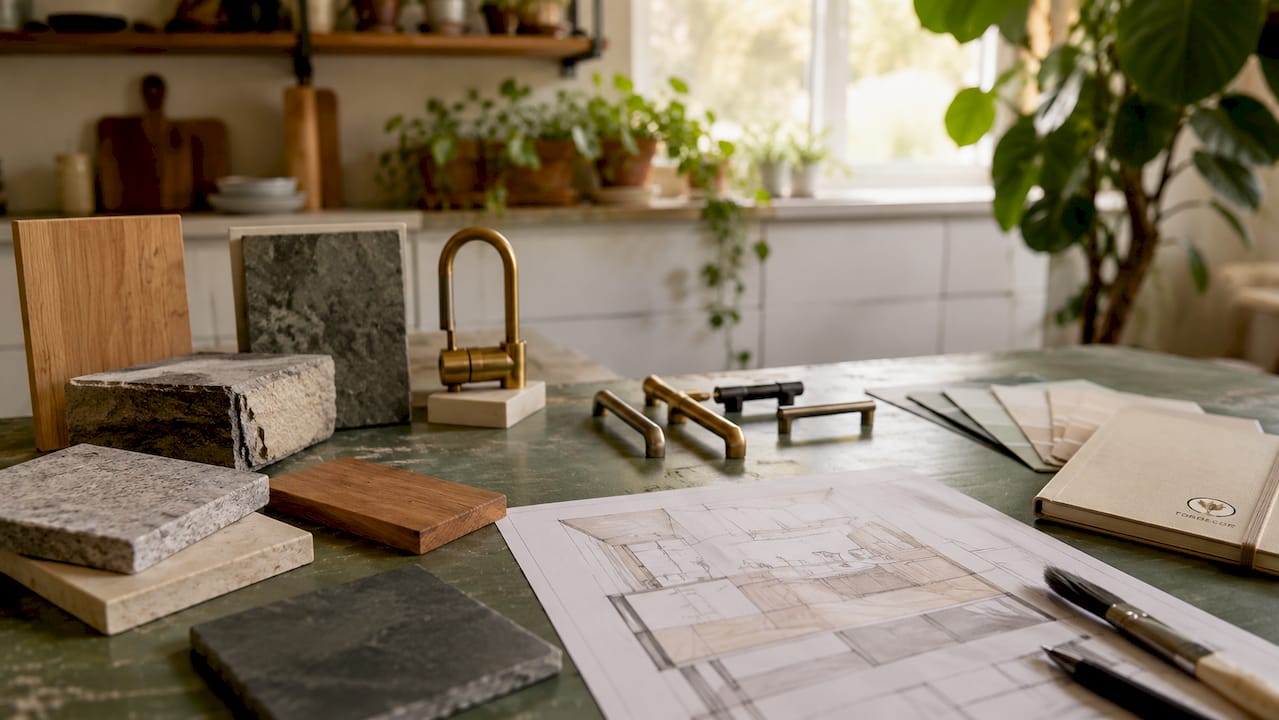
Materials determine how long the kitchen will last and how it will look in ten years. Wood fronts and stone countertops are the clearest trends in modern kitchen design for 2026. They age with dignity and withstand daily use better than many synthetic alternatives.
Modern kitchen design is moving towards textured and profiled cabinet doors with a wide color palette, from warm natural tones to bold colors. This means you no longer have to choose between a neutral white kitchen and a characterful one. You can combine a warm beige base with a dark green kitchen island, or let wood fronts meet a matte black countertop.
Materials to choose and why
- Wood fronts: Provide warmth and natural texture. Choose treated wood to withstand moisture and cleaning.
- Stone countertops: Granite and quartzite resist heat and scratches. They require minimal maintenance and last for decades.
- Laminate: Affordable and versatile. Modern laminates imitate stone and wood with good quality.
- Ceramic and clinker: Perfect for backsplashes. Large tiles with thin grout lines are easier to keep clean.
Metal fittings and lighting strongly influence the atmosphere and overall impression. Brass handles create a warm and luxurious feel. Matte black suits a modern and minimalist kitchen. Brushed steel is neutral and timeless.
Pro tip: Choose a color palette with a maximum of three colors in the kitchen. One dominant shade, one complementary, and an accent color in details such as handles and textiles. This creates a cohesive impression without the kitchen feeling cluttered.
Color also affects how large the kitchen is perceived. Light shades open up the room. Dark colors create depth and character but require more light to avoid feeling heavy. A white kitchen with dark details is a classic combination that works in most homes.
What storage solutions maximize kitchen function?
Storage is the area where most kitchens can be improved the most with the least investment. Deep drawers with dividers and supports provide better overview and order, especially when lids and cutting boards are stored upright. It sounds simple but makes a big difference in everyday life.
The cost of storage upgrades varies. Budget solutions cost 500–900 SEK per pull-out drawer, while premium solutions range from 1,500–2,500 SEK. It's an investment that pays off in the form of better organization and a calmer kitchen every day.
Smart storage principles
- Sort by function, not size. Gather everything related to baking in one drawer, everything for breakfast in another. This reduces searching and creates clear routines.
- Use pull-outs in tall cabinets. Pull-out shelves allow you to see and reach everything at the back without having to remove all contents.
- Store food containers with lids separately. A basket for lids and one for containers solves one of the kitchen's most common chaos problems.
- Hidden recycling saves countertop space. Built-in sorting under the sink frees up space and keeps the kitchen tidy.
| Storage type | Best for | Approximate cost |
|---|---|---|
| Deep pull-out drawer with dividers | Pots, lids, cutting boards | 900–2,500 SEK |
| Basket pull-out in tall cabinet | Dry goods, canned food | 500–1,500 SEK |
| Door hangers and hooks | Kitchen towels, lids | Under 200 SEK |
| Built-in recycling | Waste sorting | 800–2,000 SEK |
A well-organized kitchen drawer is both psychologically and practically important for a harmonious kitchen environment. Chaos in drawers creates stress. Order creates calm. It's a simple connection with great effect.
Before you buy organizers: completely clear out the kitchen and inventory what you actually have. This is the most common advice from professionals and the most ignored by individuals. Unnecessary items take up space and complicate order, no matter how good the storage system is.
How do you create a personal kitchen with sustainable details?
Details are what differentiate a generic kitchen from a kitchen with personality. Open shelves, textiles, and handles in brass or matte black enhance personal expression and bring the kitchen to life without losing functionality. It's about conscious choices, not about buying more.
Design is as much about the overall feeling as it is about individual material choices. Every detail contributes to the kitchen's expression. A handle in the wrong material can disrupt the overall aesthetic as effectively as an incorrect color choice.
Details that make a difference
- Handles and knobs: Choose one material and stick to it throughout the kitchen. Do not mix brass and chrome in the same room.
- Open shelves: Perfect for displaying beautiful objects and creating a lively feel. However, requires discipline to keep tidy.
- Textiles: Kitchen towels, rugs, and curtains in natural materials like linen and cotton add warmth and texture.
- Plants and dried decorations: Natural elements contrast with hard surfaces and bring life to the kitchen without requiring maintenance.
Well-planned lighting, combining general, task, and ambient lighting, enhances both function and design appeal. Spotlights above the countertop provide good task lighting. Pendant lights over the kitchen island create atmosphere. A dimmable system allows you to adjust the light according to the situation and time of day.
The trend is towards more personal and textured kitchens rather than minimalism, with natural materials and warm colors in focus. There's a clear movement away from the sterile white kitchen towards something that feels more lived-in and authentic. You can follow this trend without renovating the entire kitchen. Change the handles, add an open shelf, and install a pendant lamp. That goes a long way.
Key insights
A well-planned kitchen interior design requires zoning, the right material choices, and thoughtful details to function both practically and aesthetically over time.
| Point | Details |
|---|---|
| Zone planning is key | Divide the kitchen into washing, cooking, and storage zones to reduce unnecessary movement. |
| Materials determine durability | Wood fronts and stone countertops age well and withstand daily use better than synthetic alternatives. |
| Storage by function | Sort by area of use, not size, for better organization and a faster daily routine. |
| Details create personality | Handles, lighting, and open shelves shape the kitchen's feel as much as cabinet doors and countertops. |
| Declutter before organizing | Inventory and remove unnecessary items before investing in storage solutions. |
What I've learned from working with kitchen interior design
Having worked with kitchen design for a long time, my clearest experience is this: most mistakes are made in the planning phase, not in the execution. Customers carefully choose materials and colors but forget to measure opening angles, check hinge types, or think through how they actually move in the kitchen. The result is a beautiful kitchen that doesn't function in everyday life.
The most common mistake is prioritizing aesthetics over ergonomics. A kitchen that looks good in pictures but requires you to bend down to find pots every evening is a failed kitchen, no matter how expensive the fronts are. The correct placement of storage is worth more than expensive materials in the wrong place.
I've also seen how trendy interior details can elevate an entire kitchen without renovation. Changing handles, adding a pendant lamp, and placing a couple of thoughtful decorations costs little but completely transforms the experience of the room. This is the kind of change that lasts and doesn't require tearing everything out.
My recommendation is always to start with function and then add aesthetics. Plan the zones, secure the storage, and choose materials that last. Then you can spend time and money on the details that make the kitchen yours.
— a4
Sustainable decorations to suit your kitchen design
Torrdecor offers dried plants and decorations that fit perfectly into a well-thought-out kitchen. Dried products require no maintenance and last a long time, making them a natural choice for those who want a lively kitchen without extra work.

A beige pampas grass on an open shelf or in a corner gives the kitchen texture and warmth without competing with the rest of the decor. Torrdecor's range also includes dried bouquets and decorative vases made in Portugal, which fit equally well in a modern white kitchen as in a warm and textured one. Read more about sustainable home decor 2026 for more ideas on how to create a personal home with lasting details.
Frequently asked questions
What does the term kitchen interior design include?
Kitchen interior design encompasses the fixed components in the kitchen: cabinets, drawers, countertops, cabinet doors, and built-in storage solutions. It also includes details such as handles, lighting, and material choices that shape the kitchen's function and appearance.
How much does a kitchen storage upgrade cost?
The cost varies between 500–900 SEK for simpler budget solutions and 1,500–2,500 SEK per pull-out drawer for premium solutions. DIY installation lowers the cost compared to professional assembly.
What colors are trendy in kitchens for 2026?
Warm natural tones, dark green, and deep blue shades dominate 2026, along with wood fronts and textured surfaces. The white kitchen remains but is increasingly complemented by strong accent colors.
How can I organize kitchen drawers better?
Sort by function, not size. Use dividers and baskets in deep drawers and store lids upright. Declutter items you don't use before buying organizers.
How long does it take to get a new kitchen delivered?
Delivery times vary from approximately 2 weeks for modular kitchens in the budget segment to 4–6 months for premium kitchens. Therefore, plan your kitchen renovation well in advance to avoid delays.
0 comments