

In short:
- Bouquets quickly refresh the home, creating a lively atmosphere with color and texture.
- Choose the right vase and placement to make the most of your bouquet, preferably in a cool, bright corner.
Bouquets are one of the quickest ways to bring new life to a room. A well-placed bouquet can change the feel of a room in under five minutes by adding color, texture, and a lively atmosphere. Interior design tips with bouquets are all about choosing the right floral arrangement, the right vase, and the right spot to create a home that feels well-thought-out and personal. Torrdecor offers dried bouquets and vases that make it easy to achieve just that, without the need for daily maintenance.
1. Which bouquet types work best for different interior styles?
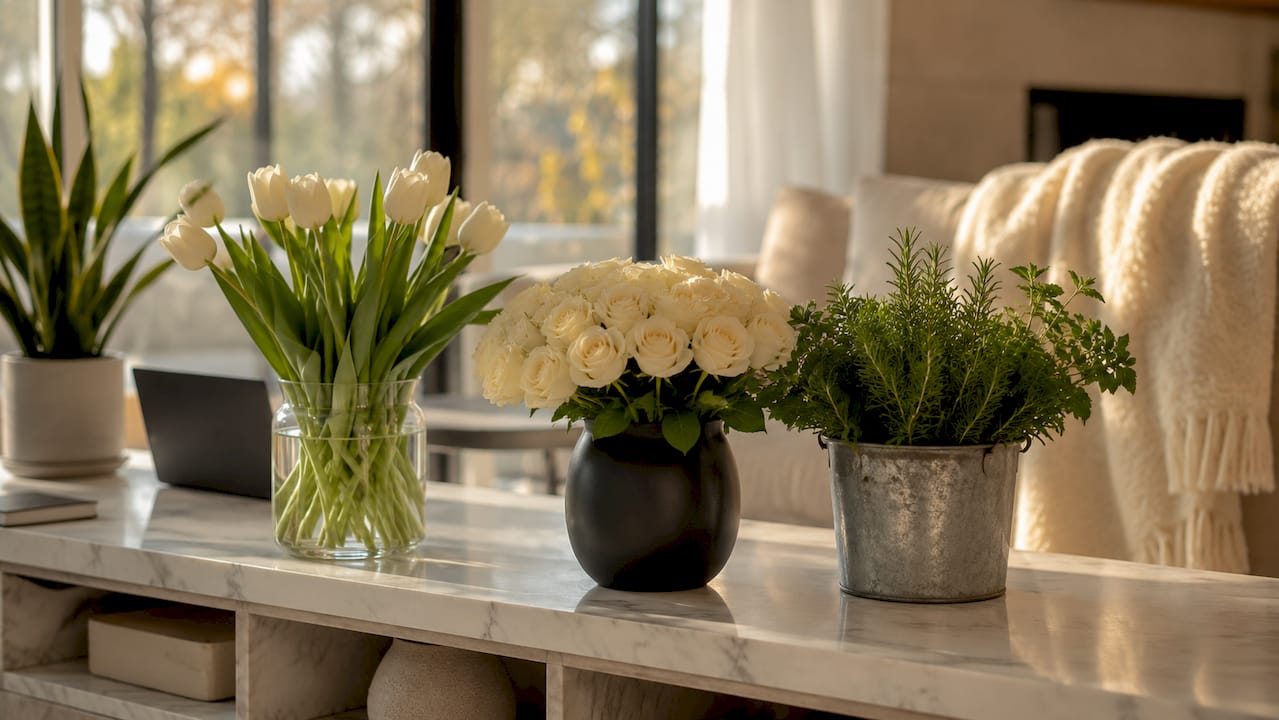
Cut flowers are natural decor elements that change with the seasons, creating a vibrant, seasonal feel. This makes them a flexible choice for those who want to change their home's expression without buying new furniture. Dried bouquets, on the other hand, provide a timeless and consistent impression year-round.
Different bouquet styles suit different interiors:
- Round, dense bouquets with roses or peonies suit classic and romantic decor.
- Wild, airy arrangements with pampas grass or eucalyptus suit Scandinavian and bohemian styles.
- Minimalist bouquets with one or two types of flowers suit modern and minimalist decor.
- Colorful bouquets with mixed cut flowers suit eclectic and lively decor.
Pro tip: Want a bouquet that looks exclusive but costs little? Choose three stems of the same flower in a narrow vase. The simplicity gives a deliberate and stylish impression.
2. How do you choose the right vase for the bouquet?
The vase is as important as the flowers. An hourglass-shaped vase provides natural support for bouquets and helps maintain a neat shape and volume. It's one of the most common mistakes to choose a vase based on appearance without considering its function.
| Vase Type | Best suited for | Advantage |
|---|---|---|
| Hourglass vase | Round and dense bouquets | Provides support and maintains shape |
| Opaque vase | Bouquets with uneven stems | Hides stems and gives an exclusive impression |
| Narrow cylinder vase | Minimalist arrangements | Highlights single stems |
| Sculptural vase | Dried bouquets | Functions as a work of art itself |
The vase should be approximately 2/3 of the bouquet's height for the best visual impression and support. A vase that is too large makes the bouquet disappear. A vase that is too small easily topples over.
An often overlooked trick is to use heirlooms as vases to create unique and personal interior effects. An old pitcher or a ceramic bowl can become a conversation piece in itself.
Pro tip: Avoid wide cylinder vases for large, heavy bouquets. Without support in the middle, the stems fall apart and the bouquet loses its shape after just one day.
3. Where to place bouquets for best effect?
Placement determines how much a bouquet actually contributes to the interior. Bouquets work best as focal points in places where the eye naturally lands, such as on the dining table, hallway console, or windowsill.
Practical placement rules:
- Place the bouquet at eye level when you are sitting, not when you are standing.
- Choose a spot with natural light but no direct sunlight.
- Keep the bouquet away from heat sources like radiators and fireplaces.
- Do not place it near fruit bowls.
The last point is important. Ethylene gas from fruit accelerates wilting in cut flowers. It's a detail many miss, but it can shorten the bouquet's life by several days.
Pro tip: The hallway console is one of the best places for a bouquet. It's the first thing you see when you come home and the first thing guests notice.
4. How to extend the life of cut flowers?
Care is the difference between a bouquet that lasts three days and one that lasts ten. Cut the stems diagonally with each water change and change to cold water daily. This is the single most important action you can take.
Daily care such as diagonally cutting stems and removing leaves below the waterline reduces bacterial growth and extends the bouquet's life. Leaves in water quickly rot and poison the water for the entire bouquet.
- Change water daily, preferably in the morning.
- Cut stems diagonally with a sharp knife, not scissors.
- Remove all leaves that fall below the waterline.
- Place the bouquet in a cool spot, away from direct sunlight.
Dried bouquets do not require any of these measures. They last for months or years without water changes or trimming, making them a practical choice for those who want beautiful plant decor without daily upkeep.
5. How to combine bouquets with other decor?
Bouquets work best when they are part of a context, not a standalone element. Use the bouquet as a color and texture accent that ties together the other parts of the room. A bouquet in the same color tone as cushions or curtains creates harmony without looking overly planned.
- Combine bouquets with green potted plants for depth and contrast.
- Mix materials: a ceramic vase next to a wooden bowl and a bouquet creates textural richness.
- Follow the 60-30-10 rule: 60 percent main color, 30 percent complementary color, and 10 percent accent color. The bouquet can be the 10 percent accent.
- Create focal points with bouquets on empty surfaces, such as an empty shelf or a corner of the dining table.
Decorating with plants and bouquets together gives a room a sense of life that furniture and textiles cannot provide on their own. It's about adding an organic element to an otherwise static room. See more inspiration for dried bouquets for concrete ideas.
6. Dried bouquets or fresh cut flowers: which suits you?
The choice between dried and fresh bouquets depends on lifestyle, budget, and interior style. Both have clear advantages, but they suit different needs.
| Feature | Dried bouquets | Fresh cut flowers |
|---|---|---|
| Lifespan | Months to years | 5–14 days |
| Maintenance | Minimal | Daily water change and trimming |
| Environmental impact | Low, long-term use | Higher, shorter life cycle |
| Aesthetics | Soft, natural tones | Vibrant, strong colors |
| Cost over time | Low | Recurring cost |
Dried bouquets are durable and require minimal maintenance, making them an eco-friendly choice for interior design. This means you invest once and enjoy for a long time. Fresh cut flowers are better suited for those who want seasonal variation and don't mind caring for them.
Dried bouquets are particularly well-suited for bedrooms, offices, and entryways where you want a consistent look. Fresh flowers are best in kitchens and living rooms where they are seen and appreciated daily. Read more about sustainable decor choices with dried flowers.
Important insights
The right bouquet, the right vase, and the right placement are the three factors that determine whether a bouquet elevates or disappears in a room.
| Point | Details |
|---|---|
| Vase size | The vase should be approximately 2/3 of the bouquet's height for best support and proportion. |
| Placement | Keep the bouquet cool, away from sunlight and fruit bowls for longer durability. |
| Daily care | Cut stems diagonally and change water daily to extend the life of cut flowers. |
| Dried bouquets | Require minimal maintenance and last months to years, an eco-friendly alternative. |
| Combination with decor | Use the bouquet as a 10 percent accent color according to the 60-30-10 rule. |
Bouquets that transform a room more than you think
I've been decorating with bouquets for many years, and what still surprises me is how much difference a single arrangement can make. Not because it's expensive or complicated, but because it's organic. A bouquet adds something no furniture can: movement, scent, and a reminder that the home is alive.
The most common mistake I see is people choosing a vase they like and then putting any flowers in it. That rarely works. The vase and the bouquet must harmonize in shape and scale. A small bouquet in a large vase looks lonely. A large bouquet in a narrow vase will tip over.
My personal favorite is dried bouquets in sculptural vases. They require no maintenance, they last a long time, and they look just as good in February as in September. It's an investment that pays off. I encourage everyone to dare to experiment with vase shapes and not get stuck in the safe choice. An unusual vase can make a simple bouquet the room's most interesting detail.
— Torrdecor
Torrdecor's sustainable bouquets and vases
Torrdecor offers a range of dried bouquets and handmade vases for those who want to decorate with long-term sustainability in mind.

Bouquet 'ÅTERBLOM' is an environmentally conscious choice made from upcycled dried flowers. It suits most interior styles and requires no maintenance at all. Vase 'BÅGE' cream is designed in Portugal and works equally well as a sculpture or a bouquet holder. If you want a dramatic element with long-lasting durability, Pampas Grass 'VILDA' 110cm is excellent as a standalone arrangement in a corner stand or a floor vase. Torrdecor's products are created for those who want beautiful floral decor without recurring purchases.
Frequently asked questions
Where to place bouquets in the home?
Bouquets work best in places where the eye naturally lands, such as a hallway console, dining table, or windowsill. Choose a cool spot without direct sunlight and keep the bouquet away from fruit bowls.
How long does a dried bouquet last?
Dried bouquets last for months to years with minimal maintenance. They don't need water and thrive in most indoor environments without direct sunlight.
Which vase is best for a large bouquet?
An hourglass-shaped vase provides the best support for large and round bouquets. The vase should be approximately 2/3 of the bouquet's height for proper proportion and stability.
How do I extend the life of cut flowers?
Change water daily, cut stems diagonally with a sharp knife at each water change, and remove leaves that fall below the waterline. Place the bouquet in a cool spot and away from fruit.
Can you mix dried and fresh flowers in the same vase?
It works aesthetically but is not practical. Fresh flowers need water, which can damage dried stems and accelerate mold. Keep them in separate vases for the best results.
0 comments