

In short:
- Shelf styling means creating a harmonious impression through conscious grouping and choice of materials. The right choice of dark wood and balanced placement contributes to sustainable and personalized shelving.
Shelf styling is the art of combining storage and decoration to give your home a personal and harmonious feel. A well-styled shelf is not a random collection of items but a conscious choice of objects, space, and rhythm. Interior design trends for 2026 clearly point towards warmer and darker wood tones, making the choice of materials more important than ever. The right shelf styling changes the overall impression of a room without you needing to buy anything new.
Which materials and shelf types are best suited for shelf styling?
The choice of material sets the tone for the entire room. Trendy shelf environments in 2026 use dark wood like walnut or brown stained veneer against light walls to create balance. This contrasts sharply with recent years when white and light tones dominated.
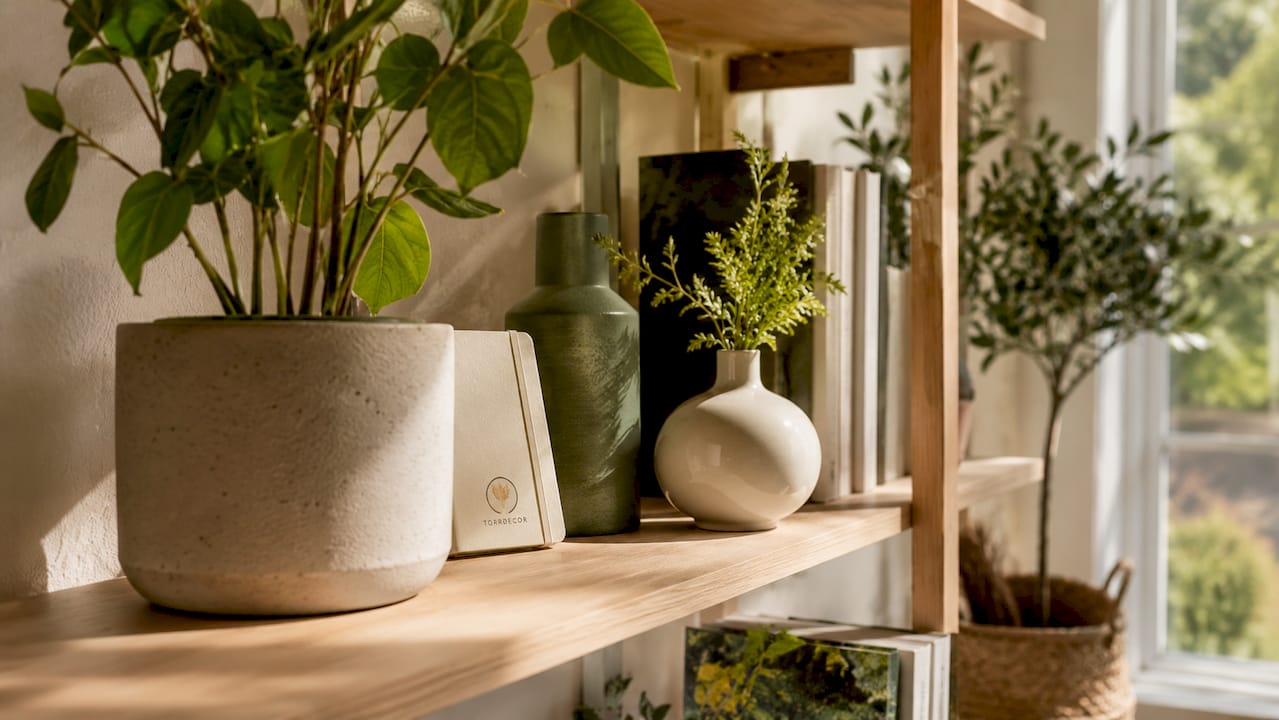
Wall-mounted shelves are the most common choice for modern homes. They free up floor space, create an airy impression, and are easy to adjust in height and width. Built-in shelves give a more integrated and exclusive look but require more planning and work.
Choose shelf material and model based on these factors:
- Dark wood like walnut or ash veneer provides warmth and timelessness.
- Brown stained veneer is an affordable option with a similar feel to solid wood.
- Wall-mounted shelves suit most rooms and are easy to remount.
- Built-in shelves give a custom look and maximize space.
- Material thickness determines how much the shelf can withstand. Thin shelves sag under heavy books and spoil the aesthetic impression.
Always choose shelves with the correct thickness for the planned load. It is the simplest measure to ensure a long lifespan and a stylish appearance.
What tools and preparations do you need?
Proper preparation saves time and avoids mistakes. Gather your tools before you start assembling or styling.
| Tool | Use |
|---|---|
| Spirit level | Check that the shelf is straight |
| Tape measure | Measure the wall at several points |
| Drill | Pre-drill holes for fixings |
| Wall brackets | Adapt to wall type and weight |
| Pencil | Mark placement before mounting |
Measure the wall at several places and use a spirit level at each measurement point. Older houses often have uneven walls, meaning a shelf that looks straight at one end can noticeably lean at the other. Pre-drilling is always necessary to avoid cracks in the wall and ensure a stable attachment.
Distribute the weight evenly along the shelf from the start. Heavy items like books or vases should be placed closest to the fixing points. This reduces the risk of the shelf bending over time.
Pro tip: Always measure at three points along the wall, not just at the ends. The difference can be several millimeters in an older house, which is clearly visible once the shelf is up.
How do you style a shelf step by step?
A well-styled shelf follows a pattern of rhythm, variation, and space. Many fail because they see the shelf as storage instead of a display surface.
Follow these steps for a balanced result:
- Clear the shelf completely. Start with an empty shelf and only put back what you truly want there.
- Mix books standing and lying down. Lying books serve as a podium for a vase or sculpture.
- Group in odd numbers. Items in groups of 3 or 5 create visual harmony according to the still life principle.
- Add plants and vases. A dried bouquet or pampas grass adds height and natural texture.
- Leave space between groups. Aim to use 60–70% of the shelf's capacity for the best visual effect.
- Integrate lighting. Solar-powered LED lights create atmosphere without cables and also work on a patio.
- Take a step back. Assess the overall look from the center of the room, not from the shelf itself.
Use color as a tool to create rhythm. Gather books in similar tones in a block, then place a neutral vase next to them to break it up. Personal items like a souvenir from a trip or an inherited item give the shelf a story that no purchased details can replace.
Pro tip: Photograph the shelf with your phone and look at the picture. The camera reveals imbalances that the eye misses when you stand close.
Common mistakes to avoid immediately:
- Placing objects of the exact same height creates a monotonous impression.
- Mixing too many colors without a common theme results in clutter.
- Forgetting height variation, i.e., mixing tall and short objects, makes the shelf look flat.
How do you create sustainability in your shelf styling?
Sustainable shelf styling involves material choices, installation, and maintenance. The right choice of materials and installation are the foundation for a shelf that supports weight and maintains a stylish appearance over time.
Consider these points for long durability:
- Secure heavy items close to the fixing points to prevent the shelf from bending.
- Choose dried plants instead of fresh ones. They require no care and last for several years.
- Clean the shelf regularly with a dry cloth. Dust accumulates quickly and dulls the aesthetic impression.
- Outdoor shelves require weather-resistant materials and stable fixings. Solar-powered LED lights are an energy-efficient choice that provides automatic lighting at dusk without electricity costs.
- Check the fixings once a year, especially if the shelf carries heavy items.
“A shelf that is properly installed and filled with durable materials rarely needs to be replaced. It's a one-time job that yields results for many years.”
Dried plants and ceramic vases are the most durable decorative choices for shelves. They withstand dust, dry indoor air, and require no watering or special care.
What mistakes should you avoid when shelf styling?
The most common mistake is to completely fill every shelf. An overflowing shelf looks stressful and hides the details you actually want to display.
- Avoid even spreading. Objects spread at equal distances give a cluttered impression. Group them instead.
- Leave breathing room. Approximately 30–40% of the shelf's surface should be decoration, the rest storage, for an exclusive and calm overall impression.
- Avoid excessively thin shelves under heavy books. The shelf will sag and look worn.
- Don't mix too many styles. Choose a theme, such as natural and bohemian, and stick to it.
- Distinguish between photo styling and everyday use. A shelf styled for a photograph is often too minimalist for daily use. Find a balance between personal and airy styling.
A simple rule: if you hesitate whether an item belongs on the shelf, remove it. A shelf with fewer but well-chosen details always looks better than an overcrowded one.
Key insights
Shelf styling has the greatest impact when you combine the right material choices, thoughtful grouping, and sufficient space between items.
| Point | Details |
|---|---|
| Material choice determines durability | Choose dark wood with the correct thickness to prevent shelves from sagging. |
| Group in odd numbers | Items in groups of 3 or 5 create visual harmony and avoid clutter. |
| Leave 30–40% for decoration | The right balance between storage and decor creates an exclusive and calm impression. |
| Dried plants are durable choices | They require no maintenance and retain their aesthetic for several years. |
| Always measure at multiple points | Spirit level and measuring at three places prevent crooked shelves, especially in older houses. |
The real secret of shelf styling is about rhythm, not purchases
I've seen hundreds of shelves that cost a lot of money but still look cluttered. And I've seen simple pine shelves, styled with dried plants and a couple of books, that look thoughtful and expensive. The difference is never the price. It's the rhythm.
What truly transforms a shelf is to stop seeing it as storage and start seeing it as an exhibition. It sounds simple but requires a different mindset. You must be prepared to remove things, not add more.
Personal items are underestimated. An inherited item or a souvenir from a trip tells something about you that no purchased detail can. That's the detail visitors notice and ask about. Styling for photos and styling for everyday life are also two different things. A shelf that looks perfect in a picture can feel sterile to live with. Find your balance.
What I return to again and again is that dried plants and natural materials are the most reliable shelf decorations. They do not change, require no maintenance, and retain their shape and color for a long time. It's an investment that actually lasts.
— a4
Torrdecor's products for sustainable shelf styling
Torrdecor offers a wide range of dried plants, vases, and bouquets that fit directly into thoughtful shelf styling. The products require no maintenance and retain their shape and color for several years.

Pampas grass 110 cm adds height and natural texture to the shelf and suits both modern and bohemian styles. Dried bouquets from Torrdecor serve as eye-catchers on a shelf and are easily combined with a ceramic vase. Torrdecor's vases are made in Portugal and fit into the warm and earthy tones that dominate 2026 interior design trends. Everything is available at torrdecor.se.
Frequently asked questions
What is shelf styling?
Shelf styling is the art of combining storage and decoration on a shelf to create a harmonious and personal impression. It's about rhythm, grouping, and space rather than filling every surface.
How many items should I have on a shelf?
Aim to use 60–70% of the shelf's capacity. Leave the rest empty to give details space to stand out and give the shelf an airy and exclusive impression.
Which decorations last longest on a shelf?
Dried plants, ceramic vases, and sculptures in natural materials last longest. They require no maintenance, tolerate dry indoor air, and retain their appearance for several years.
How do I avoid the shelf looking cluttered?
Group items in odd numbers, for example 3 or 5, and leave space between groups. Avoid mixing too many colors and styles on the same shelf.
What should I consider when mounting shelves in older houses?
Measure the wall at least at three points and use a spirit level at each measurement point. Older houses often have uneven walls, and pre-drilling is necessary for a stable and neat attachment.
0 comments