

TL;DR:
- Matching the vase's shape, size, and material with the bouquet's height and style is crucial for a harmonious floral arrangement. A proportion of approximately 1.5 times the vase's height provides balance, while the right vase shape and color enhance the overall impression. A well-chosen vase wardrobe and careful maintenance extend the arrangement's lifespan and elevate the entire interior decor.
Combining vases and flowers is the art of matching the vase's shape, size, and material with the bouquet's height, color, and style to create a harmonious and long-lasting arrangement. It's not about chance. The right proportion between vase and bouquet determines whether the arrangement looks thoughtful or falls apart, figuratively and literally. This guide provides you with concrete tools to choose the right vase, combine flowers with care, and maintain your arrangements so they last longer, whether for your home or an event.
How to combine vases and flowers: the most important factors
Proportion is the foundation of all vase selection. The bouquet's height should be approximately 1.5 times the vase's height for the arrangement to look balanced and not risk tipping over. This means that a 20-centimeter vase is best suited for a bouquet that extends up to 30 centimeters above the vase's rim.
The vase's shape is as crucial as its height. The vase's proportions, neck width, and opening shape determine how the bouquet falls and how it is perceived from different angles, both from above and from the side. A narrow neck holds loose stems together, creating a cohesive expression, while a wide opening allows space for spread-out, fluffy bouquets.
The material and color of the vase play a clear role in the overall impression. Neutral tones such as white clay, beige, or gray ceramic work with almost all flower colors and styles. Glass provides transparency and suits bright, minimalist rooms, while dark ceramics create contrast against light flowers like white roses or chrysanthemums.
Here are the most important criteria to keep in mind when choosing a vase:
- Height and proportion: The bouquet should be 1.5 times the vase's height.
- Neck width: Narrow neck for dense bouquets, wide opening for airy arrangements. Shape: Cylinder vase for long-stemmed flowers, globe vase for round bouquets.
- Material: Ceramic, glass, or clay depending on the room's style and the flowers' character.
- Color: Choose a neutral vase for strong flower colors, or a colored vase for simple white flowers.
Pro tip: Always keep a neutral vase in white clay or gray ceramic as a base choice. It works with flowers of all seasons and requires no adaptation when changing bouquets.
How do you combine multiple vases for a stronger overall impression?
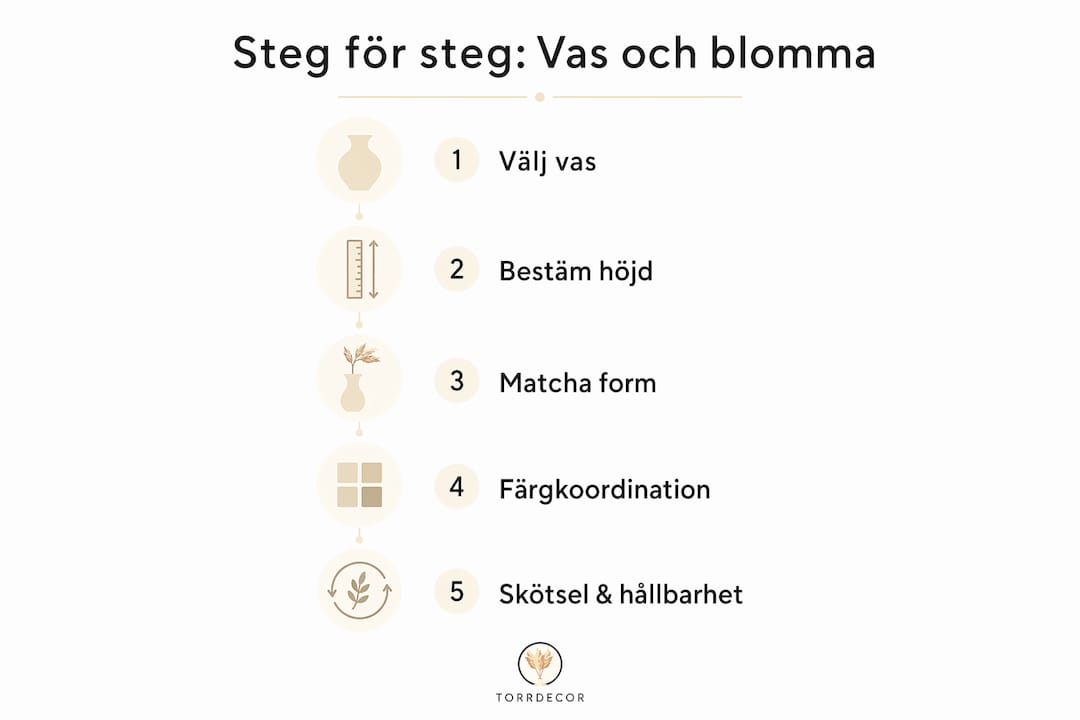
Using multiple vases together is one of the most effective ways to create depth and movement in a room. A basic set of 3 to 4 vases in different sizes and shapes covers most situations throughout the year and makes it easier to quickly create beautiful arrangements without stress of selection. This is what florists call a vase wardrobe, and it's a practical concept for anyone who decorates with flowers regularly.
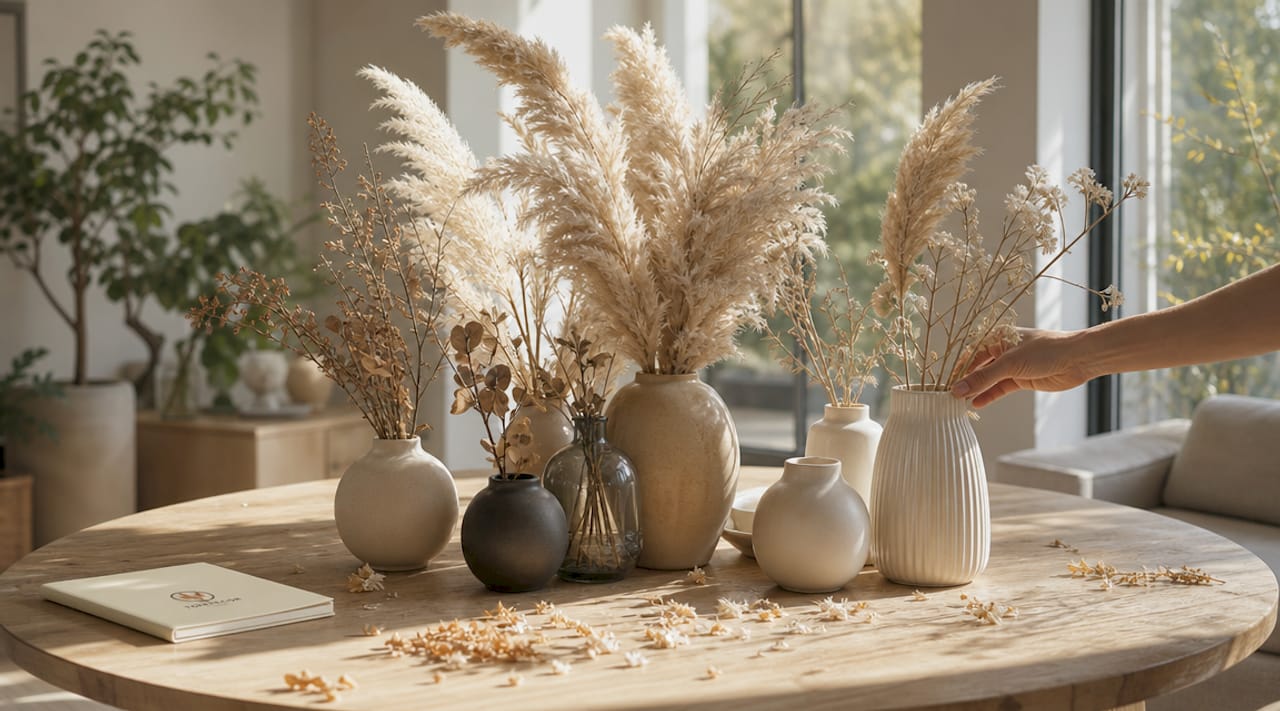
Combining materials creates contrast and life. Several small vases of different sizes can together create dynamism without obstructing the view on the table, which is especially important for dinner tables or event decoration. Feel free to mix a glass vase with a ceramic vase and one made of clay to give the group texture and variety.
Placement determines whether the group of vases is perceived as a deliberate choice or a coincidence. Follow these steps for a well-thought-out result:
- Choose a focal point. Place the tallest vase in the center or at one end of the group, not symmetrically in a row.
- Vary the heights. Use a tall cylinder vase, a medium-sized globe vase, and a small open bowl vase to create levels.
- Keep the color palette cohesive. Choose vases in the same color family or material to make the group feel connected.
- Limit the flower varieties. Distribute a maximum of two to three flower varieties among the vases to avoid visual chaos.
- Leave empty space. A vase without flowers in the group acts as breathing room and enhances the others.
| Combination | Effect | Best suited for |
|---|---|---|
| Glass + ceramic | Contrast and texture | Living room, dining table |
| Clay + glass | Natural and modern feel | Kitchen, windowsill |
| Ceramic + ceramic | Cohesive and calm | Bedroom, hallway |
| Tall + short + medium | Dynamics and depth | Event table, sideboard |
You can read more about how to choose the right vase shape for different rooms and styles at Torrdecor.
Which flowers suit which vase shapes and how do you think about color?
The vase's shape should match the bouquet's shape needs: a globe vase or wide vase suits round, dense bouquets, while a narrow cylinder vase is the right choice for long-stemmed flowers. It's not just aesthetics. The right vase shape provides support for the stems and keeps the bouquet in place without it falling apart or leaning.
Here's a practical match between common cut flowers and suitable vase shapes:
- Roses and peonies: Suit a globe vase or wide opening, which holds the round flower heads together.
- Tulips and amaryllis: Suit a narrow cylinder vase or conical vase that supports the long stems.
- Sunflowers and dahlias: Suit a wide, stable vase with weight at the bottom to support the heavy flower heads.
- Eucalyptus and green branches: Suit a tall glass vase or clay pot for a natural, airy look.
- Dried flowers and pampas grass: Suit structured clay vases or ceramic vases without water, where the shape speaks for itself.
Color scheme is the area where most people make mistakes. Limit to 2 to 3 flower varieties in the same color family plus a maximum of 1 contrasting color for a harmonious arrangement. This means, for example, combining pink roses, purple lavender, and white daisies, then adding a single deep red flower as a focal point.
| Vase shape | Best flower choice | Avoid |
|---|---|---|
| Globe vase | Roses, peonies, ranunculus | Long, thin stems |
| Cylinder vase | Tulips, amaryllis, orchids | Dense, round bouquets |
| Conical vase | Mixed bouquets, eucalyptus | Very heavy flower heads |
| Bowl vase | Floating flowers, short stems | Tall arrangements |
| Clay vase without neck | Pampas grass, dried bouquets | Cut flowers with water |
A well-thought-out color palette with a maximum of three flower varieties in similar color tones creates a calm and harmonious look. This applies whether you are decorating with fresh cut flowers or dried arrangements.
How do you care for your floral arrangements for longer durability?
Proper care practically doubles the lifespan of cut flowers. Cut the stems diagonally with a sharp knife every time you change the water and change the water daily to keep the flowers fresh longer. Scissors crush the stem tissue and reduce water absorption, while a sharp knife provides a clean cut that acts like a straw.
Follow these steps to maximize the lifespan of your cut flowers:
- Cut the stems diagonally with a sharp knife, about 2 centimeters from the end, with each water change.
- Change water daily. Use cold, clean tap water and rinse the vase thoroughly.
- Remove all leaves below the waterline. Leaves in water create bacteria that spoil the water and shorten the life of the flowers.
- Place the vase in a cool spot. Avoid direct sunlight, heat sources, and fruit bowls, as ethylene gas from fruit accelerates the aging of flowers.
- Use flower food. Nutrient packets from florists contain sugar and antibacterial agents that significantly extend shelf life.
Common mistakes when combining vases and flowers
Most mistakes in floral decorating stem from too many choices without a clear idea. Mixing too many flowers and colors without a clear concept disrupts the overall look and makes the vase's role in the arrangement disappear. The result looks messy, not generous.
Avoid these common errors:
- Too many flower varieties and colors. Stick to a maximum of three varieties and a clear color palette.
- Incorrect vase size. A vase that's too large makes the bouquet look small and lost. A vase that's too small easily tips over.
- Wrong placement. Flowers near a heat source or in direct sunlight will wilt in one to two days.
- Underestimating the vase as a decorative detail. Vases can serve as decorative objects even without flowers and contribute to the room's character. A sculptural clay vase on a shelf doesn't need flowers to make an impression.
- Not having a vase wardrobe. Without a small selection of basic vases in different sizes, you'll always be forced to compromise on form.
“The vase is not just a vessel for flowers. It is an interior design detail in itself, and the right vase choice elevates the entire room, regardless of what you put in it.”
Building a vase wardrobe with three to four thoughtfully chosen vases in different shapes and materials is the single best way to avoid most of these mistakes. It ensures you always have the right tools at hand, no matter what flowers you bring home.
Summary points
Combining vases and flowers requires three things: correct proportion, matched shape, and a clear color palette, and it is the combination of these three that determines whether the result looks professional.
| Point | Details |
|---|---|
| Proportion is key | The bouquet's height should be 1.5 times the vase's height for balance and stability. |
| Match shape with flower type | Globe vase for round bouquets, cylinder vase for long-stemmed flowers. |
| Limit the color palette | Max three flower varieties in the same color family plus one contrasting color creates a harmonious expression. |
| Build a vase wardrobe | Three to four basic vases in different sizes and materials cover all year's occasions. |
| Care extends lifespan | Daily water change, diagonal cuts, and cool placement keep cut flowers fresh longer. |
My reflections on vase selection and floral decor
What surprises most people is how much difference the vase makes, not the flowers. I've seen simple tulips from a gas station transform into an elegant arrangement in a well-chosen clay vase, and expensive peonies look tired in a plastic bucket. The vase sets the tone.
What I've learned after working with floral decor for both home and events is that people tend to overcomplicate it. They buy too many varieties, mix too many colors, and choose vases without considering proportions. The result doesn't look generous. It looks stressful.
My strongest recommendation is to invest in one or two high-quality vases in a neutral color, preferably in clay or ceramic, and then keep the flower selection simple. A single variety of three to five stems in the right vase always beats a mixed bouquet in the wrong vessel.
Dried flowers and pampas grass have also changed how I think about sustainability in floral decor. They require zero maintenance, last for years, and look just as good in January as in July. For those who want beautiful decor without changing water every day, it's an obvious choice. Torrdecor's range of sustainable floral arrangements shows how far that concept can be taken.
— Torrdecor
Find the right vases and flowers at Torrdecor
Torrdecor offers a carefully selected range of decorative vases in white clay, manufactured in Portugal, suitable for both dried bouquets and fresh cut flowers. The vases are designed to function as interior details in themselves, with shapes and proportions that match modern homes and event environments.
The assortment includes pampas grass, dried bouquets, and unique vase models in various sizes, making it easy to build a vase wardrobe that covers all occasions throughout the year. The products require minimal maintenance and last a long time, making them a sustainable choice for individuals, interior designers, and businesses. Read more about Torrdecor's vision and expertise on the about us page and see the entire assortment at torrdecor.se.
FAQ
How tall should the bouquet be in relation to the vase?
The bouquet's height should be approximately 1.5 times the vase's height for a balanced and stable arrangement. This reduces the risk of the bouquet tipping over and provides a harmonious proportional relationship.
Which vase shape is best for roses?
A globe vase or a vase with a wide opening is best for roses, as it holds the round flower heads together and supports the stems. Avoid narrow cylinder vases that squeeze the stems and hinder blooming.
How long do cut flowers last in a vase?
Cut flowers last an average of five to ten days with proper care, meaning daily water changes, diagonal cuts with each change, and cool placement away from sun and heat sources. Dried flowers last for several years without maintenance.
Can a vase stand without flowers as a decorative item?
Yes, vases with character and aesthetically pleasing shapes work excellent as decorative items without flowers. A sculptural clay vase or a ceramic vase with an interesting shape contributes to the room's feel and character on its own.
How many flower varieties should I combine in a vase?
Stick to a maximum of two to three flower varieties in the same color family, plus a contrasting color if you want a focal point. More varieties than that risk creating a messy and disjointed impression.
0 comments