

TL;DR:
- Choosing the right vase is crucial for creating harmony between flowers and interior design. A vase should be half to two-thirds as tall as the flower stems for best proportion. Material and shape affect both style and function, while placement and care extend the bouquet's life.
The wrong vase can ruin an entire bouquet. It's not uncommon to buy a beautiful bouquet of flowers and then place it in a vase that's too tall, too narrow, or completely the wrong material for the room. The result is that the flowers clump together, the vase looks clumsy, and the desired effect is lost. This guide is about how to choose vases in a way that actually works, both for the flowers and for the interior design. You'll get concrete advice on proportions, materials, shape, and care, whether you're buying your first vase or looking to build a complete vase collection.
Table of Contents
- Key Points
- How to Choose Vases: What You Need to Know First
- Step-by-Step: Choose the Right Vase for Flowers and Style
- Care for Longer Durability
- Common Mistakes and How to Avoid Them
- My View on Vase Selection and Interior Design
- Find the Right Vases at Torrdecor
- FAQ
Key Points
| Point | Details |
|---|---|
| Proportions determine the result | The vase's height should be half to two-thirds of the stem length for proper balance. |
| Material sets the style | Glass, ceramic, and metal create entirely different expressions and suit various interior design styles. |
| Vase opening guides the bouquet | Narrow opening creates a sleek arrangement, wide opening provides a more natural and airy look. |
| Basic collection of 3 to 4 vases | With the right selection of sizes, you cover all year's needs and bouquet sizes. |
| Care extends durability | Regular water changes and stem trimming often double the lifespan of the bouquet. |
How to Choose Vases: What You Need to Know First
Before you start looking at vases, it's worth understanding what actually guides the choice. It's not just about finding something pretty. The vase and the bouquet are a pair, and they need to work together both visually and practically.
Vase Height in Relation to Flowers
The most important rule is proportion. The vase's height should be approximately half to two-thirds of the flower's stem length. This provides a natural balance where the bouquet neither looks confined nor wobbly.
Specifically, a small solitaire vase of 10 to 15 cm suits single flowers with shorter stems. A medium-sized spherical vase of 15 to 20 cm works for medium-sized bouquets. A tall cylinder vase of 25 to 35 cm is suitable for long-stemmed flowers like roses and amaryllis. A floor vase of 30 to 40 cm is right for large arrangements or dried plants like pampas grass.
Bouquet Size and Type Guide the Choice
A dense, round bouquet with many flowers needs a vase with a stable base and an opening that holds the stems together. A loose, airy bouquet with long stems fares better in a narrow cylinder vase that provides support without compressing the flowers.
Also consider whether it's fresh cut flowers or dried plants. Dried flowers and pampas grass don't need water, but they still need the right size and weight in the vase to stand stably and look proportionate.
The Room and Placement Affect Size
A vase that looks perfect on a shelf in a small room can completely disappear on a large dining table. And conversely, a floor vase that fits in an open living room can feel overwhelming in a small bedroom.
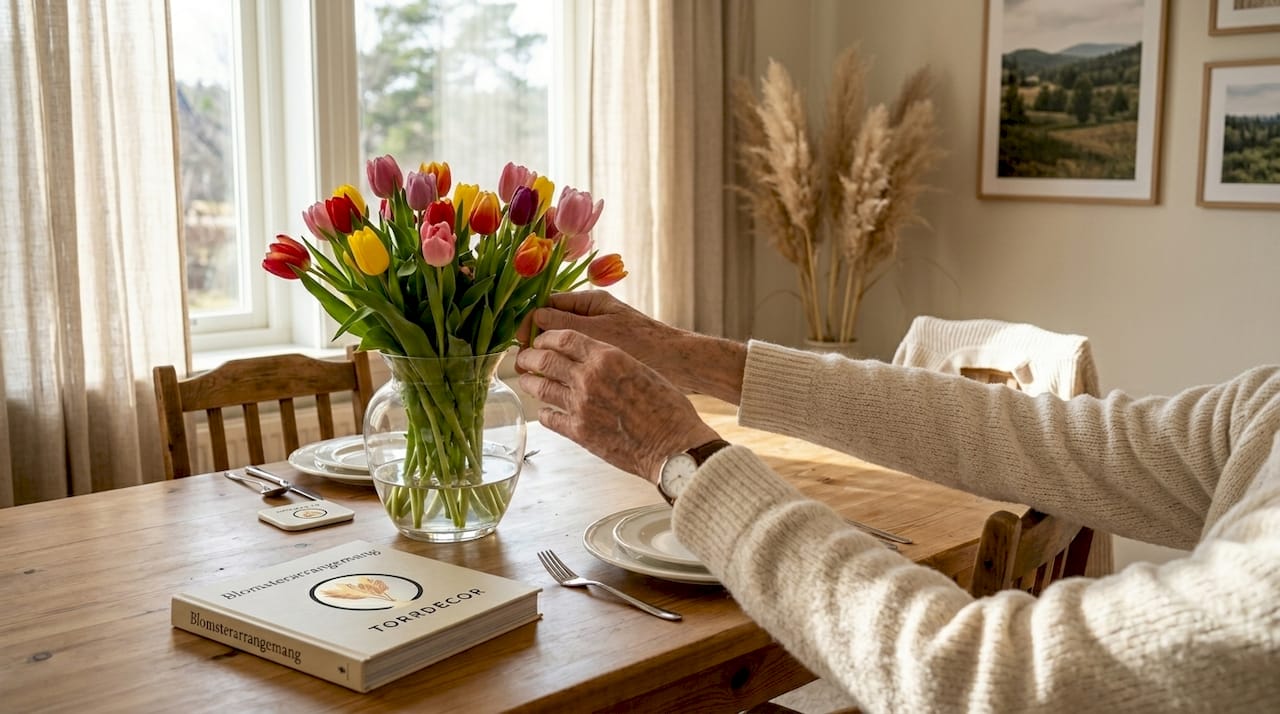
Consider where the vase will be placed. A sideboard, a windowsill, a dining table, and the floor require completely different sizes. Tall, narrow vases work well on narrow surfaces. Lower, wider vases are better suited for tables where you want the flowers to be visible without blocking the view.
Material Expressions and Practical Differences
Material affects both how the vase looks and how it's used in practice. Glass provides transparency and suits most homes, but it also shows the water and stems, requiring you to keep the vase clean. Ceramics provide warmth and stability and are excellent in Scandinavian and bohemian homes. Metal gives a more modern and industrial feel. Clay and stoneware, like the handmade vases from Portugal that Torrdecor offers, provide an organic and timeless expression that works with many different styles.
Pro tip: Choose materials based on how much care you want to put in. Opaque materials like ceramic and clay conceal the water and don't require as frequent cleaning to look tidy.
Step-by-Step: Choose the Right Vase for Flowers and Style
Now that you know the basics, it's time to go through a concrete approach. The best way to choose vases is to start with the flower type, then shape and opening, and finally interior design style.
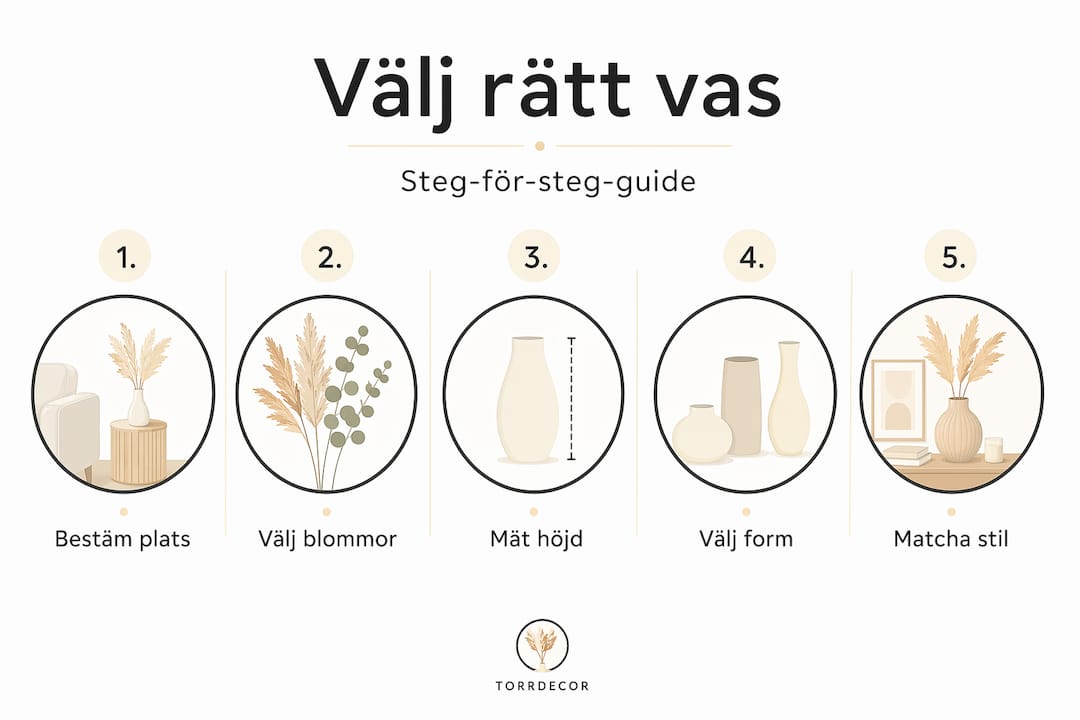
Step 1: Identify the Flower Type
Different flowers have different needs and behaviors in a vase. Here are the most common:
- Tulips continue to grow after being placed in a vase and therefore need space. A tulip vase of 15 to 20 cm in glass, slightly lower and wider, gives the flowers room to droop and move without falling out.
- Roses and amaryllis have long stems and need a tall, narrow vase that provides support along the entire stem. A cylinder vase of 25 to 35 cm works well.
- Mixed bouquets with varied heights fare best in a medium-sized vase with an opening wide enough to allow the flowers to spread naturally.
- Single flowers or solitaires fit in a small, narrow vase where a single flower can stand steadily and be seen without disappearing.
- Dried flowers and pampas grass need a stable base and the right height. Choose a vase heavy enough not to tip over and with the right proportions for the dried arrangement.
Step 2: Choose Shape and Opening
The size of the opening dictates how the bouquet is presented. A narrow opening holds the stems together, creating a sleek, controlled arrangement. A wide opening allows the flowers to spread, giving a more relaxed and natural look.
The vase's shape also affects the overall impression. Cylinder vases are neutral and suit most flower types. Spherical vases provide a softer feel and suit round bouquets. Conical vases, wider at the top, offer an airy appearance and suit loose arrangements. Ampel-shaped vases, narrower in the middle, provide stem support and are classic for roses.
Step 3: Compare Vase Types for Different Needs
| Vase Type | Height | Best suited for | Opening |
|---|---|---|---|
| Solitaire vase | 10 to 15 cm | Single flowers, sprigs | Narrow |
| Spherical vase | 15 to 20 cm | Round bouquets, tulips | Medium |
| Cylinder vase | 25 to 35 cm | Roses, amaryllis, long stems | Narrow to medium |
| Floor vase | 30 to 40 cm | Pampas grass, large dried arrangements | Wide |
| Conical vase | 15 to 30 cm | Loose, airy bouquets | Wide |
Step 4: Build a Basic Collection of Vases
A basic collection of 3 to 4 vases in different sizes covers most needs throughout the year. You don't need to buy everything at once. Start with a medium-sized spherical vase and a tall cylinder vase. Then add a small solitaire vase for single flowers and a floor vase for dried arrangements when you want to expand.
Pro tip: Choose vases in neutral colors like white, beige, grey, or natural tones. They suit all flower colors and work with most interior design styles without clashing.
Step 5: Match the Vase with the Interior Design Style
Designing with vases is about seeing the vase as part of the room, not just as a container for flowers. Here are some guidelines:
Scandinavian style suits simple forms in ceramic, clay, or white glaze. Bohemian style thrives with organic forms, terracotta, and natural materials. Modern and minimalist interiors benefit from narrow cylinder vases in glass or dark ceramic. Industrial style suits metal vases or raw stoneware vases.
You can read more about how to match vases with style in different rooms to find combinations that work in your home.
Care for Longer Durability
Choosing the right vase is only half the battle. How you care for the vase and flowers determines how long they last and how good they look.
Water Changes and Stem Trimming
The most common mistake is just refilling water without changing it. Bacteria quickly accumulate in stagnant water and shorten the bouquet's lifespan. Changing water every other day and re-trimming the stems diagonally often doubles the lifespan compared to just refilling.
Diagonal cuts increase the stem's surface area, allowing the flower to absorb more water. Remove any leaves that fall below the waterline, as they will rot and create bacteria.
Vase Material and Cleaning
Glass vases require regular cleaning because algae and lime deposits are clearly visible. Clean with a little vinegar and water, or use a bottle brush to reach the bottom. Ceramic and clay vases are easier to keep clean because the material is opaque, but they still need to be rinsed thoroughly between each bouquet.
Metal vases can react with the flowers' natural acids and shorten their lifespan. Use a plastic liner or change the water more frequently if using metal vases for fresh flowers.
Placement in the Room
Where you place the vase plays a big role in how long the flowers last. Placing them away from fruit and heat sources significantly extends their durability. Ripe fruit releases ethylene gas, which accelerates the aging of flowers. Direct sunlight and radiators dry out flowers faster.
- Avoid placing near fruit bowls
- Keep the vase away from direct heat sources like radiators and fireplaces
- Direct sunlight is negative for fresh flowers but can work for dried arrangements
- Drafts and cold air from open windows can also negatively affect them
Dried Flowers in Vases
Dried flowers and pampas grass require no water care at all, making them a convenient option. However, there are still a few things to consider. Place them away from direct sunlight, which can fade their colors. Dust them gently with a dry brush or a hairdryer on a low, cool setting. Choose a vase with sufficient weight and stability so the arrangement doesn't tip over.
You can learn more about how to dry flowers at home to create durable decorations that last a long time in a vase.
Pro tip: Dried flowers in a ceramic or clay vase create a cohesive, natural look that stays fresh for months without maintenance.
Common Mistakes and How to Avoid Them
Even with the right basic knowledge, it's easy to make mistakes. Here are the most common problems and how to solve them.
The Vase is Too Tall or Too Short
If the vase is too tall in relation to the flowers, the flower heads disappear inside the vase and are barely visible. If the vase is too short, the stems fall outwards, and the bouquet loses its shape. Remember the rule of thumb: the vase's height should be half to two-thirds of the stem length.
The Vase is Too Wide for the Bouquet
A wide opening without support causes the flowers to spread out and fall apart. The solution is to use floral tape or a floral frog. Floral tape in a grid over the vase's opening gives each stem its own compartment and holds the bouquet in place. It's a simple and inexpensive solution that works great for wide bowls and decorative vases with large openings.
- Tape a grid with floral tape over the vase opening
- Use a floral frog at the bottom of the vase for extra support
- Choose a vase with a narrower opening next time if the problem occurs frequently
The Vase is Heavy and Unstable
Tall, narrow vases can easily tip over, especially if placed on edges or in areas where they might be bumped. Always choose a vase with a stable base in relation to its height. A floor vase with a wide base is safer than a narrow cylinder vase on a high surface.
Keep in mind that heavy ceramic and clay vases can damage furniture surfaces if dragged. Always use a cork or felt coaster to protect the table.
The Vase Doesn't Match the Room
It happens that you buy a vase that looks nice in the store but doesn't fit at home. This is often because you haven't considered the room's other colors, materials, and style. Look at what you already have in the room and choose a vase that complements without clashing. Neutral tones and simple shapes are always a safe choice if you're unsure.
You can explore different vase shapes and styles to get inspiration and find what suits your room.
My View on Vase Selection and Interior Design
I have worked with interior details for a long time, and what I see over and over again is that people underestimate the role of the vase. They think of it as an accessory, almost a necessary evil for flowers to have somewhere to stand. But that's the wrong way to look at it.
A well-chosen vase can elevate an entire room. I have seen simple, white clay vases transform a neutral living room into something personal and thoughtfully designed. And I have seen expensive bouquets ruined by the wrong vase, either too large, too shiny, or the wrong shape for the flowers' character.
What I've learned is to start with a basic collection. Three to four vases in the right sizes go a long way. You don't need a large collection. You need the right selection. A small solitaire vase, a medium-sized spherical vase, and a tall cylinder vase cover most situations throughout the year. Then add a floor vase when you want to work with dried arrangements and pampas grass.
The other thing I want to say is to dare to experiment with materials. Ceramic and clay offer an expression that glass can never provide. They feel more alive, more handmade. It's no coincidence that handmade vases from Portugal have become so popular. They carry a sense of craftsmanship and durability that perfectly suits dried plants and natural materials.
Lastly: see the vase as part of the interior design, not as a temporary element. Choose vases you actually like to see even when they are empty. Then you have made the right choice.
— Torrdecor
Find the Right Vases at Torrdecor
If you want to put what you've learned in this guide into practice, Torrdecor is a great place to start. Torrdecor offers a carefully selected range of decorative vases in white clay, made in Portugal. They are designed to work with both fresh and dried flowers, and they fit into most modern homes.
The vases come in several sizes and shapes, making it easy to build a basic wardrobe that covers all your needs throughout the year. The material is durable, easy to keep clean, and provides a timeless expression that doesn't age with trends. Torrdecor combines the vases with a wide selection of dried bouquets and pampas grass, so you can create complete arrangements without hassle. Read more about Torrdecor's offering and find vases that suit your interior and style.
FAQ
How tall should a vase be in relation to the flowers?
The vase's height should be approximately half to two-thirds of the flower stems' length. This provides natural balance and an aesthetically pleasing result.
Which vase is best suited for tulips?
A tulip vase of 15 to 20 cm in glass, slightly lower and wider, works best. Tulips continue to grow in the vase and need room to move.
How do I extend the bouquet's durability in the vase?
Change the water every other day and re-cut the stems at an angle. Place the vase away from fruit and heat sources to avoid ethylene gas and dehydration.
How many vases do I need at home?
A basic wardrobe of 3 to 4 vases in different sizes covers most needs. A small solitaire vase, a medium-sized globe vase, a tall cylinder vase, and possibly a floor vase for dried arrangements go a long way.
What do I do if the flowers fall apart in the vase?
If the vase has a wide opening, you can tape a grid of floral tape over the opening or use a flower frog at the bottom. This provides support for each stem and keeps the bouquet together.
0 comments