

TL;DR:
- Dried flowers are a sustainable and low-maintenance option for Swedish interior design.
- The right choice of flowers and drying method is crucial for a beautiful, long-lasting result.
- Placement, care, and avoiding moisture prolong the bouquet's lifespan and beauty.
Creating a bouquet that still looks beautiful in a year sounds like a challenge. Fresh flowers wilt within days, and constantly buying new ones can feel wasteful. Dried flower bouquets solve that problem simply. They require minimal maintenance, fit perfectly in Swedish homes with dry indoor air, and can last for months or even years. In this guide, we'll go through everything you need to know, from choosing the right flowers to arranging and caring for your bouquet, ensuring a truly lasting result.
Table of Contents
- Choose the right flowers and materials for drying
- Prepare and dry the flowers – step-by-step
- Tie and arrange your bouquet – balance and technique
- Avoid common mistakes and make your bouquet last
- Why dried flower bouquets are the smart solution for Swedish homes
- Explore Torrdecor – beautiful dried flowers and pampas grass
- Frequently asked questions about dried flower bouquets
Key Insights
| Point | Details |
|---|---|
| Choosing the right flowers | Select dry-friendly varieties and materials that suit your style and environment. |
| Drying process | Follow step-by-step with the right environment and time – avoid moisture, pick at the right stage, and dry loosely. |
| Bouquet design | Create balance, airiness, and variety for an aesthetically pleasing and durable result. |
| Maintenance and tips | Dust the bouquet regularly and avoid common mistakes for maximum longevity. |
Choose the right flowers and materials for drying
The foundation of a durable dried bouquet starts with the right flower choice. Not all flowers are equally suitable for drying, and choosing incorrectly can lead to the bouquet collapsing or losing its shape within weeks.
The best flowers for drying include eucalyptus, thistles, lavender, hydrangeas, roses, poppies, baby's breath, statice, strawflowers, and ornamental grasses. These flowers naturally contain little moisture and have a stable structure that preserves well during the drying process.
Flowers well-suited for drying:
- Lavender: retains its scent and purple color for a long time
- Strawflowers: almost indestructible and available in many colors
- Hydrangeas: add volume and dry with beautiful texture
- Ornamental grasses and pampas grass: provide airiness and movement
- Thistles: hold their shape perfectly and give a rustic feel
- Eucalyptus: retains its green hue and smells lovely
Regarding drying methods, there are three main options. Air drying is the simplest and most common method, suitable for most flowers. You simply hang the bouquet upside down in a dark, dry, and airy room. Silica gel is a desiccant that absorbs moisture quickly and is suitable for more delicate flowers like roses, as it preserves their shape better. The oven method (around 50°C) is the fastest but risks making the flowers more brittle and can damage fragile varieties.
| Flower Type | Recommended Method | Approximate Lifespan |
|---|---|---|
| Lavender | Air drying | 1 to 2 years |
| Hydrangea | Air drying | 6 to 12 months |
| Rose | Silica gel | 6 to 12 months |
| Strawflowers | Air drying | Several years |
| Pampas Grass | Air drying | 1 to 3 years |
| Thistles | Air drying | 1 to 2 years |
The choice of vase also plays a significant role in the final result. A tall and narrow vase provides support for long stems and creates an elegant expression. A wide and lower vase is better suited for compact arrangements with a lot of volume. Clay vases in neutral tones, like the handmade vases from Portugal, are a popular choice for sustainable interior design as they complement the natural tones of dried flowers without competing with them.
Dried flowers are also excellent as part of decorative interior design throughout the home, not just as table decor. Place them in a corner, on a bookshelf, or on a windowsill for a natural and thoughtful impression. If you want to read more about what goes into a well-composed bouquet, you can find inspiration on materials and styling for dried arrangements.
Prepare and dry the flowers – step-by-step
Once you have the right flowers, it's time to prepare and dry them correctly. This is a step that many skip too quickly, but it actually determines the quality of the final result.
The most important thing is to pick the flowers at the right stage. Flowers that are just about to open, i.e., in bud or semi-open, dry best and retain their shape the longest. Fully bloomed flowers risk losing petals during drying.
Step-by-step guide to drying flowers:
- Pick flowers early in the morning when they are at their freshest
- Remove excess leaves along the stem, but leave the upper leaves intact
- Tie small bunches with a rubber band or string, a maximum of five to seven stems per bunch
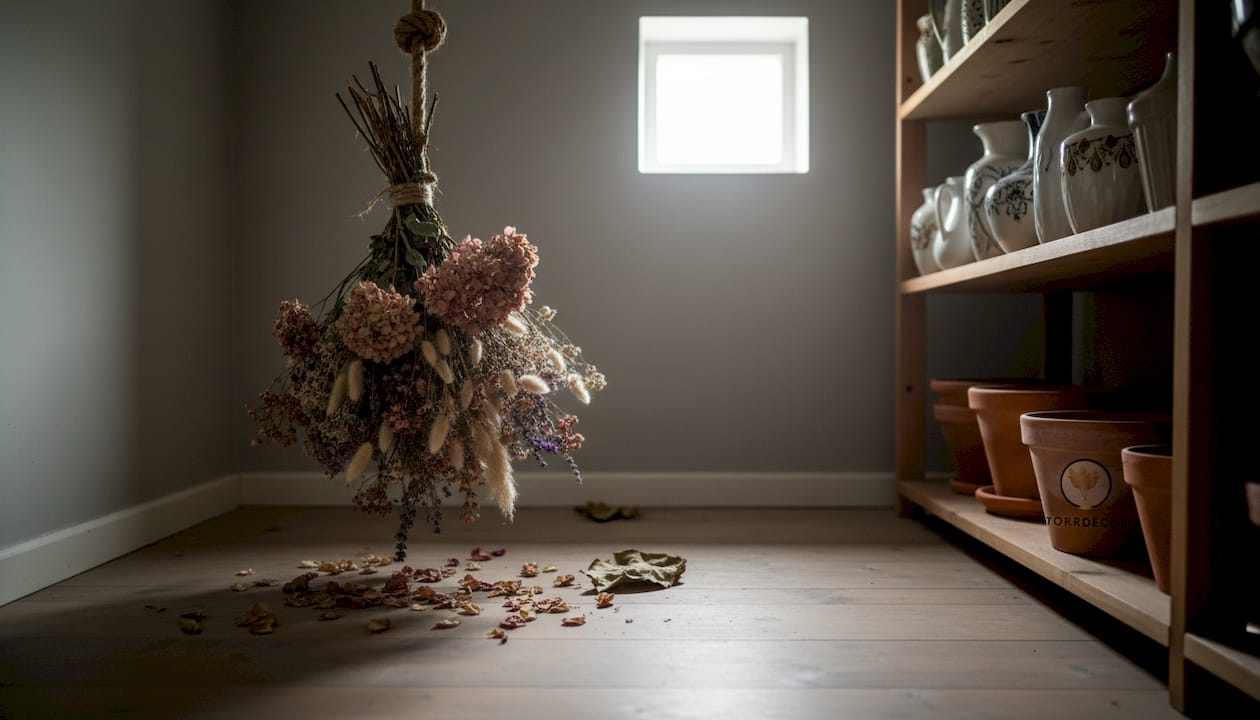
- Hang the bouquet upside down in a dark, dry, and airy room
- Leave to hang for 2 to 4 weeks until the stems feel brittle
- Regularly check for any signs of mold
The environment where you dry plays a big role. The room should be dark to prevent colors from fading, dry to avoid mold, and airy so that moisture can evaporate evenly. A storage room, a closet with air circulation, or a well-ventilated bedroom works well.
| Method | Drying Time | Suitable For | Risk |
|---|---|---|---|
| Air drying | 2 to 4 weeks | Most flowers | Low |
| Silica gel | 2 to 7 days | Delicate flowers | Medium |
| Oven (50°C) | 2 to 6 hours | Robust flowers | High |
Pro tip: Never pick flowers after rain or in the evening. Moisture in the flower at the time of drying is the most common cause of mold and poor results. Always wait until the flower is dry on the surface.
Once the flowers are ready, you can start thinking about how to care for them long-term. Feel free to read our guide on caring for dried flowers to keep the bouquet fresh for as long as possible. We also have a comprehensive care guide for dried plants that gives you a good overall picture.
Tie and arrange your bouquet – balance and technique
Once the flowers are dry, it's time to tie and arrange the bouquet itself. This is where your personal style can shine through, but there are a few techniques that make a big difference to the final result.
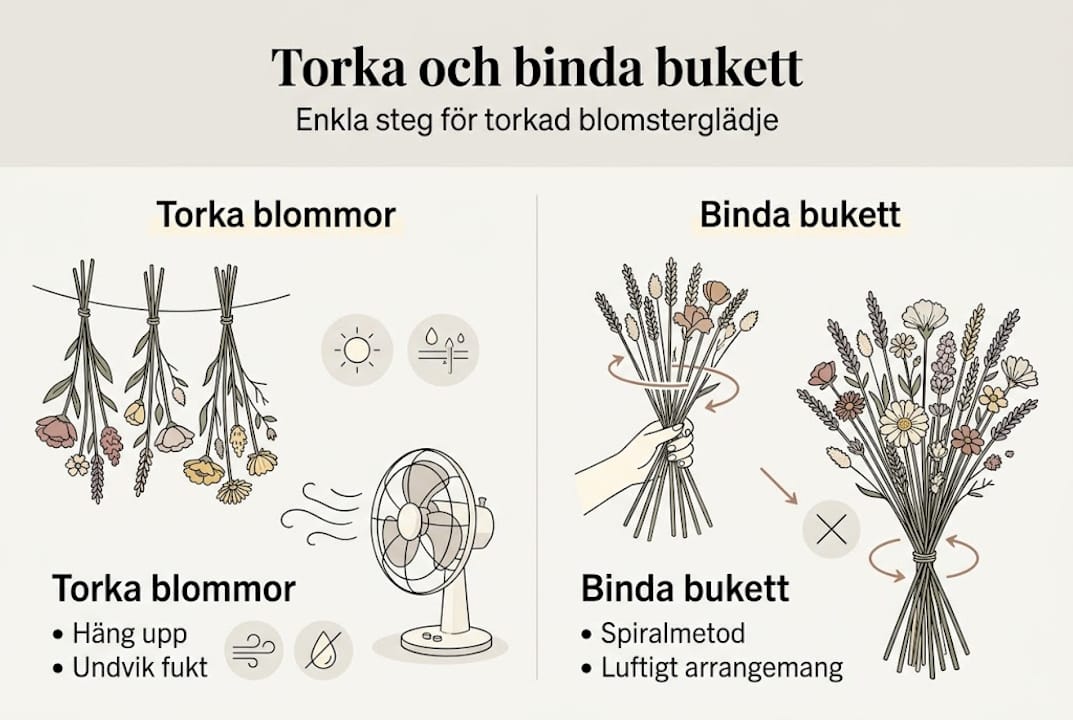
The spiral technique is the most common method for tying bouquets. You add one flower at a time and rotate the bouquet slightly with each addition, so that the stems form a spiral shape in your hand. This gives the bouquet a natural flow and makes it easy to place in a vase without the stems crossing each other in a disorderly manner.
Arrange the bouquet with height in the middle, falling stems at the edges, and empty spaces that provide airiness. This creates a balanced composition that looks thoughtful without being stiff.
Steps to tie a harmonious bouquet:
- Start with the longest and most structural stems in the middle
- Add flowers with volume, such as hydrangeas or dried roses, around them
- Fill in with lighter materials like ornamental grasses or baby's breath
- Finish with branches or eucalyptus for a natural frame
- Tie together with string or florist tape just below the flower heads
- Cut the stems evenly at the bottom so the bouquet stands stably in the vase
Create with color, texture, and volume to give the bouquet life. Feel free to combine contrasting textures, such as soft pampas grass against hard thistles, for an interesting visual depth.
Good combinations for dried bouquets:
- Pampas grass plus lavender plus eucalyptus: classic and neutral
- Hydrangea plus strawflowers plus baby's breath: romantic and airy
- Thistles plus wheat plus ornamental grasses: rustic and natural
- Roses plus statice plus branches: elegant and timeless
Pro tip: Always leave a little air between the flower heads when tying. Dried flowers are more fragile than fresh ones and can break if pressed too hard against each other. The air also gives the bouquet a more natural and lively expression.
The shape of the vase affects how the bouquet is perceived. A tall vase highlights long stems and creates a dramatic impression. A wide and lower vase is better suited for compact arrangements. Get more inspiration on trendy decor tips to find a style that suits your home.
Avoid common mistakes and make your bouquet last
All the work is done, now it's about ensuring the bouquet's long-term quality. There are some mistakes that are easy to make but simple to avoid once you know what to look out for.
Common drying mistakes include drying flowers too close together, placing them in direct sunlight, harvesting them too late when they are already fully bloomed, and tying bouquets that are too large and don't get enough air circulation.
Checklist, avoid these mistakes:
- Are you drying too close together? Give each bunch room to breathe
- Are you placing the bouquet in the sun? Move it to a shady spot
- Is the room humid? Choose a drier room or use a dehumidifier
- Is the bouquet too large? Divide into smaller bunches during drying
- Did you harvest too late? Choose semi-open buds next time
Moisture is the biggest enemy of dried flowers. A humid room quickly leads to mold, and direct sunlight makes colors fade in just a few weeks. Both problems permanently destroy the bouquet.
Once the bouquet is ready and placed in your home, you need to care for it regularly. Avoid moisture and sunlight and dust the bouquet regularly with a soft brush or a hairdryer on a low, cool setting. This keeps the bouquet fresh and prevents dust from collecting in the flower heads.
A simple trick to extend its lifespan even further is to lightly spray the bouquet with hairspray. This strengthens the delicate petals and reduces the risk of them falling off when touched. Hold the spray can at least 30 centimeters away and use a thin layer.
It's also worth considering where in your home you place the bouquet. Bathrooms and kitchens are generally too humid. Living rooms and bedrooms with normal indoor air work best. Feel free to compare how dried flowers perform against plants vs. fresh flowers to understand the practical benefits.
Want to know more about how to create sustainable floral decor that is both beautiful and climate-smart? We have gathered practical advice on care and maintenance for those who want their bouquet to last as long as possible.
Why dried flower bouquets are the smart solution for Swedish homes
We often talk about dried flowers as a practical choice, but it's actually more than that. It's a conscious choice that suits the Swedish lifestyle in a way that fresh flowers rarely do.
Swedish homes generally have dry indoor air, especially during the winter months when the heaters are on. This is actually a perfect environment for dried flowers. While fresh flowers wilt quickly in dry air, dried flowers thrive. It's not a compromise, it's the best choice for Swedish conditions.
There's also an environmental aspect that deserves more attention. Buying a dried bouquet once and having it for a year is obviously better for the environment than buying fresh flowers every week. Creating sustainable environments at home is not just about materials but also about how long products are used.
Another benefit that is rarely mentioned is flexibility. You can change parts of the bouquet seasonally or to suit your taste without starting from scratch. Add a few branches with autumn colors in October, switch to lighter tones in April. This allows you to make environmentally friendly choices without sacrificing aesthetics.
Dried flowers are not a trend that will disappear. They are a natural part of sustainable interior design that is only growing in popularity.
Explore Torrdecor – beautiful dried flowers and pampas grass
Want to take the next step and discover beautiful pre-made bouquets or materials? At Torrdecor, you'll find a carefully selected assortment of dried flowers, pampas grass, and decorative vases that suit Swedish homes.

We offer everything from classic pampas grass for bouquets in natural beige tones to ready-made dried arrangements that you can easily place directly in your home. Our vases are handmade in Portugal and designed to complement the natural tones of dried plants. With us, you'll find products that require minimal maintenance and last a long time, just as a dried bouquet should. Read more about what we offer and what drives us on our about Torrdecor page. We help you create a home that looks beautiful all year round.
Frequently asked questions about dried flower bouquets
How long does a dried flower bouquet last?
A dried bouquet typically lasts months to years if placed in a dry, dark room away from direct sunlight. With proper care, many bouquets can last over a year.
Can you dry all flowers yourself?
Most flowers can be dried at home, but strawflowers and ornamental grasses are the easiest to start with. More delicate varieties like roses require silica gel for the best results.
How do I prevent dried flowers from becoming unsightly or molding?
Place the bouquet in a dry and airy room and avoid humid environments like bathrooms. Avoid direct sunlight and dust regularly with a soft brush to keep the bouquet fresh.
How do you dry flowers extra quickly?
Silica gel or an oven at around 50°C speeds up drying but can make delicate flowers more brittle. Air drying generally gives the best and most durable results.
0 comments