

TL;DR:
- Creating your own pampas bouquet is a sustainable and personal project that requires the right materials and spiral binding for stability. With careful preparation and care, the bouquet can maintain its beautiful shape for several years and suit various interior design styles.
The soft, feathery plumes of pampas grass have found their way into Swedish homes in a way few decor trends have before. Making your own pampas bouquet is not just a creative project; it's a way to create something personal, sustainable, and beautiful that lasts for months without needing to be replaced. Many find that store-bought bouquets rarely fit exactly the style or color scheme they are looking for. This guide will show you, step by step, how to choose materials, bind your bouquet using the spiral technique, and care for it so that it lasts a long time.
Table of Contents
- Key Takeaways
- Materials and Tools for Your Pampas Bouquet
- Step-by-Step: The Spiral Technique for Pampas
- Creative Variations and Arrangements
- Care and Durability for Pampas Bouquets
- My View on DIY Pampas Bouquets
- Find Your Pampas at Torrdecor
- Frequently Asked Questions
Key Takeaways
| Point | Details |
|---|---|
| Choose the right materials | Combine different types of pampas grass and complementary dried materials for the best results. |
| Spiral technique provides stability | Spiral binding creates a balanced bouquet that can stand on its own in a vase. |
| Preparation is crucial | Thoroughly clean and trim the stems before you start binding to avoid problems later. |
| Care extends lifespan | Keep the bouquet away from moisture and dust to preserve its appearance for many months. |
| DIY adds a personal touch | A self-bound bouquet gives you full control over size, color, and style. |
Materials and Tools for Your Pampas Bouquet
Starting with the right materials is half the battle. Before you begin making your own pampas bouquet, you need a clear idea of what's required, both in terms of raw materials and tools.
Types of Pampas Grass
Pampas grass comes in several varieties with different characteristics. Natural beige pampas grass is the most classic choice and fits almost any interior design style. Pink and white pampas grass gives a softer and more romantic feel. Mini pampas, which is shorter and more compact, is excellent for smaller arrangements or as a complement to a larger pampas floral arrangement.
Dried pampas bouquets are popular precisely because they combine aesthetics with durability, making them a smart choice for home decor. Choose stems with dense and fluffy plumes. Thin or damaged plumes will result in a poorer final product.
Complementary Materials
In addition to pampas grass, you can use dried flowers such as Lagerstroemia, Lunaria, or Eucalyptus to give the bouquet more texture and depth. These materials complement the soft lines of pampas and create a more cohesive expression. Some choose to use up to 30% recycled material in their bouquets to make the decor more environmentally friendly.
Tools You'll Need
| Tool | Usage |
|---|---|
| Pruning shears | Cut stems to the correct length and diagonally for better stability |
| Floral wire | Holds the bouquet together during binding |
| String or ribbon | Decorative finish that secures the bouquet |
| Measuring tape | Helps you maintain even stem length |
| Vase | Choose one with the right opening for the bouquet size |
Pruning shears, floral wire, and string are the three most important tools for a stable and attractive result. It's a good idea to buy pruning shears with a good grip. This makes the work easier and reduces the risk of damaging the stems.
Preparations Before Binding
Lay out all materials on a table before you start. Sort the stems by length and thickness. Remove loose leaves and any damaged parts. This saves time and gives you a better overview when you start binding.
Pro Tip: Let the pampas grass lie flat in a dry room for 24 hours before binding the bouquet. This makes the stems more flexible and reduces the risk of them cracking during binding.
Step-by-Step: The Spiral Technique for Pampas
The spiral technique is the method that gives you a stable, well-balanced bouquet that holds its shape even when you place it in a vase. It's the technique professionals use, but it's entirely possible to learn at home with a little patience.
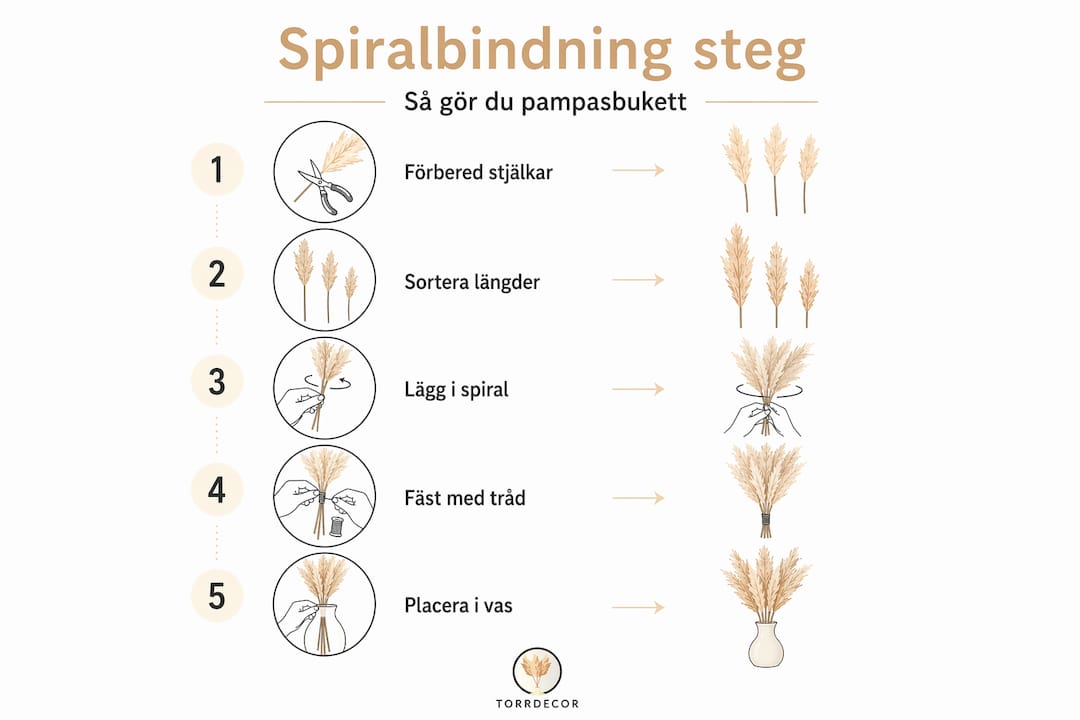
Preparing the Stems
Start by trimming off all leaves and side shoots from the bottom third of each stem. Leaves left behind will dirty the water and can shorten the bouquet's lifespan if you plan to place it in water. For dried bouquets, the same principle applies. Clean stems give a cleaner and more professional impression.
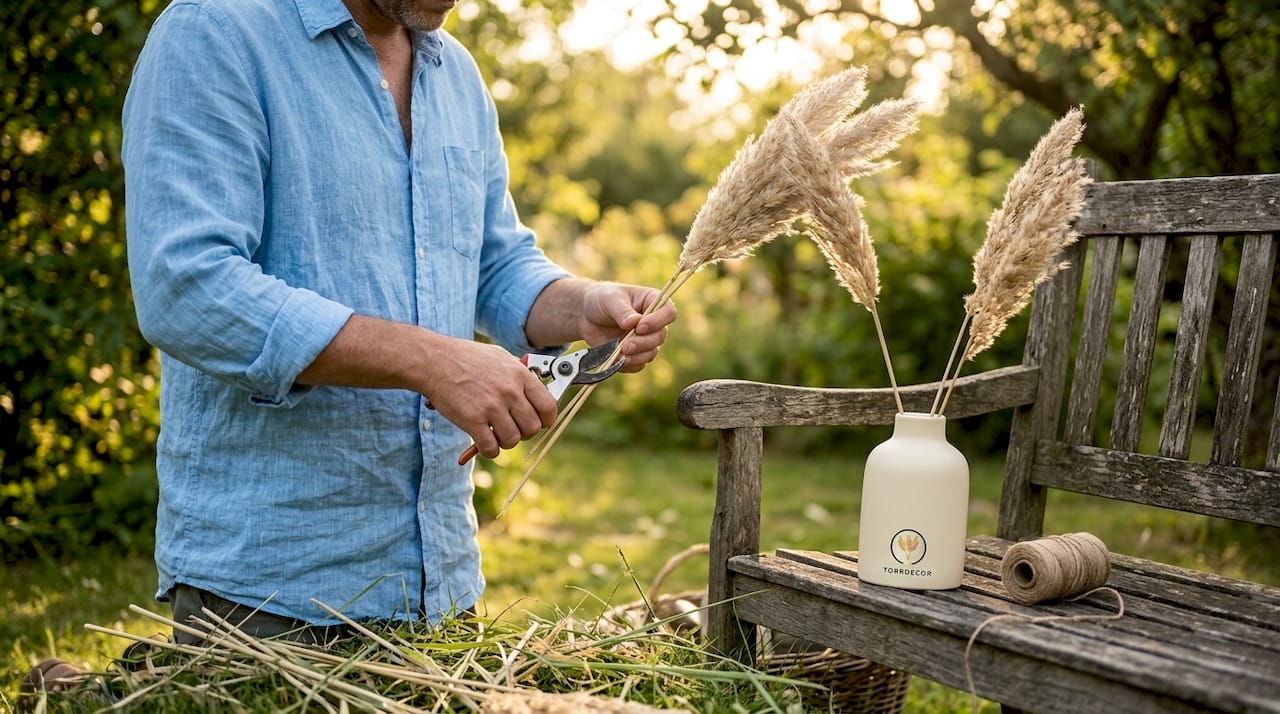
Cut all stems to approximately the same length. A good starting point is 40 to 60 centimeters, depending on the size of the vase you intend to use. A variation of a couple of centimeters is perfectly fine and actually gives a more natural look.
Binding with the Spiral Technique
Follow these steps to bind your pampas bouquet using the spiral technique:
- Hold the first stem in your non-dominant hand, approximately one-third up from the bottom. This is where you will hold the entire bouquet during binding.
- Add the second stem at an angle to the first, so they cross each other at your hand. Twist the bouquet slightly in one direction, for example, clockwise.
- Continue adding stems one at a time, always at the same angle and always with a slight twist after each addition. This movement creates the spiral.
- Alternate pampas grass with complementary materials if you are using them. Place thicker stems towards the center and thinner ones towards the outside for better balance.
- Check the bouquet regularly by placing it on the table. It should be able to stand on its own. If it leans, adjust the stems' position before continuing.
- Secure the bouquet with floral wire precisely at the point where you have been holding it. Wrap around three to four times and tie securely.
- Trim the stems evenly at the bottom with pruning shears. Cut diagonally if the bouquet is to stand in water, straight if it is to remain dry.
- Finish with a decorative ribbon or string around the binding point. Tie a nice bow or a simple knot depending on your style.
Spiral binding creates an evenly distributed bouquet that can stand on its own, which is exactly what you want to achieve with a DIY pampas arrangement.
Creating Volume and Balance
Volume is created by placing stems with fluffy plumes towards the outside of the bouquet and more compact stems in the middle. Think of the bouquet as a hemisphere. The center should be slightly higher than the edges. This gives a natural and airy look, similar to how pampas grows in nature.
Pro Tip: Never bind the bouquet too tightly with floral wire. Dried stems are more brittle than fresh ones and can crack if the wire is pulled too much. Moderate tightening is enough to hold everything in place.
If you want to learn more about how to best prepare your pampas grass, there are detailed tips on drying pampas grass at home that can give you a good starting point.
Creative Variations and Arrangements
Once you master the basics, there are many ways to develop your DIY pampas arrangement and create something that truly reflects your personality and home. Creating your own bouquet offers a freedom and personal touch that ready-made options rarely can match.
Combine with Other Dried Materials
Pampas works wonderfully with a range of other dried plants and flowers. Here are some combinations that yield beautiful results:
- Lagerstroemia and pampas create a dramatic contrast with their round, structured flower heads against the soft plumes of pampas.
- Eucalyptus and pampas create a fresh and natural look with a subtle fragrance that lingers.
- Lunaria (Honesty) and pampas give an airy and translucent impression thanks to Lunaria's silvery discs.
- Dried roses and pampas are perfect for a romantic or bohemian home.
- Wheat or rye and pampas provide a rustic and warm feeling that works well in autumn decor.
Combinations of pampas with dried flowers create unique arrangements that you can adapt completely to your taste and home.
Pampas Bouquet Summer Tips
Summer is an excellent time to create floral arrangements with pampas in lighter and airier tones. Choose white or light beige pampas grass and combine with dried summer flowers like sunflowers or lavender. Place the bouquet in a light ceramic vase near a window for a sunny and summery impression. This is one of the best pampas bouquet summer tips you can follow to get an arrangement that feels season-appropriate without requiring monthly replacement.
Adapt to Your Interior Design Style
The bouquet's appearance changes significantly depending on the vase you choose and how you present it. Some guidelines:
- Minimalist style: Use a single type of pampas in a simple, cylindrical vase. Keep the stems long and straight.
- Bohemian style: Mix many different materials and colors. Choose a round or irregular vase made of ceramic or clay.
- Scandinavian style: Beige and white pampas in a narrow, tall vase of white clay. Simple and clean.
- Rustic style: Combine pampas with wheat and dried herbs in a basket or a rustic ceramic vase.
You'll find inspiration and tips for stylish pampas use that can help you find the perfect combination for your home.
Presentation and Storage
Place the bouquet where it's visible but not exposed to direct sunlight for long periods. Direct sunlight bleaches pampas grass faster than necessary. A shelf, a side table, or an entryway are excellent locations. Avoid bathrooms and kitchens where humidity is high.
Care and Durability for Pampas Bouquets
A well-maintained pampas bouquet can last one to three years without losing its character. It doesn't require much work, but there are a few things to consider to preserve the bouquet's appearance for as long as possible.
Protect from Moisture and Dust
Moisture is the biggest enemy of dried pampas bouquets. Never place the bouquet in a room with high humidity. If you live in a humid climate, it might be worth using a dehumidifier in the room where the bouquet is kept. Dust gradually accumulates on the plumes, making them heavier and greyer over time.
Caring for dried pampas bouquets primarily involves avoiding moisture and dust, which are the two most common reasons a bouquet loses its appearance prematurely.
Cleaning and Freshening
Dust off the bouquet with a soft brush or a hairdryer on a low, cool air setting about once a month. Keep the hairdryer at least 30 centimeters away to avoid damaging the delicate plumes. Avoid using damp cloths or any type of spray.
If individual stems start to look tired, you can remove them and replace them with new ones without having to re-bind the entire bouquet. Gently loosen the tie, remove the damaged stem, and insert a new one before re-tying the ribbon.
Pro Tip: Store your pampas bouquet in a paper bag or a loose fabric cover if you won't be using it for a period, for example, during a move. This protects against dust and mechanical damage without trapping moisture.
Common Problems and Solutions
It happens that pampas grass starts to shed some of its fibers, especially in the first few days after you bring it home. This is normal and quickly subsides. If shedding continues, you can gently spray the plumes with a thin layer of hairspray from a suitable distance. This binds the fibers without significantly changing the appearance.
Faded colors are a sign that the bouquet has been in too strong sunlight. Move it to a shadier spot. You cannot restore the original color, but you can slow down further fading.
My View on DIY Pampas Bouquets
I've followed the trend of dried pampas bouquets closely over the past few years, and what strikes me is how often people underestimate their own ability to create something truly beautiful at home. Many believe it requires floristry training or expensive tools. That's not true.
What I've learned is that the most important thing isn't perfection but proportion. A bouquet that is slightly uneven or has a stem sticking out more than the others actually looks more natural than one that is geometrically precise. Nature isn't symmetrical, and neither does your bouquet need to be.
What I do see as a common misconception, however, is that all types of pampas grass are alike. They are not. The thickness of the stems, the density of the plumes, and the moisture content of the material when you buy it all affect how the bouquet behaves when you bind it and how long it lasts. I always recommend buying from a supplier who can answer questions about origin and drying method.
Another thing I've noticed is that people replace their pampas bouquets too often. A well-cared-for bouquet doesn't need to be replaced until it truly looks worn out. That can take two years or more. Creating your own bouquets is about sustainability, not about following every new trend. That's what makes it meaningful.
— Torrdecor
Find Your Pampas at Torrdecor
Torrdecor is one of Sweden's leading suppliers of dried plants and pampas grass for home decor. The assortment is carefully selected with a focus on sustainability, long lifespan, and aesthetic quality. Whether you're looking for classic beige pampas grass, pink varieties, or complementary dried flowers, there are options to suit your style and project.

At Torrdecor, you'll also find handmade white clay vases from Portugal that perfectly complement your self-bound pampas bouquets. The vases are designed to enhance the natural and organic expression that pampas offers. Read more about the company's vision and offerings on the about us page and get inspired by an assortment that makes it easy to create beautiful, sustainable decor without fuss.
Frequently Asked Questions
Which pampas grass is best suited for a homemade bouquet?
Beige and white pampas grass with dense, fluffy plumes gives the best results for a homemade bouquet. Choose stems of even thickness and without visible damage for a professional look.
How long does a pampas bouquet last?
A well-maintained pampas bouquet lasts for one to three years. Store it dry, away from direct sunlight, and dust it regularly with a soft brush for best results.
What do I do if the pampas grass sheds fibers?
It's normal for pampas grass to shed a little fiber at first. If it doesn't stop after a few days, you can carefully spray the plumes with a thin layer of hairspray from a suitable distance to bind the fibers.
Can I combine pampas with fresh flowers?
Pampas pairs better with dried flowers than with fresh ones. Fresh flowers require water and moisture, which damages the dried pampas grass. Instead, combine it with dried eucalyptus, lagerstroemia, or lunaria.
How do I tie the bouquet so that it keeps its shape?
Use the spiral technique where you add one stem at a time at a fixed angle and rotate the bouquet clockwise after each addition. Secure with floral wire at the holding point and finish with a decorative ribbon.
0 comments