

TL;DR:
- A basic vase wardrobe with four models – small solitaire vase, medium globe-shaped, tall cylinder vase, and floor vase – covers most interior design needs. Material and size influence the vase's expression and function, while the right choice of shape and proportions creates harmonious bouquets. Vases are also used as independent decorative details to create stylish and durable home decor.
A checklist for interior vases is a practical tool that helps you choose the right size, shape, and material for your vases so they suit both your flowers and your interior style. The right vase makes a difference, not only as a flower holder but as an independent decorative detail in the home. The foundation is to build a functional vase wardrobe with four key models: a small solitaire vase, a medium globe-shaped vase, a tall cylinder vase, and a larger floor vase. With these four, you cover most everyday needs and can create stylish decor with vases all year round.
1. Checklist for interior vases: what sizes do you need?
A basic wardrobe with four models covers most everyday needs and gives you flexibility to vary your decor. It’s not about collecting many vases, but about having the right type for each situation. Here are the four basic models you should have at home:
- Small solitaire vase (up to 15 cm): Perfect for a single flower, a small twig, or as an accent detail on a desk or windowsill. The small vase is often the most personal and can change character with the seasons.
- Medium globe-shaped vase (15 to 25 cm): The round shape naturally holds a bouquet together and suits flowers with short to medium-long stems, such as roses, ranunculus, and anemones. The globe shape gives a soft and harmonious impression.
- Tall cylinder vase (25 to 40 cm): The cylinder vase is versatile and suits tall flowers like sunflowers, gladioli, and eucalyptus. It gives a clean and modern expression and works equally well on a dining table or a sideboard.
- Larger floor vase (40 cm and up): A floor vase creates a dramatic focal point in a corner, a hallway, or next to a sofa. It suits pampas grass, large dried arrangements, and long twigs.
Pro tip: Start with one vase in each size category before buying more. This gives you a complete foundation to work from and helps you see which types you actually use the most.
The vase's height and opening determine how the floral arrangement falls and looks. A narrow opening holds the stems together, creating a dense, structured arrangement. A wide opening gives the flowers more room to spread out and creates a looser, more natural impression. Matching the vase's proportions to the flowers' shape is central to making the bouquet look harmonious.
2. Material and color: what suits your interior style?
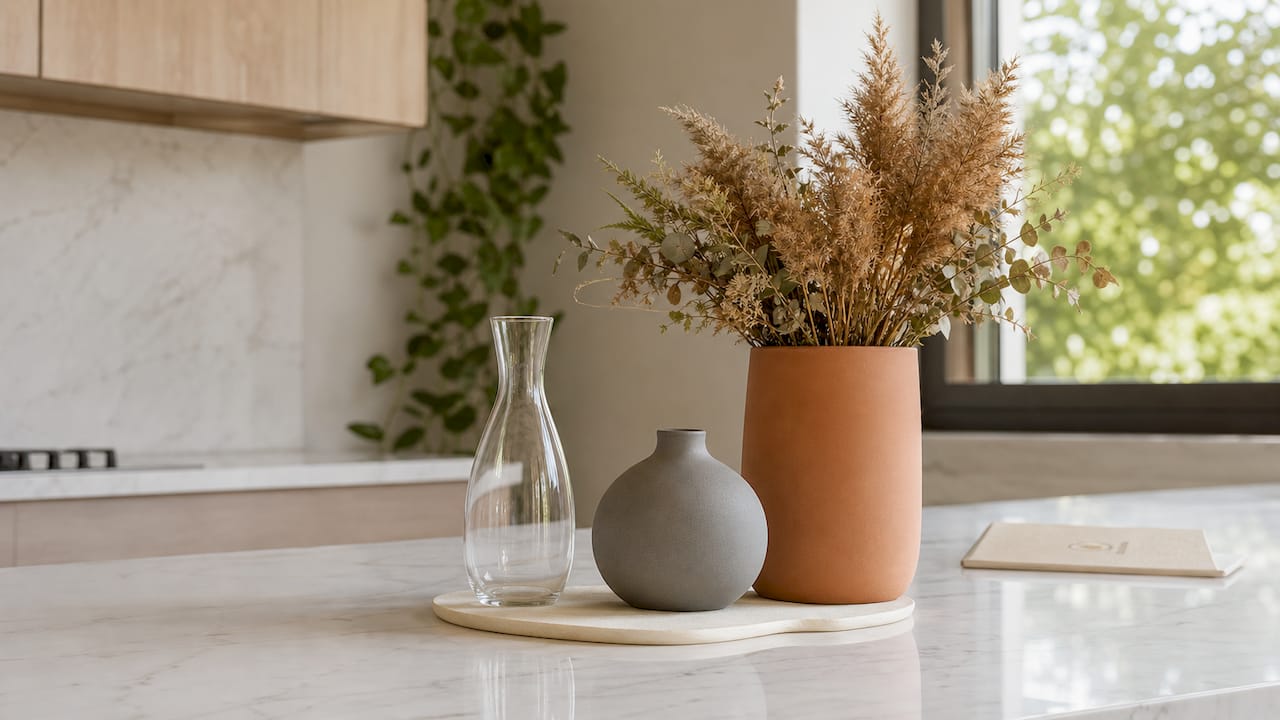
Material choice influences the vase's expression and function in a way that color alone cannot. Glass provides lightness and transparency, ceramic warmth and weight, metal a modern feel, and terracotta a rustic touch. This means you should choose materials based on the feeling you want to create in the room, not just based on what looks good in the store.
Here's a quick overview of how different materials suit different interior themes:
- Glass: Suits modern, minimalist, and Scandinavian styles. Its transparency allows the flower stems and water to be seen, giving a lively and natural impression. Requires regular cleaning to avoid discoloration.
- Ceramics and clay: Suits Nordic, bohemian, and country styles. White clay ceramics, like Torrdecor's vase models manufactured in Portugal, provide a craftsmanship and texture that elevates the entire room. Durable and easy to clean.
- Metal (brass, copper, steel): Suits industrial, modern, and art deco styles. Metal vases do not require water filling and are therefore excellent for dried arrangements.
- Terracotta: Suits rustic, Mediterranean, and bohemian styles. Its warm, earthy color serves as a natural base for dried plants and pampas grass.
Pro tip: Choose one or two materials to dominate your vase collection. This creates a common thread in the decor and makes it easier to change flowers and decor without the overall feel losing its character.
Color plays an important role, but neutral tones like white, beige, gray, and terracotta are more versatile than strong accent colors. A white ceramic vase fits almost all interior themes and can be combined with everything from fresh tulips to dried bouquets. Strong colors like cobalt blue or dark green work best as a deliberate focal point, not as a base in a collection.
3. The right vase for the right flower: tulips, dried bouquets, and pampas grass
Choosing a vase based on size and opening is more important than just color or shape for the bouquet to fall harmoniously and stay fresh longer. It’s one of the most common mistakes: people choose a vase because it's beautiful, but forget to check if the opening actually suits the flower stems. The result is an arrangement that sprawls or collapses.
The table below provides a quick reference for common flower types and their vase choices:
| Flower Type | Recommended Vase Type | Opening | Height |
|---|---|---|---|
| Tulips | Wide cylinder vase or tulip vase | Wide (8 to 12 cm) | 25 to 35 cm |
| Roses | Globe-shaped or narrow cylinder vase | Medium (5 to 8 cm) | 20 to 30 cm |
| Dried bouquets | Metal vase, ceramic, or terracotta | Medium to wide | 15 to 30 cm |
| Pampas grass | Large floor vase, ceramic, or terracotta | Wide (10 cm and up) | 40 cm and up |
| Eucalyptus and twigs | Tall cylinder vase | Narrow to medium | 30 to 50 cm |
| Ranunculus and anemones | Globe-shaped vase | Medium | 15 to 20 cm |
Tulips require the right space
Tulip vases come in various shapes and sizes, often with a wide opening to accommodate the growth of tulips and create a lush impression. Tulips continue to grow after they are cut, which means the vase must have sufficient height and opening for the flower to move freely. A too-narrow vase squeezes the stems and accelerates wilting.
Dried bouquets and their special requirements
For dried bouquets, you don't need a water-filled vase. This opens up more material choices, such as metal, terracotta, and opaque ceramics. Air-drying takes 2 to 4 weeks, while silica gel preserves color and shape better and faster in 1 to 2 weeks. This means you can plan your dried arrangements in advance and have them ready to place directly in the vase.
Placement is crucial for the durability of dried bouquets. Avoid direct sunlight and high humidity, as both accelerate fading and degradation. A dark, dry, and ventilated space yields the best results for extending the bouquet's lifespan. Read more about care of dried plants to maximize durability.
Pampas grass and large arrangements
Pampas grass requires a large, stable floor vase with a wide opening. The stems are thick and heavy, and a pampas grass arrangement can weigh several kilograms. A ceramic or terracotta vase provides the weight and stability needed for the arrangement not to tip over. Place the floor vase in a corner or next to a sofa for the best visual effect.
4. Vases as interior details without flowers
Vases can function as works of art and decor even without flowers, especially vases with characteristic shapes or colors. A beautiful vase stands as a focal point and creates atmosphere on its own. It's a perspective many miss: the vase is bought for the flowers, but it can be just as valuable as an independent decorative object.
Here are concrete ways to use vases as pure interior details:
- Entrance and hallway: A tall cylinder vase or floor vase in the entrance sets the tone for the entire home. Choose a vase with a strong shape or interesting texture, such as handmade ceramics or a white clay vase.
- Bookshelf and sideboard: Group three vases of different sizes to create depth and movement. Odd numbers always work better visually than even numbers.
- Windowsill: A small solitaire vase in glass or ceramic on a windowsill catches the light and creates a calm, minimalist feel.
- Living room corner: A large floor vase with pampas grass or dried twigs fills an empty corner without feeling overcrowded.
- Dining table and kitchen counter: A simple vase without flowers, preferably in a material that matches the kitchen's details, functions as a discreet but stylish detail.
Combining vases of different sizes and materials creates a more interesting composition than having identical vases in a row. Feel free to mix a glass vase with a ceramic vase and a terracotta vase to give the group character and depth. Color-wise, it works well to stay within the same shade group, for example, white, beige, and terracotta, for the overall look to feel cohesive.
A vase with a strong, sculptural form needs no decoration at all. Torrdecor's white clay vase models, manufactured in Portugal, are a good example of vases designed to be beautiful on their own. The shape and texture of the clay make the vase function as a work of art whether it is empty or filled.
5. How to choose the right vase for your room and your style?
Vase selection is not just about flowers. It's about understanding which room the vase will be in, what style you have, and what impression you want to create. Here is a structured overview of how to think about vase selection for different rooms and styles.
Living Room
The living room is often the home's most representative room and can handle a more pronounced decor profile. A large floor vase with pampas grass or dried twigs creates a natural focal point. Complement with a medium-sized ceramic vase on the coffee table for a more intimate feel. Choose vases that match or complement the color scheme of the sofa and cushions.
Bedroom
The bedroom benefits from a calmer expression. A small solitaire vase on the bedside table with a single flower or a dry twig goes a long way. Avoid overly large arrangements that distract from the room's relaxed feel. Materials like ceramics and clay in muted tones are well-suited for a bedroom environment.
Kitchen and Dining Area
The kitchen and dining area are practical environments where the vase should be easy to care for and durable. A medium-sized cylinder vase in glass or ceramic on the dining table works well with fresh flowers. On the kitchen counter, a small vase with herbs or a simple twig is suitable. Choose vases that are easy to clean and can withstand being near water.
Hallway and Entrance
The hallway is the first and last thing you see when moving around the home. A vase in the entrance creates a welcoming impression. Choose a vase with a clear form and preferably a material with texture, such as handmade ceramics. A dried bouquet or a pampas grass arrangement works well here as it requires minimal maintenance.
6. Build a sustainable vase wardrobe for long-term use
A vase wardrobe should be built for function and overall coherence rather than many similar vases, to reduce impulse purchases and create a consistent style. This is a principle that saves both money and space in the long run. Here is a step-by-step strategy for building a vase wardrobe that lasts:
- Start with the four basic models. Buy a small solitaire vase, a medium globe-shaped one, a tall cylinder vase, and a larger floor vase. This gives you a complete foundation for most situations.
- Choose quality over quantity. A well-made, high-quality ceramic vase lasts for decades and looks better with age. Cheap vases made of plastic or thin glass quickly lose their appeal and need to be replaced.
- Stick to one or two materials. This creates a cohesive feel in the collection and makes it easier to combine vases in groups.
- Adapt for seasons without buying new. Change the contents of the vases according to the season: fresh tulips in spring, dried sunflowers in autumn, twigs and cones in winter. The vases are the same, but the feeling changes.
- Avoid impulse purchases. Always ask yourself: do I already have a vase of this size? Does this vase fill a need I haven't already covered? If the answer is no to both questions, leave it in the store.
- Take care of the vases. Glass and ceramics are cleaned with warm water and a little dish soap. Terracotta may need dry cleaning to avoid absorbing moisture. Metal vases are wiped with a soft cloth to prevent scratches.
Pro tip: Photograph your current vase collection and place the images side by side. This is an easy way to see if you have too many of the same type and where a size or material is missing.
Sustainability in interior design is about buying right from the start. A white clay vase from Portugal, like those offered by Torrdecor, is an example of a product designed to last and look good for many years. This is a better choice than buying three cheaper vases that need to be replaced within a couple of years. Read more about sustainable interior choices for more tips on long-term thinking in the home.
7. How to combine vases with dried plants for the best results?
Dried plants and vases are a particularly good combination for those who want beautiful decor without daily maintenance. The right match between vase and dried material makes the arrangement look thoughtful and last a long time. Here are the most important principles:
Choose a vase whose opening matches the thickness of the stems. Pampas grass has thick, stiff stems that require a wide opening, at least 10 cm. Dried bouquets with thinner stems, such as lavender or statice, are better suited for a vase with a narrower opening that holds the arrangement together. An overly large opening will cause the bouquet to spread out and lose its shape.
Material plays an especially important role for dried arrangements. Since the vase doesn't need to hold water, you can choose materials that are otherwise impractical for fresh flowers, such as wood, basketry, or opaque ceramics. This opens up more creative combinations. A terracotta vase with dried sunflowers gives a warm, autumnal impression. A white ceramic vase with pampas grass gives a clean, Nordic expression.
Placement without direct sunlight is the most important care tip for dried arrangements. Sunlight quickly fades colors and makes the material brittle. Place the vase with dried plants in a room with indirect light or in a corner away from the window. Read more about types of dried bouquets to find the right material for your vase.
Key takeaways
A well-chosen vase wardrobe with four basic models in the right material and size covers all everyday needs and functions as stylish interior details with or without flowers.
| Point | Details |
|---|---|
| Build with four basic models | Small solitaire vase, medium globe-shaped, tall cylinder vase, and floor vase cover most needs. |
| Prioritize size and opening | The vase's proportions determine how the bouquet falls and how long it stays fresh. |
| Choose material based on interior style | Ceramic, glass, metal, and terracotta give different feelings and suit various themes. |
| Dried plants require proper placement | Avoid direct sunlight and high humidity to preserve color and shape longer. |
| Buy fewer but better vases | A function-based collection creates consistency and reduces impulse purchases in the long run. |
My Thoughts on Vase Selection and Sustainable Decor
There's a common mistake I see over and over again: people buy vases because they look beautiful in the store, without considering how they will actually be used at home. The result is a collection of ten vases of the same size, three of which are used regularly, and the rest gather dust in a cupboard.
What I've learned is that vase selection is more about function than aesthetics. Aesthetics come naturally when you have the right size and material for the situation. A simple cylindrical vase in white ceramic that actually fits your tulips always looks better than a designer vase that is too narrow for the flower stems.
I'm also convinced that dried plants and vases are an undervalued combination in Sweden. Pampas grass in a large terracotta vase requires zero maintenance, lasts for years, and looks just as good in January as in July. It's an example of sustainable decor that actually works in practice, not just in theory.
One thing I like to challenge is the idea that you have to have matching vases. Feel free to mix old and new, expensive and cheap, handmade and industrial. It's the contrast that creates character. An old terracotta vase next to a modern white ceramic vase tells a story that a perfectly matched collection never can.
Finally: buy vases that you actually enjoy looking at, even when they are empty. That's the best test of whether a vase is worth having at home.
— Torrdecor
Torrdecor: Sustainable Vases and Decorative Details for Your Home
Torrdecor specializes in sustainable interior decor with long lifespan and minimal maintenance. The range includes handmade white clay vases manufactured in Portugal, pampas grass, dried bouquets, and decorative accessories for homes, stores, and events.
The vases are designed to function as independent decorative objects and look equally good with dried arrangements or entirely empty. Torrdecor is one of Sweden's leading suppliers of pampas grass and offers inspiration and care tips for anyone looking to create a stylish and sustainable home environment. Explore the range and learn more about Torrdecor's philosophy for sustainable decor.
FAQ
What vases should be included in a basic wardrobe?
A basic wardrobe for vases consists of four models: a small solitaire vase, a medium-sized spherical vase, a tall cylindrical vase, and a larger floor vase. These four cover most everyday needs and provide flexibility for different flower types and interior styles.
How do you choose the right vase size for your bouquet?
The vase's height should be approximately two-thirds of the flowers' total length, and the opening should match the thickness of the stems. An opening that is too narrow will compress the flower stems, while an opening that is too wide will cause the bouquet to spread out.
Can vases be used as decor without flowers?
Yes, vases with characteristic shapes or textures work excellently as independent decorative objects. A handmade ceramic vase or a white clay vase creates atmosphere and a focal point on its own, without needing to be filled with flowers.
Which material is best for dried bouquets?
Ceramic, terracotta, and metal are best for dried bouquets as they don't need to hold water. Avoid glass if you want to hide the fact that the vase is empty, and choose a material that complements the color and texture of the dried material.
How long do dried bouquets last in a vase?
Dried bouquets last for several years if placed away from direct sunlight and high humidity. Silica gel preserves color and shape better than air-drying and results in a longer-lasting product with maintained quality.
0 comments