

Portuguese vases: 5 features that will enhance your interior design
Portuguese vases are much more than blue and white ceramics on a shelf. They carry hundreds of years of craftsmanship, regional traditions, and a design breadth that few other ceramic traditions can match. Whether you are furnishing a minimalist Scandinavian home or creating festive event decor, there is a Portuguese vase that fits perfectly. In this article, we go through what truly characterizes these vases, how to recognize authentic craftsmanship, and how to combine them with dried plants for a sustainable and stylish interior.
Table of Contents
-
Materials and Durability: What Makes Portuguese Vases So Resilient?
-
How to Use Portuguese Vases for Sustainable and Beautiful Decor
Key Insights
| Point | Details |
|---|---|
| Hand-painted motifs | Portuguese vases often feature unique motifs such as flowers, leaves, and geometric shapes. |
| Regional style variation | Different Portuguese regions have distinct styles and rich manufacturing traditions. |
| Durable materials | Faience, porcelain, and terracotta make the vases robust and perfect for dried plants. |
| Authenticity markers | Markings and imperfections indicate handmade quality and value in Portuguese vases. |
| Decorative use | The vases are excellent for sustainable decor and beautiful arrangements with dried plants. |
The Unique Characteristics of Portuguese Vases
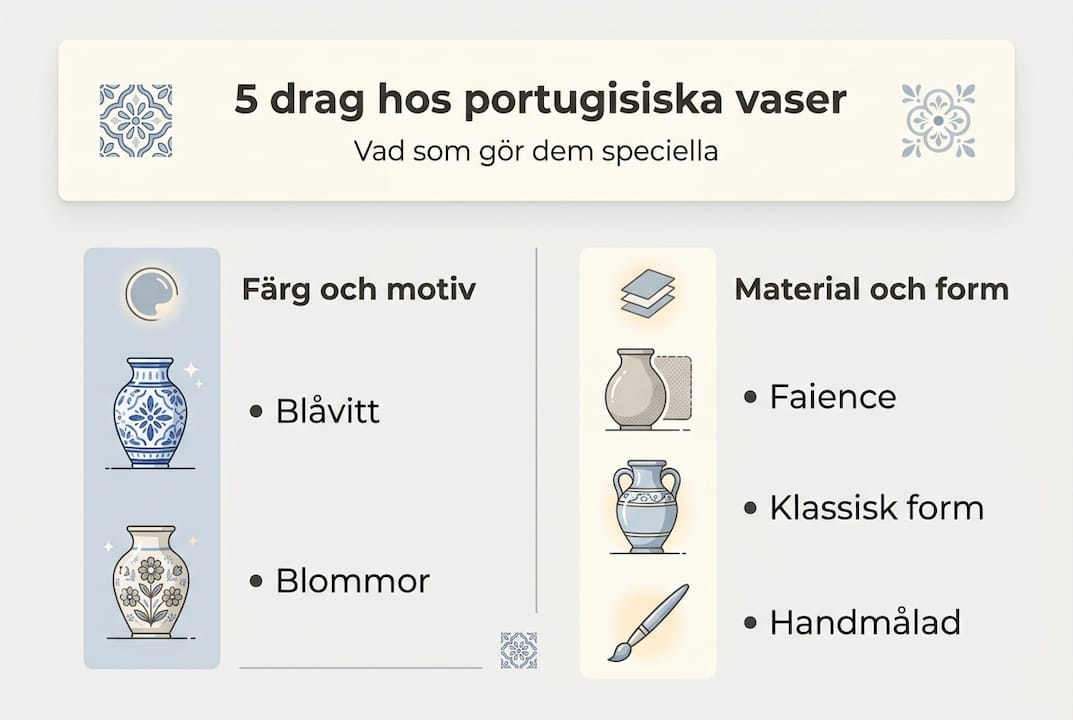
When most people think of Portuguese ceramics, the image of blue and white immediately comes to mind. It is true that blue and white dominate, but that is only part of the story. Portuguese vases are characterized by hand-painted decoration with motifs such as flowers, leaves, vines, and geometric patterns, and each piece bears traces of the person who created it.
What truly distinguishes Portuguese vases from mass-produced ceramics is the combination of form and technique. The shape can be classically bulbous or modernly slender, but the surface is always thoughtfully designed. The decorations are not only beautiful but also tell a story about the region and tradition they come from.
Here are the most common characteristics:
-
Hand-painted motifs in blue, white, yellow, and green
-
Nature-inspired patterns such as flowers, leaves, and vines
-
Geometric details that frame and structure the surface
-
Glazed surfaces that provide shine and protect against moisture
-
Unique variations between individual pieces due to handcraftsmanship
“Portuguese ceramics are a living craft. Each vase is a unique expression of the artisan who shaped and painted it.”
When choosing a Portuguese vase for your home, it's about finding harmony with unique vases that suit your style and room. A well-chosen vase can elevate the entire decor without you needing to change anything else.
Regional and Historical Variations
Portugal is a small country but with an enormous ceramic diversity. Each region has its own style, colors, and motifs. This means you can find a Portuguese vase that perfectly suits your taste, whether you prefer rustic or refined.
Portuguese vases are primarily produced in regions such as Alcobaça, Caldas da Rainha, Viana do Castelo, and Vista Alegre, with varying styles and traditions. Regional variations include earthy terracotta in Alentejo, black ceramics in the north, and vibrant colors in the Algarve.
| Region | Style | Typical Motifs | Known For |
|---|---|---|---|
| Alcobaça | Blue decoration on white background | Flowers, leaves | Classic azulejo tradition |
| Caldas da Rainha | Naturalistic, humorous | Cabbage, animals, frogs | Bordallo Pinheiro |
| Vista Alegre | Elegant porcelain | Fine patterns, gold | Luxury tableware |
| Alentejo | Rustic terracotta | Simple geometric shapes | Earthy, natural |
| Algarve | Vibrant colors | Fish, sun, sea | Holiday feel, folk art |
Caldas da Rainha is perhaps the most striking region. Here, Bordallo Pinheiro created his famous cabbage designs and animal motifs, and the frog logo is one of the most recognizable brands in Portuguese ceramics. Alcobaça ceramics are characterized by their blue decoration on a white background, a style reminiscent of the classic azulejos.
Here's how you can think when choosing a region:
-
Do you want classic elegance? Choose Vista Alegre or Alcobaça.
-
Do you want something playful and unique? Look at Caldas da Rainha.
-
Do you want a rustic, natural feel? Alentejo terracotta is perfect.
-
Do you want colorful accents? Algarve ceramics bring life to the room.
If you want to see how decorative vases for sustainable decor can be used in practice, there is plenty of inspiration to be found.
Materials and Durability: What Makes Portuguese Vases So Resilient?
A Portuguese vase is not only beautiful, it is built to last. This is due to the choice of materials and the craftsmanship traditions that have been refined over centuries. Materials such as faience, porcelain, and terracotta are handcrafted with high quality, durability, and are often marked with the factory logo.
| Material | Characteristics | Best for |
|---|---|---|
| Faience | Tin-glazed, glossy, durable | Decorative vases, living room |
| Porcelain | Fine, elegant, light | Luxurious decor, gifts |
| Terracotta | Rustic, natural color, robust | Outdoor, rustic style |
Faience is the most common material for decorative vases. The tin-glazed surface gives a characteristic sheen and makes the vase resistant to bumps and moisture. Porcelain is finer and is often used for more elegant pieces, while terracotta gives a warm, earthy feel.
Pro Tip: If you plan to use your vase with dried plants, you don't have to worry about water, but it's still worth knowing the difference. Read more about water-resistant vs. decorative vases to choose correctly.
The quality of ceramics from Portugal is also evident in the details. Factory marks and signatures on the bottom of the vase are a sign of genuine craftsmanship and guarantee that you get a piece that will last for many years.
Design: Tradition Meets Modernity
In recent years, Portuguese ceramics have found new life in modern homes. Contemporary designers blend heritage with minimalist forms, cobalt blue, and tactile surfaces to create vases that feel both timeless and current.
Cobalt blue is the big trend color right now. The classic blue and white pattern has been given a modern interpretation with cleaner lines and more stripped-down forms. The result is a vase that fits just as well in a Scandinavian home as in a more eclectic room.
Pro Tip: Mix a classic hand-painted Portuguese vase with a modern minimalist model to create depth and contrast in your decor. It doesn't have to match perfectly to look good.
Here are the most important design trends in Portuguese ceramics:
-
Minimalist forms with historical motifs as accents
-
Tactile surfaces that provide a sensory experience
-
Cobalt blue as the trend color for 2026
-
Mixing glossy and matte surfaces on the same piece
-
Organic forms that resemble nature's own lines
Portuguese ceramic craftsmanship has always had the ability to adapt without losing its identity. It is precisely this balance that makes unique vases in decor never feel overused.
How to Recognize Authentic Portuguese Vases?
The market is full of copies. It's easy to be fooled by a cheap imitation that looks Portuguese but lacks the genuine craftsmanship. Fortunately, there are clear signs to look for.
Check authenticity via marks such as the frog logo for Bordallo Pinheiro. Imperfections in glaze and form indicate handwork, and mass-produced copies lack these details.
Here's how to identify an authentic Portuguese vase:
-
Look at the bottom. An authentic vase has a factory mark, logo, or artisan's signature.
-
Feel the surface. Handmade vases have small variations and imperfections that mass-produced ones lack.
-
Examine the edges of the glaze. Authentic faience often has slight irregularities at edges and details.
-
Check the colors. Hand-painted motifs have natural variations in intensity and breadth.
-
Ask about the origin. A reputable seller can always tell you about the vase's manufacturing region.
Pro Tip: Bordallo Pinheiro is one of the most counterfeited brands. The frog logo should be clear and well-made. A blurry or uneven stamp is a warning sign.
Authenticity is not just about getting value for money. A genuine handmade vase lasts longer, looks better with age, and helps preserve a living craft. It's an investment in both your decor and Portuguese culture.
Once you've found your authentic vase, you can read more about authenticity in vases and how to care for it best.
How to Use Portuguese Vases for Sustainable and Beautiful Decor
A Portuguese vase is not just a work of art to look at. It is a practical decorative tool that works excellently with dried plants, pampas grass, and dried bouquets. Portuguese vases are durable and decorative, perfect for decor with dried plants thanks to their robust faience and vibrant, nature-inspired decorations.
Statistic: Dried plants require zero water and zero maintenance after placement, making the combination with a ceramic vase one of the easiest-to-maintain decor solutions on the market.
Here are the best ways to use a Portuguese vase in your decor:
-
Pampas grass in a large bulbous vase creates a dramatic focal point in the living room
-
Dried bouquets in a tall narrow vase add elegance to the dining table or hallway
-
Group of three vases in different sizes and styles creates a cohesive display
-
Mix blue and white ceramics with neutral dried plants for a Scandinavian feel
-
Place a terracotta vase outdoors with dried stems for a rustic patio feel
For your dried plants to last as long as possible, it is important to know how to care for them. Check out our guide on dried plant care for concrete tips. If you want to delve deeper into how flowers and plants are used as decorative elements, you can read more about floral decor.
The great advantage of Portuguese vases is that their vibrant decorations complement the natural, muted tones of dried plants. The blue and white meets beige and brown, and the result is a decor that feels both thoughtful and relaxed.
Find Your Portuguese Vase and Create Trendy Decor
Now that you know what makes Portuguese vases so special, it's time to find your favorite. At Torrdecor.se, you will find a carefully selected assortment of vases for interior design that combine Portuguese craftsmanship with Scandinavian simplicity.
A popular choice is VALV cream vase, an elegant model made in Portugal that pairs perfectly with dried plants and pampas grass. Do you want to create a real eye-catcher? Combine the vase with our beige pampas grass for decor for a timeless and easy-care interior. With us, you will find everything you need to create a home that looks thoughtfully designed without requiring daily maintenance.
Frequently Asked Questions About Portuguese Vases
Which regions in Portugal are most known for their vases?
Alcobaça, Caldas da Rainha, Viana do Castelo, and Vista Alegre are particularly known for unique ceramic traditions with distinct styles and motifs.
How do you distinguish between a handmade and a mass-produced Portuguese vase?
Handmade vases have markings and imperfections that show craftsmanship, while mass-produced copies have perfectly smooth surfaces and lack a factory stamp.
Which materials are most used for Portuguese vases?
Faience, porcelain, and terracotta are most common and provide both durability and unique character depending on the region and tradition.
Can Portuguese vases be used for dried plants?
Yes, their robust faience and nature-inspired decorations make them perfect for dried flowers and pampas grass without the need for water.
Which motifs are most common on Portuguese vases?
Flowers, leaves, vines, and geometric patterns are typical motifs, reflecting Portugal's rich nature and long ceramic tradition.