

TL;DR:
- Modern dried bouquets combine sustainability, natural materials, and aesthetic variety.
- The right materials and drying process ensure the bouquet retains its shape and color for several years.
- They are an active design choice that suits various styles and requires minimal maintenance.
Dried bouquets have long had a reputation for being dusty and dull. This is not true. Modern dried bouquets are a conscious design choice that combines natural materials, sustainability, and aesthetics in a way that fresh flowers can never match. Many people don't actually know what goes into a dried bouquet or how it's created, which makes it difficult to choose the right one for their home. This article guides you through materials, the drying process, styles, and care, so you have all the information you need to succeed with dried bouquets at home.
Table of Contents
- What are dried bouquets made of?
- The Process: How to create a durable dried bouquet
- Variation and Design: Popular combinations and styles
- Care and placement for long-lasting enjoyment
- Our View: Dried bouquets are more than a sustainability choice
- Try it yourself: Explore dried bouquets at Torrdecor
- Common Questions about Dried Bouquets
Key Insights
| Point | Details |
|---|---|
| Versatile material choices | Dried bouquets combine flowers, grasses, and herbs for durable and unique arrangements. |
| Long lifespan | Properly dried and placed bouquets last 1–3 years without losing their appearance. |
| Easy-care decor trend | Dried bouquets require minimal maintenance and fit perfectly in most home environments. |
| Styling creates expression | Variation in color, texture, and height makes bouquets flexible interior details. |
What are dried bouquets made of?
A dried bouquet is not just an old flower forgotten in a vase. It involves a careful selection of plants chosen for their ability to retain shape, color, and structure after drying.
Dried bouquets primarily consist of dried flowers, grasses, herbs, and branches such as lavender, immortelle (Helichrysum), cornflower, lagurus (hare's tail), baby's breath, eucalyptus, hydrangea, roses, pampas grass, and thistles. Each material contributes something unique, whether volume, texture, scent, or color.
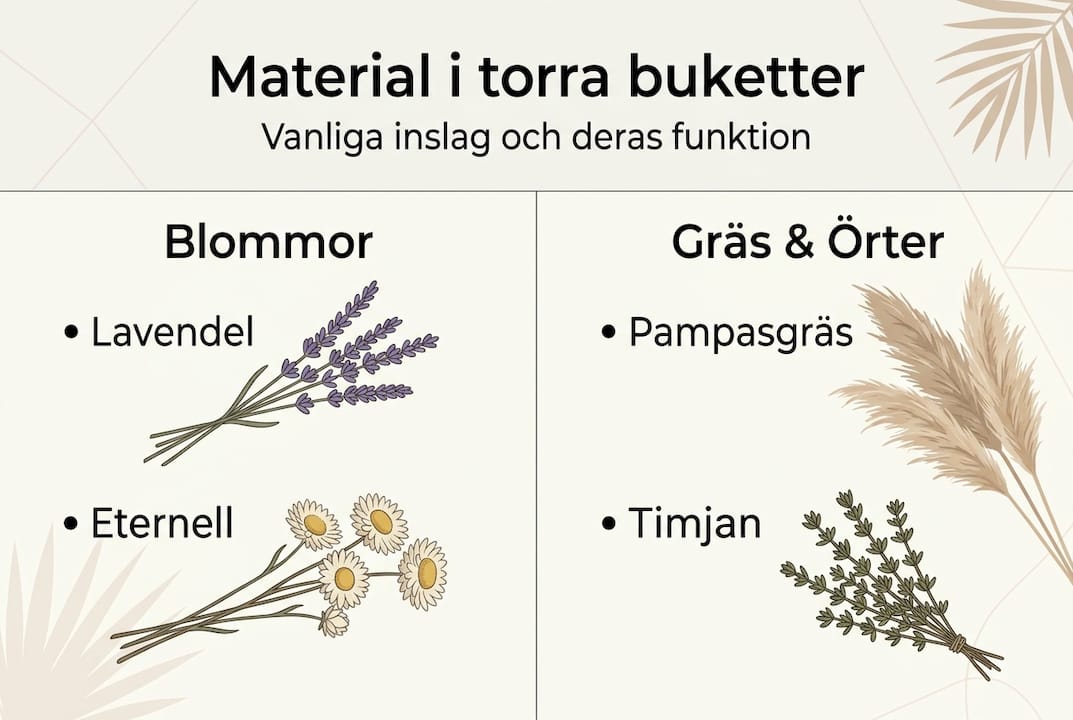
There are also different dried flowers that suit various styles and rooms, making it easy to adapt the bouquet to your home.
Here are some of the most common elements in dried bouquets:
- Lavender – provides scent and purple tones, dries excellently and holds its shape for a long time
- Immortelle (Helichrysum) – sometimes called strawflower, retains its strong color after drying
- Lagurus (hare's tail) – a soft, fluffy grass that adds airiness and volume
- Pampas grass – large and dramatic, perfect as a focal point in a room
- Baby's breath – gives a light and airy impression, acts as a filler
- Thistles – structurally strong and provide a rustic feel
- Eucalyptus – popular for its shape and green hue
Dried herbs such as thyme, rosemary, and oregano are also often used in or as a complement to dried bouquets, especially in more rural or nature-inspired arrangements.
Below is an overview of common materials and what they contribute:
| Plant | Function | Aesthetics |
|---|---|---|
| Lavender | Scent and structure | Purple, natural |
| Pampas grass | Volume and focal point | Beige, dramatic |
| Lagurus | Airiness and softness | Creamy white, fluffy |
| Immortelle | Color retention | Yellow, red, orange |
| Baby's breath | Filler and lightness | White, subtle |
| Thistles | Texture and contrast | Blue-purple, rustic |
The advantages dried plants have compared to fresh ones are largely due to this selection. The right materials create a bouquet that looks as good after a year as it did on day one.
The Process: How to create a durable dried bouquet
Once we know which materials are most common, it's equally important to understand how a durable bouquet is actually created. The process is simple but requires patience and the right conditions.
Here's how it's done step-by-step:
- Harvest at the right time – Pick the flowers when they have just opened and are in full bloom. If you wait too long, they will lose petals during drying.
- Ensure the plants are dry – Harvest flowers dry and in full bloom, bundle and hang upside down in a dark, airy space for 2 to 4 weeks to preserve shape and color.
- Bundle together – Gather 5 to 10 stems per bundle and tie with a rubber band. The rubber band will tighten as the stems shrink during drying.
- Hang upside down – If you hang them upright, the petals will droop. Upside down maintains the shape.
- Choose the right place – Dark, dry, and airy is key. Avoid kitchens and bathrooms where moisture collects.
- Wait 2 to 4 weeks – Patience pays off. Check that the stems are completely dry before taking them down.
“The right drying environment determines whether the bouquet lasts six months or several years. Moisture is the biggest enemy.”
Pro tip: Lightly spray the dried bouquet with hairspray. This reduces brittleness and better holds the shape, especially for delicate flowers like baby's breath.
Some flowers require a different method. Delicate varieties such as roses and peonies dry better with silica gel, a desiccant that absorbs moisture without damaging the shape. This only takes 2 to 4 days and yields a more vibrant result.
For more advice on dried bouquet care, there are good guides to read further.
Variation and Design: Popular combinations and styles
Once the bouquet is dried, the question remains of how to combine and vary it for different expressions. There is no universal solution, but there are clear styles that work particularly well.
Scandinavian minimalist is one of the most popular styles right now. Here, one chooses few materials in neutral tones, for example, lagurus, baby's breath, and beige pampas grass. The result is airy and easy to fit into most homes.
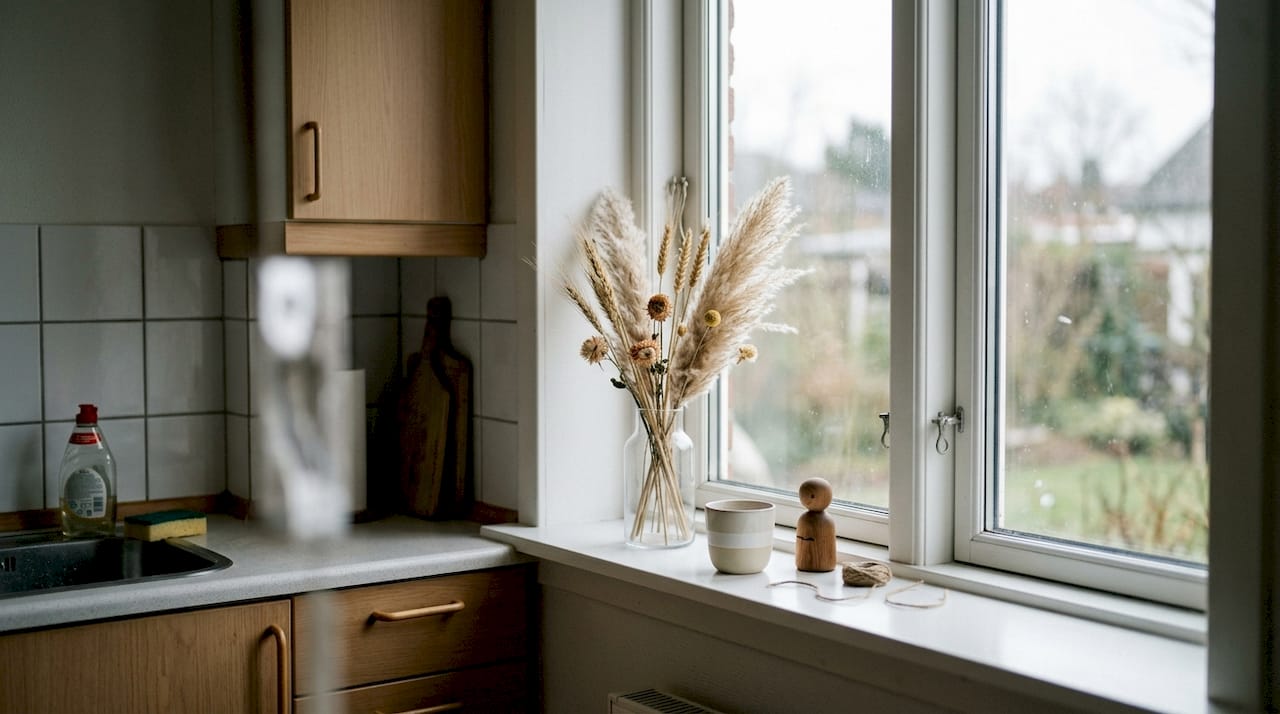
Boho-inspired is a more playful style with more materials, textures, and heights. Here, you can mix pampas grass, thistles, eucalyptus, and immortelle in warm tones. This gives a fuller and more organic impression.
Colorful bouquets with dried immortelles, cornflowers, and lavender give a lively expression and suit rooms that need a splash of color.
Expert tip: combine different textures and heights for airy arrangements. Avoid humid environments and spray with hairspray to reduce brittleness.
Here is a comparison of the three most common styles:
| Style | Typical materials | Feel | Suits |
|---|---|---|---|
| Scandinavian | Lagurus, baby's breath, pampas | Airy, neutral | Living room, bedroom |
| Boho | Pampas, thistles, eucalyptus | Organic, warm | Hallway, studio |
| Colorful | Immortelle, lavender, cornflower | Lively, cheerful | Kitchen, children's room |
Some combination tips to keep in mind:
- Stick to a neutral base tone and add one or two accent materials
- Vary the height of the stems for a more natural look
- Mix soft and strong-textured materials for contrast
- Avoid putting in too many varieties; three to five materials are often enough
Read more about decorating with dried bouquets for concrete ideas for different rooms. If you want to know more specifically about pampas grass in dried bouquets, there is also good reading about that particular material, as well as examples of pampas grass in various varieties and sizes.
Care and placement for long-lasting enjoyment
To get maximum enjoyment from your dried bouquet, you need to consider care and placement. It's not difficult, but there are some common mistakes that are easy to avoid.
The most important rule is to keep the bouquet away from moisture. Bathrooms and kitchens are the worst places. Moisture makes the stems soften, mold can form, and the shape is quickly destroyed.
Direct sunlight is another problem. Fading in sunlight is a common problem, and delicate flowers that have not dried optimally can also become brittle and fall apart. Place the bouquet in a bright room but not directly in a south-facing position.
Here are the most important care tips:
- Avoid moisture – Never place the bouquet in a bathroom, near a sink, or in a basement
- Protect from sunlight – Indirect light is best to preserve colors
- Clean gently – Blow off dust with cool air from a hairdryer or a small air blower
- Avoid drafts – Strong air currents can break off dry stems
- Change water – Not necessary. Dried bouquets do not need any watering at all
Pro tip: Place the bouquet in a spot with good air circulation but without direct drafts, such as on a shelf along an interior wall or in a corner with natural light from the side.
A common question is how long a dried bouquet lasts. Most last one to three years with proper care. Some materials like pampas grass and thistles can last even longer. It's about giving them the right conditions from the start.
If you want to read more about caring for dried plants, there are detailed guides that address common problems and solutions.
Our View: Dried bouquets are more than a sustainability choice
Many believe that dried bouquets are about saving money or reducing waste. This is a misconception. Sustainability is a bonus, not the reason people choose them.
What truly drives the trend are the design possibilities. A dried bouquet does not change. It looks the same in January as in October. This provides a stability in interior design that fresh flowers can never offer. You avoid planning, changing water, and buying new ones every week.
The old notion that dried bouquets are dull persists because most people have never seen modern versions. Properly composed with varying textures, heights, and neutral tones, they can be just as expressive as a fresh arrangement.
We believe that the creative choice is the most important. If you choose the right materials and style, the bouquet says something about the room and about you. It's not a compromise but an active aesthetic decision. Read more about sustainable floral decor to understand how dried plants fit into a larger interior design perspective.
Try it yourself: Explore dried bouquets at Torrdecor
If you want to take the next step and explore what suits your home, Torrdecor is a resource.

At Torrdecor, you will find a wide range of dried bouquets and materials, from classic dried flowers to pampas grass in the assortment in various sizes and shades. The assortment is carefully selected to suit modern homes and provide you with materials that last a long time without complicated care. If you want to know more about available products and what suits your home, you can read more about Torrdecor. There you will also find information about how we work and what we stand for.
Common Questions about Dried Bouquets
Which flowers dry best for dried bouquets?
Flowers with a harder structure such as lavender, immortelle, cornflower, and thistles dry best and retain their color and shape over time. They are also the most common elements in pre-made dried bouquets.
How long does a dried bouquet last?
Most dried bouquets last a long time if protected from moisture and sunlight, typically one to three years depending on the material and placement.
Can you make your own dried bouquets at home?
Yes, it's perfectly fine. Harvest flowers dry and in full bloom, bundle and hang upside down in a dark, airy space for 2 to 4 weeks for a good result.
How do you prevent dried bouquets from getting dusty?
Clean gently with cool air from a hairdryer on the lowest setting and avoid placing the bouquet in dusty areas. Regular and gentle cleaning goes a long way according to our care guide for dried plants.
Is it possible to combine dried flowers with fresh ones?
It is possible but results in variation in durability. Dried plants have a longer shelf life than fresh flowers, meaning fresh flowers will wilt while the dried ones look the same.
0 comments