

TL;DR:
- Dried plants require no watering and last a long time, making them a practical and sustainable decor choice.
- The most suitable plants for drying are eucalyptus, lavender, and pampas grass, which retain their shape and color well.
- Proper placement and careful maintenance extend the life of dried plants, for example, by avoiding moisture and direct sunlight.
Many believe that dried plants are old-fashioned and belong on grandma's bookshelf. This is no longer true. Interest in dried plants has grown significantly in Sweden, and it's easy to see why: they require no watering, last for several years, and fit equally well in a modern home as at a wedding. This guide will show you how to choose the right plants, dry them at home, and arrange them for the best effect. You'll also get practical tips on care and common mistakes to avoid, ensuring your arrangements stay fresh for a long time.
Table of Contents
- Why dried plants are a sustainable choice
- Which plants are best suited and how to choose?
- Drying plants at home: methods and step-by-step guide
- Placement and care: common mistakes and expert advice
- Our experience: what many miss about dried plants
- Explore dried bouquets and exclusive arrangements
- Frequently asked questions about dried plants
Key Insights
| Point | Details |
|---|---|
| Sustainability in focus | Dried plants require no maintenance and last for several years, perfect for long-lasting decor. |
| Best plant choices | Eucalyptus, lavender, and pampas grass are excellent choices for drying at home, retaining both shape and scent. |
| Simple drying methods | You can dry plants with air, silica gel, or a microwave and enhance durability with hairspray. |
| Common pitfalls | Avoid placing in humid rooms and clean gently to preserve the bouquet for a long time. |
| Create an exclusive feel | Balance different plants and colors to bring life and variety to your interior design. |
Why dried plants are a sustainable choice
Dried plants are one of the smartest choices you can make for your home if you want beautiful decor without the hassle. There are no flowers to replace every week, no water to refill, and no leaves falling on the floor. It's normal to hesitate at first, but once you try it, you'll quickly understand how practical it is.
A major advantage is that dried plants can be reused for new arrangements and events again and again. You can swap out individual stems, add new varieties, or simply move bouquets between rooms for a fresh look. This makes them a flexible decor choice.
From an environmental perspective, dried plants are also a better alternative than fresh cut flowers. Fresh flowers are often transported by air from countries like Kenya or Colombia, resulting in a high carbon footprint. Dried plants are purchased once and used for a long time, reducing both transport and waste.
“Dried plants last for several years and require neither water nor care.”
The long-term cost is also lower. A bouquet of fresh flowers can cost 150 to 300 SEK and last perhaps one to two weeks. A bouquet of dried plants costs about the same but lasts for years. This is a clear economic advantage. The TORKA product series from IKEA is a good example of how dried plants have become accessible to all budgets.
Dried plants require no care, last for years, and can be combined for new arrangements, making them an excellent choice for modern homes. You can read more about care for dried plants to get started correctly.
Here are some of the most important benefits summarized:
- No watering or flower changes needed
- Lasts for several years with minimal care
- Can be combined and rearranged freely
- Lower environmental impact than fresh cut flowers
- Cost-effective in the long run
- Suitable for homes, shops, and events
Which plants are best suited and how to choose?
Not all plants are suitable for drying. Some lose color, shape, or scent too quickly to be worth the effort. Others remain perfect for years. It pays to know which varieties work best before you start.
According to plant selection for drying, the best plants to dry are eucalyptus, lavender, pampas grass, baby's breath, poppies, hydrangeas, roses, everlasting flowers, and various grasses. These varieties retain their shape and color well and yield professional results even for beginners.
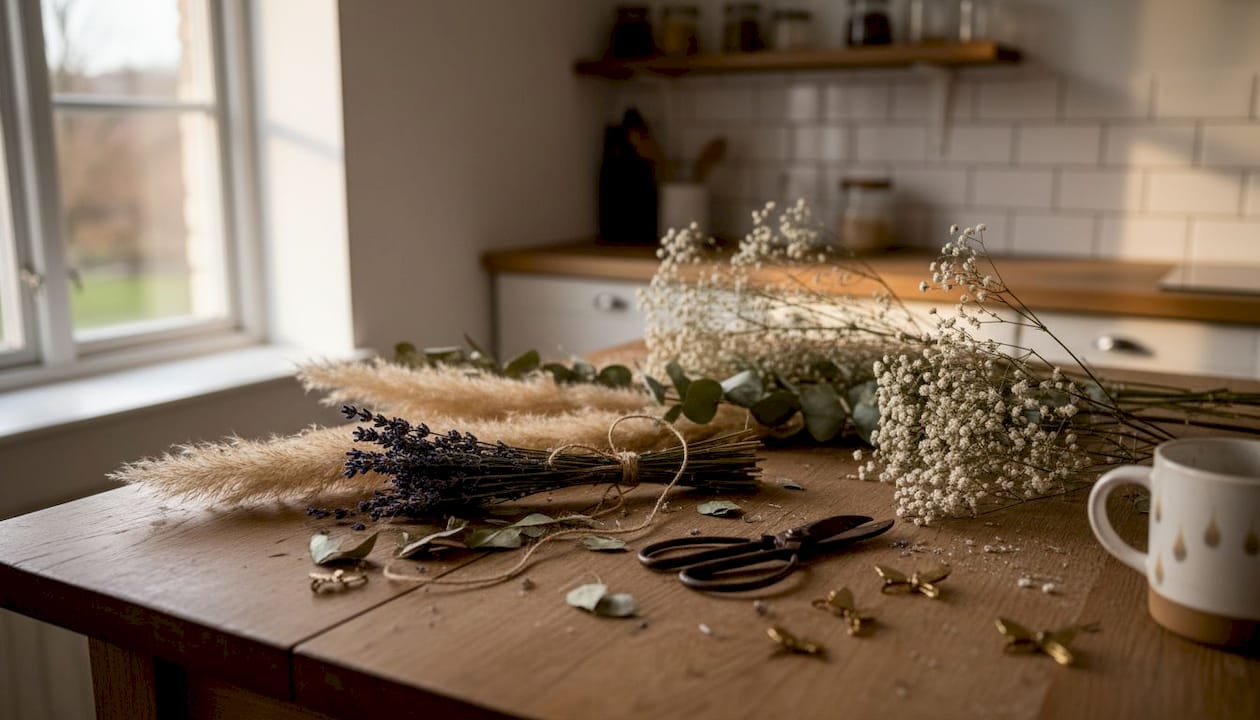
Here is a comparison of the most popular dried plants:
| Plant | Scent | Durability | Drying difficulty |
|---|---|---|---|
| Eucalyptus | Mild, fresh | Very long | Easy |
| Lavender | Strong, floral | Long | Easy |
| Pampas Grass | None | Very long | Easy |
| Hydrangea | None | Medium | Medium |
| Rose | Faint | Medium | Medium |
| Everlasting Flowers | None | Very long | Easy |
When picking plants for drying, timing matters. Pick them when they are in full bloom but before the petals begin to fall. Dry weather is important, preferably in the morning after the dew has dried. Moisture in the stems increases the risk of mold during the drying process.
Pro tip: Combine eucalyptus for structure and volume with lavender for scent. This creates an arrangement that both looks good and smells good for weeks.
Here are five plants to start with if you're new to dried plants:
- Pampas grass – dramatic effect, easy to handle
- Lavender – long-lasting scent and beautiful appearance
- Eucalyptus – provides greenery and structure
- Everlasting flowers – retains color perfectly
- Baby's breath – light and airy, good as filler
You can read more about the benefits of pampas grass if you want to delve deeper into the most popular variety. If you want to skip the DIY part, there are also ready-made arrangements available for purchase directly.
Drying plants at home: methods and step-by-step guide
Drying plants at home is easier than most people think. There are several methods to choose from depending on the plant you are drying and how quickly you want the result.
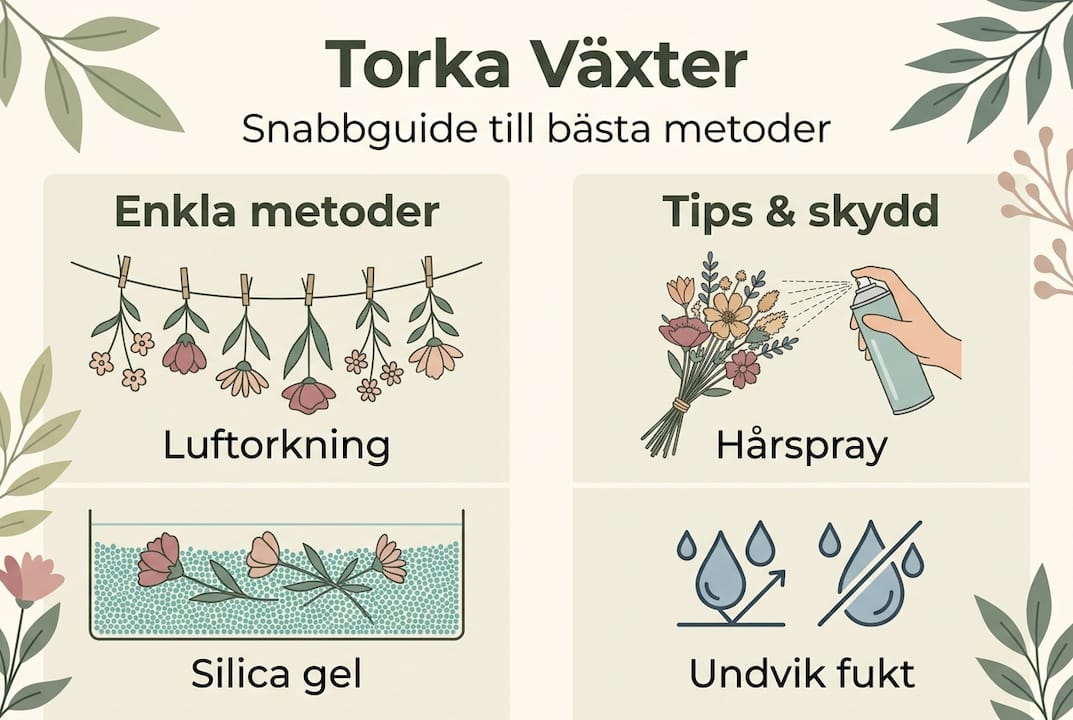
Air drying is the most common and simplest method. You bundle the stems with a rubber band and hang them upside down in a dry, dark, and well-ventilated place. Darkness protects the colors from fading. The process usually takes two to three weeks depending on the plant and humidity.
Silica gel is an alternative when you want to preserve the shape more precisely, for example, for roses or hydrangeas. You place the flowers in a jar and cover them completely with silica gel, which absorbs moisture in three to seven days. It is faster than air drying and yields a more detailed result.
The microwave works for quick drying but is not suitable for all plants. Place the plants between two layers of paper towels and run on low power in short intervals. Check after each round to ensure they don't burn.
According to drying methods and tips, hairspray is an effective way to protect dried flowers and give them extra durability. Spray with 2 to 4 layers from a distance of 20 to 30 centimeters for best results.
Pro tip: Always test the hairspray on a small part of the plant first. Some varieties can become sticky or discolored if the spray is too strong.
Here are the five steps to drying:
- Choose healthy, fully bloomed plants without signs of disease or damage
- Remove the lowest leaves from the stem
- Bundle together with a rubber band and hang upside down
- Place in a dry, dark, and well-ventilated area for two to three weeks
- Spray with hairspray for extra protection and durability
You can also watch an instructional video for visual guidance. Once the plants are dried, they are ready to be placed in a vase or arrangement, and you can find inspiration for decoration with vases on our blog.
Placement and care: common mistakes and expert advice
Drying plants correctly is only half the battle. How you place and care for them determines how long they stay beautiful. Many make mistakes that unnecessarily shorten their lifespan.
The most common mistake is placing dried plants in humid rooms. Bathrooms and kitchens have high humidity, which increases the risk of mold and discoloration. Avoid humid environments and instead choose living rooms, bedrooms, or hallways where the air is drier and circulation is better.
Direct sunlight is another problem. UV radiation quickly breaks down the pigments in dried plants, causing them to fade. Place them in bright rooms but protect them from direct sun, for example, behind a thin curtain or on a shelf away from the window.
Pro tip: Choose rooms with good air circulation. Stagnant, humid air is the biggest enemy of dried plants. A small fan on low power during the summer months can make a big difference.
Here are the most common mistakes to avoid:
- Placement in bathrooms or kitchens with high humidity
- Direct exposure to sunlight
- Handling without care, causing petals to fall off
- Forgetting to clean from dust regularly
- Storing fragile flowers without support
Dust quickly accumulates on dried plants, making them look dull and gray. Clean them gently with a soft brush or a hairdryer on low power and cool airflow. Avoid rubbing or pressing too hard.
There is a contrasting view in feng shui, where living plants are sometimes preferred over dried ones as they are believed to provide more positive energy. It's worth knowing, but for most homes, dried plants are an excellent and practical option. You can compare the alternatives in our guide on dried vs. fresh flowers. If you want to combine with the right vase, there's advice on decorating with vases and ceramic vases that perfectly complement dried arrangements.
Our experience: what many miss about dried plants
Many believe that dried plants are a dull alternative, something you choose when you can't be bothered to care for real flowers. This is a misconception we encounter often. The truth is that the right composition of dried plants can create a more exclusive and thoughtful impression than a regular bouquet of flowers.
It's about balance. Mix different textures, heights, and tones. A bouquet with just pampas grass can feel monotonous, but add some eucalyptus and a few everlasting flowers, and suddenly you have an arrangement with depth and movement. Balance bouquets for airiness and vary seasonally for the best effect.
“It's the balance and variety that make dried plants come alive in the home.”
A simple tip that we see work time and again: change arrangements with the seasons. Bring out warmer tones in autumn, brighter and airier in spring. It costs nothing extra but makes the home feel fresh and updated. Read our care guide for dried bouquets for concrete advice on how to keep your arrangements in top condition.
Explore dried bouquets and exclusive arrangements
Now that you know how to choose, dry, and care for dried plants, the next step is to find the arrangements that suit your home. At Torrdecor, you'll find a wide range of dried bouquets that are ready to display immediately, without you having to dry anything yourself.

If you want something dramatic and stylish, dried pampas grass is excellent in a large vase in a bright room. If you prefer something more complex and colorful, bouquet Blonde is a popular choice. We also offer customized solutions for events and businesses. Welcome to be inspired and find your style.
Frequently asked questions about dried plants
How long do dried plants actually last?
Dried flowers last a long time and require minimal care. With proper placement and maintenance, they can last for several years, unlike fresh flowers which wilt in a few days.
Which plants are easiest to dry at home?
Eucalyptus, lavender, pampas grass, and baby's breath are the easiest to dry and retain their shape and scent best, making them perfect for beginners.
Can dried plants be used in bathrooms or kitchens?
No, avoid humid rooms to reduce the risk of mold and discoloration. Choose drier rooms like the living room or bedroom instead.
Do you need to use hairspray to preserve dried plants?
Spraying dried flowers with hairspray is recommended for extra durability and protection, especially if the plants are fragile or have thin petals.
How do you clean dried plants from dust?
Clean dried plants gently with a soft brush or a hairdryer on low power to carefully remove dust without damaging the arrangement.
0 comments