

TL;DR:
- Dried flowers often have a lower environmental impact than fresh cut flowers, especially if they are locally grown and untreated. Environmental impact is affected by cultivation, transport, chemicals, and sustainable use. Making conscious choices and reusing dried flowers is key to a more sustainable option.
Dried flowers are often marketed as the obvious sustainable alternative to fresh cut flowers. But is this really true? The answer is more nuanced than many believe. The environmental impact depends not only on whether the flower is dry or fresh, but on the entire chain from cultivation to storage and final disposal. In this article, you will get concrete facts, a clear comparison, and practical advice to help you make informed choices, whether you are decorating your home, planning an event, or simply want to shop more responsibly.
Table of Contents
-
How to make environmentally friendly choices with dried flowers
-
Dried flowers in homes and events: inspiration and environmental effects
-
Our perspective: Why awareness is more important than perfection
-
Explore sustainable dried flowers and inspiration at Torrdecor
-
Frequently asked questions about the environmental impact of dried flowers
Key Insights
| Point | Details |
|---|---|
| Dried usually best | Dried flowers are often more sustainable than fresh if you choose local. |
| Origin determines | Environmental benefits depend on production, transport, and chemicals used. |
| Smart choices have an impact | Reuse and circular solutions make the biggest difference for the environment and your wallet. |
What is the environmental impact of flowers and plants?
When we talk about the environmental impact of flowers, it's about several interacting factors. It's not enough to look at a single part of the chain. You need to understand the entire life cycle, from soil to compost.
The most important factors are:
-
Carbon dioxide emissions from transport, primarily air and truck transport when importing from countries such as Kenya, Colombia, and the Netherlands.
-
Pesticides used to protect flowers during cultivation and transport, often in quantities not permitted within the EU.
-
Water consumption in growing countries where water scarcity is already a problem.
-
Energy consumption in greenhouses and cold chains to keep flowers fresh.
-
Waste when flowers are discarded after short use, creating unnecessary waste.
Fresh cut flowers have a particularly high environmental impact. A large proportion of the flowers sold in Sweden are imported by air or refrigerated transport, and many cut flowers are imported with toxins such as pesticides and chemicals not permitted in Europe. This means that as a consumer, you can unconsciously contribute to environmental problems in the growing countries every time you buy a bouquet at the supermarket.
Dried flowers avoid some of these problems, but not all. They do not require a cold chain and last significantly longer, reducing waste. However, if they are imported from the other side of the world and chemically treated to preserve color and shape, the environmental benefit is significantly reduced.
“The environmental impact of flowers is not just about what you buy, but about how, where, and by whom it was produced.”
It is also important to understand that the industry as a whole faces major challenges. Globally, the flower industry is one of the most resource-intensive sectors within agriculture. Large amounts of water, land, and chemicals are used to meet the demand for perfect flowers all year round. Choosing dried plants in interior design is a step in the right direction, but it is just one of many choices you can make.
An important insight is that sustainability is not a binary choice. It's about reducing impact step by step, and understanding what actually makes the biggest difference in your particular situation.
Fresh flowers vs. dried: an environmental comparison
Now that we know what's at stake, we can compare the alternatives side by side to see what actually makes a difference.
| Environmental Aspect | Fresh Cut Flowers | Dried Flowers |
|---|---|---|
| Transport | Often air or refrigerated truck | Usually sea freight or road |
| Chemicals | High usage | Lower, but varies |
| Water consumption | High during cultivation and transport | Low after drying |
| Durability | 1 to 2 weeks | Months to years |
| Waste | High | Low |
| CO2 emissions | High per bouquet | Lower overall |
The table clearly shows that dried flowers are generally a better environmental choice, and dried flowers are a better environmental choice especially if they are locally grown. But there are important nuances to be aware of.
Here are four key factors to consider when comparing:
-
Country of origin – A dried flower grown in Sweden or the Nordic region has a lower transport footprint than one flown in from South America.
-
Chemical treatment – Some dried flowers are treated with dyes and preservatives. Choose untreated options when possible.
-
Durability in the home – The longer you use your dried flowers, the better the environmental calculation. A bouquet that lasts for three years is much better than one that is discarded after three months.
-
Packaging and shipping – Unnecessary plastic packaging and express shipping also increase the environmental impact of sustainable products.
You can read more about the differences in a detailed comparison of fresh and dried flowers to get an even better basis for your choices.
Pro tip: Choose dried flowers that are naturally dried without chemical treatment, and that are grown as close to Sweden as possible. Always ask the supplier about the origin if it is not clearly stated in the product description.
How to make environmentally friendly choices with dried flowers
Now that we have seen the environmental benefits, it's time to put that knowledge into practice and make active choices for your home and events.
Choosing the right dried flowers means asking the right questions before you buy. Here are the most important points to consider:
-
Origin and cultivation method – Ask where the flowers come from and how they were grown. Locally grown and properly handled dried flowers have the least environmental impact.
-
Chemical treatment – Avoid flowers that have been dyed with synthetic dyes or treated with strong preservatives. Naturally dried flowers are always preferable.
-
Packaging – Choose suppliers who use minimal and recyclable packaging.
-
Durability – Prioritize flower varieties that are known to last a long time, such as pampas grass, lavender, eucalyptus, and statice.
Common mistakes to avoid:
-
Buying dried flowers imported from Asia or South America without checking their origin and production method.
-
Unnecessarily discarding dried flowers when they can still be reused or composted.
-
Choosing chemically dyed flowers because they look more colorful, without considering the environmental impact.
-
Ignoring the environmental impact of packaging.
Once you have your dried flowers at home, you can significantly extend their lifespan with proper handling. Store them in a dry place, away from direct sunlight, which reduces fading. Gently dust them with a hairdryer on low cool setting or a soft brush. And when they finally no longer meet your standards, compost them if they are untreated.
Pro tip: Reuse dried flowers from an event or decoration in a new context. A bouquet that adorned a wedding dinner can just as well decorate the home office afterward. It's an easy way to maximize value and minimize waste.
For more concrete advice, you can read about smart tips for sustainable flower decor and maintenance-free flower choices that suit both homes and events.
Dried flowers in homes and events: inspiration and environmental effects
To help you make practical choices, we will now show real examples of environmentally smart floral solutions.
Dried flowers are suitable for virtually all rooms and contexts. In the home, you can use them in the living room as a focal point in a large vase, in the bedroom for a calm and natural feel, or in the kitchen as a decorative basket of dried herbs. They require no watering, no special light, and no regular care.
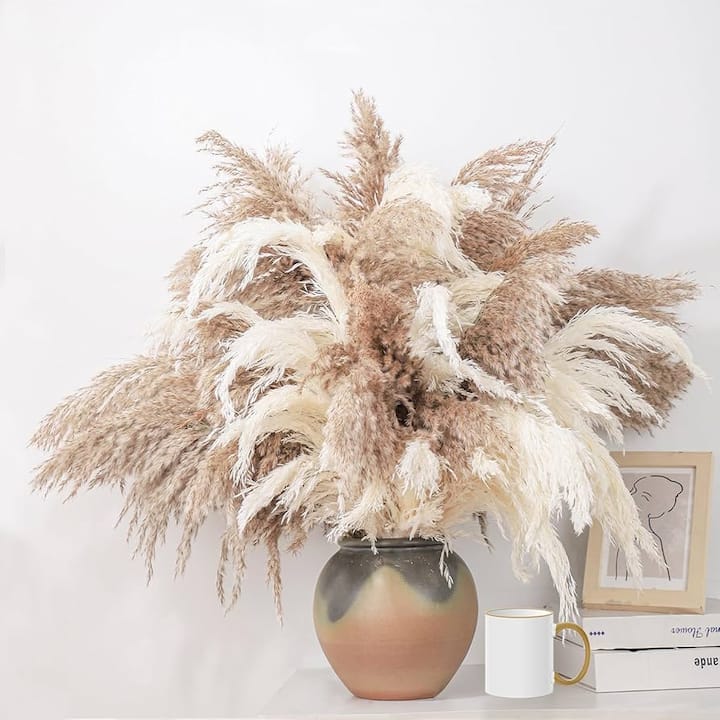
For events, the environmental benefits are even clearer. Dried flowers reduce waste and transport, especially for planned events, as you can order well in advance without worrying about the flowers wilting before the party begins. You can also reuse decorations from one event to the next.
Here are some concrete ideas:
-
Weddings – Dried bouquets and table decorations with pampas grass and eucalyptus. Can be saved as a souvenir or reused.
-
Corporate events – Sustainable centerpieces with dried flowers that can be donated or reused after the event.
-
Home decor – Permanent decorations that are replaced seasonally but never thrown away, instead composted or reused.
-
Shop decoration – Dried arrangements that last for months without maintenance, perfect for shops and salons.
| Decoration Type | Durability | Environmental Impact | Reuse |
|---|---|---|---|
| Fresh cut flowers | 1 to 2 weeks | High | No |
| Dried flowers | 1 to 3 years | Medium to low | Yes |
| Artificial flowers | Unlimited | High (plastic) | Yes, but difficult to recycle |
| Potted plants | Long | Low if locally grown | Yes |
The table shows that dried flowers strike a good balance. They last a long time, can be reused, and have a lower environmental impact than both fresh cut flowers and artificial alternatives. Although artificial plastic flowers can be reused, they are difficult to recycle and contribute to plastic consumption.
For more inspiration and concrete ideas, you can explore sustainable event decor with dried plants and see how others have solved their decoration needs in an environmentally smart way.
Our perspective: Why awareness is more important than perfection
There's a temptation to believe that choosing dried flowers automatically makes you a sustainable consumer. But at Torrdecor, we want to be honest: it's not that simple.
The true environmental footprint is determined by the entire life cycle of your dried flowers. A dried flower that has been flown from South America, treated with chemicals, and discarded after a month is not necessarily better than a locally grown fresh flower that is composted immediately.
What truly matters is circular thinking. Local, seasonal, and reused weighs more heavily than simply choosing dried over fresh. It's about asking questions, choosing consciously, and using what you buy for a long time.
Small changes at a time make a big difference over time. Start by choosing an untreated option, asking about the origin, and reusing before discarding. You don't have to be perfect, just aware. Read more about how flower decor for sustainability can become a natural part of your everyday life.
Explore sustainable dried flowers and inspiration at Torrdecor
Do you want to take the next step in your interior design journey? At Torrdecor, you will find both beautiful plants and more knowledge.

At Torrdecor.se you will find a wide range of dried flowers and plants with a focus on sustainability and long lifespan. Our most popular option is Pampas Grass 110cm, a natural and maintenance-free choice that suits most homes and events. We actively work to offer products that reduce environmental impact, and you can read more about Torrdecor's sustainability efforts to see how we think about our assortment and suppliers. Welcome to explore and find your next sustainable decoration.
Frequently asked questions about the environmental impact of dried flowers
Are dried flowers always better for the environment than fresh ones?
Dried flowers often have a lower environmental impact, but it depends on their origin and production method. Dried flowers are a better option, especially if they are locally grown and untreated.
Which factors most affect the environmental impact of dried flowers?
The most important factors are cultivation method, transport distance, chemical use, and how long the flowers are actually used. Fresh cut flowers have a high environmental impact from pesticides and transport, making dried alternatives advantageous when chosen carefully.
Can dried flowers be composted after use?
Yes, most untreated dried flowers can be composted after use. Always check that the flowers are not treated with synthetic dyes or preservatives before composting them.
How do I choose the most environmentally friendly dried flowers?
Choose locally grown, untreated, and seasonal options that last a long time. Locally grown and properly handled dried flowers have the least environmental impact and can be recycled or reused when they are no longer useful.
0 comments