

TL;DR:
- Sustainable floral decor means long-lasting flowers with a low climate impact.
- Alternatives like dried, preserved, and slow flowers minimize environmental damage and maintenance.
- Choosing locally grown or seasonal flowers supports Swedish growers and reduces transport emissions.
Many don't realize that a single rose can cause up to 2.4 kg of CO2 emissions during its life cycle, from cultivation and cold storage to air transport from Kenya or Colombia. That's more than many people think. Cut flowers look innocent, but behind them lies a long chain of cold, chemicals, and carbon dioxide. At the same time, there are alternatives that are beautiful, easy to care for, and significantly better for the climate. This article explains what sustainable floral decor actually means, what alternatives are available, and how you can easily make smarter choices at home, in the office, or for your next event.
Table of Contents
- What is sustainable floral decor?
- Different types of sustainable floral decorations
- Slow flowers – seasonal and local floral luxury
- How to keep your floral decor fresh and sustainable
- Why many miss the benefits of sustainable floral decor
- Get inspired and find sustainable floral decor that suits your style
- Frequently asked questions about sustainable floral decor
Key Insights
| Point | Details |
|---|---|
| Dramatically reduced climate impact | Sustainable floral decorations contribute to much lower CO2 emissions compared to conventional cut flowers. |
| Long-lasting and easy-care alternatives | Dried, preserved, and artificial flowers require minimal maintenance but remain beautiful for months or years. |
| Support for local growers | Slow flowers and locally produced flowers benefit both the environment and Swedish growers. |
| Function and aesthetics in harmony | Sustainable floral decor combines style with smart, eco-friendly choices for both home and events. |
What is sustainable floral decor?
After an eye-opening introduction to climate impact, we must first establish: what exactly does sustainable floral decor mean? It's not about giving up beautiful arrangements. It's about choosing decorations that last longer, require fewer resources, and cause less harm to the environment.
A floral decoration is considered sustainable if it meets some basic criteria:
- Long lifespan: The product lasts months or years, not days.
- Low climate impact: Manufacturing, transport, and waste generate minimal CO2 emissions.
- Non-toxic materials: No harmful chemicals in cultivation, preservation, or manufacturing.
- Minimal waste: The product does not need to be thrown away after a week.
- Local or sustainable source: Preferably grown near you or with certified production.
Comparing conventional cut flowers with sustainable alternatives shows a clear difference. A typical bouquet of cut flowers is often flown in from Africa or South America, kept refrigerated all the way, and thrown away after 7 to 14 days. A dried bouquet or a preserved arrangement, on the other hand, can last for months to years, without water, without refrigeration, and without chemical spraying.
“Sustainable floral decorations reduce climate impact through lower CO2 emissions compared to conventional cut flowers.”
It is also important to understand that sustainable floral decor doesn't have to look dull. Dried plants, pampas grass, and preserved flowers have become enormously popular in interior design precisely because they combine natural beauty with practical simplicity. You can read more about how dried plants for sustainable decoration work in the home.
For individuals and interior designers, sustainable floral decor also presents an economic argument. You buy once and enjoy for a long time. You don't have to run to the florist every week. And you avoid the feeling of throwing money away when the bouquet wilts.
For events and businesses, the benefits are even clearer. Sustainable decoration can be used on multiple occasions, transported without refrigeration requirements, and adapted to different environments. This is precisely why more and more interior designers and event planners are now opting out of single-use flowers.
Understanding what floral interior design is in a broader perspective helps you see how the right choice of decoration affects the entire experience of a room or venue. It's not just about flowers, but about creating an environment that feels thoughtful and welcoming.
In summary: sustainable floral decor is a choice that benefits you, your wallet, and the planet. It's practical, beautiful, and increasingly accessible.
Different types of sustainable floral decorations
Now that the concept is clear, we need to look at what solutions are available and how they compare. There are several categories of sustainable floral decorations, and they suit different needs and tastes.
Dried flowers are flowers that have been dried naturally or with the help of heat. They retain their shape and color for months and require no water or maintenance. Popular examples include lavender, straw, and pampas grass. They are perfect for homes and offices.
Preserved flowers are real flowers that have been treated with a special solution to maintain their softness and color. They look fresh but last up to 3 years. They are ideal when you want a natural look without maintenance.
Slow flowers are fresh flowers grown locally and seasonally, without chemicals. They are not as long-lasting as dried or preserved flowers, but they have a much lower climate impact than imported cut flowers.
Artificial flowers of high quality can look very realistic and last for many years. They are best suited for environments where naturalness is not the most important factor, such as shop windows or offices.
| Type | Durability | Maintenance | Environmental Impact | Price | Use |
|---|---|---|---|---|---|
| Dried flowers | 6 months to 2 years | Minimal | Low | Medium | Home, event, office |
| Preserved flowers | 6 months to 3 years | None | Low to medium | High | Home, wedding, gifts |
| Slow flowers | 1 to 2 weeks | Normal | Very low | Medium | Event, wedding |
| Artificial flowers | Several years | None | Varies | Low to high | Office, shops |
| Conventional cut flowers | 7 to 14 days | Daily | High | Low | Home, event |
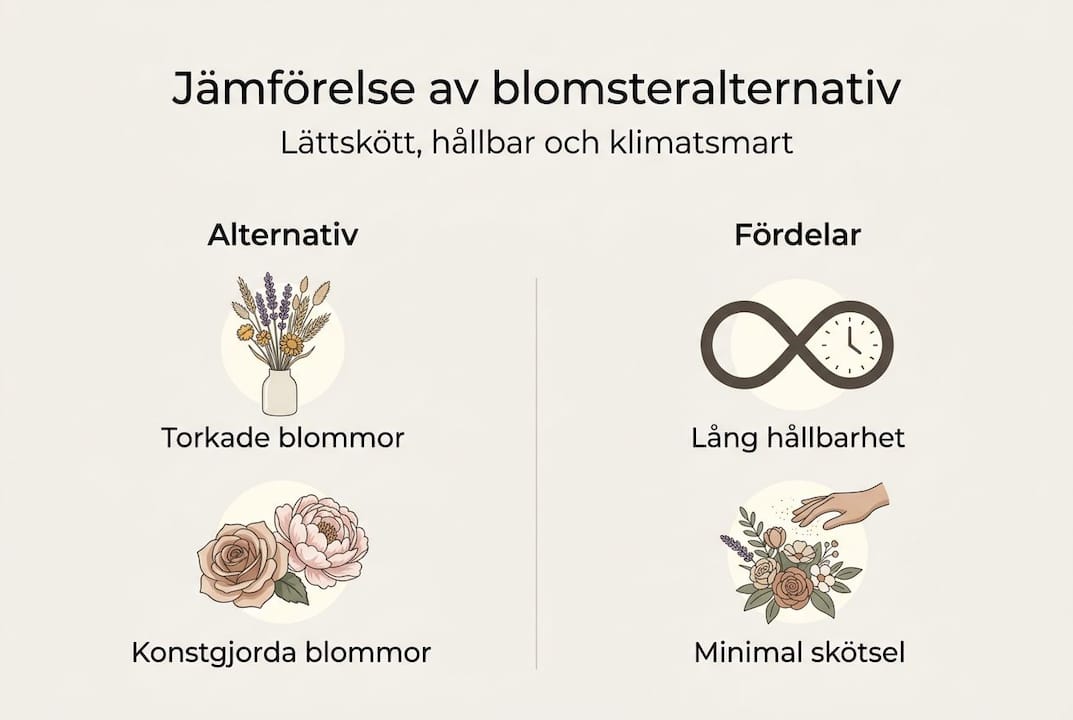
Easy-care alternatives like dried, preserved, and artificial flowers require minimal to no maintenance and last for months to years, making them a smart choice for anyone who wants beautiful decoration without constant upkeep.
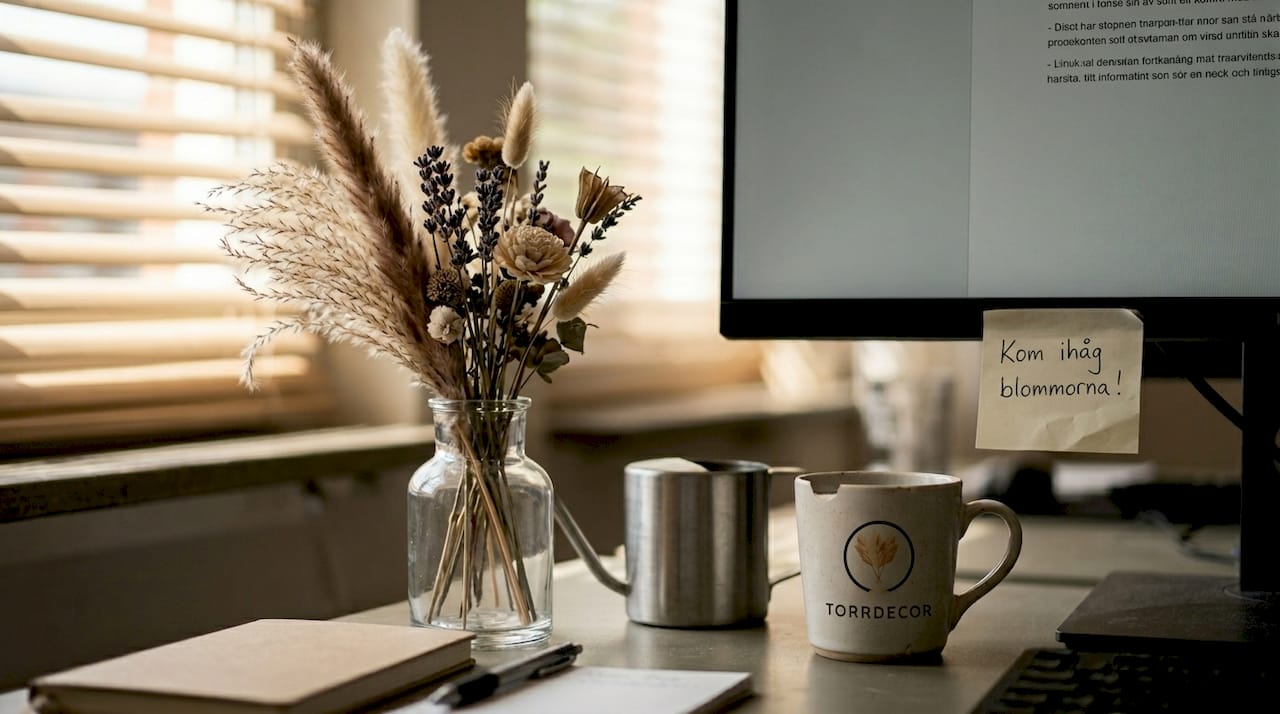
A smart strategy is to combine dried and fresh flowers. For example, you can have a permanent arrangement of dried flowers as a base and add a small bunch of seasonal flowers for special occasions. This adds variety without significantly increasing the climate impact. Read more about smart decoration choices with dried flowers for concrete ideas.
If you want to understand the differences in more depth, we recommend reading about dried plants or fresh flowers and what suits best in different situations.
Pro tip: Choose preserved flowers if you want a natural look with absolutely minimal maintenance. They look fresh, require no water, and last a long time. Perfect for home and as a gift.
For those who want inspiration and to see how dried flowers are used in modern homes, there are many trendy tips with dried flowers to gather.
Slow flowers – seasonal and local floral luxury
For those who want to take sustainability a step further, there is a rapidly growing trend: slow flowers. The movement has its roots in the USA but has also gained widespread popularity in Sweden in recent years.
The slow flowers method uses locally grown, seasonal flowers cultivated without chemicals to reduce transport, chemical use, and to support local growers. It is a direct response to the global flower industry, where flowers are often flown thousands of kilometers under refrigerated conditions.
The benefits of slow flowers are clear:
- Significantly reduced CO2 emissions compared to imported flowers
- No or minimal pesticides
- Support for Swedish and Nordic growers
- Seasonal aesthetic that feels authentic and thoughtful
- Shorter supply chain provides fresher flowers
But there are also challenges. The availability of slow flowers is limited, especially during the winter months in Sweden. You can't always get exactly the flower you want, and the selection varies depending on the season and region.
Here is a simple step-by-step guide to getting started with slow flowers:
- Find a local grower. Search for flower growers in your region via markets, farm shops, or local networks.
- Plan according to the season. Tulips in spring, peonies in summer, dahlias in autumn. Adapt your choice to what is actually growing right now.
- Order in advance. Local growers have limited production. Contact them early, especially for weddings or events.
- Combine with dried elements. Use slow flowers as a fresh complement to a permanent arrangement of dried plants.
- Choose unwrapped. Ask for flowers without plastic wrap and synthetic ribbons to minimize waste.
Combining slow flowers with the environmental impact of dried flowers gives you the best of both worlds: natural beauty with minimal climate impact.
For weddings and events, the combination of slow flowers and dried elements is particularly effective. The dried parts can be prepared well in advance, while the fresh slow flowers are added closer to the event for a lively feel. If you want to get started with slow flowers, there are good resources to help you find growers and get started practically.
How to keep your floral decor fresh and sustainable
Once you've chosen one or more sustainable options, you naturally want them to stay beautiful for as long as possible. Proper handling makes a big difference, and it's easier than you might think.
Choose dried or preserved for easy-care decoration in homes and at events, and avoid direct sunlight and humidity for long durability. These are the most important basic rules.
Here's a step-by-step guide to maintaining your sustainable floral decorations:
- Place correctly from the start. Avoid windows with direct sunlight, bathrooms with high humidity, and kitchens with steam.
- Dust regularly. Use a soft brush or a hairdryer on a low, cool setting to gently blow away dust from dried flowers.
- Keep away from water. Dried and preserved flowers should never be watered or exposed to moisture.
- Rotate the arrangement. Turn the bouquet or vase regularly so that all parts receive equal light and do not fade unevenly.
- Store properly when needed. If you're not using the arrangement, store it in a box with tissue paper in a dry and dark place.
The best choices for minimal maintenance are:
- Dried flowers and grasses: Almost zero maintenance. Dust as needed.
- Preserved flowers: No water, no care. Keep dry and cool.
- High-quality artificial flowers: Wipe with a damp cloth as needed.
Pro tip: Replace individual details in your arrangement when a new season begins. Add a couple of branches with autumn colors in the fall or a small sprig of spring flowers in the spring. You don't need to buy a whole new arrangement to get a new feel in the room.
You can find more specific advice in our care guide for dried plants and in the guide on care tips for dried flowers for those who want to delve deeper.
A checklist for long-lasting results:
- Place away from direct sun and humidity
- Dust every two to four weeks
- Rotate the vase or arrangement monthly
- Replace individual elements with the changing seasons
- Store unused parts dry and dark
If you want to choose flowers that require absolutely the least maintenance from the start, the guide on choosing maintenance-free flowers will be a great help.
Why many miss the benefits of sustainable floral decor
Now you know what, how, and why. But why are so many still hesitant to choose sustainable floral decorations?
The most common misconception is that sustainable decor is duller or cheaper in appearance. This is not true. Dried bouquets and preserved arrangements are now used in luxury hotels, at design fairs, and in premium interiors. They are not a compromise choice; they are an active style choice.
Another common thought is that it only matters for big decisions, like buying an electric car or installing solar panels. But experts emphasize support for Swedish growers and combinations like dried and fresh for versatility at events. Even small choices, like replacing a bouquet of cut flowers with a dried one, contribute to a real change.
We also see that many hesitate when it comes to holidays and important occasions. They don't want to risk it looking wrong. But it is precisely at weddings, baptisms, and anniversaries that sustainable alternatives truly shine. A well-composed arrangement of dried flowers and preserved elements lasts throughout the event without wilting in the middle of the festivities.
Our experience is that those who have tried sustainable alternatives rarely go back. It's about daring to try. Start with a small arrangement at home. See what it looks like after a month. Feel free to read about how to create sustainable event environments with dried plants for more inspiration.
Get inspired and find sustainable floral decor that suits your style
For those who want to take the next step and find products that match the sustainable values and style you want to create at home or for events, it's easier than you think to get started.
At Torrdecor, you'll find a wide range of dried plants, pampas grass, and bouquets suitable for both modern homes and professional events. Popular choices like Pampas Grass Beige are easy to care for, long-lasting, and instantly elevate any room. All products are selected with a focus on sustainability and simplicity, so you don't have to compromise between aesthetics and environmental responsibility. If you want to know more about the philosophy behind the selection, you can read about Torrdecor and what drives the assortment forward. A sustainable choice doesn't have to be difficult. It can be just as beautiful, just as festive, and significantly more long-lasting.
Frequently Asked Questions about Sustainable Floral Decor
How much do sustainable floral decorations reduce CO2 emissions?
A preserved bouquet can have less than 1 kg of CO2, compared to 25 to 37 kg for a conventional bouquet. This is a dramatic difference that makes sustainable alternatives one of the most effective choices you can make in interior design.
Which floral alternatives require the least maintenance?
Dried, preserved, and artificial flowers require minimal to no maintenance and last for months to years, making them the obvious choice for anyone who wants beautiful decorations without daily effort.
How do I support Swedish growers when choosing flowers?
Choose the slow flowers method: seasonal, locally grown, and chemical-free flowers from local growers. This is the most direct way to support Swedish flower farming.
How long do preserved flowers last?
Preserved flowers last 6 months to 3 years when placed correctly, i.e., away from direct sunlight and humidity.
Recommendation
- Dried flowers: sustainable interior design and smart decorative choices - – Torrdecor
- What is floral interior design: creating sustainable environments – Torrdecor
- How to choose low-maintenance flowers for sustainable interior design – Torrdecor
- Dried plants vs fresh flowers: best for interior design – Torrdecor
- Eco-Friendly Blinds: Sustainable Choices for Conscious Homeowners - Classique Blinds, Shutters and Curtains
0 comments